Sensorineural Hearing Loss: Causes, Symptoms & Treatment
Do people seem to mumble more than they used to? Do you nod along in a busy restaurant while catching only half of the conversation? These are some of the most common early signs of sensorineural hearing loss, the most frequent form of permanent hearing loss in adults and children. Understanding what causes it, how it shows up and what can be done about it helps you act early, protect the hearing you still have and stay connected to the people you love. This guide from VR Speech and Hearing Clinic explains sensorineural hearing loss in simple language, covering causes, symptoms, diagnosis, treatment and prevention.
What Is Sensorineural Hearing Loss?
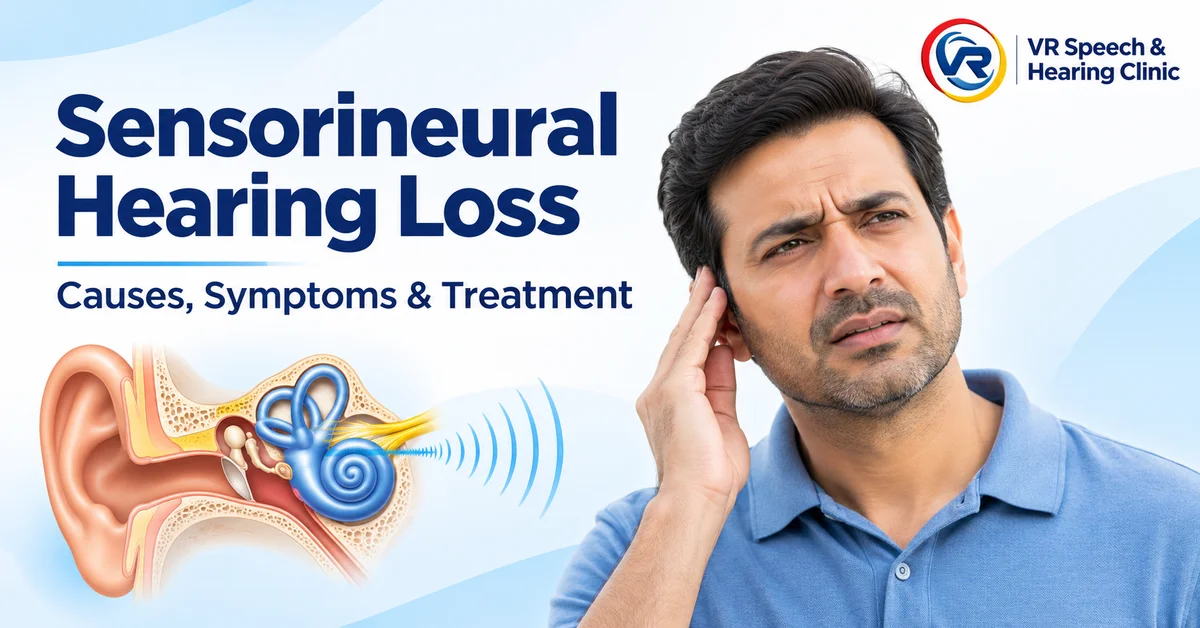
Sensorineural hearing loss, often shortened to SNHL, is hearing loss caused by damage to the inner ear (the cochlea) or to the auditory nerve that carries sound signals to the brain. Inside the cochlea sit thousands of delicate hair cells. They convert sound vibrations into electrical signals that the brain interprets as speech, music and everyday noise. When these hair cells or their nerve fibres are damaged, sounds become softer, distorted or unclear.
This is different from conductive hearing loss, which results from problems in the outer or middle ear, such as earwax blockage, fluid or a perforated eardrum. Conductive problems can often be treated with medicine or surgery. Sensorineural hearing loss, however, is usually permanent because human hair cells do not regrow. It can range from mild to profound, can affect one ear or both, and may be present from birth or develop later in life. When both types occur together, it is called mixed hearing loss.

Common Causes of Sensorineural Hearing Loss
There is rarely a single cause. Often several factors combine over the years. The most common ones include the following.
Ageing (Presbycusis)
Age-related hearing loss is the leading cause of SNHL. Hair cells gradually wear down over decades, usually affecting high-pitched sounds first. Consonants such as s, f and th become hard to catch, so speech sounds muffled even when it seems loud enough.
Noise Exposure
Prolonged exposure to loud sound is one of the biggest preventable causes. Factory machinery, construction work, loud music, headphones played at high volume and fireworks can all injure hair cells. A single extremely loud event, such as an explosion, can also cause sudden damage.
Genetic Factors
Some people are born with inherited changes that affect how the inner ear develops or works. Genetic hearing loss may be present at birth or appear gradually in childhood or adulthood, and it often runs in families.
Infections and Illness
Meningitis, mumps, measles, rubella, cytomegalovirus and labyrinthitis can all damage the inner ear. Infections passed from mother to baby during pregnancy are also a recognised cause of childhood hearing loss.
Ototoxic Medications
Certain medicines can harm the inner ear, including some antibiotics, chemotherapy drugs and loop diuretics. Never stop a prescribed medicine on your own, but do ask your doctor about hearing risks and whether monitoring is needed.
Head Injury and Inner Ear Disorders
A blow to the head, a skull fracture or sudden pressure changes can damage the cochlea or hearing nerve. Conditions such as Ménière’s disease, autoimmune inner ear disease and acoustic neuroma, a non-cancerous growth on the hearing nerve, can also cause SNHL, often in one ear only.
Health Conditions and Birth-Related Factors
Diabetes, high blood pressure and heart disease can reduce blood supply to the inner ear. In newborns, premature birth, low birth weight, severe jaundice and lack of oxygen at birth raise the risk.
Sudden Sensorineural Hearing Loss
Sometimes hearing drops dramatically over a few hours or up to three days, usually in one ear. The cause is often never identified, though viral infection, circulation problems and inflammation are suspected. This is a medical emergency, and prompt treatment within the first few days gives the best chance of recovery.
Symptoms of Sensorineural Hearing Loss
SNHL often develops slowly, so many people adapt without realising how much they are missing. Watch for these signs:
Difficulty following conversations, especially in noisy places such as restaurants, markets or family gatherings
Voices sounding muffled or unclear, even when you can tell someone is speaking
Frequently asking people to repeat themselves
Turning the television or phone volume higher than others prefer
Trouble hearing women’s and children’s voices, birdsong or doorbells, which are higher pitched
Ringing, buzzing or hissing in the ears (tinnitus)
A feeling of fullness in the ear, dizziness or balance problems
Tiredness after social events because listening takes so much effort
Avoiding phone calls and social situations
Symptoms in children: Children rarely complain of hearing problems. Look for delayed speech, unclear pronunciation, not responding to their name, poor attention in class, falling grades or watching faces closely during conversation. Babies who do not startle at loud sounds, turn towards voices or begin babbling should be assessed promptly.
How Is Sensorineural Hearing Loss Diagnosed?
A proper diagnosis starts with a full hearing evaluation by a qualified audiologist. A comprehensive assessment typically includes:
Case history and ear examination to rule out wax, infection or other blockages
Pure tone audiometry, which measures the softest sounds you can hear at different pitches and plots them on an audiogram
Speech audiometry, which checks how clearly you understand words, not just how loudly you hear them
Tympanometry, which tests middle ear function
Otoacoustic emissions and auditory brainstem response tests, especially useful for babies and young children
In sensorineural loss, hearing through air and through bone are reduced by a similar amount, which helps separate it from conductive loss. If hearing is much worse in one ear, or the loss is sudden, a doctor may recommend an MRI scan or other medical tests to look for an underlying cause.
Treatment Options for Sensorineural Hearing Loss
Although damaged hair cells cannot currently be repaired, SNHL is very manageable. The right solution depends on the degree of loss, your lifestyle and your listening needs.
Hearing aids: Modern digital hearing aids amplify the sounds you miss and improve speech clarity, even in background noise. They are the most common treatment for mild to severe loss.
Cochlear implants: For severe to profound loss where hearing aids give limited benefit, an implant bypasses damaged hair cells and stimulates the hearing nerve directly.
Medical treatment: Sudden SNHL is usually treated with corticosteroids as early as possible, and underlying conditions such as infection, diabetes or autoimmune disease need to be managed.
Assistive listening devices: Amplified telephones, TV streamers, captioning and alerting systems make daily life easier.
Auditory training and speech therapy: These help children develop speech and language, and help adults get the most from their hearing devices.
Tinnitus management: Counselling and sound therapy can reduce the distress caused by ringing in the ears.
Early intervention matters. The brain needs steady sound stimulation to keep processing speech well, and untreated hearing loss has been linked to social isolation, depression and a higher risk of cognitive decline in older adults. In children, early fitting of hearing devices and therapy supports speech, language and school success.
How to Prevent Sensorineural Hearing Loss
Not every case can be prevented, but many can. Simple habits protect your hearing for life:
Follow the 60/60 rule: keep headphone volume at or below 60 percent for no more than 60 minutes at a time
Wear earplugs or earmuffs in noisy workplaces, at concerts and when using power tools
Give your ears quiet breaks after loud exposure
Keep vaccinations up to date, including measles, mumps, rubella and meningitis
Manage diabetes, blood pressure and cholesterol, and avoid smoking
Ask about hearing side effects before starting new medicines
Screen newborns and test adult hearing regularly, especially after age 50 or if you work around loud noise
When Should You See a Hearing Specialist?
Book an appointment if conversations feel harder than they used to, if people complain that your TV is too loud, or if you have ongoing tinnitus. Seek urgent care if you notice sudden hearing loss in one or both ears, hearing loss with dizziness or ear pain, or hearing loss after a head injury. For children, speech delay or inconsistent response to sound is always worth checking early. Do not wait for it to improve on its own.
Why Choose VR Speech and Hearing Clinic?
Hearing loss affects far more than the ears. It affects communication, confidence and relationships. At VR Speech and Hearing Clinic, we combine accurate audiological testing with speech and hearing care that supports the whole person. Whether you are an adult noticing the first signs, a parent worried about a child’s speech, or someone who has lived with hearing loss for years, our team offers clear explanations, personalised recommendations and steady support at every step.
Final Thoughts
Sensorineural hearing loss is common, but it does not have to limit your life. Recognising the symptoms early, understanding the causes and getting a professional hearing evaluation can make a lasting difference. If you suspect hearing loss in yourself or a family member, schedule a hearing test with VR Speech and Hearing Clinic today.
Frequently Asked Questions (FAQs)
1. Can sensorineural hearing loss be cured or reversed?
Most sensorineural hearing loss is permanent because inner ear hair cells do not regrow. However, it can be managed very well with hearing aids, cochlear implants and therapy. Sudden cases may partly or fully recover if treated quickly, so seek care at once.
2. What is the most common cause of sensorineural hearing loss?
Ageing and noise exposure are the two most common causes. Years of normal wear on the inner ear, combined with exposure to loud sound, gradually reduce hearing, usually starting with high-pitched sounds.
3. What is the difference between sensorineural and conductive hearing loss?
Conductive hearing loss comes from problems in the outer or middle ear, such as wax or fluid, and is often treatable. Sensorineural loss comes from damage to the inner ear or hearing nerve and is usually permanent.
4. Can sensorineural hearing loss get worse over time?
Yes. Age-related, noise-related and genetic forms often progress slowly. Regular hearing tests, ear protection and early use of hearing devices help you track changes and protect your remaining hearing.
5. Do hearing aids help with sensorineural hearing loss?
Yes. Hearing aids are the most common treatment. They make sounds audible and clearer, and when properly fitted and programmed by an audiologist, they greatly improve speech understanding and quality of life.
6. Is sudden sensorineural hearing loss an emergency?
Yes. A sudden drop in hearing, especially in one ear, needs medical attention within hours or days. Early treatment gives the best chance of recovering hearing.
7. Can children have sensorineural hearing loss?
Yes. It can be present at birth or develop in childhood because of genetics, infections or birth complications. Early screening and prompt treatment protect speech, language and learning.