Tinnitus Treatment: Reduce Ear Ringing
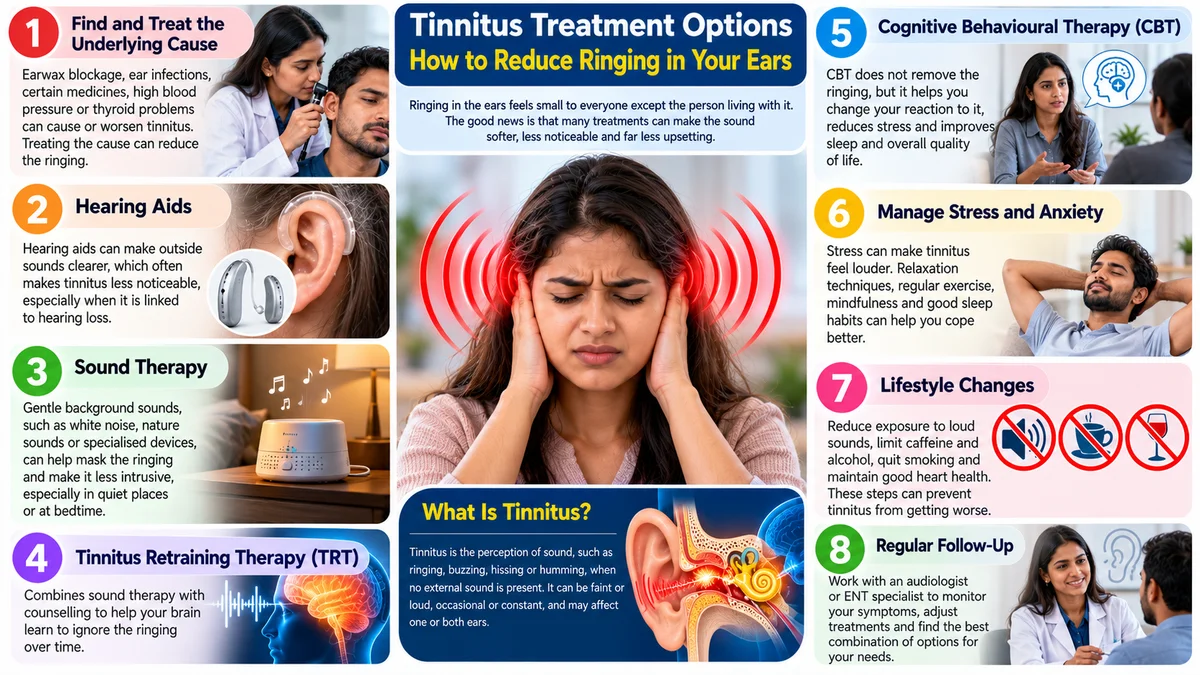
Tinnitus Treatment Options: How to Reduce Ringing in Your Ears
Ringing in the ears feels small to everyone except the person living with it. A faint whistle at bedtime can grow into a constant buzz that steals sleep, makes conversations harder and wears down patience. If you have ever sat in a quiet room and heard a sound nobody else can, you are not alone. Tinnitus affects millions of adults worldwide, and for most of them the first question is simple: can anything be done about it?
The answer is yes. No single cure switches tinnitus off for everyone, but many tinnitus treatment options can make the sound softer, less noticeable and far less upsetting. This guide explains what tinnitus is, why it happens, and which therapies audiologists and doctors use to help people take back their daily lives.
What Is Tinnitus?
Tinnitus is the perception of sound when no matching sound exists in your surroundings. It is a symptom, not a disease. People describe it as ringing, buzzing, hissing, whistling, roaring, clicking or humming. The pitch can be sharp like a kettle or low like a distant engine. It may appear in one ear, in both ears, or seem to sit in the middle of the head. For some people it never stops. For others it comes and goes, often becoming obvious in quiet moments such as bedtime.
Most tinnitus is subjective, meaning only you can hear it. A much rarer type, objective tinnitus, can sometimes be heard by an examiner and usually relates to blood vessels or small muscle movements near the ear. Severity ranges from a mild nuisance to a condition that disrupts concentration, mood and sleep, so it deserves to be taken seriously.
What Causes Tinnitus?
Specialists still do not have a complete answer. Research shows that tinnitus is generated and maintained in the brain’s hearing pathways, not only in the ear. When the inner ear sends weaker or altered signals, the brain may raise its own internal activity to compensate, and that activity is experienced as sound.
Common triggers include:
Long-term or sudden exposure to loud noise, such as machinery, concerts or headphones at high volume
Age-related hearing loss
Damage to the tiny hair cells of the inner ear
Certain medications that can affect hearing, including some antibiotics, chemotherapy drugs and high doses of aspirin
Earwax blockage, ear infections or fluid behind the eardrum
Jaw joint problems or neck injuries
Stress, anxiety and poor sleep
Medical conditions such as Meniere’s disease or high blood pressure
In many people no single cause is ever found. That does not mean something has been missed. It is simply how tinnitus often behaves.
Why Normal Hearing Tests Do Not Always Mean No Tinnitus
A common frustration is being told your hearing tests are normal while the ringing carries on. A standard hearing test checks a limited range of pitches, and tinnitus can occur with subtle changes that the test does not capture, such as damage at very high frequencies. Some researchers also believe that early strain on the connections between inner ear cells and the hearing nerve may contribute, even when the usual results look fine.
Tinnitus is also strongly shaped by how the brain and nervous system react to sound, which is why stress and tiredness can make it seem louder. Normal results are reassuring, but they do not mean your tinnitus is imaginary, and they do not mean treatment cannot help.
Is There a Cure for Tinnitus?
At present there is no medicine or surgery that reliably removes tinnitus in every case. Supplements and herbal products are heavily marketed, but evidence that they work is weak. Be cautious about any product that promises a quick cure.
The better news is that tinnitus can be managed very effectively. The goal of treatment is to reduce how much the sound bothers you, so that it fades into the background and stops controlling your day. Many people find that once the sound stops causing distress, they notice it far less.
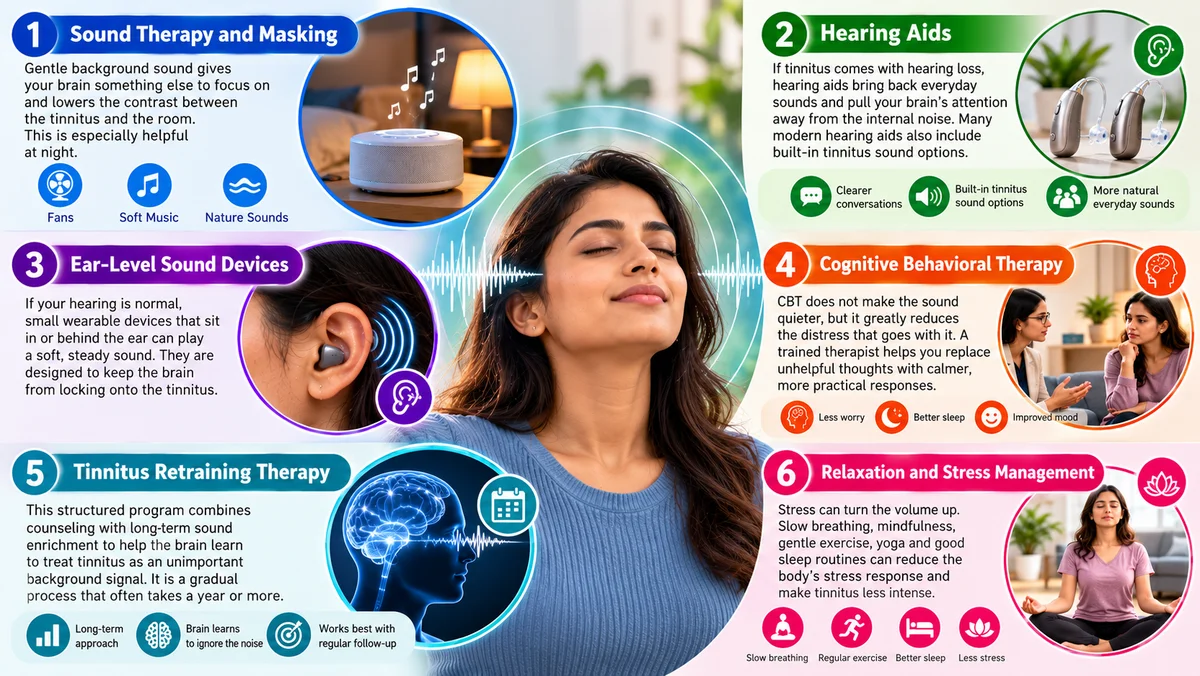
Tinnitus Treatment Options That Can Help
Sound Therapy and Masking
Silence makes tinnitus easier to hear. Adding gentle background sound gives the brain something else to focus on and lowers the contrast between the tinnitus and the room. Many people use sound machines, fans, soft music or apps that play rain, ocean waves or steady noise. This is especially helpful at night, when the surroundings are quietest and tinnitus tends to feel most intrusive.
Hearing Aids
If tinnitus comes with hearing loss, hearing aids are often one of the most useful tools. They bring back everyday sounds that the ear has been missing, and this natural sound stimulation pulls the brain’s attention away from the internal noise. Many modern hearing aids also include built-in tinnitus sound options, so one device can amplify speech and provide soothing sound at the same time.
Ear-Level Sound Devices
If your hearing is normal, small wearable devices that sit in or behind the ear can play a soft, steady sound. They look similar to hearing aids and are designed to keep the brain from locking onto the tinnitus. Your audiologist can set the sound to suit your comfort and preferences.
Cognitive Behavioral Therapy
Cognitive behavioral therapy, often called CBT, does not make the sound quieter, but it can greatly reduce the distress that goes with it. A trained therapist helps you notice unhelpful thought patterns, such as fearing the noise or believing it will never improve, and replace them with calmer, more practical responses. Many people also find it improves sleep, anxiety and mood. CBT is widely supported in clinical guidelines for people whose tinnitus is affecting their quality of life.
Tinnitus Retraining Therapy
If symptoms stay disruptive despite other measures, tinnitus retraining therapy may be considered. This structured program combines counseling with long-term sound enrichment to help the brain learn to treat tinnitus as an unimportant background signal. It is a gradual process that often takes a year or more, and it works best with consistent follow-up from a trained professional.
Relaxation and Stress Management
Stress does not cause every case of tinnitus, but it can turn the volume up. Slow breathing, mindfulness, gentle exercise, yoga and good sleep routines can all reduce the body’s stress response and make tinnitus less intense. These habits work well alongside other treatments.
Everyday Habits That Make Tinnitus Easier to Live With
Small changes can add up:
Protect your ears with earplugs or earmuffs around loud noise, and keep headphone volume moderate
Limit caffeine and alcohol if you notice they make the ringing worse
Keep a regular sleep schedule and a calm bedtime routine
Avoid complete silence; keep soft sound playing in the background
Do not strain to listen for your tinnitus, since constant checking tends to strengthen it
Stay physically active, which supports circulation and mood
When to See a Professional
Any tinnitus that lasts more than a few days is worth having checked. Book a visit promptly if your tinnitus:
Appears suddenly, especially with a drop in hearing
Affects only one ear
Beats in time with your pulse
Comes with dizziness, ear pain, discharge or facial weakness
Follows a head injury
Is causing anxiety, low mood or difficulty sleeping
Sudden hearing loss with tinnitus needs urgent attention, since early treatment can make a real difference. If tinnitus leaves you feeling hopeless, reach out for support right away. You do not have to manage it alone.
How VR Speech and Hearing Clinic Can Help
Effective care starts with understanding your tinnitus. At VR Speech and Hearing Clinic, an audiologist can assess your hearing, review your history and look for treatable contributors such as earwax, hearing loss or noise damage. From there, a personal plan can be built around your needs, which may include sound therapy, hearing devices, counseling guidance and referral to an ear, nose and throat specialist when a medical check is needed.
Because tinnitus affects every person differently, there is no one-size-fits-all fix. A plan that works well for you will be based on your hearing, your daily routine and how much the sound is bothering you. Follow-up visits allow adjustments as your needs change.
Final Thoughts
Tinnitus can be exhausting, but it is not something you simply have to endure. With the right combination of sound therapy, hearing support, counseling and healthy habits, most people find that the ringing becomes quieter in their minds and far less disruptive in their lives. If ringing in your ears is getting in the way of sleep, work or peace of mind, book a hearing evaluation at VR Speech and Hearing Clinic and take the first step toward relief.
Frequently Asked Questions
What is the best treatment for tinnitus?
There is no single best option. Sound therapy, hearing aids for those with hearing loss, and cognitive behavioral therapy are among the most helpful approaches. An audiologist can recommend the right combination after assessing your hearing and symptoms.
Can tinnitus go away on its own?
Sometimes. Tinnitus caused by earwax, an ear infection or a brief loud noise often settles once the cause resolves. If it lasts more than a few days or keeps returning, a hearing check is a good idea.
Can hearing aids really help with tinnitus?
Yes, especially when tinnitus occurs with hearing loss. Hearing aids restore outside sounds, which makes the tinnitus less noticeable, and many models also provide soothing sounds designed for tinnitus relief.
Does stress make tinnitus worse?
It often does. Stress, anxiety and lack of sleep can make tinnitus seem louder and more bothersome. Relaxation techniques, counseling and regular rest can help keep it in check.
Is tinnitus a sign of a serious problem?
Most of the time it is not dangerous, but certain signs need prompt attention. These include tinnitus in one ear only, a pulsing sound, sudden hearing loss, dizziness or ear pain. See a professional if you notice any of these.
How long does tinnitus retraining therapy take?
It is a gradual approach, and many people continue for a year or longer. Progress is usually steady rather than sudden, with the sound becoming less intrusive over time.