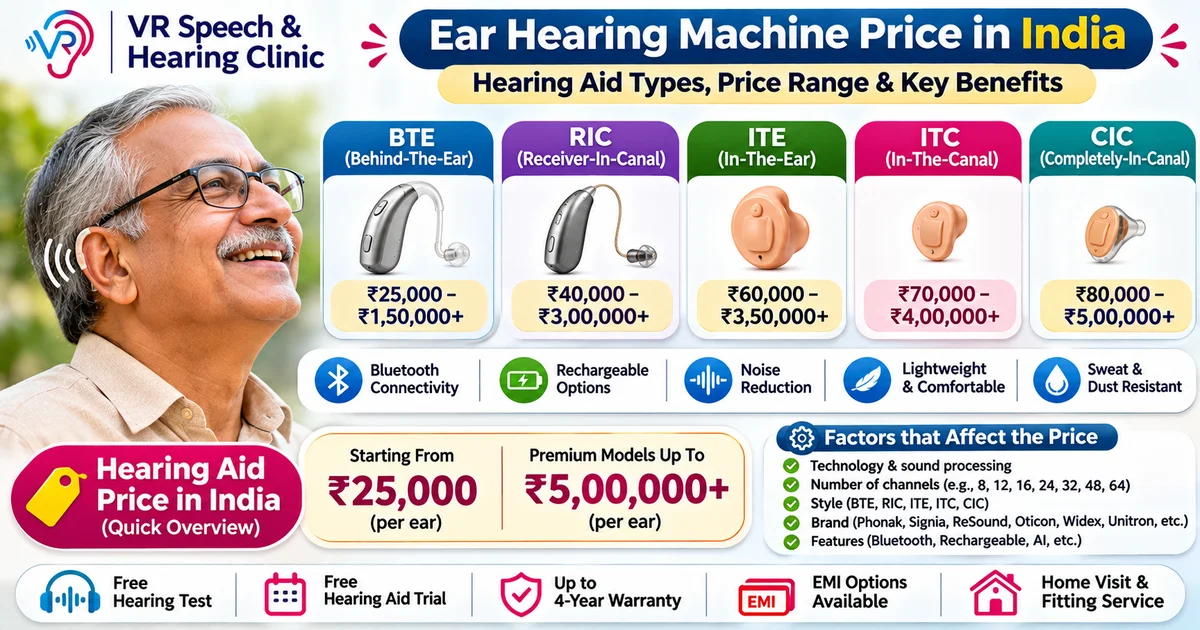
Ear Hearing Machine Price in India
Ear Hearing Machine Price in India 2026: What You Should Know Before You Buy
If you or a family member is struggling to follow conversations, you have probably searched for the ear hearing machine price. It is one of the most common questions patients ask at VR Speech and Hearing Clinic. The honest answer is that prices vary widely. A basic digital hearing aid can cost under ₹20,000, while a premium AI-powered model can cross ₹3,00,000 per pair.
This guide explains what drives the price, what you get at each budget level, and how to choose a hearing aid that fits your hearing loss, lifestyle and wallet.
What Is an Ear Hearing Machine?
“Ear hearing machine” is the everyday name many people in India use for a hearing aid. It is a small electronic device worn in or behind the ear. It picks up sound, amplifies it according to your hearing loss, and delivers it clearly to your ear. Modern devices do much more than make sound louder. They reduce background noise, improve speech clarity, connect to phones and TVs, and adjust automatically to different environments.
Ear Hearing Machine Price List in India (2026)
The table below shows indicative price ranges. Final prices depend on the brand, model, technology level, and whether you need one ear or both.
Hearing Aid Type | Approximate Price Range (per ear) | Best For |
|---|---|---|
Basic Digital BTE | ₹14,000 – ₹30,000 | Budget buyers, mild to severe loss |
Advanced BTE | ₹30,000 – ₹1,20,000 | Moderate to profound loss |
RIC / RITE | ₹35,000 – ₹3,50,000 | Natural sound, discreet look |
CIC (Completely in Canal) | ₹45,000 – ₹2,50,000 | Mild to moderate loss |
IIC (Invisible in Canal) | ₹60,000 – ₹3,00,000 | Those who want a hidden device |
Rechargeable Hearing Aids | ₹40,000 – ₹3,80,000 | Daily users, seniors |
Bluetooth Hearing Aids | ₹50,000 – ₹3,50,000 | Phone and TV streaming |
These are indicative figures. The exact cost is confirmed only after a hearing test and a consultation with an audiologist.
Hearing Aid Price by Technology Level
Many buyers find it easier to think in terms of technology level rather than device style.
Category | Approximate Price (per pair) | What You Get |
|---|---|---|
Basic Digital | ₹12,000 – ₹35,000 | Simple amplification, basic noise reduction |
Mid-Range | ₹35,000 – ₹90,000 | Better speech clarity, more channels |
Advanced | ₹90,000 – ₹2,50,000 | Strong noise control, rechargeable, Bluetooth |
Premium / AI | ₹2,50,000 – ₹8,50,000+ | AI sound processing, app control, top comfort |
If your hearing loss is mild and you mostly talk in quiet settings, a basic or mid-range model may be enough. If you attend meetings, travel often, or spend time in noisy places, an advanced model is usually a better investment.
Brand-Wise Hearing Aid Price Overview
Several global brands are available in India. Prices overlap, but each brand has its own strengths.
Phonak: Known for strong speech clarity and rechargeable options. Entry models start around the ₹28,000 range, while premium models go well above ₹3,00,000 per pair.
Signia (Siemens): German engineering with a sleek design and good Bluetooth features. It suits both budget and premium buyers.
Oticon: Built around a brain-friendly approach to sound that keeps speech natural in busy places.
ReSound: Popular for smartphone connectivity and comfortable fit. Mid-range pairs often sit between ₹95,000 and ₹1,75,000.
Widex: Valued for clear, natural sound and strong noise control.
Starkey: Offers advanced features, including tinnitus relief options.
Unitron: Well known for flexible fittings and rechargeable models across several budgets.
Brand matters less than correct fitting. A well-programmed mid-range device often outperforms a premium one that was fitted badly.
Why Do Hearing Aid Prices Differ So Much?
1. Technology Level
Basic devices amplify sound. Premium devices analyse your surroundings, separate speech from noise, and adapt automatically. More processing power means a higher price.
2. Style and Size
Behind-the-ear models are generally the most affordable. Smaller devices that sit inside the canal need custom manufacturing and miniature parts, so they cost more.
3. Rechargeable Battery
Rechargeable hearing aids cost more upfront but save you from buying and changing batteries. Many seniors prefer them because they are easier to handle.
4. Connectivity
Bluetooth streaming for calls, music and TV, along with smartphone app control, adds to the cost.
5. Number of Channels
More channels allow finer sound tuning across different pitches. This helps people with complex hearing loss patterns.
6. Fitting, Programming and Follow-Up Care
A hearing aid is not an off-the-shelf gadget. It must be programmed to your hearing test results and fine-tuned over several visits. Good clinics include fitting, counselling and follow-up in the price.
7. Warranty and Service
Warranty length, repair support and loss or damage cover can affect the final cost. Extended cover typically adds around 10 to 15 percent to the device price.
One Hearing Aid or Two?
Most people with hearing loss in both ears benefit from two devices. Two aids help you locate where sounds come from, understand speech in noise, and avoid straining your better ear. Prices are often quoted per ear, so always check whether a quote is for a single device or a pair.
Basic vs Rechargeable Hearing Aids: Which Is Worth It?
Battery-operated models have a lower starting price, and batteries are easy to find. The downside is regular replacement and the difficulty some elderly users have with tiny battery doors.
Rechargeable models give around 20 to 30 hours of use on a charge, charge overnight, and remove battery hassle. Over a few years, the extra upfront cost is often balanced by what you save on batteries.
Hidden Costs to Ask About Before You Buy
When comparing quotes, ask whether the price includes:
Hearing test and consultation
Programming and fine-tuning visits
Ear moulds or domes
Charger or batteries
Warranty period and what it covers
Free cleaning and servicing
Trial period terms
A lower sticker price can turn out costlier if these are charged separately.
How to Get the Best Value for Your Money
Start with a hearing test. Never buy a device without knowing your exact hearing loss.
Choose by lifestyle, not just price. Think about where you spend most of your day.
Compare total value. Look at fitting, warranty and after-sales care together.
Ask about a trial period. Wearing the device in daily life tells you more than a showroom demo.
Buy from an authorised provider. This protects you from fake or refurbished products and ensures valid warranty.
Use EMI options if needed. Easy instalments make advanced technology more affordable.
Why Choose VR Speech and Hearing Clinic?
At VR Speech and Hearing Clinic, patients get more than a device. You get a proper hearing assessment, honest guidance on which technology level you actually need, and genuine products from leading brands. The clinic offers rechargeable, Bluetooth, BTE, RIC and invisible hearing aids, along with programming, repairs and ongoing support. Affordable pricing and EMI options help families plan better hearing without financial stress.
Untreated hearing loss can lead to social withdrawal, frustration, and even a higher risk of cognitive decline. Getting the right ear hearing machine early makes a real difference to everyday life.
Final Thoughts
The ear hearing machine price in India ranges from around ₹14,000 for basic devices to several lakhs for premium AI models. The right choice is the one that matches your hearing loss, daily needs and budget, and is fitted by a qualified audiologist. Book a hearing test, get a personalised price estimate, and compare options before you decide.
Frequently Asked Questions (FAQs)
1. What is the average ear hearing machine price in India?
Most people spend between ₹15,000 and ₹1,50,000 per ear, depending on technology and features. Premium models can cost much more.
2. What is the minimum price of a hearing aid in India?
Basic digital hearing aids start from roughly ₹12,000 to ₹15,000. Very cheap devices may only amplify sound without proper programming, so test before you buy.
3. Are hearing aid prices quoted per ear or per pair?
Both formats are used. Always confirm whether a quote covers one device or two.
4. Why are rechargeable hearing aids more expensive?
They contain lithium-ion batteries and charging systems, and are usually built on more advanced platforms. They save money on batteries over time.
5. Can I buy a hearing aid on EMI?
Yes. Many clinics, including VR Speech and Hearing Clinic, offer easy EMI options so you can spread the cost.
6. Which hearing aid brand is best?
There is no single best brand. Phonak, Signia, Oticon, ReSound, Widex, Starkey and Unitron all make good devices. The best one depends on your hearing test, budget and lifestyle.
7. Is a hearing test necessary before buying?
Yes. A hearing test shows the type and degree of loss, which decides which device and settings suit you.
8. Does the price include fitting and programming?
At a reputable clinic, usually yes, but confirm this in writing before you pay.
9. How long does a hearing aid last?
With good care, most hearing aids last 4 to 6 years. Regular cleaning and servicing extend their life.
10. Are invisible hearing aids worth the extra cost?
They suit people who want the most discreet option and have mild to moderate hearing loss. They are not ideal for everyone, so ask your audiologist.
11. Can I get a trial before buying?
Many premium hearing aids come with a trial period that depends on the manufacturer. Ask the clinic for the exact terms.