Cochlear Implant – Who Needs It? Signs, Candidates & Benefits
Introduction
Hearing loss affects millions of people worldwide, ranging from mild difficulty understanding conversations to complete deafness. While hearing aids work well for many types of hearing loss, some individuals have hearing loss so severe that hearing aids no longer provide meaningful benefit. For these individuals, a cochlear implant can be life-changing. But how do you know if you or your loved one actually needs one? This guide breaks down everything you need to know about cochlear implants and who truly benefits from them, brought to you by the experts at VR Speech and Hearing Clinic.
What Is a Cochlear Implant?
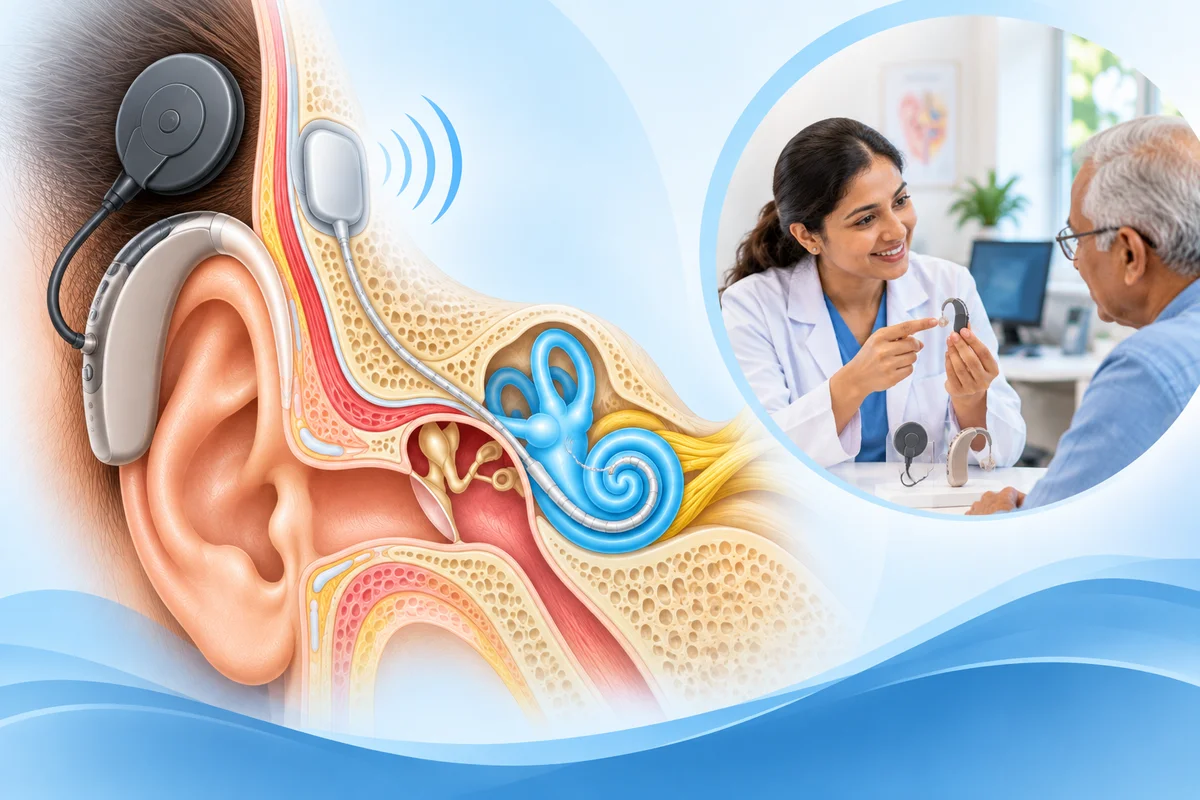
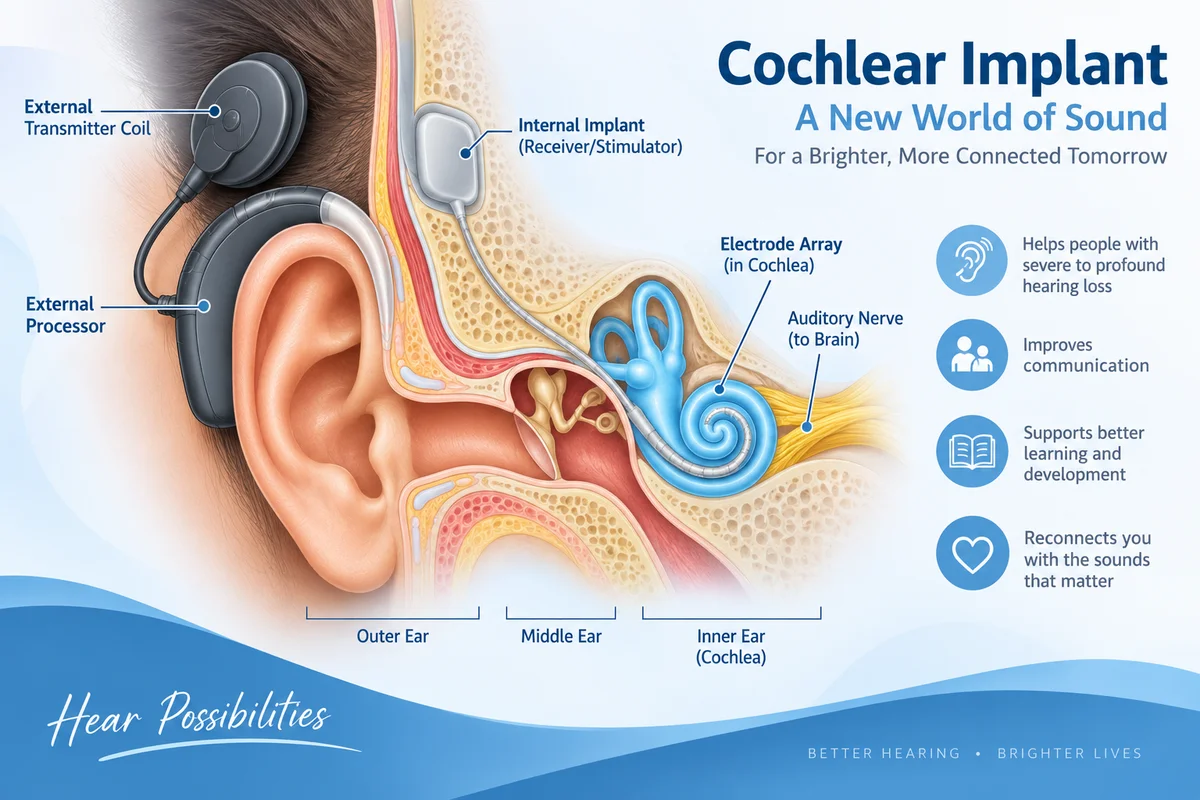
A cochlear implant is a small electronic device that bypasses damaged portions of the ear and directly stimulates the auditory nerve. Unlike a hearing aid, which simply amplifies sound, a cochlear implant converts sound into electrical signals that the brain can interpret as sound. It consists of two main parts: an external portion worn behind the ear and an internal portion surgically placed under the skin. Together, these components allow individuals with severe to profound hearing loss to perceive sound, understand speech, and reconnect with the world around them.
Difference Between Hearing Aids and Cochlear Implants
Many people confuse hearing aids with cochlear implants, but they work in fundamentally different ways. Hearing aids amplify sound so that a damaged ear can pick it up more easily. They are effective for mild to moderately severe hearing loss where some natural hearing function remains. Cochlear implants, on the other hand, are designed for people whose inner ear (cochlea) is too damaged to benefit from amplification alone. Instead of making sounds louder, a cochlear implant directly stimulates the auditory nerve, essentially creating a new pathway for sound signals to reach the brain. This is why cochlear implants are typically recommended only after hearing aids have failed to provide sufficient benefit.
Who Needs a Cochlear Implant?
Not everyone with hearing loss is a candidate for a cochlear implant. The decision depends on the type, degree, and cause of hearing loss, as well as individual health factors. Below are the main groups of people who may need a cochlear implant.
1. Children with Severe to Profound Hearing Loss
Children born with severe to profound sensorineural hearing loss, or who develop it early in life, are often strong candidates for cochlear implants. Early intervention is critical because the first few years of life are crucial for speech and language development. Children who receive cochlear implants at a young age, especially before the age of two, often develop spoken language skills comparable to their hearing peers. If a child fails newborn hearing screening tests or shows delayed speech and language milestones, an evaluation for cochlear implant candidacy should be considered promptly.
2. Adults with Severe to Profound Hearing Loss
Adults who have lost significant hearing, whether gradually over the years or suddenly due to illness or injury, may also benefit from cochlear implants. This includes adults who find that hearing aids no longer help them understand speech clearly, even at maximum amplification. Many adults who receive cochlear implants report a dramatic improvement in their ability to communicate, participate in conversations, and enjoy activities like talking on the phone or watching television without heavy reliance on lip-reading or captions.
3. People Who Get Little to No Benefit from Hearing Aids
One of the clearest signs that someone may need a cochlear implant is when hearing aids, even high-powered ones, no longer provide adequate benefit. If a person continues to struggle to understand speech in quiet environments, not just noisy ones, despite using well-fitted hearing aids, this is often a strong indicator that a cochlear implant evaluation is warranted.
4. Individuals with Sudden Sensorineural Hearing Loss
Sudden hearing loss, particularly when it affects both ears and does not respond to medical treatment, can also make someone a candidate for a cochlear implant. Prompt evaluation is important in these cases, as earlier implantation tends to lead to better outcomes.
5. People with Single-Sided Deafness
Individuals who have normal hearing in one ear but profound hearing loss in the other are increasingly being considered for cochlear implants. This condition, known as single-sided deafness, can make it difficult to localize sound and understand speech in noisy environments. Cochlear implants can help restore a sense of balance between both ears.
6. Older Adults with Age-Related Hearing Loss
Age-related hearing loss, or presbycusis, can sometimes progress to a level where hearing aids are no longer sufficient. Many people assume cochlear implants are only for children, but older adults often experience some of the most significant quality-of-life improvements after implantation, including reduced social isolation and improved cognitive engagement.
Signs You or Your Child May Need a Cochlear Implant Evaluation
Difficulty understanding speech even with hearing aids turned to maximum volume
Frequently asking others to repeat themselves
Relying heavily on lip-reading to understand conversations
Delayed speech and language development in children
Withdrawing from social situations due to communication difficulties
Little to no response to loud sounds or spoken name calls in infants
Struggling to hear in both quiet and noisy environments
If any of these signs sound familiar, it is worth scheduling a comprehensive hearing evaluation with a specialist.
The Cochlear Implant Candidacy Evaluation Process
Determining whether someone needs a cochlear implant involves a thorough, multi-step evaluation process. This typically includes a detailed hearing test called an audiogram, speech perception testing with hearing aids, medical imaging such as a CT scan or MRI to assess the structure of the inner ear, and a consultation with an ear, nose, and throat specialist. Speech-language pathologists and audiologists also play a key role in assessing communication abilities and setting realistic expectations for outcomes. This comprehensive approach ensures that only those who will truly benefit undergo the surgical procedure.
Benefits of Getting a Cochlear Implant
For those who qualify, the benefits of a cochlear implant can be profound. Many recipients experience significantly improved speech understanding, better sound localization, and the ability to enjoy music and environmental sounds again. Children often show remarkable gains in speech and language development, academic performance, and social confidence. Adults frequently report reduced feelings of isolation, improved relationships, and greater independence in daily life. While outcomes vary depending on factors such as age at implantation and duration of hearing loss, most recipients report a substantial improvement in their overall quality of life.
Life After Cochlear Implant Surgery
Receiving a cochlear implant is not an instant fix. It requires a period of adjustment, auditory rehabilitation, and consistent follow-up care. After the surgical site heals, the device is activated, and the recipient begins a process of learning to interpret the new sounds they hear. This process, known as auditory-verbal therapy or aural rehabilitation, is essential for maximizing the benefits of the implant. Children typically require ongoing speech therapy, while adults may need auditory training sessions to help their brain adapt to the new way of processing sound.
Why Choose VR Speech and Hearing Clinic
At VR Speech and Hearing Clinic, we understand how overwhelming it can feel to navigate hearing loss and explore treatment options like cochlear implants. Our experienced team of audiologists and speech-language pathologists provides comprehensive hearing evaluations, cochlear implant candidacy assessments, and personalized rehabilitation programs tailored to each patient's needs. Whether you are seeking help for a child with hearing loss or exploring options for yourself or an aging parent, our clinic is committed to guiding you through every step of the journey with compassionate, expert care.
Conclusion
Cochlear implants have transformed the lives of countless children and adults with severe to profound hearing loss, offering a chance to reconnect with sound, speech, and the people around them. If hearing aids are no longer providing enough benefit, or if you notice signs of significant hearing loss in yourself or a loved one, it is important to seek a professional evaluation as soon as possible. Early diagnosis and intervention can make a meaningful difference in long-term outcomes. Reach out to VR Speech and Hearing Clinic today to schedule a consultation and take the first step toward better hearing.
Frequently Asked Questions (FAQs)
Q1: At what age can a child get a cochlear implant?
Children as young as nine to twelve months old can receive cochlear implants, especially if they have severe to profound hearing loss and show little benefit from hearing aids. Early implantation often leads to better speech and language outcomes.
Q2: Is cochlear implant surgery safe?
Yes, cochlear implant surgery is generally considered safe and has been performed successfully for decades. As with any surgery, there are some risks, which your surgeon will discuss during the evaluation process.
Q3: Will a cochlear implant restore normal hearing?
A cochlear implant does not restore normal hearing but provides a useful representation of sound that allows most recipients to understand speech and recognize environmental sounds, especially with auditory training.
Q4: How long does it take to adjust to a cochlear implant?
Adjustment periods vary by individual. Some people notice improvements within weeks, while others may take several months of consistent use and therapy to fully adapt to the new sound input.
Q5: Can adults with long-term hearing loss still benefit from a cochlear implant?
Yes, many adults with long-term hearing loss experience significant benefits from cochlear implants, though outcomes can vary depending on the duration and cause of hearing loss.
Q6: How do I know if I should get evaluated for a cochlear implant?
If you or your child struggle to understand speech despite using hearing aids, or show signs of severe hearing loss, scheduling a candidacy evaluation with a specialist is the best next step.