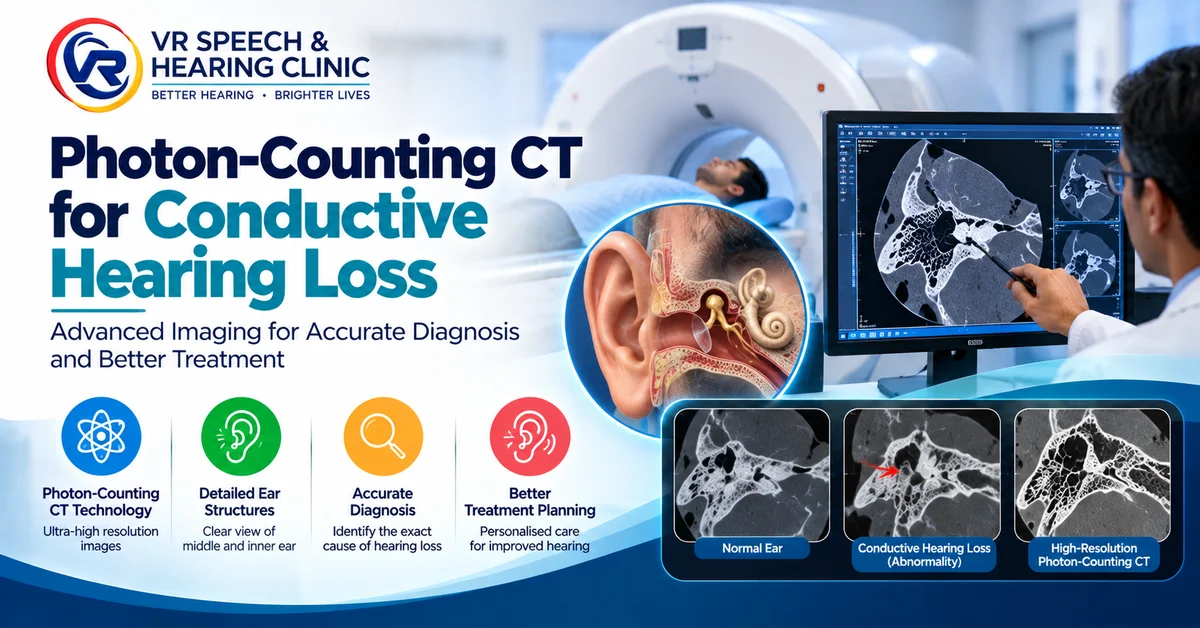
Photon-Counting CT for Conductive Hearing Loss
Photon-Counting CT: A Clearer Way to Find the Cause of Conductive Hearing Loss
Do you feel that sounds are muffled, even though your ears look healthy? Is your hearing test showing a gap between what your ear canal and your inner ear can pick up? This pattern often points to conductive hearing loss, and finding the exact cause is not always easy. A newer scan called photon-counting CT is helping doctors see tiny ear problems that older scans can miss.
What Is Conductive Hearing Loss?
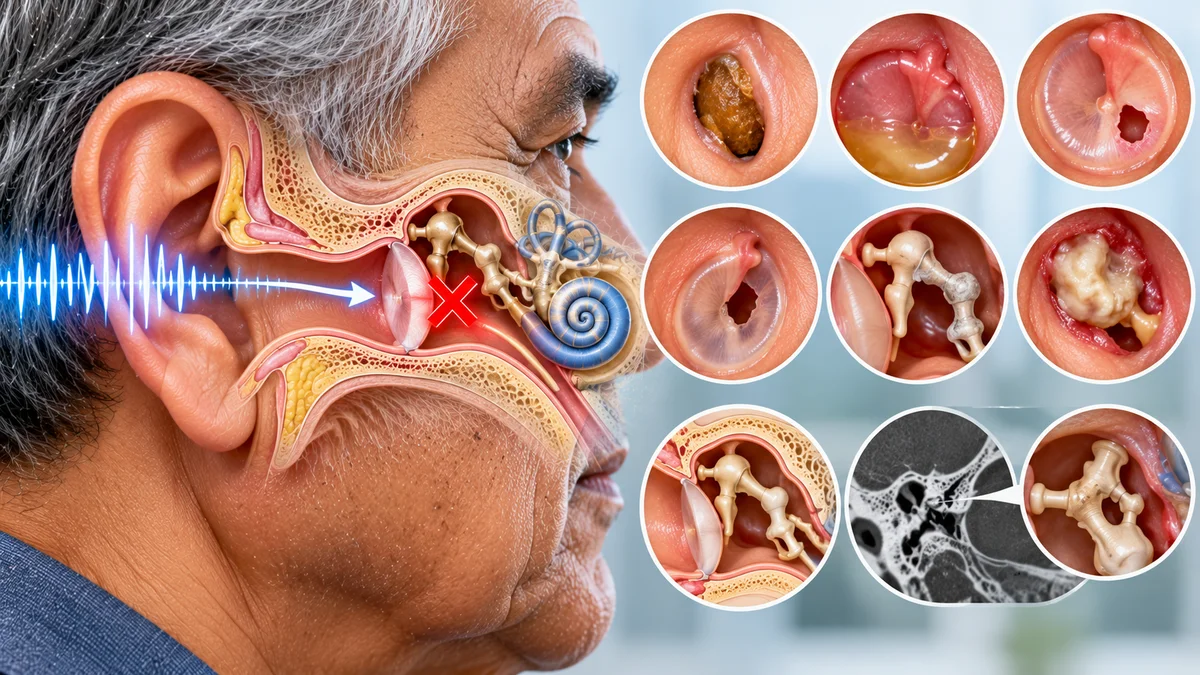
Conductive hearing loss happens when sound cannot travel properly through the outer ear or middle ear to reach the inner ear. The inner ear may be perfectly healthy, but the sound arrives weak.
Common causes include:
Earwax blockage
Fluid behind the eardrum
Chronic or repeated ear infections
A hole in the eardrum
Damage or stiffness in the tiny middle ear bones
Otosclerosis, where abnormal bone growth fixes the stapes bone in place
Cholesteatoma, an abnormal skin growth in the middle ear
The harder cases are those where the eardrum looks normal but hearing is still reduced. Here, the real problem may be hidden deep inside the temporal bone, the bone that houses the ear.
Why a Normal-Looking Eardrum Does Not Rule Out a Problem
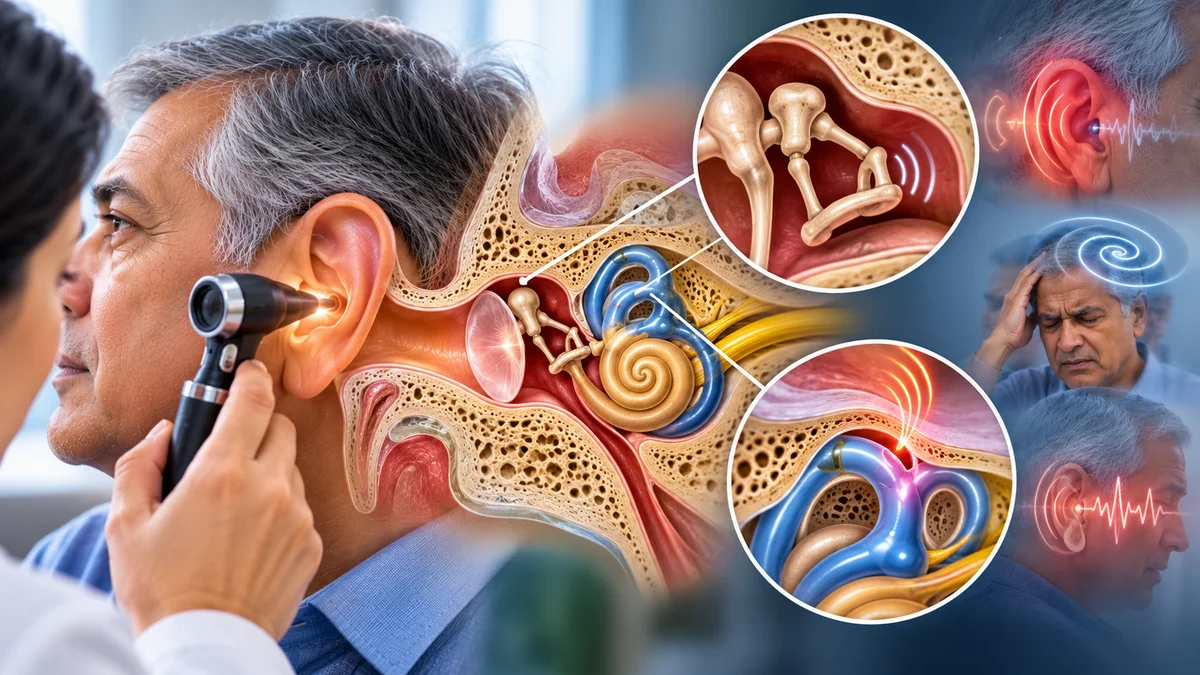
An ear examination shows the eardrum, but not the delicate bones and structures behind it. Two conditions can look alike on a hearing test yet need very different treatment:
Otosclerosis. The stapes bone becomes stiff and cannot vibrate well.
Superior semicircular canal dehiscence (SSCD). A thin or missing area of bone over a balance canal in the inner ear creates an extra pathway for sound. It can cause hearing loss that looks conductive, along with dizziness triggered by loud sounds, or hearing your own voice or heartbeat unusually loudly.
Some people have both conditions at once. Knowing which one is present, or whether both are, can change the treatment plan completely.
What Is Photon-Counting CT?
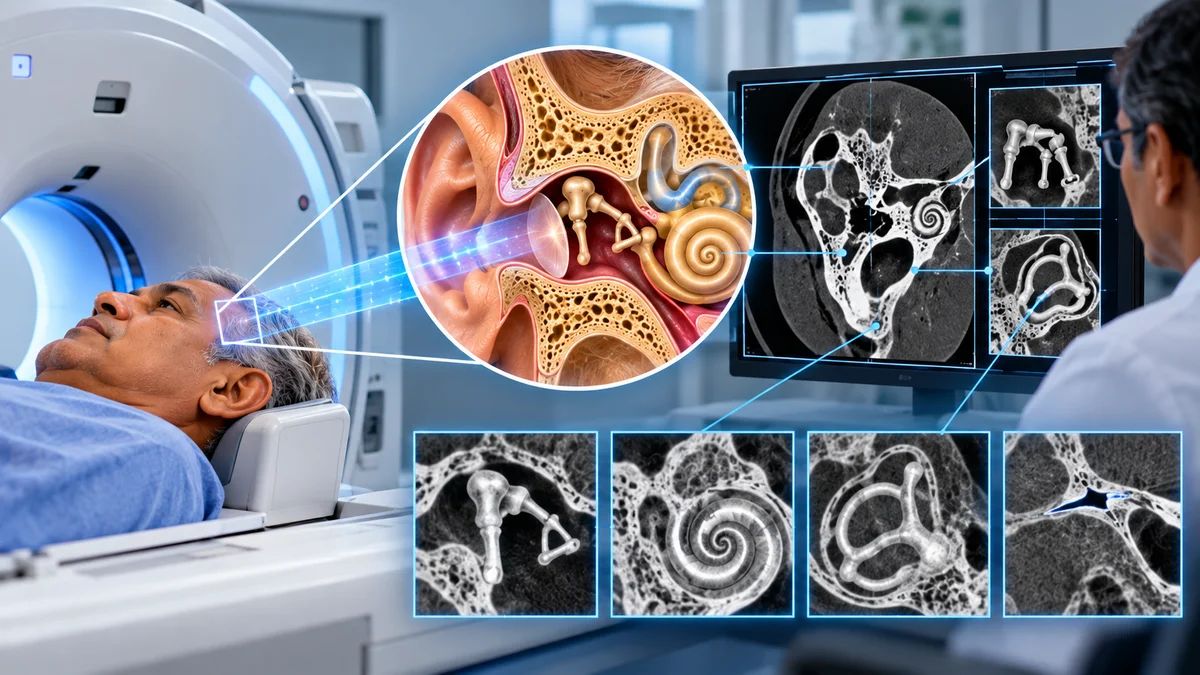
A regular CT scan uses X-rays to create images of the body. Photon-counting CT is a newer technology that detects and measures individual X-ray particles. In simple terms, it can produce sharper pictures with less image noise.
For ear problems, this matters because the middle ear contains some of the smallest bones in the human body. A clearer scan can help specialists:
See very fine bone changes
Detect early or subtle otosclerosis
Spot thin bone in cases of SSCD
Study the middle ear bones and surrounding structures in more detail
Plan surgery with a better understanding of the anatomy
Photon-counting CT is still an advanced technology and is not available at every hospital. Your ENT specialist will decide whether any scan is needed and which type is right for you.

How a Clearer Scan Helps You Choose Treatment
When the cause is clearly identified, you and your doctor can make better decisions. For example:
Surgery. For otosclerosis, a procedure on the stapes bone may restore hearing in suitable patients.
Hearing aids. If surgery is risky, not suitable or not preferred, hearing aids can be an effective option.
Observation. Some mild cases may only need regular monitoring.
Specialist referral. Conditions such as SSCD may need a team approach involving an ENT surgeon and balance specialists.
A detailed picture of the ear before treatment also helps the doctor explain how much hearing improvement is realistic, so you can set clear expectations.
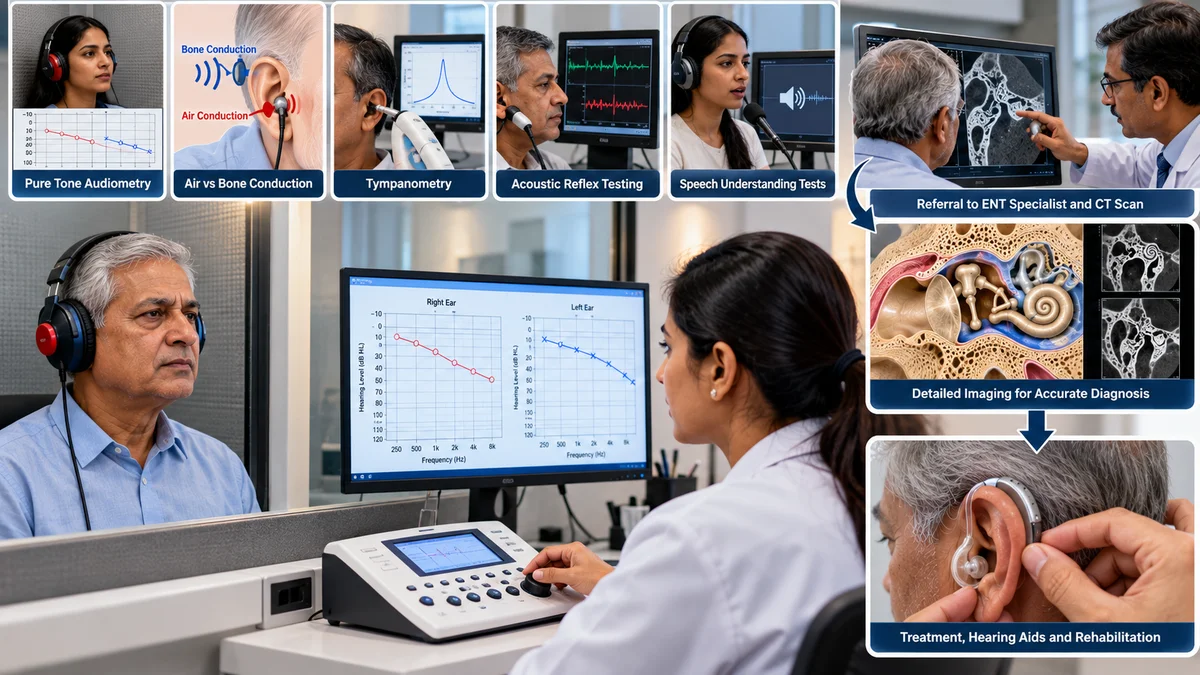
The Role of Audiology in Diagnosis
A scan is only one part of the answer. Careful hearing tests come first, and they guide who needs imaging at all. At a hearing clinic, these tests can include:
Pure tone audiometry to measure how well you hear different pitches
Comparison of air conduction and bone conduction hearing to identify a conductive component
Tympanometry to check eardrum and middle ear movement
Acoustic reflex testing
Speech understanding tests
If the results suggest a middle ear or bone problem, the next step is a referral to an ENT specialist, who may advise a CT scan. After treatment, an audiologist can retest your hearing, fit hearing aids if needed, and guide you through rehabilitation.

When Should You Get Your Hearing Checked?
Do not wait if you notice:
Gradual or sudden drop in hearing in one or both ears
Feeling that your own voice sounds too loud
Hearing your heartbeat or eye movements
Dizziness triggered by loud noise or pressure changes
Ear fullness, ringing or repeated ear discharge
Difficulty understanding speech, even though the ears look normal
Early testing protects your hearing and helps you reach the right specialist sooner.
Book a Hearing Evaluation at VR Speech and Hearing Clinic
At VR Speech and Hearing Clinic, Vilas Rathod, BASLP, provides detailed hearing assessments, guidance on your results, hearing aid fitting and rehabilitation. If your tests point toward a middle ear condition, you will be advised to consult an ENT specialist for further evaluation. Book your appointment today and take the first step toward clearer hearing.
Disclaimer: This article is for general awareness and is not a substitute for medical advice. Please consult a qualified ENT doctor or audiologist for diagnosis and treatment.
FAQs
1. What is photon-counting CT in simple words?
It is an advanced CT scan that measures individual X-ray particles to create sharper, less noisy images. It helps doctors see very small structures, such as the tiny bones of the middle ear.
2. Can photon-counting CT find the cause of conductive hearing loss?
It can help identify problems like otosclerosis, middle ear bone abnormalities and thin bone over the balance canal (SSCD). Your doctor combines the scan with hearing tests and a physical exam to reach a diagnosis.
3. What is the difference between otosclerosis and SSCD?
Otosclerosis makes the stapes bone stiff, so sound cannot pass well to the inner ear. SSCD is a thin or missing patch of bone over a balance canal that creates an abnormal sound pathway. Both can look like conductive hearing loss on a hearing test.
4. Do I need a CT scan for every hearing problem?
No. Many cases, like earwax or a simple ear infection, are diagnosed with an examination and hearing tests. A scan is usually advised only when the cause is unclear or surgery is being planned.
5. Can hearing aids help conductive hearing loss?
Yes. Hearing aids can help many people with conductive hearing loss, especially when surgery is not suitable or not preferred. An audiologist can test, select and fit the right device.
6. Is conductive hearing loss curable?
It depends on the cause. Some causes, such as earwax or fluid, can be fully treated. Others, such as otosclerosis, may improve with surgery in suitable patients. Your ENT specialist can tell you what is possible in your case.
7. How do I know if my hearing loss is conductive?
Only a hearing test can tell. An audiologist compares how you hear through air and through bone. A gap between the two suggests a conductive component.
8. Who should I see first, an audiologist or an ENT?
Either is a good starting point. An audiologist can test your hearing and explain the type of loss, while an ENT doctor examines the ear and advises on medical or surgical treatment. Many patients need both.