Can Your Child Hear the Teacher? Child Hearing Test Guide
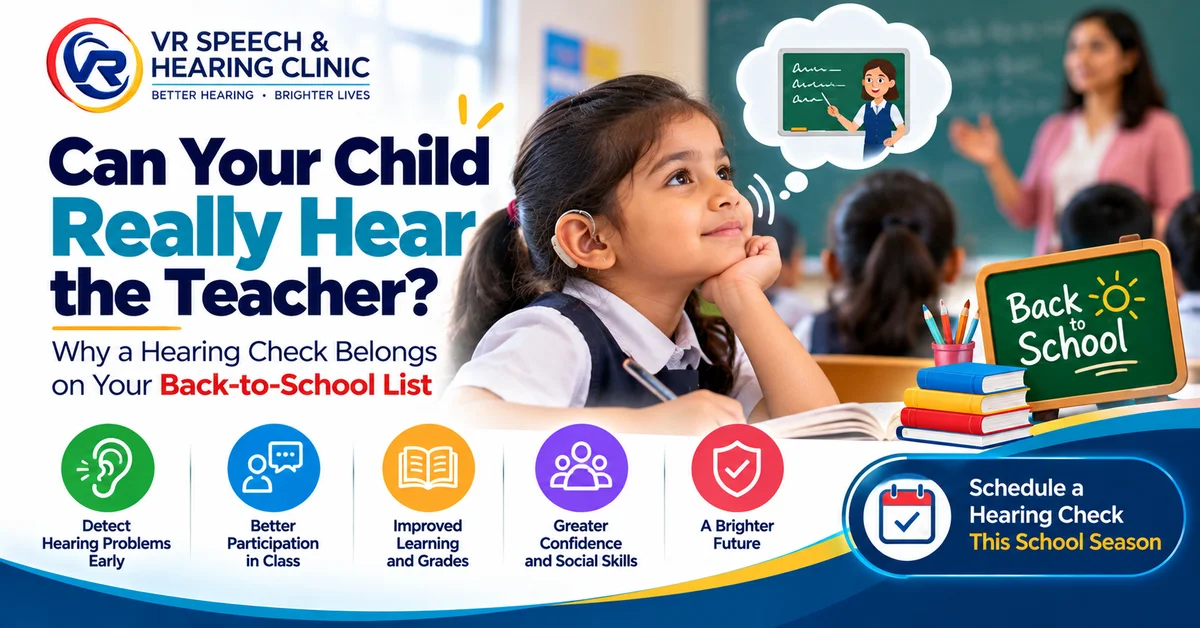
Can Your Child Really Hear the Teacher? Why a Hearing Check Belongs on Your Back-to-School List
When school starts, parents usually check the uniform, books, shoes and lunch box. One important item is often missed: your child’s hearing.
A child can sit in the front row, have perfect eyesight and still miss much of what the teacher says. If your child cannot hear clearly, learning becomes harder, friendships become harder, and confidence can drop quietly over time.
Why Hearing Matters So Much in the Early School Years
The kindergarten and primary school years are when children build the foundation for language, speech, reading and social skills. They learn new words by listening, copy sounds from teachers and classmates, and pick up the rhythm of conversation during play.
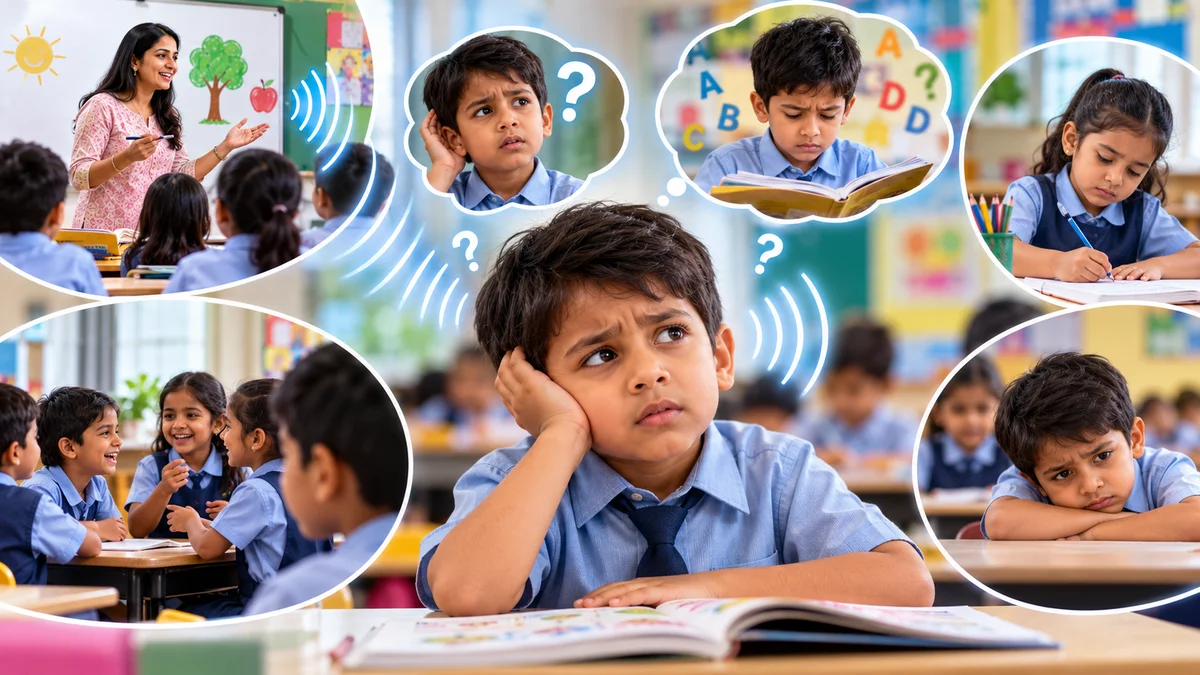
Even mild hearing loss in a classroom can mean:
Missed instructions
Mispronounced words
Slow progress in reading and spelling
Difficulty joining group conversations
Feeling left out or frustrated
Audiologists note that an undiagnosed hearing problem can affect both academic performance and social development. Many children don’t complain because they don’t know what normal hearing sounds like. They simply adapt, and the struggle goes unnoticed.
What Causes Hearing Problems in Children?
Hearing loss in children has several common causes:
1. Loud noise exposure. Listening to music at high volume through earphones or headphones for long periods is a growing concern. Children today spend much more time with phones, tablets and gaming headsets than earlier generations did.
2. Middle ear problems. Ear infections, fluid behind the eardrum and other middle ear conditions are common in childhood. They can cause temporary or, if repeated and untreated, longer-lasting hearing difficulty.
3. Family history. Some types of hearing loss run in families. If a parent, sibling or close relative has hearing loss, your child should be screened early.
4. Other factors. Certain illnesses, ear injuries, some medicines and conditions present at birth can also affect hearing.
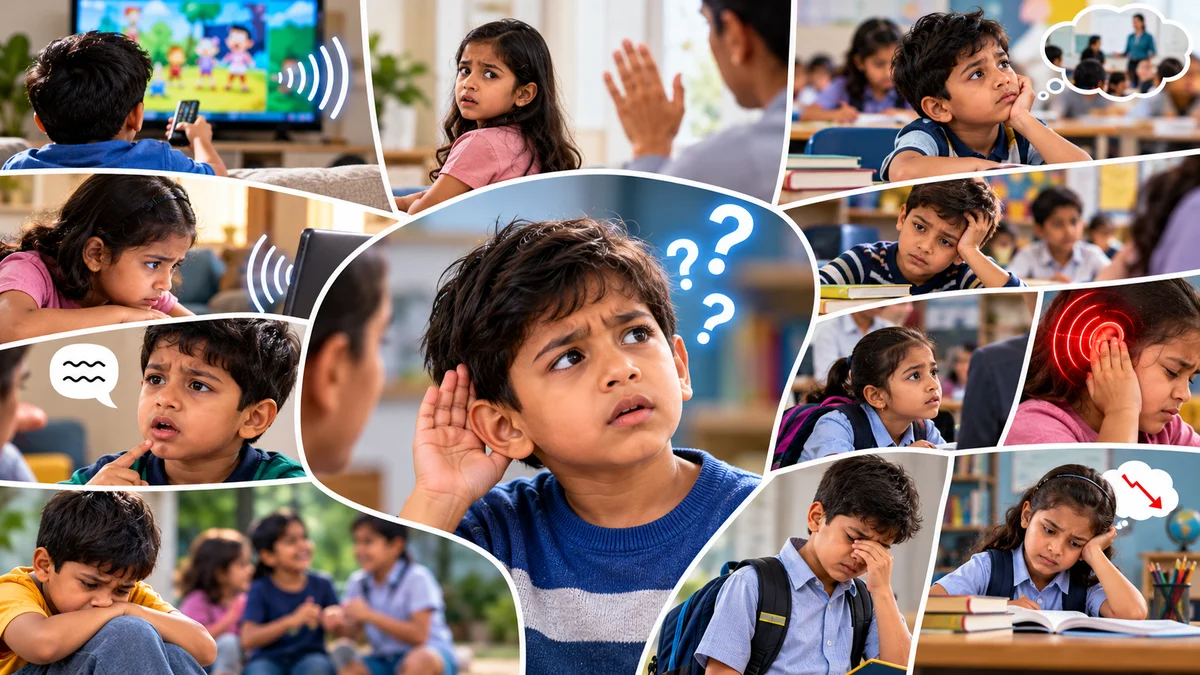
Warning Signs Parents Should Not Ignore
A child may have a hearing problem if they:
Often say “what?” or “huh?”
Turn the television or tablet volume very high
Do not respond when called from behind or from another room
Seem inattentive or daydream in class
Have delayed or unclear speech
Struggle to follow multi-step instructions
Sit very close to the screen or the teacher to follow lessons
Complain of ear pain, ringing, or a blocked feeling
Seem tired or irritable after school
Prefer playing alone or avoid group activities
Show a sudden fall in grades without a clear reason
One sign alone doesn’t confirm hearing loss, but several together are a good reason to book a hearing evaluation.
Why a Hearing Check Should Be Part of Your Child’s Yearly Routine
Early detection leads to early support. When a hearing problem is found sooner, your child can receive the right care sooner, whether that means medical treatment for an ear condition, hearing devices, speech and language therapy, or classroom adjustments.
Waiting makes it harder to catch up. A hearing check takes little time, is safe and painless, and can prevent years of avoidable struggle.
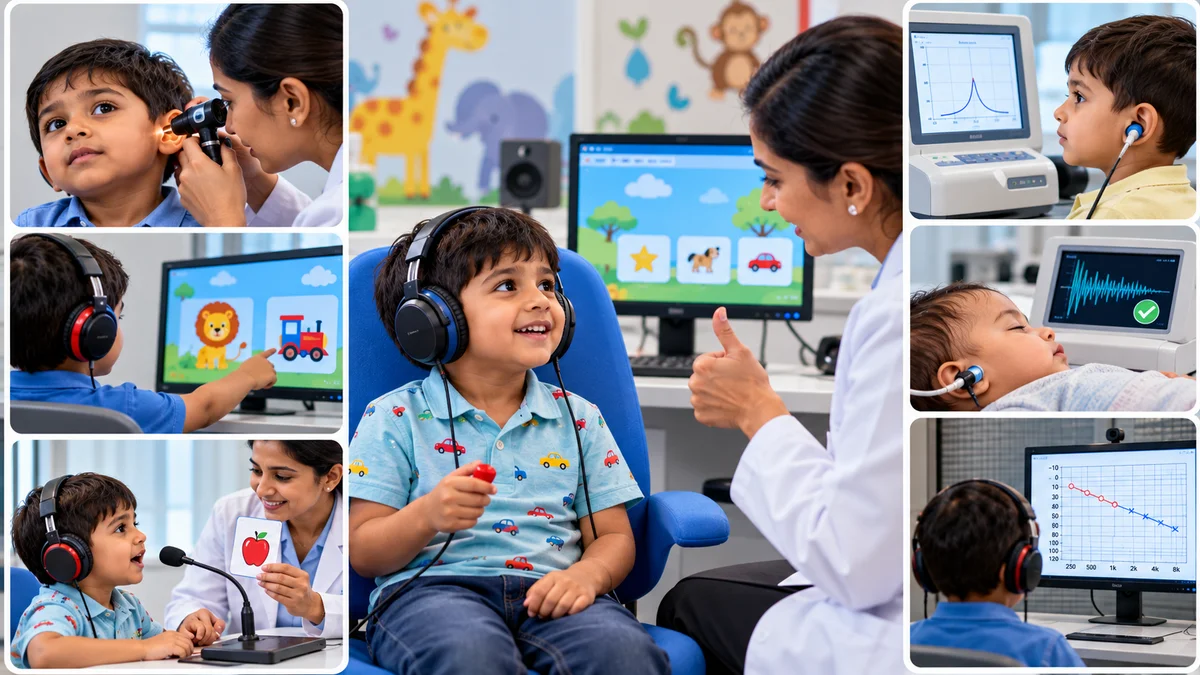
What Happens During a Child’s Hearing Evaluation?
The tests depend on your child’s age and ability to cooperate. A hearing professional may use:
Ear examination to look at the ear canal and eardrum
Pure tone audiometry to find the softest sounds your child can hear at different pitches
Play audiometry for younger children, using simple games to keep them engaged
Speech audiometry to check how clearly your child understands spoken words
Tympanometry to check how well the middle ear and eardrum are working
Otoacoustic emissions (OAE) to assess the inner ear response, often useful for babies and toddlers
These tests are gentle, and children usually find them interesting rather than scary.
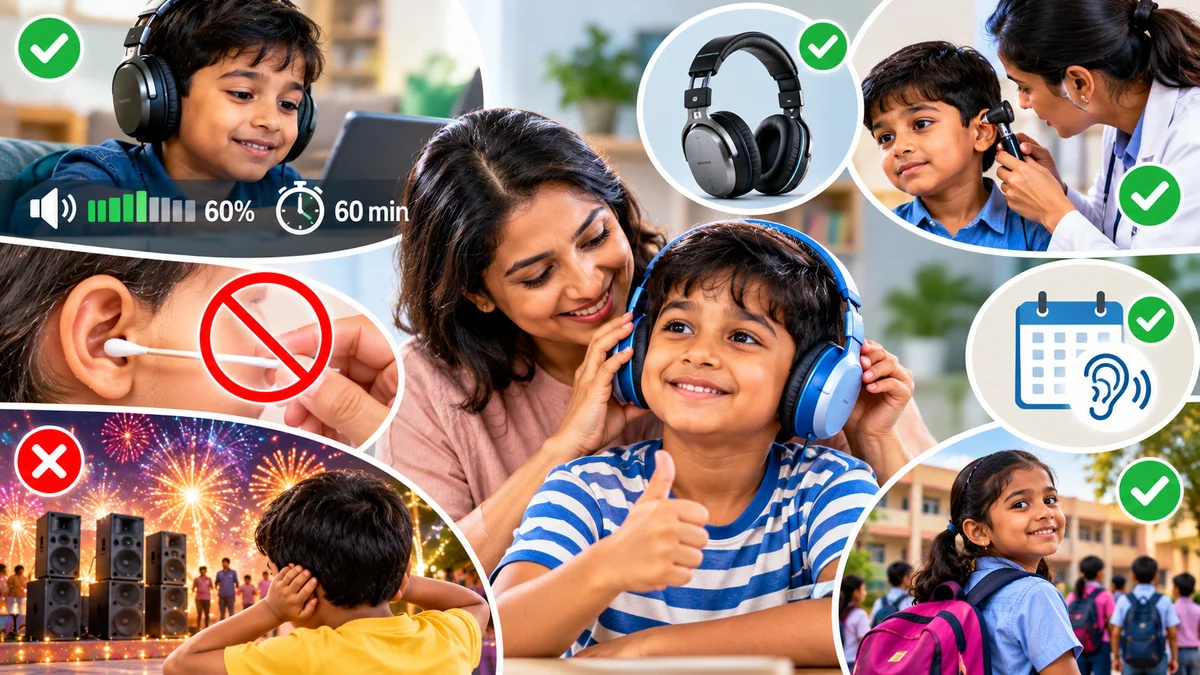
How Parents Can Protect Their Child’s Hearing
Keep the volume down. A widely used guideline is to keep headphones at no more than 60 percent volume for no more than 60 minutes at a time, then take a break.
Choose comfortable headphones. Over-ear headphones with volume control are generally better than tiny earbuds pushed deep into the ear.
Treat ear infections promptly. Do not ignore ear pain, discharge or repeated colds that affect the ears.
Never insert objects into the ear. Cotton buds, pins and sticks can damage the ear canal and eardrum.
Limit exposure to loud sounds such as firecrackers, loud speakers at celebrations and very loud toys.
Schedule regular hearing checks, especially before the school year starts.
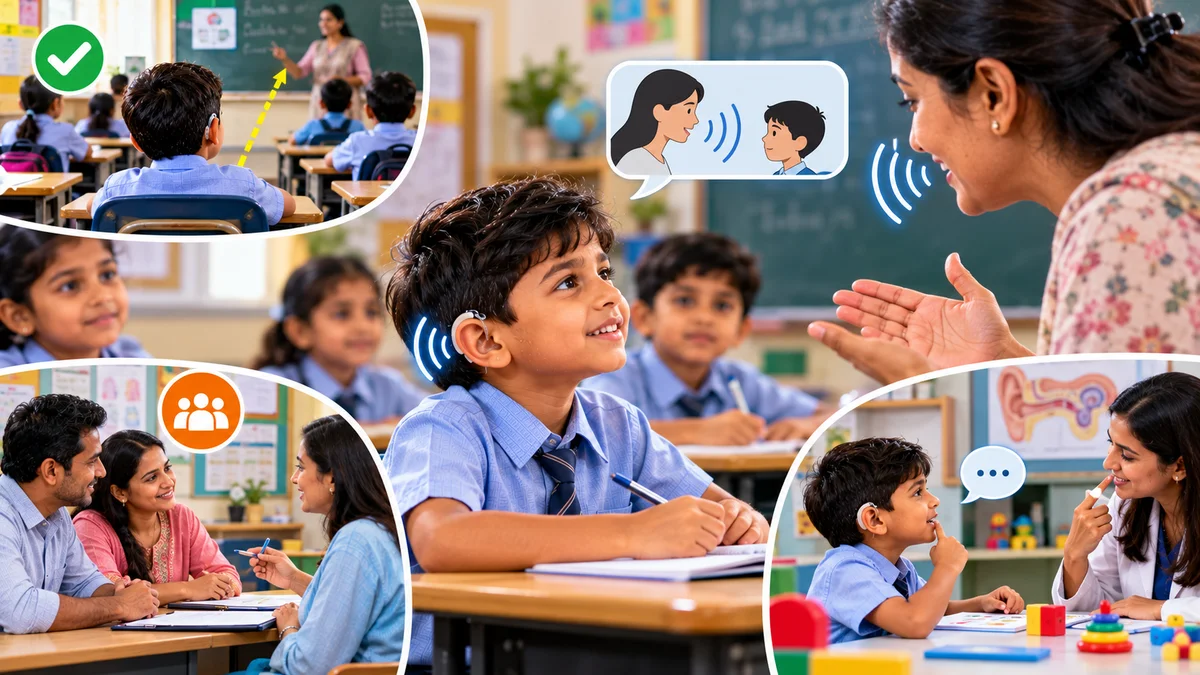
Helping Your Child in the Classroom
If your child is diagnosed with hearing loss, simple steps can make a big difference:
Ask the teacher to seat your child near the front, away from noisy corners
Request that instructions be given facing the child, with clear speech
Keep communication open between parents, teachers and the hearing professional
Follow through with recommended therapy, devices or medical care
Book a Hearing Check at VR Speech and Hearing Clinic
At VR Speech and Hearing Clinic, Vilas Rathod, BASLP, helps children and families with hearing evaluation, speech and language concerns, and guidance for better communication. If your child shows any warning signs, or if it has been a while since their last hearing check, do not wait for report cards to raise the alarm.
Good hearing helps your child learn, speak, play and grow with confidence. Make a hearing check the first item on your back-to-school list.
FAQs
1. At what age should a child’s hearing be tested?
Hearing can be checked at any age, even in newborns. For school-going children, a hearing check before starting school and then at regular intervals is a good habit. Test immediately if you notice any warning signs.
2. How do I know if my child has hearing loss?
Common signs include frequently asking for repetition, high TV volume, not responding to their name, delayed speech, poor attention in class and falling grades. A hearing evaluation is the only reliable way to confirm.
3. Can headphones and earphones damage a child’s hearing?
Yes. Listening at high volume for long periods can damage the delicate inner ear. Keep volume moderate, limit listening time and give the ears regular breaks.
4. Can ear infections cause hearing loss in children?
Yes. Ear infections and fluid in the middle ear can reduce hearing, often temporarily. Repeated or untreated problems can affect hearing and speech development, so see a professional if infections keep returning.
5. Is a child’s hearing test painful?
No. Hearing tests are safe, gentle and painless. For younger children, tests are designed as simple games.
6. Can hearing problems affect my child’s studies?
Yes. Children who cannot hear clearly may miss instructions, learn language more slowly, struggle with reading and spelling, and lose confidence in class.
7. Does hearing loss run in families?
Some types do. If there is a family history of hearing loss, early and regular hearing checks are recommended for your child.
8. What can be done if my child has hearing loss?
Depending on the cause and degree, options may include medical treatment, hearing devices, speech and language therapy and classroom support. Early diagnosis gives the best results.