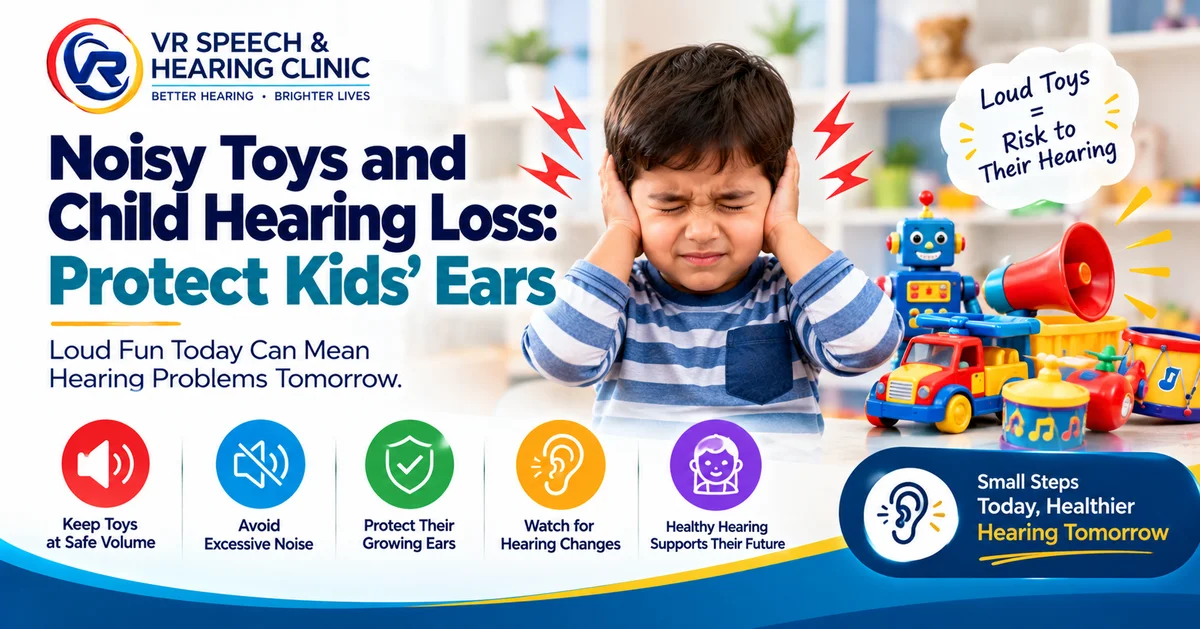
Noisy Toys and Child Hearing Loss: Protect Kids' Ears
How Noisy Toys Can Harm Your Child's Hearing: A Parent's Guide
When most people think of hearing loss, they picture grandparents turning up the television. The truth is that loud sound affects children too, and one of the most overlooked sources is sitting right in the toy box.
Electronic toys with sirens, buzzers and music are designed to grab attention, and children usually play with them just inches from their ears. Inside the inner ear are tiny sensory hair cells that pick up sound. Repeated exposure to loud noise can damage these cells, and once they are damaged they do not grow back. That is why prevention matters far more than treatment when it comes to noise-related hearing loss in children.
At VR Speech and Hearing Clinic, Vilas Rathod, BASLP, regularly meets parents who want to protect their child's hearing without taking the fun out of playtime. This guide shows you how.
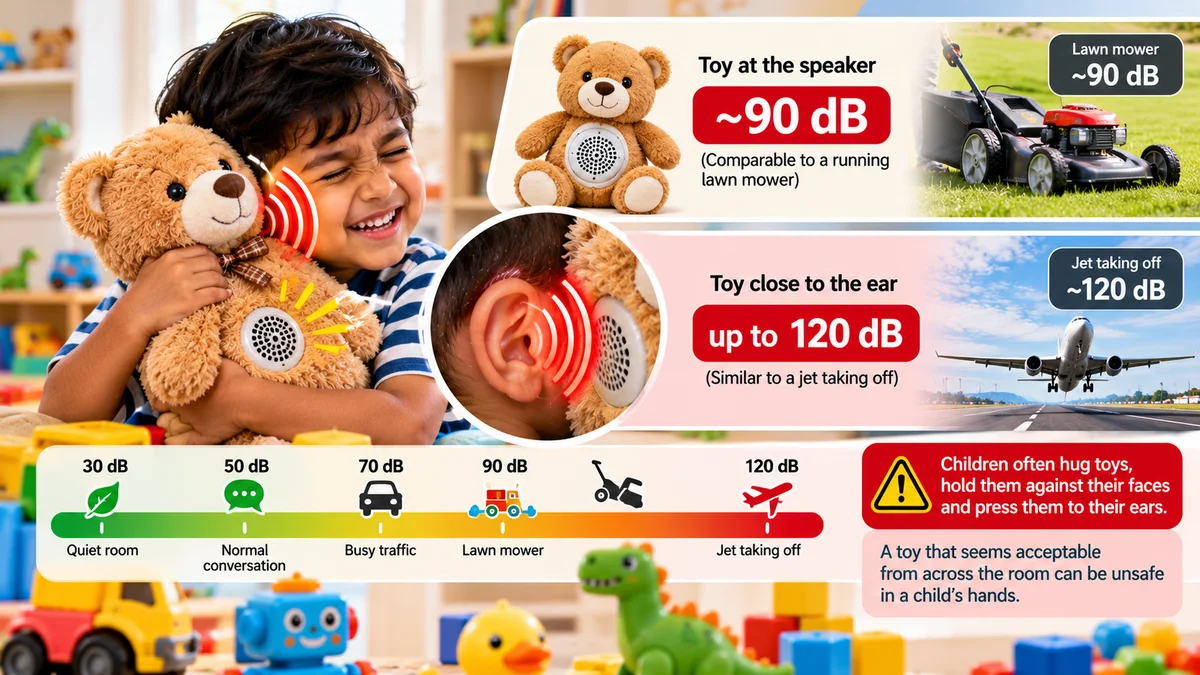
How loud are children's toys, really?
Many popular toys can produce around 90 decibels at the speaker, which is comparable to a running lawn mower. Sound at this level is the kind that adults would normally protect their ears from.
The real problem is distance. Children hug toys, hold them against their faces and press them to their ears. At that range, the sound reaching the ear can climb as high as 120 decibels, similar to a jet taking off. A toy that seems acceptable from across the room can be unsafe in a child's hands.
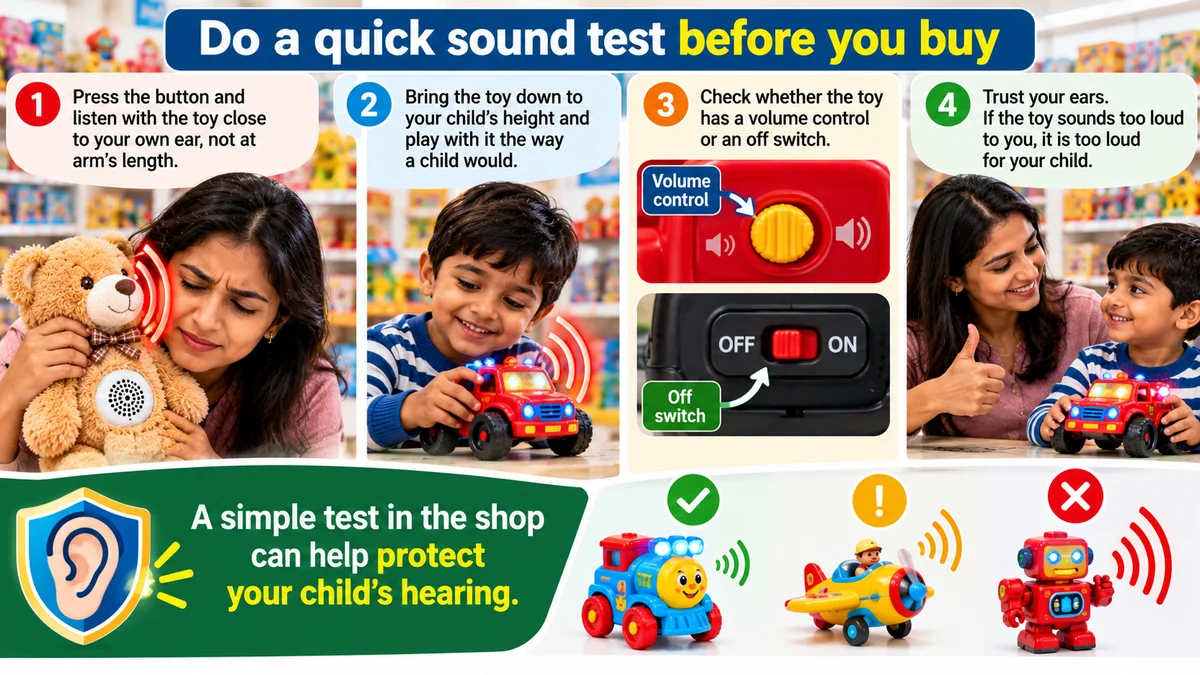
Do a quick sound test before you buy
A child's ears are far more delicate than ours. A simple test in the shop can save you a lot of worry later:
Press the button and listen with the toy close to your own ear, not at arm's length.
Bring the toy down to your child's height and play with it the way a child would.
Check whether the toy has a volume control or an off switch.
Trust your ears. If the toy sounds too loud to you, it is too loud for your child.
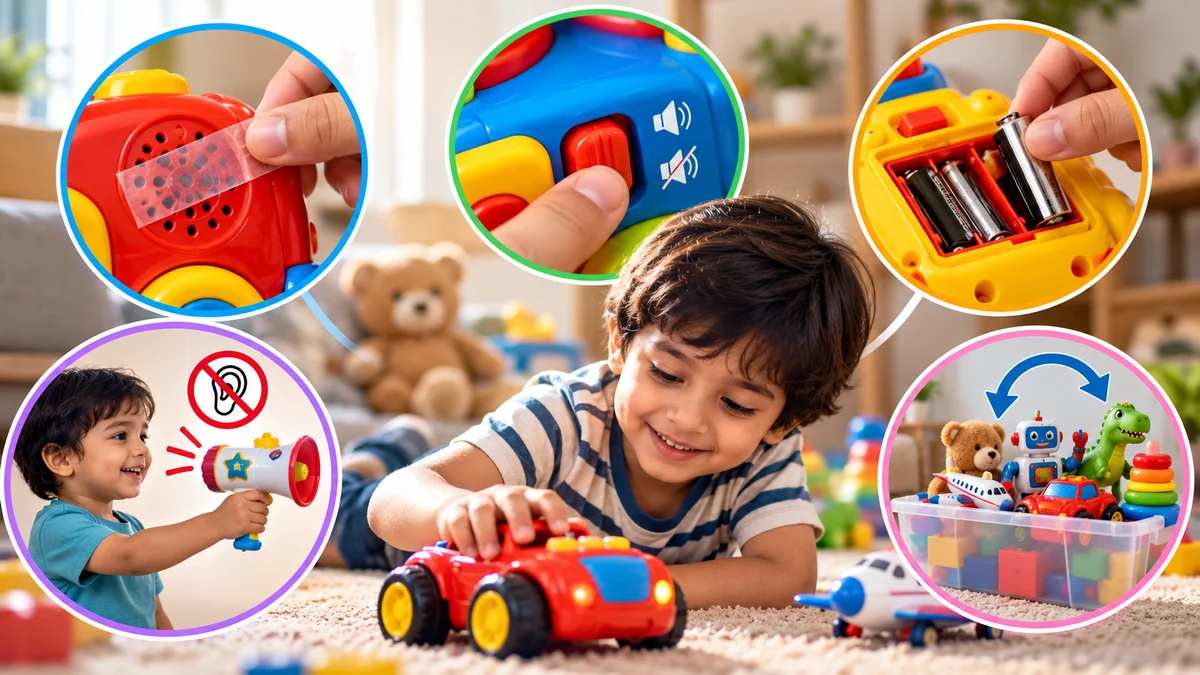
Easy ways to make noisy toys quieter
You do not have to throw away every loud toy. A few small changes can make playtime much safer:
Cover the speaker with a strip of clear tape to soften the sound.
Turn the volume down or switch the sound off for part of playtime.
Take the batteries out of toys that are not being used.
Teach your child to keep sound-making toys away from their ears.
Rotate toys so that the loudest ones do not stay in constant use.
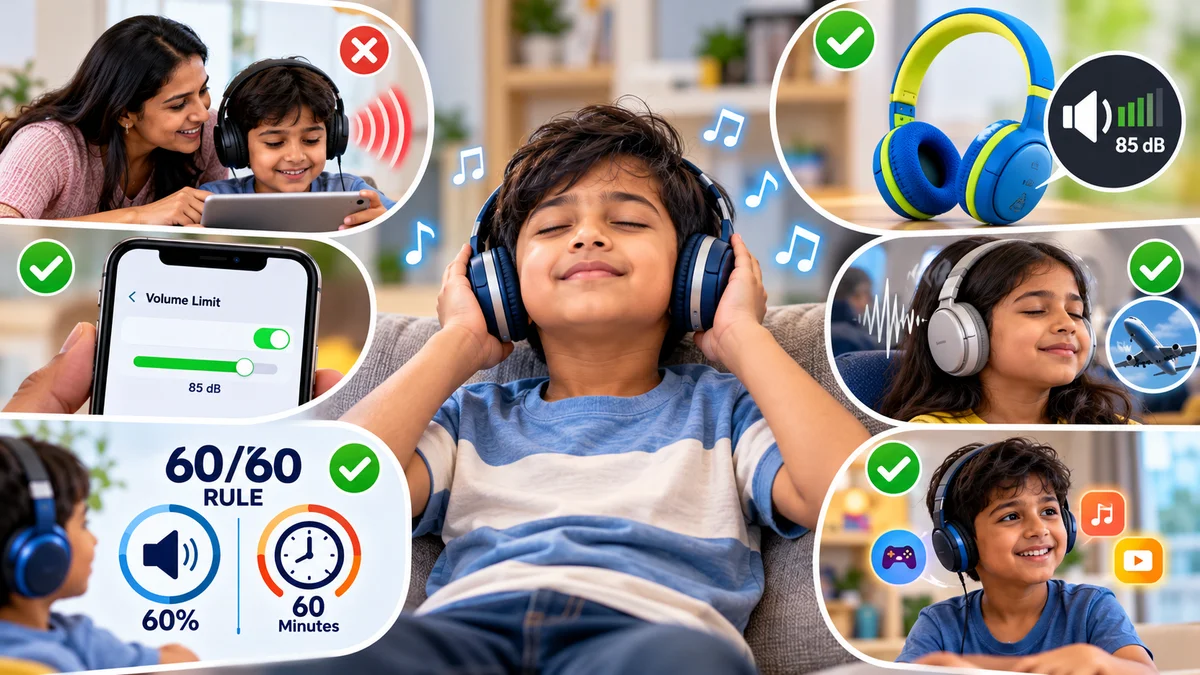
Keep headphones and earphones at a safe level
Children and teenagers often spend hours with music, videos and games playing through earphones. Here is how to keep that habit ear-friendly:
Stand next to your child while they listen. If you can clearly hear the sound leaking out, the volume is too high.
Choose volume-limiting headphones. Most are set to stay around 85 decibels, a level generally considered safe for up to eight hours of listening.
Switch on the volume limit setting found on many smartphones and tablets.
Consider noise-cancelling headphones or well-fitting earbuds, because they block background noise and let your child listen at a lower volume.
Follow the 60/60 habit: keep volume at no more than 60 percent and take a listening break after every 60 minutes.
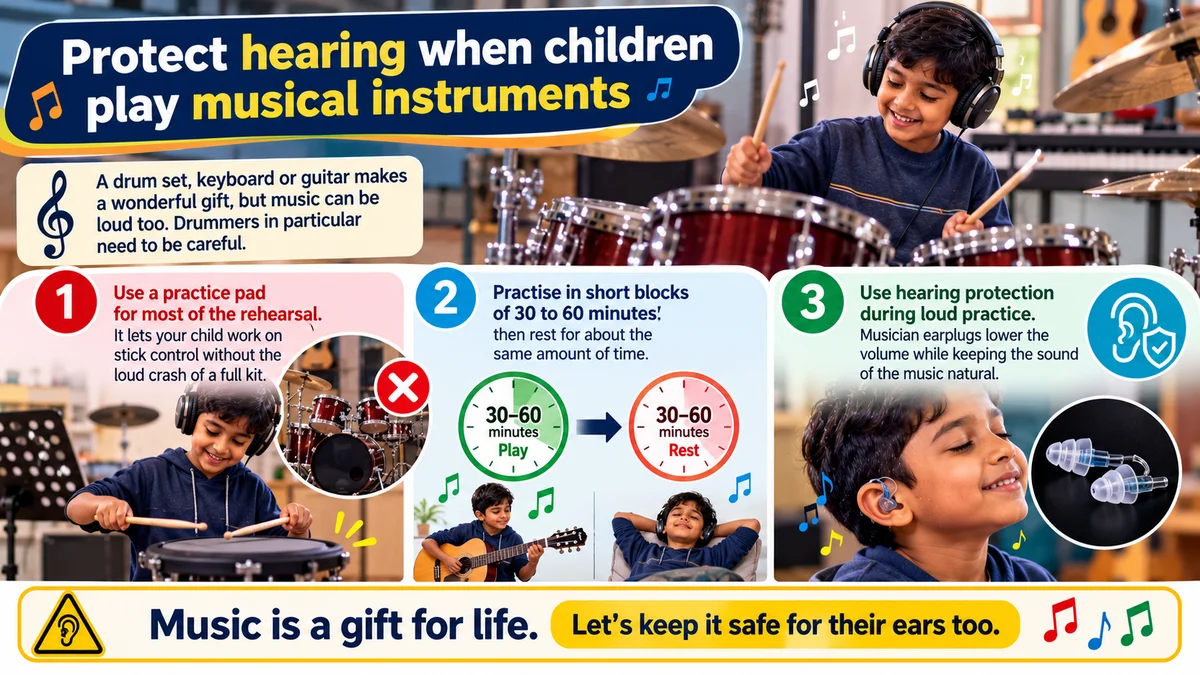
Protect hearing when children play musical instruments
A drum set, keyboard or guitar makes a wonderful gift, but music can be loud too. Drummers in particular need to be careful.
Use a practice pad for most of the rehearsal. It lets your child work on stick control without the loud crash of a full kit.
Practise in short blocks of 30 to 60 minutes, then rest for about the same amount of time.
Use hearing protection during loud practice. Musician earplugs lower the volume while keeping the sound of the music natural.
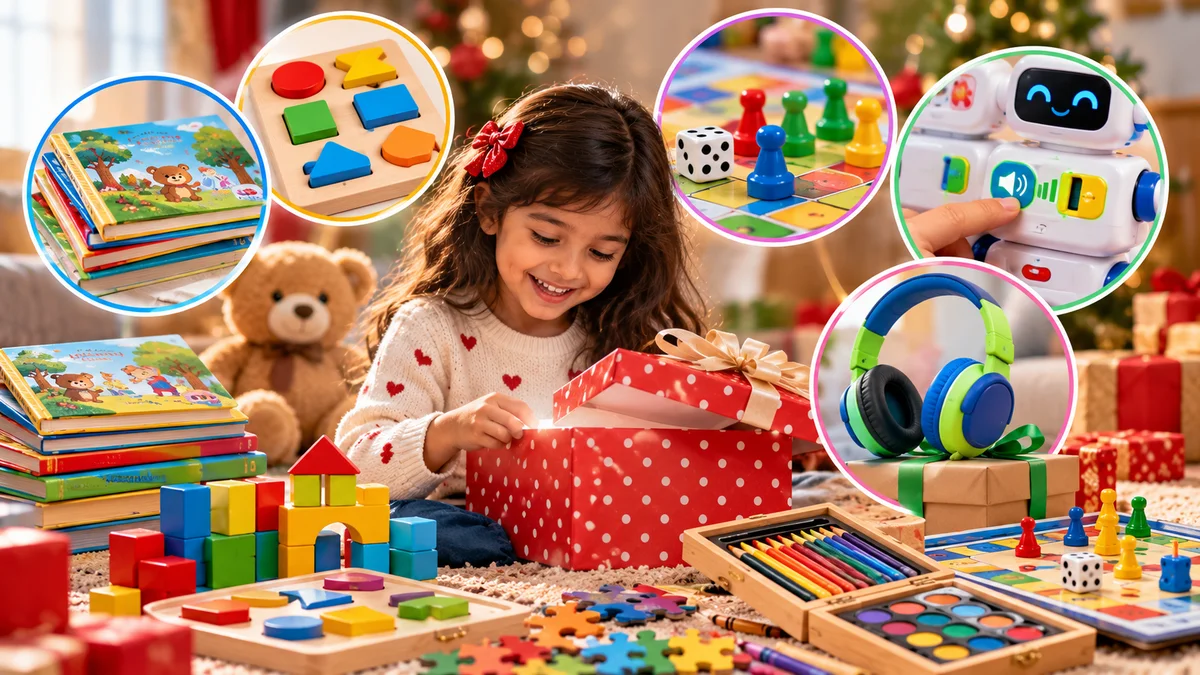
Smart, ear-friendly gift ideas
If you are shopping for birthdays or the holiday season, look for gifts that are fun without being loud: books, puzzles, building blocks, art supplies, board games, and toys that have an adjustable volume control. Volume-limiting headphones also make a practical gift for older children.
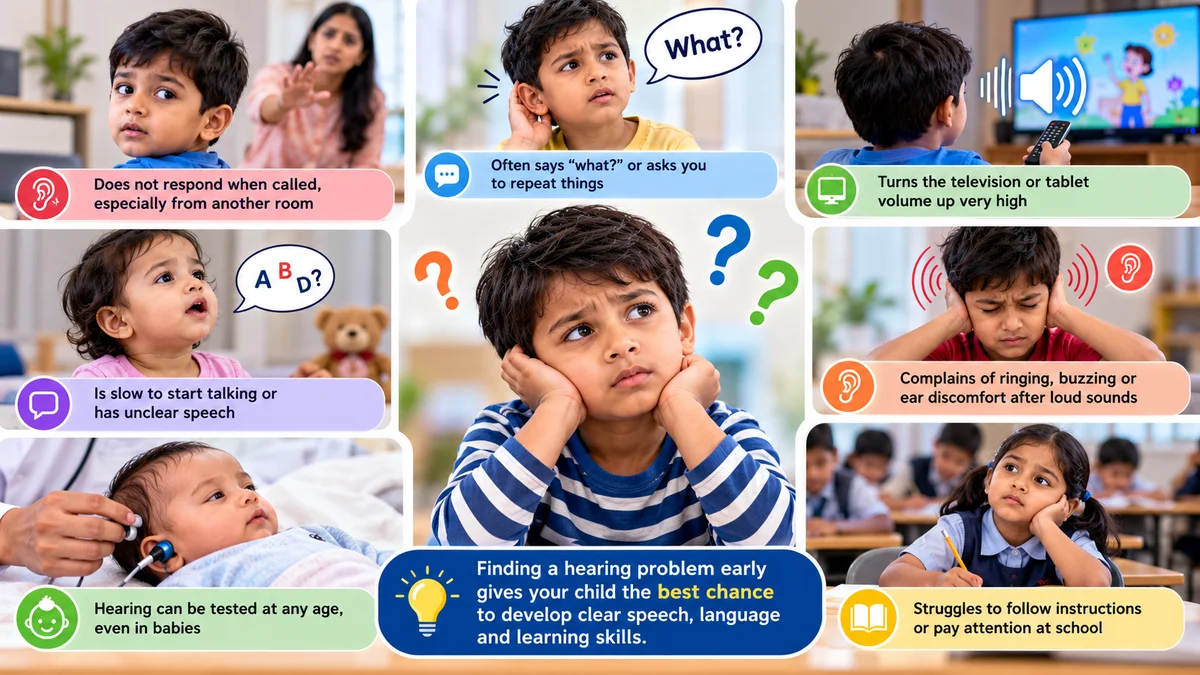
Signs your child may have a hearing problem
See a hearing specialist if you notice that your child:
Does not respond when called, especially from another room
Often says "what?" or asks you to repeat things
Turns the television or tablet volume up very high
Is slow to start talking or has unclear speech
Complains of ringing, buzzing or ear discomfort after loud sounds
Struggles to follow instructions or pay attention at school
Hearing can be tested at any age, even in babies. Finding a problem early gives your child the best chance to develop clear speech, language and learning skills.
Book a hearing check-up at VR Speech and Hearing Clinic
Protecting your child's hearing today helps them listen, speak and learn well for the rest of their life. If you are worried about noise exposure or have noticed any of the signs above, visit VR Speech and Hearing Clinic for a complete hearing evaluation and personal guidance from Vilas Rathod, BASLP.
FAQs
Can noisy toys cause hearing loss in children?
Yes. Toys that produce loud sound, especially when held close to the ears, can damage the delicate hair cells in the inner ear over time. This kind of damage is permanent, so prevention is the best protection.
How loud is too loud for a child's toy?
Many toys reach about 90 decibels at the speaker, and the level can be much higher when the toy is held at the ear. As a simple rule, if the toy sounds uncomfortably loud to you when held near your ear, it is not safe for your child.
What is a safe volume for children using headphones?
Keep the volume at or below about 60 percent and limit listening to around 60 minutes at a time before taking a break. Volume-limiting headphones that cap sound near 85 decibels add another layer of protection.
How can I make a noisy toy quieter at home?
Place clear tape over the speaker, lower the volume if the toy allows it, switch the sound off at times, or remove the batteries when the toy is not in use.
Are volume-limiting headphones worth buying for kids?
Yes. They automatically keep sound below a set level, so your child is protected even if you are not standing next to them. Use them together with sensible listening breaks.
What are the signs of hearing loss in a child?
Common signs include not responding to their name, asking people to repeat themselves, turning the volume up too high, delayed or unclear speech, and complaints of ringing in the ears.
When should I take my child for a hearing test?
Book a hearing test as soon as you notice any warning sign, or if your child has been exposed to loud noise often. Children of any age, including infants, can be tested by a hearing specialist.