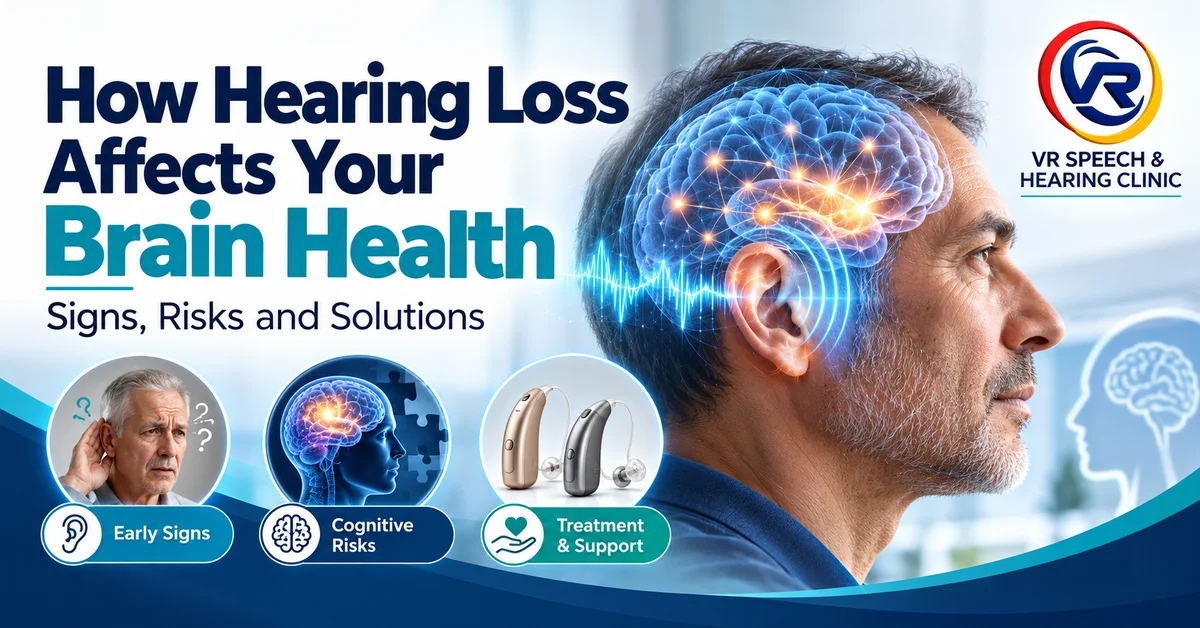
How Hearing Loss Affects Your Brain Health: Signs, Risks and Solutions
Do you often ask people to repeat themselves? Do you lose track of conversations in noisy places? Do you feel more forgetful or mentally tired than before? These could be signs of hearing loss, and they may also be connected to your brain health.
Hearing loss is often seen as a normal part of getting older, but research shows it can affect more than your ears. At VR Speech and Hearing Clinic, we want you to understand how hearing and the brain work together, and why an early hearing check is one of the simplest steps you can take to protect your long-term health.

How Are Hearing and the Brain Connected?
Your ears collect sound, but your brain makes sense of it. Every word you hear is processed by the brain, which links it to language, memory and attention. When hearing fades, the brain receives weaker signals and has to work harder to fill in the gaps. This extra effort can leave you drained and less able to focus on thinking and remembering.

What Does Research Say About Hearing Loss and Dementia?
Several large studies have found that people with hearing loss have a higher risk of cognitive decline and dementia later in life. This holds even when the hearing loss begins in midlife.
Experts do not yet know the exact reason, but there are two main explanations:
1. Changes in the brain. Long-term hearing loss may affect the temporal lobe, the part of the brain that handles sound, language and memory. Some studies suggest this area may shrink when it is not stimulated enough.
2. Social isolation. When conversations become hard to follow, many people withdraw from family, friends and social events. Loneliness and less mental stimulation are known risk factors for memory problems.
It is important to know that hearing loss does not guarantee dementia. It is a risk factor, and one that can often be managed.
Warning Signs of Hearing Loss You Should Not Ignore
Hearing loss usually develops slowly, so many people do not notice it at first. Watch for these signs:
Difficulty following conversations, especially in crowded or noisy places
Often asking people to repeat themselves
Turning the TV or phone volume higher than others prefer
Feeling that people mumble
Trouble hearing on the phone
Ringing or buzzing in the ears (tinnitus)
Feeling tired after long conversations
Avoiding social gatherings because listening is stressful
Problems with memory or concentration
How Often Should You Get Your Hearing Checked?
Experts recommend a hearing assessment every two to three years, especially if you notice any changes. Do not wait for the problem to get worse. If you are over 50, work in a noisy environment, have a family history of hearing loss or have diabetes, regular testing is even more important.
The cause may also be simple. Sometimes hearing difficulty comes from blocked earwax, which can be safely removed by a professional. A proper hearing evaluation will tell you what is really going on.
Hearing Loss Can Be Treated
Hearing loss does not have to be accepted as a normal part of aging. Depending on the type and level of loss, treatment options include:
Safe earwax removal
Hearing aids that suit your lifestyle and hearing needs
Cochlear implants for severe to profound hearing loss
Assistive listening devices for TV, phone and group settings
Hearing counseling and listening training
Can Treating Hearing Loss Protect Your Brain?
Early evidence is encouraging. Specialists believe that improving your ability to hear may help slow cognitive decline when it is linked to hearing loss. Better hearing helps you stay connected, active and mentally engaged, all of which support a healthy brain.
Why Choose VR Speech and Hearing Clinic?
At VR Speech and Hearing Clinic, we focus on complete care for your hearing and communication. Our team offers:
Comprehensive hearing tests
Personalized hearing aid advice and fitting
Speech and language support
Friendly guidance for you and your family
We take time to explain your results in simple language and help you choose the right solution for your needs and budget.
Take the First Step Today
If you or a loved one is struggling to hear, do not wait. Book a hearing test at VR Speech and Hearing Clinic today. Hearing well today can help you stay sharp, social and independent for years to come.
This article is for general information only and is not a substitute for professional medical advice. Please consult a qualified audiologist or doctor for diagnosis and treatment.
FAQs
1. Can hearing loss cause memory problems?
Hearing loss is linked to memory and thinking difficulties. When the brain works harder to understand sound, it has less capacity for memory and attention. Social withdrawal caused by hearing difficulty can also affect brain health.
2. Does hearing loss increase the risk of dementia?
Large studies show that people with hearing loss, even in midlife, have a higher risk of developing dementia later. It is a risk factor, not a certainty, and early treatment may help.
3. What are the early signs of hearing loss?
Common early signs include asking people to repeat themselves, trouble following conversations in noisy places, raising the TV volume, ringing in the ears and feeling tired after listening for a long time.
4. How often should I get my hearing tested?
Most experts suggest every two to three years. If you notice changes in your hearing, get tested right away instead of waiting.
5. Can hearing aids help protect brain health?
Hearing aids improve sound input to the brain and make communication easier, helping you stay socially active. Research suggests that treating hearing loss may help slow hearing-related cognitive decline, though results vary from person to person.
6. Can earwax cause hearing loss?
Yes. Blocked earwax is a common and easily treatable cause of reduced hearing. A hearing specialist can check your ears and remove wax safely.
7. Is hearing loss a normal part of aging?
Hearing changes are common with age, but they are treatable and should not be ignored. Hearing aids and other solutions can greatly improve quality of life.
8. When should I visit a hearing clinic?
Visit a clinic if you have trouble hearing, ringing in the ears, frequent misunderstandings in conversations, or any sudden change in hearing. Sudden hearing loss needs urgent medical attention.