Hearing Aids with Noise Cancellation for Noisy Places
If you wear hearing aids, or are thinking about getting them, you probably know the frustration of a noisy room. Conversations blur together in a busy restaurant. Traffic drowns out the person beside you. A family gathering turns into a guessing game. Background noise is the most common complaint among people with hearing loss, and it is the main reason many people feel their hearing aids “don’t work.”
The good news is that modern hearing aids with noise cancellation features are far better at handling these situations than older devices. At VR Speech and Hearing Clinic, we help patients every day find the right technology for the places where they struggle most. This guide explains how noise cancellation works, which features to look for, and how to choose the right hearing aid for noisy environments.
Why Is Background Noise So Hard When You Have Hearing Loss?
A healthy ear and brain are excellent at separating speech from noise. This is the “cocktail party effect”: you can focus on one voice while many others are talking.
Hearing loss weakens this ability. Damage to the inner ear, especially to the tiny hair cells that detect sound, makes it harder to pick out the fine details of speech, particularly high-pitched consonants like s, f, t and k. When these sounds are lost, background noise easily covers what remains.
Simply making everything louder does not solve the problem. A basic amplifier raises speech and noise together, which can make crowded places even more tiring. This is where noise cancellation and advanced sound processing make the difference.
What Does “Noise Cancellation” Mean in Hearing Aids?
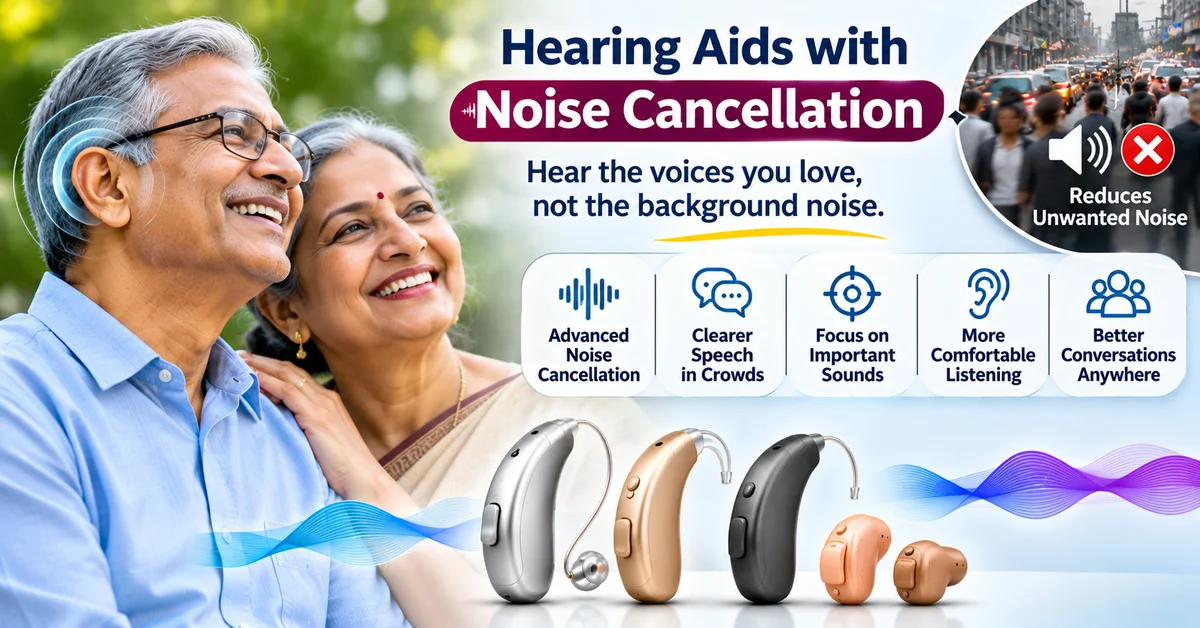
The term can be misleading. Unlike noise-cancelling headphones, which create an opposing sound wave to cancel noise, hearing aids must still let you hear your surroundings safely. Instead, hearing aids use digital processing to reduce unwanted sounds and highlight speech.
In practice, “noise cancellation” in hearing aids usually refers to a group of technologies working together:
Digital noise reduction
Directional microphones
Speech enhancement algorithms
Wind and impulse noise management
Artificial intelligence and machine learning
Together, these features analyze the sound around you hundreds of times per second and decide what to boost and what to soften.
Key Noise Cancellation Features to Look For
1. Digital Noise Reduction
Digital noise reduction identifies steady, non-speech sounds, such as the hum of an air conditioner, a fan or engine noise, and lowers their volume. Speech has a distinct rhythm and pattern, so the hearing aid can tell it apart from constant background sound. The result is a calmer, more comfortable listening experience, especially in cars, offices and public transport.
2. Directional Microphones
Most modern hearing aids have two or more microphones on each device. By comparing the sound arriving at each microphone, the hearing aid can focus on what is in front of you, usually the person you are talking to, and reduce sounds from the sides and behind. Adaptive directionality goes a step further, automatically adjusting the focus as the noise source moves.
3. Binaural Processing
Advanced hearing aids communicate wirelessly with each other, sharing information between your left and right ears. This helps the devices work as one system, improving your sense of where sound is coming from and giving you a clearer signal in crowded settings. For people with hearing loss in both ears, this can improve speech understanding in noise noticeably.
4. AI and Deep Neural Network Technology
The newest generation of hearing aids uses artificial intelligence trained on millions of real-world sound samples. These systems can separate speech from noise with more precision than traditional methods. They adapt to restaurants, streets, concerts and quiet rooms automatically, so you do not need to adjust settings constantly.
5. Wind Noise Reduction
Wind blowing across a hearing aid microphone can create loud, irritating rushing sounds. Wind noise management detects this and reduces it, which is valuable for people who walk, cycle, play golf or spend time outdoors.
6. Impulse Noise Protection
Sudden loud sounds, like dishes clattering, a door slamming or a car horn, can be uncomfortable. Impulse noise control softens these sharp sounds quickly without affecting speech.
7. Speech-in-Noise Programs
Many devices include dedicated programs for challenging environments. These can be adjusted by your audiologist or switched on through a smartphone app, giving you extra control in places like restaurants, meetings or events.
Hearing Aid Styles and Noise Performance
Style affects comfort, but also how well noise features work.
Behind-the-ear (BTE) and receiver-in-canal (RIC) models: These have more room for multiple microphones and larger batteries, so they usually offer the strongest directional and noise reduction performance. They are a popular choice for people who struggle in noisy settings.
In-the-ear (ITE) models: These sit in the outer ear and can provide good noise management with a more discreet look, depending on the technology level.
Completely-in-canal (CIC) and invisible models: These are very discreet, but their small size can limit microphone options and directional features. They are better suited to quieter lifestyles.
Your audiologist can help you balance appearance, comfort and performance based on your hearing test results and daily routine.
Technology Levels: Do You Need Premium?
Hearing aids are usually offered in basic, mid-range and premium levels. The difference often lies in how many listening environments the device can recognize and how precisely it handles noise.
If you spend most of your time at home in quiet conversation, a basic or mid-level device may be enough. If you regularly attend social events, work in an open office, eat out often, travel or enjoy outdoor activities, a higher technology level usually delivers a more comfortable and effective experience in noise. The right choice depends on your lifestyle, your degree of hearing loss and your budget, which is why a personal consultation matters.
Beyond the Device: Fitting and Programming Matter
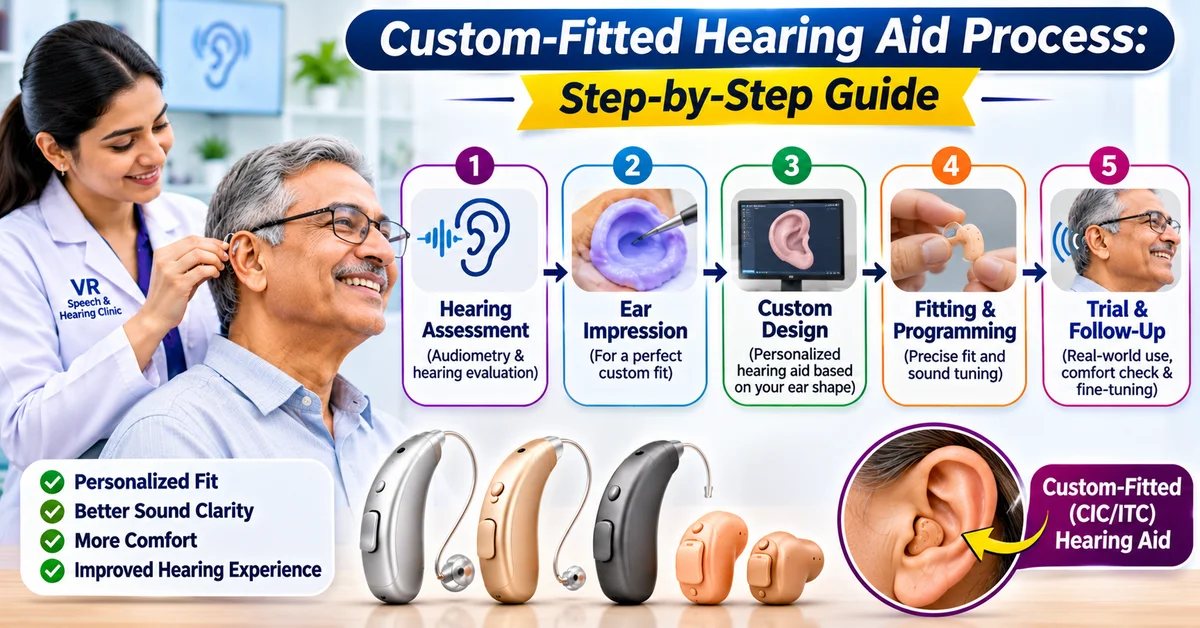
Even the best hearing aid will disappoint if it is not set up correctly. Professional fitting is just as important as the technology inside the device. A qualified audiologist will:
Perform a full hearing evaluation, including speech-in-noise testing
Choose a style and technology level suited to your needs
Program the device based on your individual hearing profile
Verify the fit using real-ear measurements
Fine-tune settings after you have worn the device in real-life situations
Follow-up visits are essential. Your brain needs time to adjust to hearing sounds it has been missing, and small adjustments in the first weeks can greatly improve comfort in noisy settings.
Practical Tips for Hearing Better in Noisy Places
Technology works best when combined with smart habits:
Choose your seat wisely. In restaurants, sit with your back to a wall and face the person you want to hear.
Face the speaker. Seeing lips and facial expressions helps your brain fill in missing sounds.
Reduce noise sources. Ask for a quieter table or move away from speakers, kitchens and busy doorways.
Use your smartphone app. Many hearing aids let you adjust volume, choose programs or focus direction on the go.
Consider accessories. Remote microphones and streaming devices can send a speaker’s voice directly to your hearing aids in difficult settings.
Give yourself time. Adapting to new hearing aids takes weeks. Wear them consistently, even in quiet settings.
Who Can Benefit from Noise Cancellation Hearing Aids?
These devices can help people with mild to profound hearing loss, especially those who:
Struggle to follow conversations in restaurants or at gatherings
Work in busy offices, classrooms, shops or factories
Travel often by train, plane or car
Attend meetings, worship services or social events
Feel tired after a day of listening effort
Are older adults who want to stay socially active
If you often say “I can hear, but I can’t understand,” that is a classic sign that noise is affecting your speech clarity, and an audiology assessment can help.
Why Choose VR Speech and Hearing Clinic?
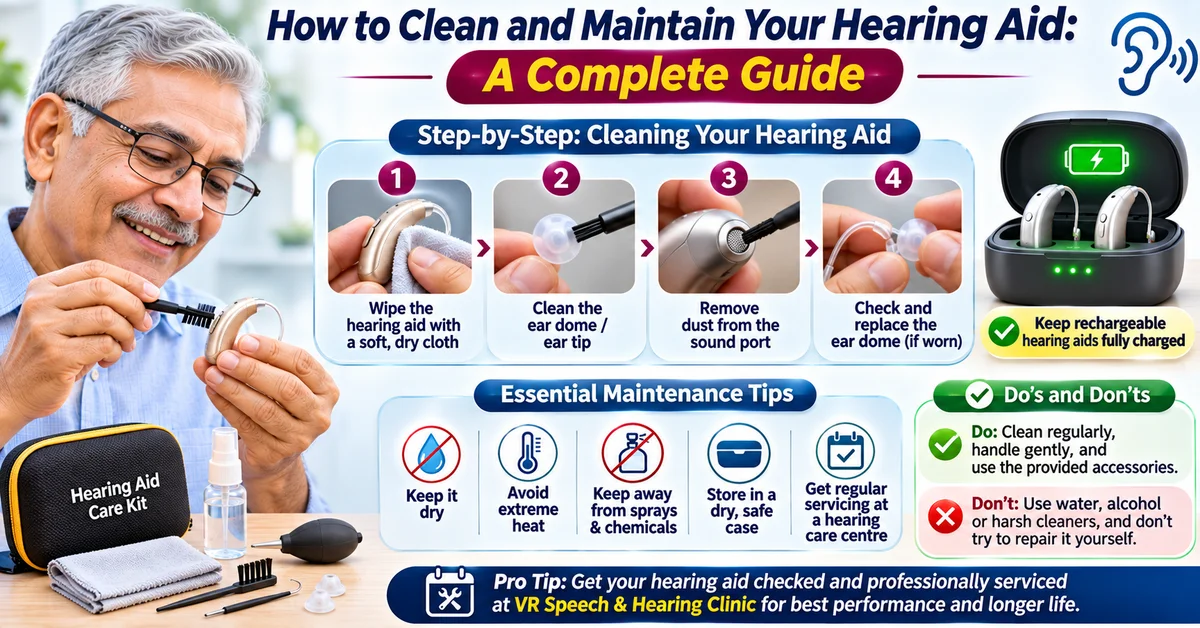
At VR Speech and Hearing Clinic, we focus on solutions that fit real life. Our team understands that hearing well in a quiet clinic is very different from hearing well in a crowded market, a family celebration or a busy workplace. That is why we take time to understand your daily environments before recommending any device.
We offer comprehensive hearing assessments, personalized hearing aid selection, precise fitting and programming, and ongoing support. Our goal is not just to make sounds louder, but to help you understand speech clearly, comfortably and confidently wherever you are.
Take the Next Step
Hearing aids with noise cancellation can transform how you experience restaurants, travel, work and social life. You do not have to avoid noisy places or settle for constant frustration. Schedule a hearing evaluation at VR Speech and Hearing Clinic to find out which technology is right for you, and start enjoying conversations again, even when the world around you is loud.
FAQs
1. Do hearing aids really cancel background noise?
Hearing aids do not eliminate all noise, but they reduce it significantly using digital noise reduction, directional microphones and AI processing. This makes speech clearer and listening less tiring.
2. What is the best hearing aid for noisy environments?
The best option depends on your hearing loss, lifestyle and budget. Devices with multiple microphones, binaural processing and AI-based speech enhancement generally perform best. An audiologist can recommend the right model after testing.
3. Can hearing aids help in restaurants?
Yes. Directional microphones and speech-in-noise programs are designed for restaurants and similar settings. Combined with good seating choices, they can greatly improve understanding.
4. Are noise cancellation hearing aids worth the extra cost?
For people who often face noisy situations, higher technology levels usually provide better clarity and comfort. If your lifestyle is mostly quiet, a lower level may be enough.
5. Will hearing aids make background noise louder?
Basic or poorly fitted devices can amplify noise along with speech. Modern, properly programmed hearing aids are designed to manage noise so it does not overwhelm speech.
6. How long does it take to adjust to hearing aids in noisy places?
Most people need a few weeks to months. Wearing the devices consistently and attending follow-up appointments helps your brain adapt and allows fine-tuning.
7. Can I control noise settings myself?
Many hearing aids can be adjusted through a smartphone app or built-in controls, letting you change programs, volume and focus in different environments.
8. Do I need a hearing test before buying hearing aids?
Yes. A professional hearing evaluation identifies the type and degree of hearing loss, which is essential for choosing and programming the right device.