Hearing Aids
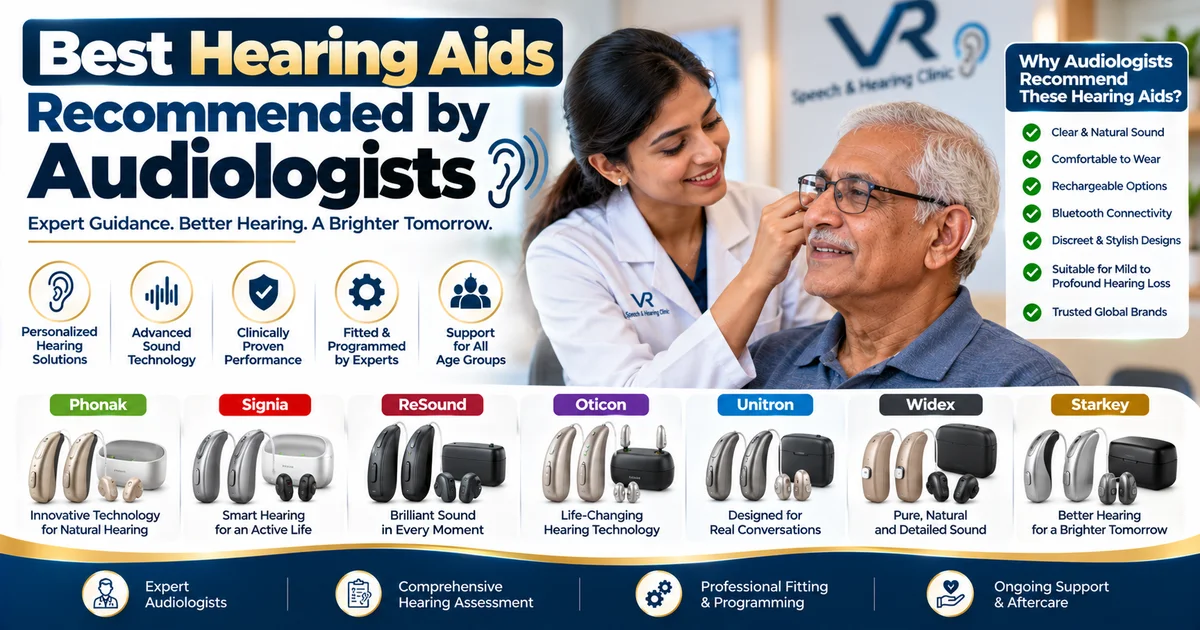
Best Hearing Aids Recommended by Audiologists
Best Hearing Aids Recommended by Audiologists: A Complete Buying GuideChoosing a hearing aid is one of the most important decisions you can make for your hearin
Trusted hearing aids for Indian Army veterans in Aurangabad. Visit VR Speech and Hearing Clinic, Cidco, rated 5 stars by 1,124 Google reviewers.
We'll call you back. Your details are safe with us.
 -7%
 -27%
 -27%-46%
Years of service in the Indian Army often come with a quiet cost: your hearing. Rifle ranges, artillery fire, generators, aircraft, armoured vehicles and long postings near heavy machinery all take a toll on the ears. If you are a veteran in Aurangabad, now officially Chhatrapati Sambhajinagar, and you keep asking people to repeat themselves, turn the television up or avoid family gatherings, you are not alone, and you do not have to put up with it.
This guide explains why hearing loss is so common among ex-servicemen, what a proper hearing assessment involves, which hearing aids suit veterans, and how VR Speech and Hearing Clinic in Cidco helps veterans and their families hear clearly again.
Noise-induced hearing loss is one of the most widely reported health issues among people who have served in the armed forces. Sudden loud sounds such as gunfire and explosions can damage the delicate hair cells in the inner ear. Long exposure to engines, helicopters and heavy machinery does the same, only more slowly. Because the damage builds up gradually, many veterans do not notice it until years after retirement.
Age adds to the problem. Natural age-related hearing loss often combines with earlier noise damage, so a veteran in his sixties may hear like someone much older. The good news is that modern hearing aids are small, comfortable and far more advanced than the bulky devices many people remember.
Hearing loss is not only about missing sounds. When the brain has to work harder to decode speech, you tire faster, lose patience and slowly withdraw from conversation. Many veterans say they feel left out at weddings, festivals and reunions, where noise and many voices make listening even harder. Family members feel the strain too, as every conversation turns into repetition and raised voices.
Research has also linked untreated hearing loss with a higher risk of social isolation and memory problems in later life. Treating hearing loss early helps you stay sharp, independent and connected to the people who matter most.
You do not need to wait until conversation becomes impossible. Consider a hearing test if you notice any of these:
You often ask people to repeat themselves, especially in crowded or noisy places
Family members say the television or phone volume is too loud
You hear voices but cannot make out the words, particularly women’s and children’s voices
A ringing, buzzing or hissing sound stays in your ears
You feel tired or irritable after long conversations because listening takes so much effort
You have started avoiding social events
If you recognise two or three of these, an audiometry test is the sensible next step.
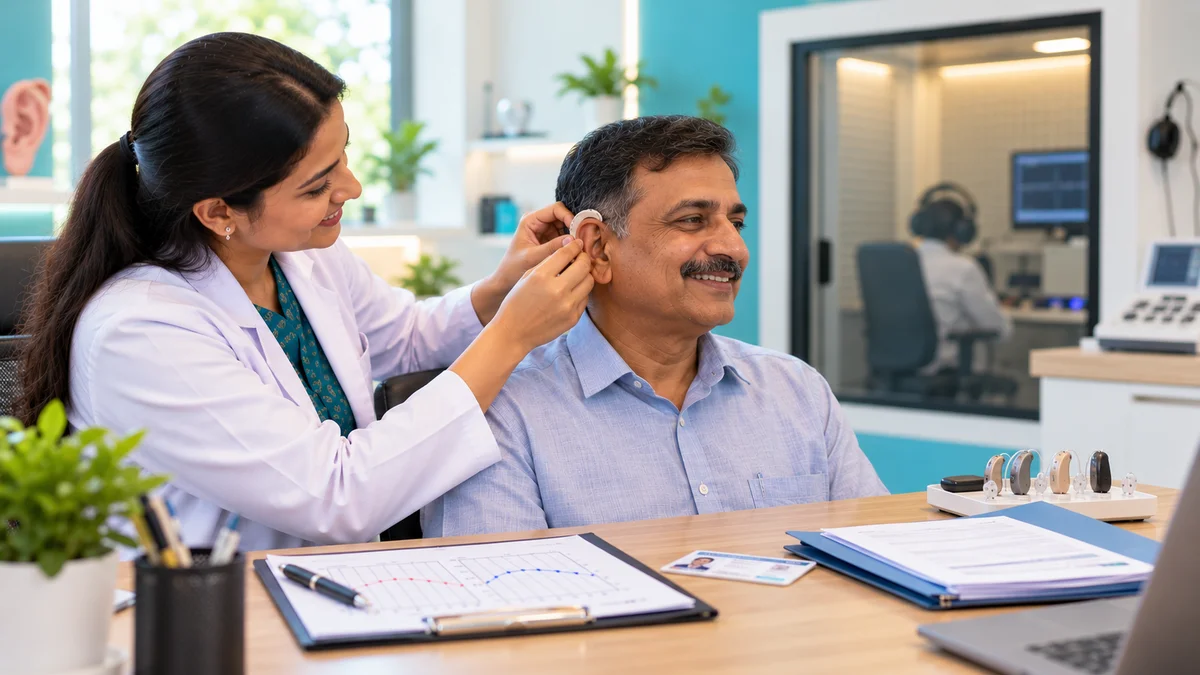
A reliable hearing aid fitting begins with a reliable diagnosis. At a specialised clinic, the process typically includes a conversation about your history, including your years of service, the kind of noise you were exposed to, and any ear problems or medicines; a careful look at the ear canal; pure tone audiometry to measure the softest sounds you can hear at different pitches; and speech audiometry to check how clearly you understand words.
These results show the type and degree of your hearing loss, and whether a hearing aid is the right solution or whether you need medical attention first. A qualified audiologist explains the findings in plain language, so you know exactly where you stand before any decision is made.
There is no single best hearing aid. The right choice depends on your hearing test, your lifestyle, your dexterity and your budget. Common styles include:
Behind-the-ear (BTE) aids are sturdy, powerful and easy to handle. They suit moderate to severe loss and are a good choice if you prefer larger, simpler controls.
Receiver-in-canal (RIC) aids are slim and discreet, with a natural sound quality. They are among the most widely fitted styles today.
In-the-ear and in-the-canal aids are custom made to sit within the ear. They suit mild to moderate loss and those who want a less visible device.
Rechargeable models remove the hassle of tiny batteries, a real benefit if you have stiff fingers or a tremor.
Many modern aids also offer noise reduction, directional microphones that focus on the person in front of you, and Bluetooth connection to a phone or television. Your audiologist will recommend what fits your hearing needs and daily routine.
Many veterans live with tinnitus, a constant ringing or buzzing sound. Hearing aids do not cure it, but amplifying outside sounds often makes tinnitus less noticeable, and some devices include soft masking sounds. Your audiologist can also discuss counselling and simple management strategies so the ringing disturbs you less, especially at night.
Many ex-servicemen in Maharashtra receive healthcare through ECHS, and it is natural to ask how this relates to hearing aids. Entitlements, empanelled facilities and approval procedures can change, so always confirm the current rules with your ECHS polyclinic before you buy. Keep your discharge book, service medical records and any earlier audiometry reports ready. They help the audiologist understand your history and may also be useful if you are pursuing disability-related claims. The clinic team is happy to answer questions about your test report and recommended device so you can make an informed decision.
Choosing a clinic is as important as choosing a device. VR Speech and Hearing Clinic in Cidco, Chhatrapati Sambhajinagar, is rated 5 stars on Google by 1,124 reviewers, a strong sign of the trust local patients place in the clinic.
Here is what veterans and their families can expect:
Patient listening: You are heard first, and your daily challenges shape the recommendation.
Evaluation before recommendation: Devices are suggested only after a proper hearing assessment.
Speech and hearing under one roof: Hearing care and speech support are available from one team, which is helpful when hearing loss affects communication.
Fitting and follow-up: Hearing aids need fine tuning, and follow-up visits help you settle in comfortably.
Respectful, unhurried service: Questions are welcome, and nothing is rushed.
The clinic is easy to reach on the second floor at Vasantrao Naik Chowk, opposite Hotel Deepali Executive, N-3, Cidco, which is convenient for veterans from across the city.
To get the most from your first visit, carry these with you:
Your ex-servicemen identity card, ECHS card and any discharge or medical documents
Earlier hearing test reports or medical board papers, if you have them
A list of the medicines you take
A family member or friend who knows how you hear at home
Bringing someone along is genuinely helpful. They can describe situations you may not notice yourself, and they can learn how to communicate better with you.
The brain needs time to adjust to sounds it has been missing. Start by wearing your hearing aids at home in a quiet room for a few hours each day, then increase the time gradually. At first, everyday sounds such as footsteps, a ceiling fan or rustling paper may seem unusually loud. This is normal and settles with regular use.
Attend your follow-up visits, because small programming adjustments make a big difference. Practise in one-to-one conversations before moving to groups, and ask family members to face you and speak clearly instead of shouting. Most people feel comfortable within a few weeks.
Simple habits keep your hearing aids working well for years. Wipe them daily with a soft, dry cloth, store them in a dry box at night, and keep them away from water, hairspray and heat. In Aurangabad, hot summers and monsoon humidity can affect electronics, so a drying case is especially useful. Replace wax guards or domes as advised, and book periodic check-ups so the device can be cleaned and checked professionally.
Even after retirement, protect your ears. Use ear protection around firing practice, generators and power tools, keep headphone volume moderate, and avoid standing close to loud speakers at functions. If you are above 50, an annual hearing check is a smart habit, just like a regular blood pressure or sugar test.
You served the nation with discipline and courage. You deserve to hear your grandchildren, your friends and your favourite music clearly. If you or a fellow veteran in your family is struggling to hear, take the first step by booking a hearing test.
VR Speech and Hearing Clinic Second Floor, Vasantrao Naik Chowk, opposite Hotel Deepali Executive, N-3, Cidco, Chhatrapati Sambhajinagar, Maharashtra 431003 Google rating: 5 stars from 1,124 reviews
Hearing well is not a luxury. It is how you stay connected, confident and independent. Visit the clinic and let an experienced team help you hear life again.
1. Where can I find hearing aids for Indian Army veterans in Aurangabad?
VR Speech and Hearing Clinic, located on the second floor at Vasantrao Naik Chowk, opposite Hotel Deepali Executive, N-3, Cidco, Chhatrapati Sambhajinagar, offers hearing tests and hearing aid fitting for veterans and their families. The clinic holds a 5-star Google rating from 1,124 reviews.
2. How do I know if I need a hearing aid?
If you often ask people to repeat themselves, struggle in noisy places, or turn up the television volume, you may have hearing loss. Only a hearing test can confirm this and show whether a hearing aid will help you.
3. Does ECHS cover hearing aids for ex-servicemen?
Coverage and procedures depend on your entitlements and the current ECHS rules, which can change. Please confirm with your ECHS polyclinic before buying a device, and bring your reports to the clinic so the team can guide you.
4. Can hearing aids help with tinnitus?
Hearing aids do not cure tinnitus, but many people find the ringing less bothersome once everyday sounds are amplified. Some devices also include masking sounds. Your audiologist can suggest the best approach.
5. How long does it take to get used to hearing aids?
Most people adjust within a few weeks. Wearing the aids a little longer each day, attending follow-up visits and practising in quiet conversations speed up the process.
6. How long do hearing aids last?
With daily cleaning, dry storage and regular check-ups, many hearing aids serve well for five years or more. Lifespan depends on the model and how carefully it is maintained.
7. Is a hearing test painful?
No. A hearing test is painless and non-invasive. You listen to soft tones and words through headphones and respond when you hear them.
Best Hearing Aids Recommended by Audiologists: A Complete Buying GuideChoosing a hearing aid is one of the most important decisions you can make for your hearin
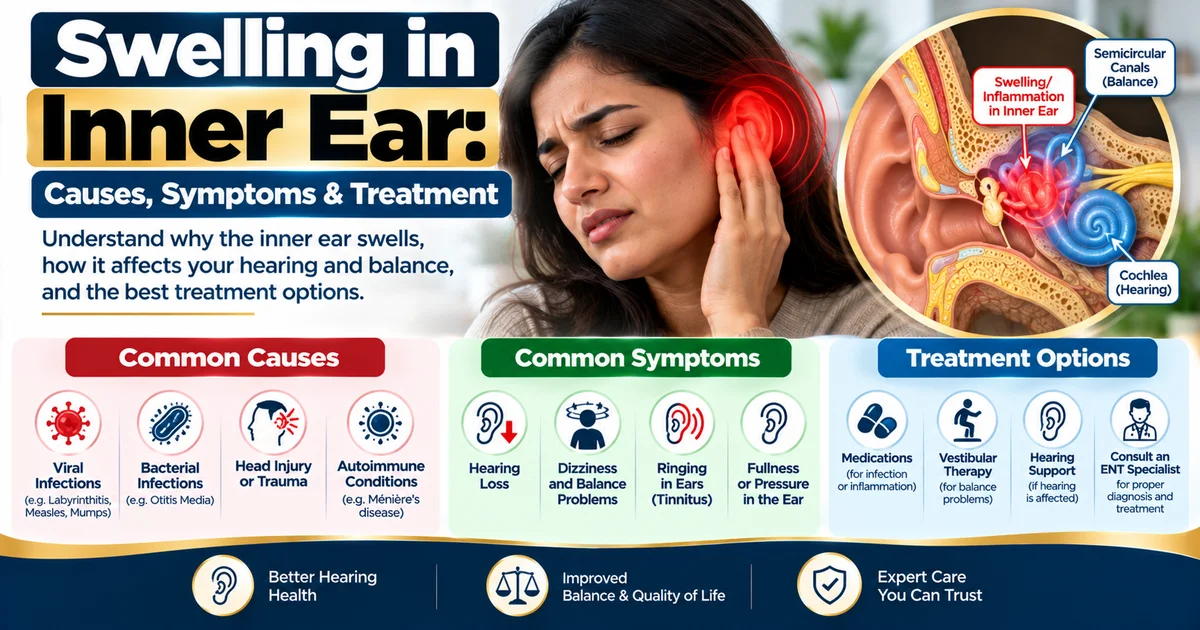
Swelling in Inner Ear: Causes, Symptoms, Diagnosis and TreatmentWaking up with a spinning room, a constant ringing in one ear, or a sudden feeling of fullness c
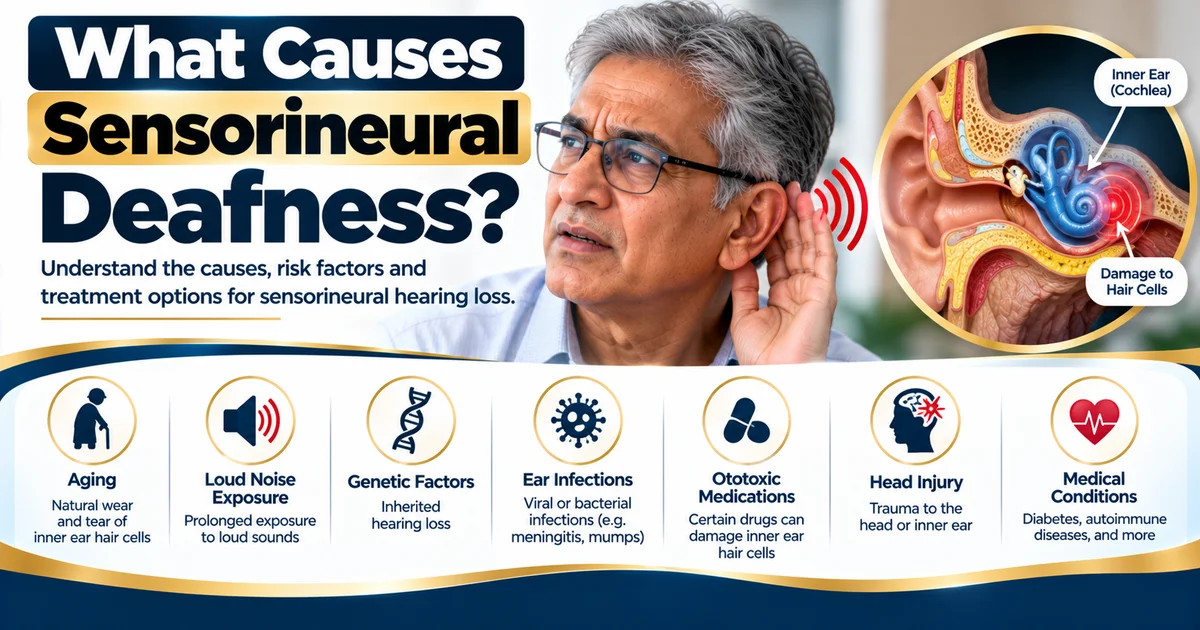
What Causes Sensorineural Deafness? Causes, Symptoms and Treatment OptionsSensorineural deafness, also known as sensorineural hearing loss (SNHL), is the most c
Enter your phone number to continue