Best Hearing Aids Recommended by Audiologists
Best Hearing Aids Recommended by Audiologists: A Complete Buying Guide
Choosing a hearing aid is one of the most important decisions you can make for your hearing, your relationships, and your independence. With so many brands, styles, and technology levels available, it is easy to feel overwhelmed. That is why so many people search for the best hearing aids recommended by audiologists before they invest.
The honest answer is that no single device is best for everyone. The right hearing aid is the one that matches your type of hearing loss, your lifestyle, your ear anatomy, and your budget, and that is fitted and programmed correctly by a qualified professional. In this guide, we explain how audiologists choose hearing aids, which brands and styles they often recommend, and what features really matter. Whether you live in Chhatrapati Sambhajinagar or elsewhere in Maharashtra, this guide will help you decide with confidence.
Why Audiologist Recommendations Matter
A hearing aid is a medical device, not a simple gadget. Hearing loss differs from person to person, and two people with the same hearing test results may still need different settings. Audiologists are trained to test hearing, diagnose the type and degree of loss, and match the right technology to each individual.
When you rely on an audiologist, you receive guidance based on clinical assessment rather than advertising. You also get professional programming, follow-up adjustments, and ongoing care, which are just as important as the device itself. In practice, a well-fitted mid-range hearing aid often performs better than a poorly programmed premium one.
How Audiologists Choose the Right Hearing Aid
Before recommending any device, an audiologist considers several factors:
Hearing test results: Pure tone and speech audiometry show how softly you hear and how clearly you understand words.
Type and degree of loss: Sensorineural, conductive, and mixed hearing loss need different solutions.
Lifestyle: A retired person at home has different needs from a teacher, driver, or professional attending noisy meetings.
Ear shape and size: The ear canal decides whether a small in-canal device or a behind-the-ear model fits comfortably.
Dexterity and vision: Tiny batteries and buttons can be difficult, so rechargeable or larger devices may suit some users.
Budget: A good audiologist explains options honestly and helps you find the best value.
Special needs: Tinnitus, phone calls, music, TV listening, and smartphone use also shape the choice.
Hearing Aid Brands Audiologists Commonly Recommend
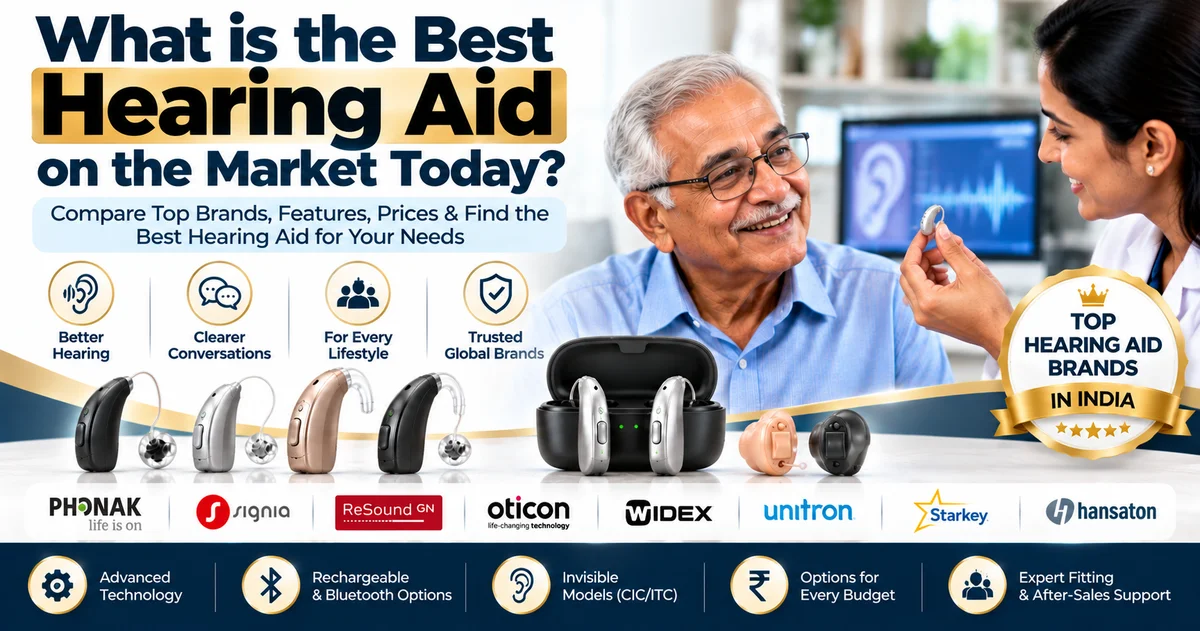
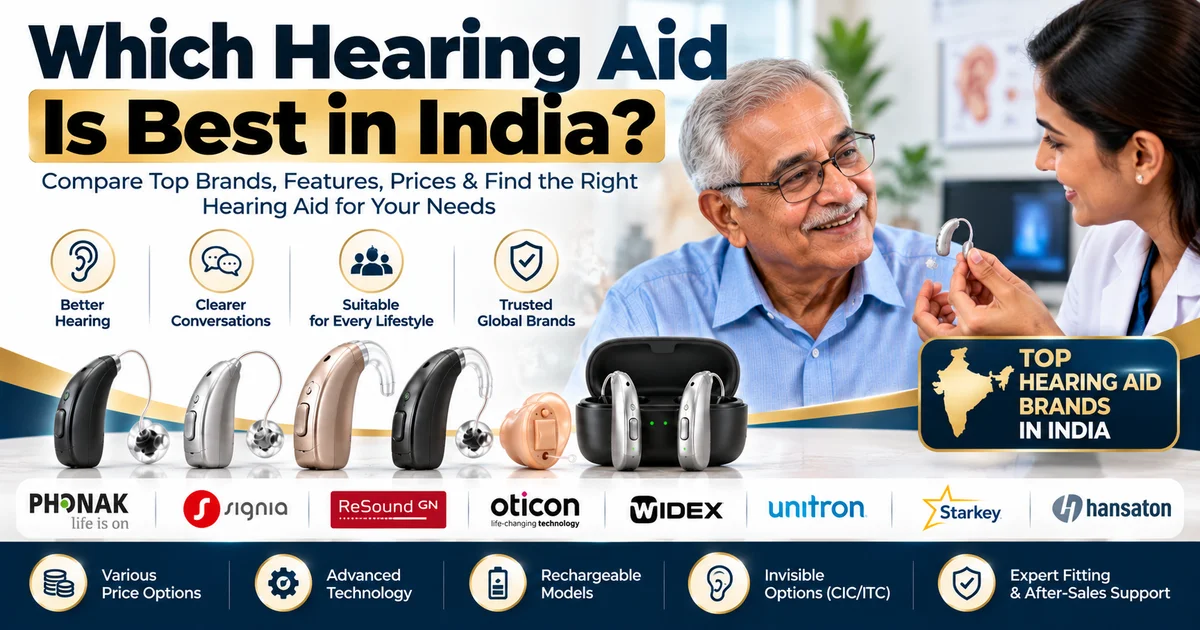
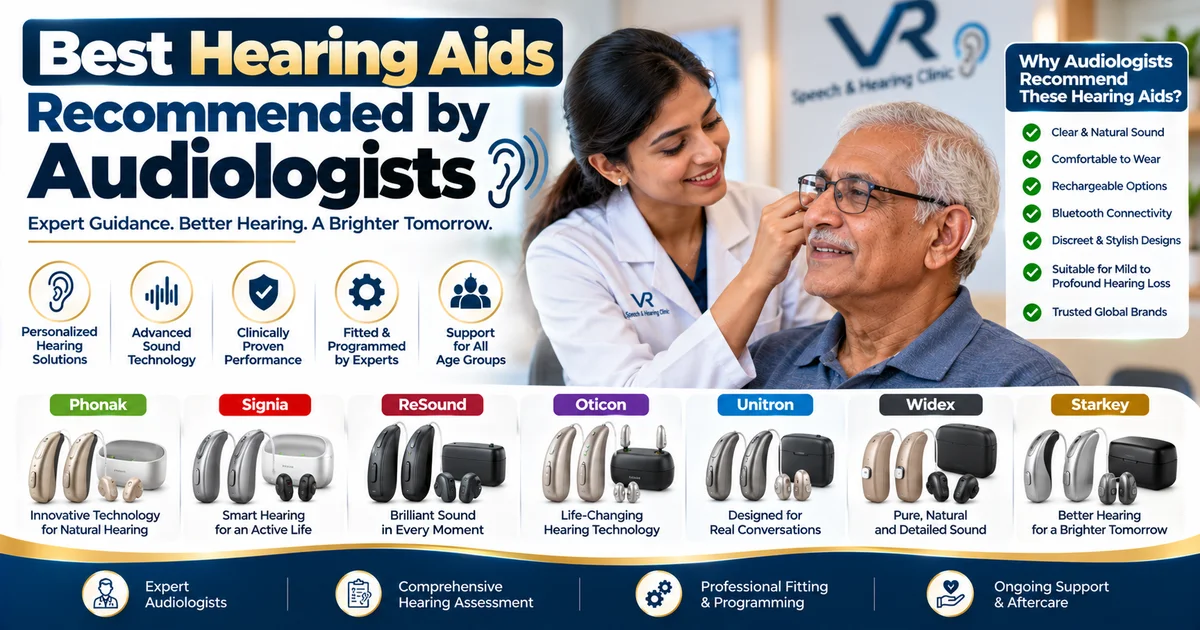
Audiologists fit products from several trusted manufacturers, and each brand has its own sound philosophy. Models are updated often, so your audiologist will suggest the most suitable current option within each brand.
Phonak: Often chosen for clear speech understanding in noisy places, a wide product range, and dependable power options for more severe hearing loss.
Oticon: Known for a natural, open listening experience that supports the brain in processing the full sound environment, which many users like in busy places such as markets and family gatherings.
Signia: Popular for natural-sounding conversation, including technology that processes your own voice separately so it does not sound strange. Stylish designs and rechargeable options add to its appeal.
ReSound: Respected for strong smartphone connectivity, easy app control, and comfortable sound quality. A good option if you stream calls, music, and videos directly to your hearing aids.
Widex: Valued for rich, natural sound that music lovers appreciate, along with tinnitus support programs for people who also hear ringing in the ears.
Starkey: Recognised for innovative features such as health and activity tracking, fall detection in selected models, and a strong range of custom in-the-ear styles.
No brand is a universal winner. A trial period lets you compare real-world performance before you decide.
Best Hearing Aid Styles Recommended by Audiologists
Style affects comfort, appearance, battery life, and power, so it matters as much as the brand.
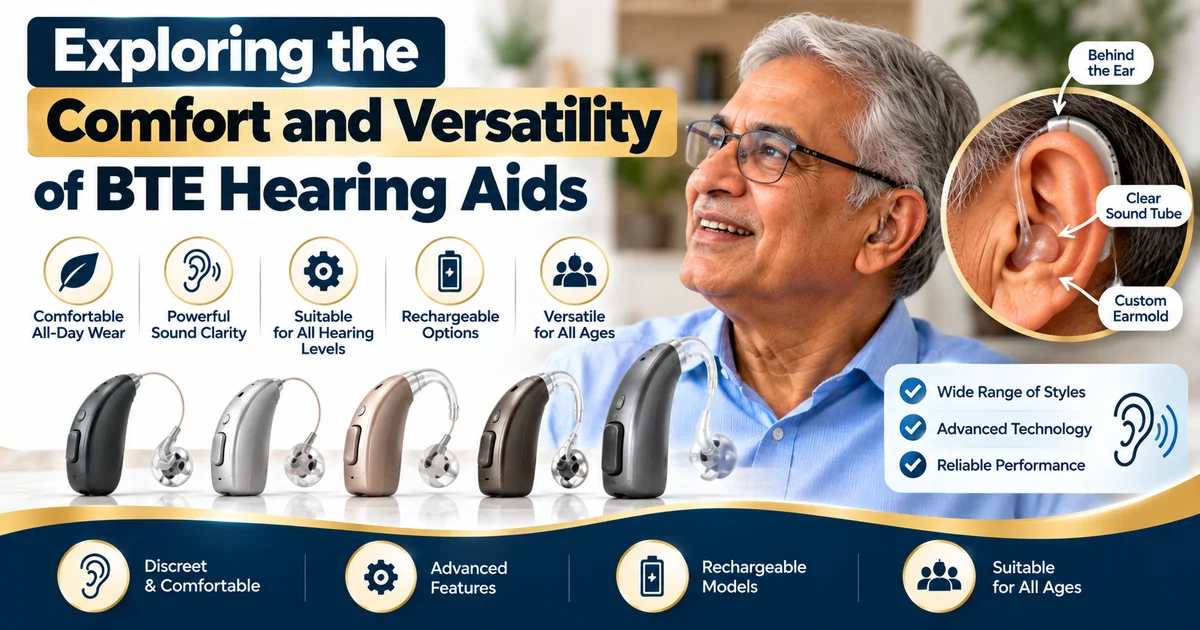
Behind-the-ear (BTE): The most versatile and powerful style. It suits mild to profound hearing loss, is easy to handle, and is commonly recommended for children and older adults.
Receiver-in-canal (RIC): A small device sits behind the ear with a thin wire to a tiny speaker in the canal. It offers natural sound with a discreet look and is among the most commonly fitted styles for mild to moderately severe loss.
In-the-ear (ITE) and in-the-canal (ITC): Custom-made to fit your ear, these are easy to wear with glasses and suit mild to moderate loss, although small controls can be harder to use.
Completely-in-canal (CIC) and invisible-in-canal (IIC): Nearly invisible and ideal if discretion matters most. They suit mild to moderate loss but may offer fewer features and shorter battery life because of their size.
Rechargeable models: Many modern hearing aids use built-in rechargeable batteries, which removes the hassle of changing tiny batteries and is especially convenient for seniors.
Features Audiologists Look For
Technology level affects how well a hearing aid performs in real life. Key features include:
Noise reduction and directional microphones: Help you focus on speech in crowded places.
Feedback control: Prevents irritating whistling.
Bluetooth connectivity: Streams calls, music, and TV, with remote adjustments through a mobile app.
Rechargeable battery: Offers a full day of use on a single charge.
Tinnitus support: Soothing sound options for ringing in the ears.
Dust and moisture resistance: Look for a good IP rating, useful during the monsoon and dusty summers.
Automatic programs: Adapt to different environments so you rarely need to adjust settings.
Best Hearing Aids by Degree of Hearing Loss
Mild loss: Discreet RIC, small ITE, or invisible styles with natural sound and basic noise management usually work well.
Moderate loss: RIC or BTE hearing aids with strong noise reduction and directional microphones are common choices.
Severe to profound loss: Power BTE models provide strong amplification, and in some cases your audiologist may discuss other options such as cochlear implants.
Children: Durable BTE models with child-safe battery doors, reviewed often as the child grows.
Seniors: Simple controls, rechargeable batteries, and a comfortable fit make daily use easier.
How Much Do Hearing Aids Cost in India?
Prices vary widely depending on brand, technology level, style, and features. As a rough guide, entry-level digital hearing aids may start around ₹15,000, mid-range models often fall between ₹40,000 and ₹1,00,000, and premium models can go well beyond that per ear. Prices change with new models and offers, so always confirm current rates at the clinic.
Do not choose by price alone. Ask about warranty, trial period, follow-up visits, and repair support, because these decide long-term value.
Why You Should Not Buy Hearing Aids Without a Hearing Test
Online amplifiers and personal sound amplification products are not the same as prescription hearing aids. Without a proper test, you may buy the wrong power, miss a medical problem such as wax, infection, or sudden hearing loss, and waste money. Always get evaluated first.
Tips to Get the Best Results From Your Hearing Aids
Ask for a trial period before the final purchase.
Wear them daily, because the brain needs a few weeks to adapt.
Attend follow-up visits for fine-tuning.
Keep devices clean and dry, and store them in a drying kit.
Set realistic expectations: hearing aids improve hearing but do not restore normal hearing.
Why Choose VR Speech and Hearing Clinic in Chhatrapati Sambhajinagar
At VR Speech and Hearing Clinic in Chhatrapati Sambhajinagar (formerly Aurangabad), we believe the right hearing aid starts with the right assessment. Our approach includes a detailed hearing evaluation, honest counselling, suitable hearing aid options, careful fitting and programming, and regular follow-up so you keep benefiting over time. We also support people who need speech and hearing care together.
Visit us at Second Floor, Vasantrao Naik Chowk, opposite Hotel Deepali Executive, N-3, CIDCO, Chhatrapati Sambhajinagar, Maharashtra 431003. Book a hearing test today and let our audiologists guide you toward a hearing aid that suits your ears, lifestyle, and budget.
Final Thoughts
The best hearing aids recommended by audiologists are not defined by a single brand or price tag. They are defined by a correct diagnosis, a suitable style, the right technology level, and expert fitting that is refined over time. Brands such as Phonak, Oticon, Signia, ReSound, Widex, and Starkey all offer excellent options, but the right choice depends on your hearing test, your daily routine, and your comfort.
If you notice trouble following conversations, frequently asking people to repeat themselves, turning the TV volume up, or avoiding social situations, do not wait. Early hearing testing and timely treatment protect your communication, safety, and quality of life. Schedule an appointment with an audiologist and take the first step toward hearing clearly again.
FAQs
1. Which hearing aid brand do audiologists recommend the most?
There is no single best brand. Phonak, Oticon, Signia, ReSound, Widex, and Starkey are all widely fitted by audiologists. The right one depends on your hearing test results, lifestyle, ear shape, and budget, so a professional evaluation is essential.
2. Are expensive hearing aids always better?
No. Higher-priced models usually offer more advanced noise handling and connectivity, but a correctly fitted mid-range device can serve many users better than a poorly programmed premium one.
3. What is the best hearing aid for senior citizens?
Rechargeable RIC or BTE hearing aids with simple controls, clear sound, and easy handling suit many seniors. The final choice depends on the degree of hearing loss, comfort, and dexterity.
4. Can I buy hearing aids online without a hearing test?
It is not recommended. Without testing, you may choose the wrong power and miss a medical condition. Prescription hearing aids also need professional programming and follow-up.
5. How long does it take to get used to hearing aids?
Most people need a few weeks to adapt as the brain gets used to sounds it has been missing. Wearing the devices daily and attending follow-up visits make the process smoother.
6. Where can I get a hearing test and hearing aid fitting in Chhatrapati Sambhajinagar?
You can visit VR Speech and Hearing Clinic at Second Floor, Vasantrao Naik Chowk, opposite Hotel Deepali Executive, N-3, CIDCO, Chhatrapati Sambhajinagar, Maharashtra 431003.