UDID Card for Hearing Impairment in Maharashtra: Eligibility, Documents & How to Apply
If you or your child has hearing loss, a UDID card is the one document that lets you claim disability benefits anywhere in India without repeating the paperwork. This guide explains, in plain language, who qualifies, how much hearing loss is needed, which documents to keep ready, how to apply in Maharashtra, and what benefits you can expect.
Quick answer: To qualify for a disability certificate and UDID card for hearing impairment, you generally need a hearing disability of 40% or more. In practical terms, this means a hearing loss of roughly 60 dB or more in both ears, as measured by pure tone audiometry and confirmed by a government medical board. The application is made free of cost on the official Swavlamban portal (swavlambancard.gov.in).

UDID Card for Hearing Impairment: At a Glance
Question | Short answer |
|---|---|
Full form | Unique Disability ID |
Who issues it | Department of Empowerment of Persons with Disabilities (DEPwD), Government of India |
Minimum disability for most benefits | 40% (benchmark disability) |
Approximate hearing level needed | About 60 dB or more in both ears (speech frequencies) |
Where to apply | Official portal: swavlambancard.gov.in |
Who decides the percentage | The government medical authority (board) at the hospital you choose |
Cost | Free on the official portal and at government hospitals |
Valid in | All of India |
Time taken | Varies by district; often several weeks, sometimes longer |
What Is a UDID Card?
UDID stands for Unique Disability ID. It is a single national identity card for persons with disabilities, issued under the Rights of Persons with Disabilities (RPwD) Act, 2016. Instead of carrying different certificates for different offices, you carry one card that records your name, your type of disability, the percentage of disability and a unique ID number.
For a person with hearing impairment, the UDID card is the proof of both the type and the extent of hearing disability. A card issued in Maharashtra is valid across India.
UDID Card vs Disability Certificate: What Is the Difference?
People often use these two terms as if they mean the same thing. They are closely connected, but not identical:
Disability certificate: the medical document that states your disability percentage after assessment by a medical board.
UDID card: the national ID that carries those details and a unique 18-character number.
When you apply on the Swavlamban portal, both are generated together after your assessment. Since 1 June 2021, disability certificates are meant to be issued through this online UDID system, so older handwritten certificates are gradually being replaced.
Why Hearing Impairment Needs Proper Certification
Hearing loss is often called an invisible disability. A person may look completely healthy, yet struggle in classrooms, offices, hospitals or public places. Without an official certificate, it is hard to claim the support meant for them.
A UDID card officially recognises your hearing disability and opens the door to benefits in education, jobs, travel, taxation, pension and hearing devices. Parents of deaf children in Maharashtra find it especially useful, because early support matters a great deal for speech and language development.
Who Is Eligible for a UDID Card for Hearing Impairment?
Any Indian citizen with a permanent hearing disability can apply, including children, adults and senior citizens. Under the RPwD guidelines, hearing impairment is divided into two groups:
Deaf: a hearing loss of 70 dB or more in speech frequencies in both ears.
Hard of hearing: a hearing loss of 60 dB to 70 dB in speech frequencies in both ears.
To be a person with benchmark disability, you need at least 40% disability as certified by the medical authority. Many benefits start at 40%, and some, such as the higher income tax deduction and the central disability pension, apply at 80% or more.
How Is Hearing Disability Percentage Calculated?
Many families are surprised to learn that the “percentage” on a certificate is not the same as the percentage shown on an audiogram. The government uses a fixed method:
Find the Pure Tone Average (PTA) for each ear. Add the air conduction thresholds at 500, 1000, 2000 and 4000 Hz and divide by 4.
Convert each ear’s PTA to a disability percentage using the official ready reckoner given in the guidelines.
Combine the two ears using this formula, which gives the better ear five times the weight of the poorer ear:
Hearing disability % = [(better ear % × 5) + (poorer ear % )] ÷ 6
A few values from the official conversion chart will help you get a feel for it:
Pure Tone Average (dB) | Disability for that ear |
|---|---|
40 dB | 8% |
60 dB | 40% |
65 dB | 48.55% |
70 dB | 57.1% |
78 dB | 70.78% |
These are selected values only. Your audiologist and the medical board use the complete chart in the government guidelines.
Worked example. Suppose the better ear has a PTA of 60 dB (40%) and the poorer ear has a PTA of 65 dB (48.55%). Then: (40 × 5 + 48.55) ÷ 6 = 248.55 ÷ 6 = about 41.4%. This person would meet the 40% benchmark.
What this means in practice
If both ears are about the same, you need roughly 60 dB in both ears to reach 40%.
A loss below 60 dB in the better ear usually will not reach 40%, even if it affects daily life and benefits from hearing aids.
Because the better ear counts five times more, hearing loss in only one ear normally cannot reach the benchmark. Even a total loss in the poorer ear would add only about 17% when the better ear is normal.
The final decision always rests with the medical board. For a more detailed explanation, read our guide on how to calculate hearing loss percentage.
Tests Used to Assess Hearing for a UDID Card
The board relies on objective test reports. The main tests are:
Pure Tone Audiometry (PTA): measures the softest sounds you can hear at different frequencies in each ear. This is the main test used to calculate the percentage.
Speech Audiometry: checks how well you understand speech.
Impedance Audiometry (Tympanometry): evaluates middle ear function.
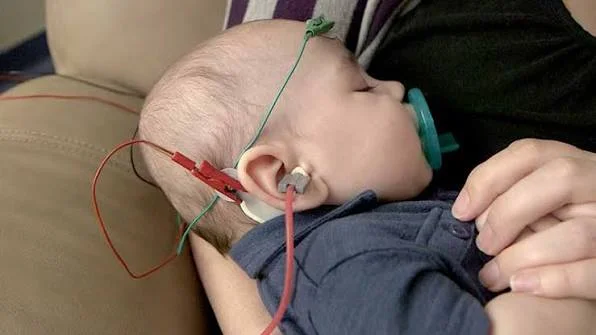
BERA or ABR Test: an objective brain response test, important for infants, young children and anyone who cannot respond reliably to regular tests.
OAE Test: commonly used for newborn and child screening.
The guidelines recommend additional tests such as immittance, speech audiometry or ABR whenever the pure tone thresholds appear unreliable.
Do I need a private hearing test before applying? It is not compulsory. The medical board will carry out its own assessment. However, a recent, properly documented audiogram from a qualified audiologist helps in three ways: it tells you in advance whether you are likely to reach the benchmark, it gives the board a clear reference, and it saves you a wasted trip if your loss is too mild to qualify. Hearing thresholds for certification are normally recorded without hearing aids, so wear them to the hospital but be ready to remove them for testing.
Documents Required for a UDID Card in Maharashtra
Keep these ready before you start:
Aadhaar card or Aadhaar enrolment number
Recent passport-size colour photograph
Scanned signature or thumb impression
Address proof, such as ration card, voter ID or electricity bill
Existing disability certificate, if you have one
Audiogram, BERA report and other medical records
Mobile number and email address for updates
For a minor: the child’s birth certificate and the parent’s or guardian’s identity documents
Scans should be clear and within the size limits shown on the portal. Blurred files or details that do not match your Aadhaar are a common cause of delay.
Step-by-Step: How to Apply for a UDID Card Online in Maharashtra
Step 1: Open the official portal. Go to swavlambancard.gov.in, the official UDID portal run by DEPwD. The Maharashtra Department of Empowerment of Persons with Disabilities also links to it. Avoid unofficial websites and agents who ask for money. The application is free.
Step 2: Choose “Apply for Disability Certificate & UDID Card.” Register as a new applicant and enter your name, date of birth, address and contact details.
Step 3: Fill in the disability details. Select hearing impairment and enter the medical information as accurately as possible.
Step 4: Upload your documents. Add your photograph, signature, ID proof and any medical reports in the format the portal asks for.
Step 5: Select a hospital for assessment. Choose the nearest government hospital or medical authority that conducts hearing disability assessment in your district.
Step 6: Submit and save your enrolment number. You will need this number to track your application and to download your card later.
Step 7: Attend the medical assessment. Visit the hospital on the date given. Carry originals of all documents and your audiology reports (see the next section).
Step 8: Board evaluation. The medical authority examines you, reviews your reports and decides the percentage.
Step 9: Track your application. On the portal, use “Track Your Application Status” with your enrolment number, UDID number, Aadhaar number or registered mobile number.
Step 10: Download your card. Once the status shows the card is generated, log in to the portal and download your e-UDID card and e-disability certificate. A physical card is usually posted to your address later.
Can I apply offline? Yes. If you cannot apply online, you can ask the designated hospital or the District Disability Rehabilitation Centre (DDRC) for help in submitting the application.
Where to Get Assessed in Maharashtra
Hearing disability is certified by a medical authority headed by the Medical Superintendent, Chief Medical Officer or Civil Surgeon (or an equivalent authority notified by the State). For hearing impairment, the board includes an ENT specialist and an audiologist.
In Maharashtra, assessments are done at designated government facilities such as district civil hospitals, sub-district hospitals and government medical college hospitals. Many hospitals hold the disability board only on fixed days of the week, so check the day and time before you travel. The hospital list inside the Swavlamban portal is the most reliable place to confirm your nearest centre.
Under the National Programme for Prevention and Control of Deafness (NPPCD), several district hospitals in Maharashtra also offer audiometry and issue UDID certificates and cards to patients. For specialised hearing assessments, the Ali Yavar Jung National Institute of Speech and Hearing Disabilities (AYJNISHD) in Mumbai is a national-level institute.
Tip: The Maharashtra DEPwD website (depwd.maharashtra.gov.in) also lists district-wise UDID information and links to the state’s disability welfare services.
What Happens on the Day of Assessment?
Knowing what to expect reduces stress, especially for parents:
Your documents are checked at the hospital counter.
You are sent to the ENT and audiology department for testing, usually pure tone audiometry. Young children may need BERA or OAE.
The ENT specialist examines your ears and reviews the reports.
The board records your thresholds, calculates the percentage and approves the certificate on the portal.
Go early, carry water and snacks for children, and keep all earlier reports in one folder. If you use hearing aids, bring them along.
UDID Card for Children with Hearing Loss
Children with hearing impairment are fully eligible. A few points parents should know:
A parent or guardian applies on the child’s behalf.
Very young children cannot respond to normal listening tests, so BERA/ABR and OAE are used.
Because a young child’s hearing levels may be refined as they grow, the certificate for a young child may be temporary with a review date rather than permanent.
A child with 40% or more disability can use the card for school admission benefits, exam accommodations and, when eligible, government support for hearing aids or cochlear implants under the ADIP scheme.
Do not delay certification while waiting for the “right age.” Early assessment helps you plan hearing aids, therapy and school support sooner.
Validity, Renewal and Lost Cards
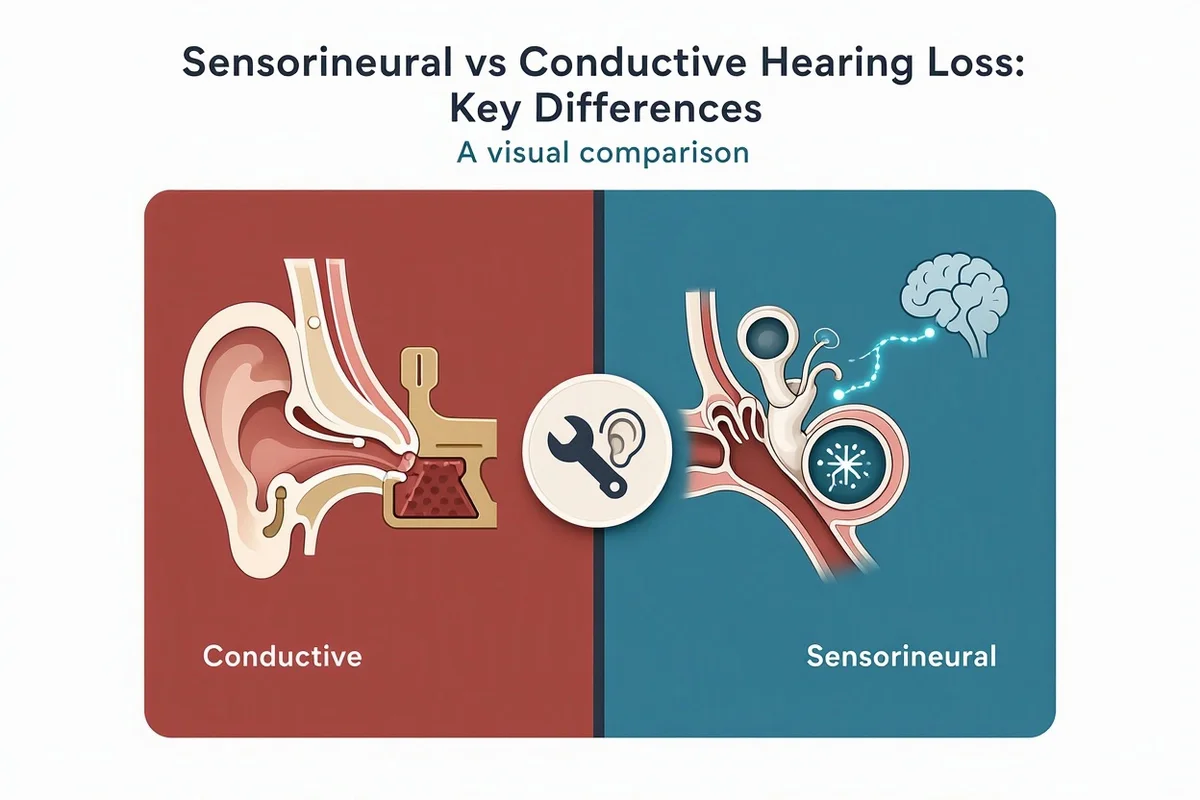
Permanent or temporary: The certificate states whether the disability is permanent or valid until a certain date. Sensorineural loss is usually permanent. Conditions that may change, such as some conductive losses or a child’s early assessment, can carry a validity period.
Renewal: If your card shows a validity date, apply for renewal on the portal before it expires.
Lost card: The portal has an option to apply for a duplicate card or certificate.
Updating details: If your hearing, address or mobile number changes, use the portal’s update or renewal options and keep your records current.
Benefits of a UDID Card for Hearing Impairment in Maharashtra
Benefits depend on your disability percentage and on current government rules. Use the table below as a guide and confirm the latest details with the concerned department before applying.
Area | What you may get | Usually needs |
|---|---|---|
Education | Not less than 5% seats in government and government-aided higher education institutions; free education for children with benchmark disability aged 6 to 18; exam help such as extra time or a scribe | 40% or more |
Government jobs | Not less than 4% of vacancies reserved for persons with benchmark disabilities, including a share for deaf and hard of hearing candidates | 40% or more |
Railways | A 50% concession is available for persons with hearing and speech impairment together (both in the same person), with an escort concession. Hearing loss alone is not covered under this rule. You usually need a Railway Divyangjan photo ID from the Divisional Railway Manager’s office for online booking | Certificate as required by Railways |
State transport (MSRTC) | Concession on state buses for persons with disabilities, reported as up to about 75% on some bus types. Rules differ by bus type, so confirm at your local depot | Certificate or ID as required |
Income tax | A fixed deduction of ₹75,000 (40% to 79% disability) or ₹1,25,000 (80% or more) under Section 80U for your own disability, or Section 80DD for a dependant. Available only under the old tax regime. Under the Income-tax Act, 2025, these correspond to Section 154 and Section 127 | Certificate; old regime |
Pension and social security | Maharashtra’s Sanjay Gandhi Niradhar Anudan Yojana and the central Indira Gandhi National Disability Pension Scheme offer monthly assistance to eligible persons. Amounts, age limits and income limits are revised from time to time | Income limits apply; central scheme is generally for 80% or more |
Hearing aids and implants | Free or subsidised hearing aids and cochlear implant support under ADIP, subject to income limits | 40% or more |
Healthcare | Priority access and concessions in some public health services | Varies |
Important: UDID is the identity and proof. Each scheme still has its own application process, income limit and documents. Read more in our guides on the ADIP scheme and government hearing aid schemes, hearing aid government subsidy in India and free hearing aid camps in Maharashtra. If you are wondering whether Ayushman Bharat covers hearing aids, see our explainer on hearing aids and Ayushman Bharat.
Why Applications Get Delayed or Rejected
Name or date of birth that does not match Aadhaar
Blurred, outdated or incomplete medical reports
Hearing loss below the 40% benchmark (for example, loss in only one ear or below about 60 dB in the better ear)
Missing the medical board appointment
Choosing a hospital that does not hold the hearing board on the day you visit
Trusting agents who promise a “guaranteed” percentage
What if my application is rejected or the percentage seems wrong? First, ask the hospital for the reason. If your hearing has changed, you can apply again with updated tests. If you believe the assessment was incorrect, you can raise the matter with the appellate authority notified by the State Government. Ask the hospital or the Maharashtra disability welfare department for the current appeal procedure and time limit, and keep copies of all your reports.
Myths vs Facts
Myth | Fact |
|---|---|
“An agent can get me a higher percentage.” | Only the medical board decides the percentage. No genuine agent can guarantee it. |
“Any hearing loss qualifies for a UDID card.” | Generally 40% or more disability is needed, which means roughly 60 dB or more in both ears. |
“I need a private hospital report to apply.” | Not compulsory, but a recent audiogram helps you prepare. |
“UDID gives me every benefit automatically.” | You still apply separately for each scheme. |
“The card is only valid in Maharashtra.” | It is a national ID valid across India. |
“Mild hearing loss gets no help at all.” | You may not qualify for UDID, but hearing aids, therapy and school support can still help. |
What If You Do Not Qualify for a UDID Card?
If your hearing loss is below the benchmark, you do not need to be discouraged. A loss of 30 to 55 dB can still make conversations, classes and phone calls difficult. A hearing aid trial, auditory training and counselling can improve your daily life even without a disability certificate. An audiologist can also tell you if your hearing is likely to change over time, so you can plan a reassessment.
How VR Speech and Hearing Clinic Can Help
Accurate test reports are the foundation of a smooth UDID application. At VR Speech and Hearing Clinic, our audiologists can:
Perform pure tone audiometry, speech audiometry, impedance testing and objective tests for children
Explain your results in simple language and estimate whether you are likely to reach the 40% benchmark
Guide you on which documents to carry and how the medical board process works
Advise on hearing aid trials, fitting, speech and language therapy, and auditory training
Help you understand which government schemes, such as ADIP, you may qualify for
Please note that the disability percentage and certificate are issued only by the government medical authority. Our role is to prepare you with clear reports and honest guidance. Book a hearing evaluation to get started.
Quick Checklist Before You Apply
Get a recent audiogram (and BERA/OAE for children)
Check that the name and date of birth match across all documents
Scan your photo, signature and ID proof clearly
Note your hospital’s disability board day and timing
Apply only on swavlambancard.gov.in
Save your enrolment number and track the status regularly
Carry originals and photocopies on the day of assessment
Conclusion
A UDID card for hearing impairment in Maharashtra opens the way to education support, job reservation, travel concessions, tax relief, pension and hearing devices. The process is simple when you prepare well: understand the 40% benchmark, get accurate audiological tests, gather your documents, apply on the official portal and attend the medical assessment with originals. If you or someone in your family has hearing loss, begin with a professional hearing evaluation at VR Speech and Hearing Clinic and take the first step toward the support you are entitled to.
Frequently Asked Questions
1. What is the minimum hearing loss required for a UDID card in Maharashtra?
You generally need a hearing disability of 40% or more. In practice, this means a loss of about 60 dB or more in both ears. The medical board decides the final percentage.
2. What is the difference between “deaf” and “hard of hearing” under the RPwD Act?
“Deaf” means a loss of 70 dB or more in speech frequencies in both ears. “Hard of hearing” means a loss of 60 dB to 70 dB in speech frequencies in both ears.
3. Is the UDID card application free?
Yes. Applying on the official portal is free, and so is the assessment at government hospitals. Be careful of anyone asking for money to guarantee approval.
4. Can I get a UDID card for hearing loss in only one ear?
This is generally difficult. The percentage formula gives the better ear five times the weight of the poorer ear, so one-sided loss usually does not reach 40%. The medical board makes the final decision.
5. Can children with hearing impairment get a UDID card?
Yes. Parents or guardians can apply for a minor. BERA and OAE tests are commonly used for infants and young children, and the certificate may carry a review date.
6. Which tests are needed for a hearing disability certificate?
Usually pure tone audiometry, speech audiometry, impedance audiometry and, where needed, BERA or ABR. Your audiologist can advise which apply to you.
7. Do I need to visit a government hospital?
Yes. The final assessment is done by an authorised government medical authority, even if you have private reports.
8. How do I check my UDID application status?
Open swavlambancard.gov.in, click “Track Your Application Status” and enter your enrolment number, UDID number, Aadhaar number or registered mobile number.
9. How do I download my UDID card?
Log in to the portal with your enrolment or UDID number and date of birth. When the status shows that the card is generated, download the e-UDID card and e-disability certificate.
10. How long does it take to receive the UDID card?
It varies by district and hospital workload. It can take a few weeks or longer, so track your application regularly.
11. Is a UDID card valid outside Maharashtra?
Yes. It is a national ID valid across India.
12. Does the UDID card expire? Some cards are permanent, while others carry a validity date, especially for children or conditions that may change. Apply for renewal on the portal if a date is mentioned.
13. What should I do if I lose my UDID card?
You can apply for a duplicate card or certificate on the official portal. You can also download the e-UDID again from your dashboard.
14. Can I get hearing aids with a UDID card?
Eligible persons may get free or subsidised hearing aids under the ADIP scheme, subject to income and other conditions. A clinic like VR Speech and Hearing Clinic can guide you on suitable devices and fitting.
15. Does the railway concession apply to all hearing loss?
No. The railway rule covers persons with hearing and speech impairment together. Check with the railway authorities for the current process and the Railway Divyangjan ID.
Official Sources and Further Reading
Swavlamban / UDID portal: swavlambancard.gov.in
Maharashtra Department of Empowerment of Persons with Disabilities: depwd.maharashtra.gov.in
DEPwD, Government of India: Notified guidelines for assessing the extent of specified disabilities (March 2024)
Rights of Persons with Disabilities Act, 2016
Medical and legal note: This article is for general information. Scheme amounts, income limits, concessions and procedures change from time to time. Please confirm the latest details with the concerned government department or your hospital before applying. The disability percentage is decided only by the authorised medical board.