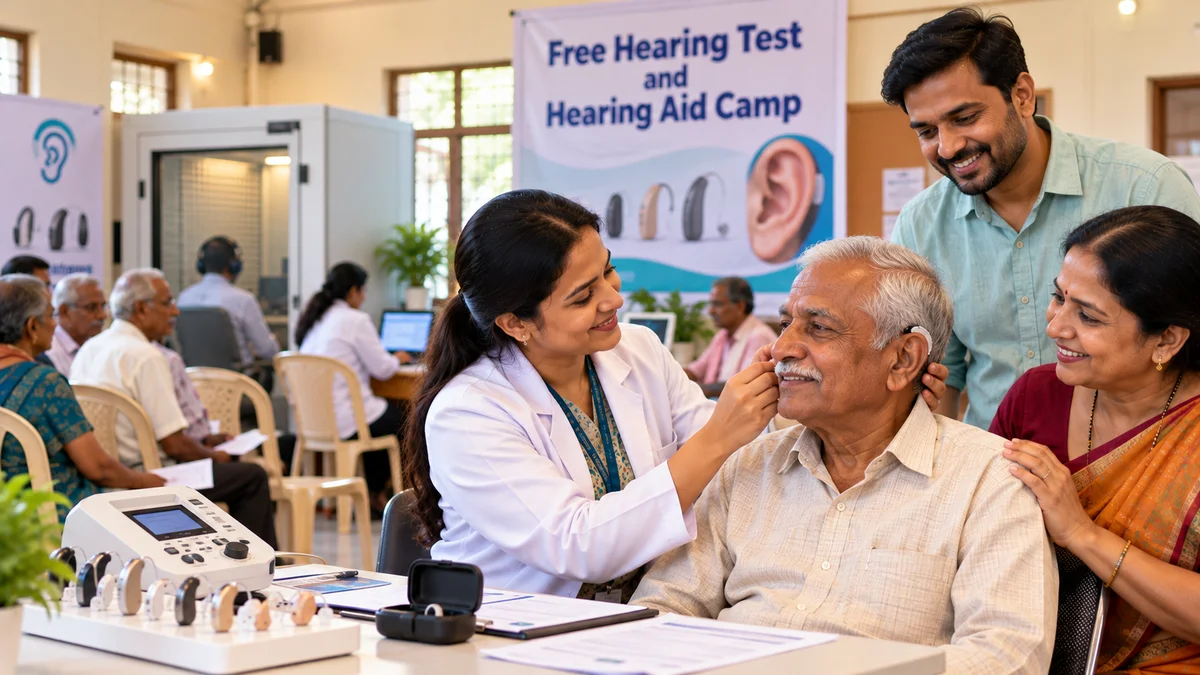
Hearing Aid Government Subsidy in India 2026
Hearing Aid Government Subsidy in India: Complete Guide to Schemes, Eligibility and Application
Hearing loss quietly affects millions of people across India, yet the cost of a good digital hearing aid stops many families from ever getting help. A single device can cost anywhere from a few thousand rupees to well over a lakh, and for someone earning a modest monthly wage, that is simply out of reach. Fortunately, the Government of India runs several welfare programs designed to close this gap. Chief among them is the ADIP Scheme, which provides free or heavily subsidized hearing aids to eligible citizens. This guide walks you through every scheme available, who qualifies, how much support you can expect, and exactly how to apply.
Why a Hearing Aid Subsidy Matters
Untreated hearing loss does more than reduce someone's ability to hear a conversation. It can delay a child's speech development, isolate elderly citizens from family life, and make it harder for working adults to hold a job or communicate confidently. Early intervention with a properly fitted hearing aid changes all of this. Government subsidy programs exist precisely because hearing care should not be a privilege reserved for those who can pay full price. By subsidizing the cost of assessment, devices, and even surgical procedures like cochlear implants, these schemes aim to give every citizen, regardless of income, a fair chance at better hearing and a better quality of life.
The ADIP Scheme: India's Main Hearing Aid Subsidy Program
The Assistance to Disabled Persons for Purchase/Fitting of Aids and Appliances, better known as the ADIP Scheme, is run by the Ministry of Social Justice and Empowerment through the Department of Empowerment of Persons with Disabilities. It is the single largest and most widely used program for obtaining a subsidized or free hearing aid in India. The scheme covers a range of assistive devices, including hearing aids, wheelchairs, tricycles, and cochlear implants, and is currently applicable for the period running through March 2026, with a revised structure introduced in 2024 to expand its reach and improve device quality.
Devices distributed under the ADIP Scheme are typically manufactured and supplied by the Artificial Limbs Manufacturing Corporation of India, commonly known as ALIMCO, a central public sector undertaking that specializes in producing assistive aids to Indian Standards Institute and ISO-certified quality.
How the ADIP Subsidy Works
The scheme does not offer a flat subsidy to everyone. Instead, the amount of assistance depends on the applicant's monthly household income:
Applicants with a monthly income up to roughly ₹22,500 generally qualify for full, 100 percent free assistance, meaning the hearing aid is provided at no cost.
Applicants with a monthly income between approximately ₹22,501 and ₹30,000 typically receive a 50 percent subsidy on the cost of the device.
Applicants whose income exceeds this ceiling are usually not eligible under the core ADIP scheme, though they may explore state-level programs or other welfare routes.
There is also a cost ceiling on the aids and appliances supplied under the scheme. Basic devices are generally covered up to around ₹15,000, while combined assistance for higher-cost devices can extend up to about ₹30,000 depending on income category. Applicants who are students beyond the ninth standard may be eligible for a slightly higher device cost ceiling to support their educational needs. A person generally cannot claim assistance for the same purpose more than once within a three-year period, though this rule is relaxed to one year for children below the age of twelve, recognizing how quickly a young child's needs can change.
Cochlear Implants Under ADIP
For children with severe to profound hearing loss, the ADIP Scheme goes further than standard hearing aids by covering cochlear implants, a far more expensive and technically involved intervention. The scheme provides financial support with a ceiling of around ₹7 lakh per unit for children with pre-lingual hearing loss between one and five years of age, and around ₹6 lakh for children with acquired hearing loss between five and eighteen years. This support is designed to cover the full journey, not just the implant itself. It typically includes the cost of the device, the surgery, post-operative therapy, mapping sessions, pre-implant assessment, and even travel expenses connected to treatment. The nodal institute coordinating cochlear implants under this scheme is the Ali Yavar Jung National Institute for the Hearing Handicapped in Mumbai, and surgeries are carried out at a network of government-approved hospitals across the country.
Who Is Eligible for the Hearing Aid Subsidy
Eligibility under the ADIP Scheme rests on a few clear conditions:
The applicant must be an Indian citizen, and the scheme does not restrict eligibility by age, meaning children, working adults, and senior citizens can all apply.
The applicant must hold a disability certificate confirming at least 40 percent benchmark hearing disability, issued by a competent medical authority. A Unique Disability ID card, commonly called a UDID card, can also serve this purpose and is increasingly the preferred document.
The applicant's monthly income from all sources must fall within the scheme's prescribed ceiling. For dependents, including children, the income of the parent or guardian is considered instead.
The applicant must not have received assistance for the same purpose from any source within the preceding three years.
Documents You Will Need
Before visiting a distribution camp or government hospital, it helps to have the following documents ready:
Disability certificate or UDID card showing at least 40 percent hearing impairment
Income certificate issued by a local authority, or alternative proof such as a BPL card, MGNREGA job card, disability pension card, or a certificate from an MP, MLA, councillor, or gram pradhan
Proof of Indian citizenship, such as an Aadhaar card
Recent passport-sized photographs
Medical assessment or audiometry report confirming the degree of hearing loss
How to Apply for the Hearing Aid Subsidy
Applying for assistance under the ADIP Scheme is a fairly straightforward process once your documents are in order.
Get a hearing assessment. Visit a government hospital, District Disability Rehabilitation Centre, or a recognized audiology clinic to have your hearing loss formally evaluated and documented.
Obtain your disability certificate or UDID card. If you do not already have one, apply through your state's disability certification portal or the national UDID portal, since this document is central to your eligibility.
Collect your income proof. Approach your local authority for an income certificate, or use an accepted alternative document.
Locate an implementing agency. Applications are processed through ALIMCO offices, District Disability Rehabilitation Centres, empanelled hospitals, NGOs, and Composite Regional Centres that are recognized implementing agencies under the scheme.
Submit your application and documents. Many camps and centers accept applications in person, and some regions also allow submission through state disability welfare portals.
Attend the fitting camp. Once approved, you will be informed about a distribution camp or center where the hearing aid is assessed, fitted, and handed over. Processing time varies, and it can take anywhere from a few weeks to a few months depending on regional demand and device availability.
It is worth noting that standard government programs generally provide reliable, basic-to-mid-range digital hearing aids rather than premium or highly advanced models. If your hearing loss requires a more specialized device, you may need to bridge the cost difference privately.
Other Government Schemes Supporting Hearing Care
Beyond ADIP, several complementary programs contribute to hearing healthcare access in India.
Rashtriya Bal Swasthya Karyakram (RBSK) focuses on early identification of health conditions in children, including hearing loss, through school and anganwadi screenings. Catching hearing impairment early through RBSK can prevent long-term speech and language delays.
National Programme for Prevention and Control of Deafness (NPPCD) works on the prevention side, strengthening audiology services at the district and community level and training healthcare workers to identify hearing loss earlier in the general population.
Rashtriya Vayoshri Yojana is aimed specifically at senior citizens from economically weaker sections, providing free assistive devices, including hearing aids, to elderly beneficiaries with income below a defined threshold, distributed through camps organized across the country.
State-level disability pensions are also offered by many Indian states, providing monthly financial support to persons with hearing impairment, which can indirectly help cover ongoing costs like batteries, maintenance, or device upgrades.
Where to Get Help
If you are unsure where to begin, your nearest District Disability Rehabilitation Centre, a government hospital's ENT or audiology department, or a local ALIMCO regional marketing center are good starting points. These centers can confirm current eligibility criteria, help you complete paperwork, and guide you to the nearest distribution camp. The Department of Empowerment of Persons with Disabilities also maintains information through its official website for applicants who want to verify scheme details directly at the source.
Final Thoughts
The hearing aid government subsidy landscape in India, anchored by the ADIP Scheme, has made real hearing care accessible to lakhs of people who would otherwise have gone without. Whether it is a child needing a cochlear implant, a working adult trying to stay engaged at their job, or a senior citizen wanting to hear their grandchildren clearly again, these programs exist to make that possible. The process does involve some paperwork and patience, but the outcome, restored hearing and renewed connection with the world, is well worth the effort. If you or someone in your family struggles with hearing loss, do not let cost be the reason treatment is delayed. Get a hearing assessment, gather your documents, and take the first step toward the support you are entitled to.
Frequently Asked Questions
Q1. What is the main government scheme for hearing aid subsidy in India?
The ADIP Scheme, run by the Ministry of Social Justice and Empowerment, is the primary national program offering free or subsidized hearing aids to eligible citizens.
Q2. What is the minimum disability percentage required to apply?
Applicants must have at least 40 percent benchmark hearing disability, certified through a disability certificate or UDID card.
Q3. What is the income limit to get a free hearing aid under ADIP?
Applicants with a monthly income up to approximately ₹22,500 generally qualify for full, free assistance, while those earning between about ₹22,501 and ₹30,000 typically receive a 50 percent subsidy.
Q4. Can children get free cochlear implants under this scheme?
Yes, children with severe to profound hearing loss can receive financial assistance for cochlear implants, covering the device, surgery, therapy, and related costs, up to a defined ceiling based on age group.
Q5. How often can I claim assistance under the ADIP Scheme?
Generally once every three years for the same purpose, though children below twelve years of age can reapply after just one year.
Q6. Are hearing aids under this scheme high-end models?
No, government schemes typically provide standard, reliable digital hearing aids rather than premium or advanced models.
Q7. Where can I apply for the hearing aid subsidy?
You can apply through District Disability Rehabilitation Centres, ALIMCO offices, empanelled government hospitals, and recognized NGOs or Composite Regional Centres.
Q8. Is there a separate scheme for senior citizens?
Yes, the Rashtriya Vayoshri Yojana provides free assistive devices, including hearing aids, to eligible senior citizens from low-income backgrounds.
Q9. How long does it take to receive the hearing aid after applying?
Processing time varies by region and demand, typically ranging from a few weeks to a few months.
Q10. Are hearing aids subject to GST in India?
No, hearing aids are exempt from GST in India, though accessories like batteries and chargers may still attract tax.