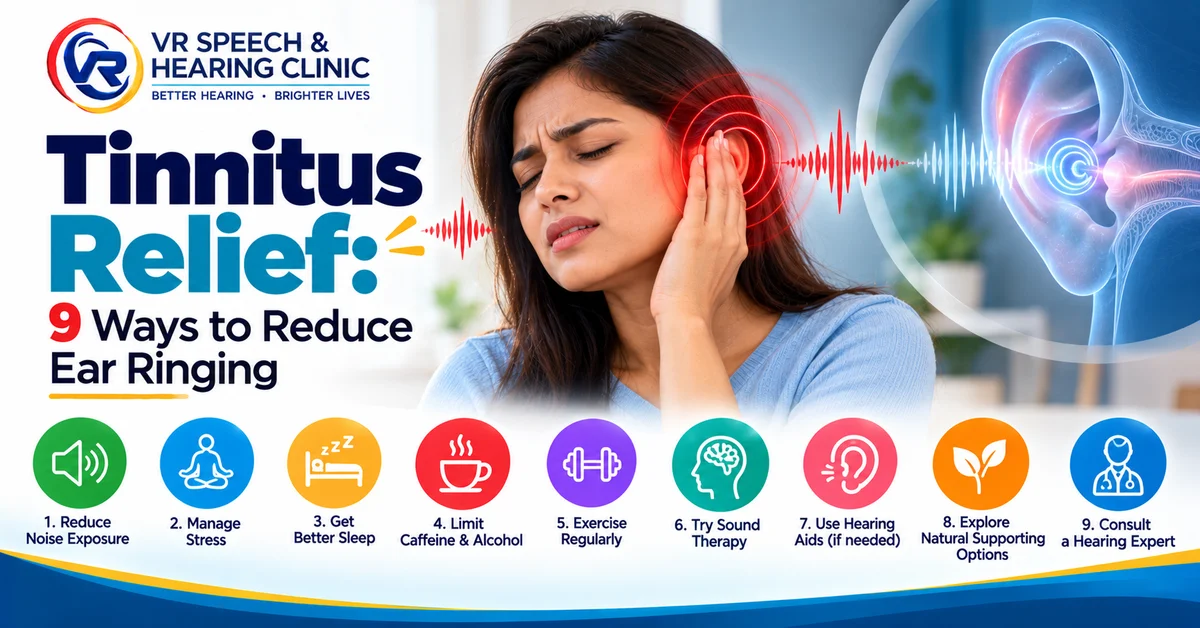
Tinnitus Relief: 9 Ways to Reduce Ear Ringing
Do you hear a ringing, buzzing, hissing or whistling sound that nobody else can hear? You are not alone. Millions of people live with tinnitus, and for many it is more than a small annoyance. A constant noise in the ears can steal your sleep, make it hard to focus and leave you feeling tense and tired.
The good news is that tinnitus can be managed. In this guide, Vilas Rathod, BASLP of VR Speech and Hearing Clinic explains what tinnitus is, what can trigger it and nine practical ways to reduce the irritation so that the sound takes up less space in your day.
What Is Tinnitus?
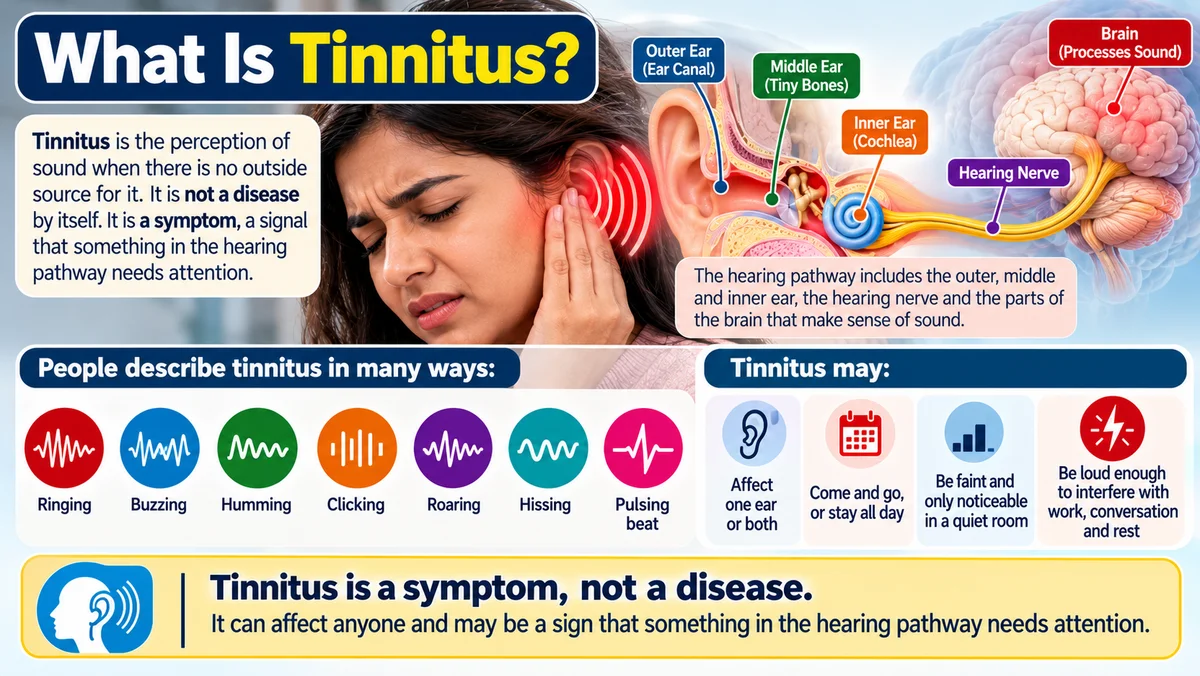
Tinnitus is the perception of sound when there is no outside source for it. It is not a disease by itself. It is a symptom, a signal that something in the hearing pathway needs attention. That pathway includes the outer, middle and inner ear, the hearing nerve and the parts of the brain that make sense of sound.
People describe tinnitus in many ways: ringing, buzzing, humming, clicking, roaring, hissing or even a pulsing beat. It may affect one ear or both, it may come and go, or it may stay all day. For some people it is faint and only noticeable in a quiet room. For others it is loud enough to interfere with work, conversation and rest.
Common Causes of Ringing in the Ears
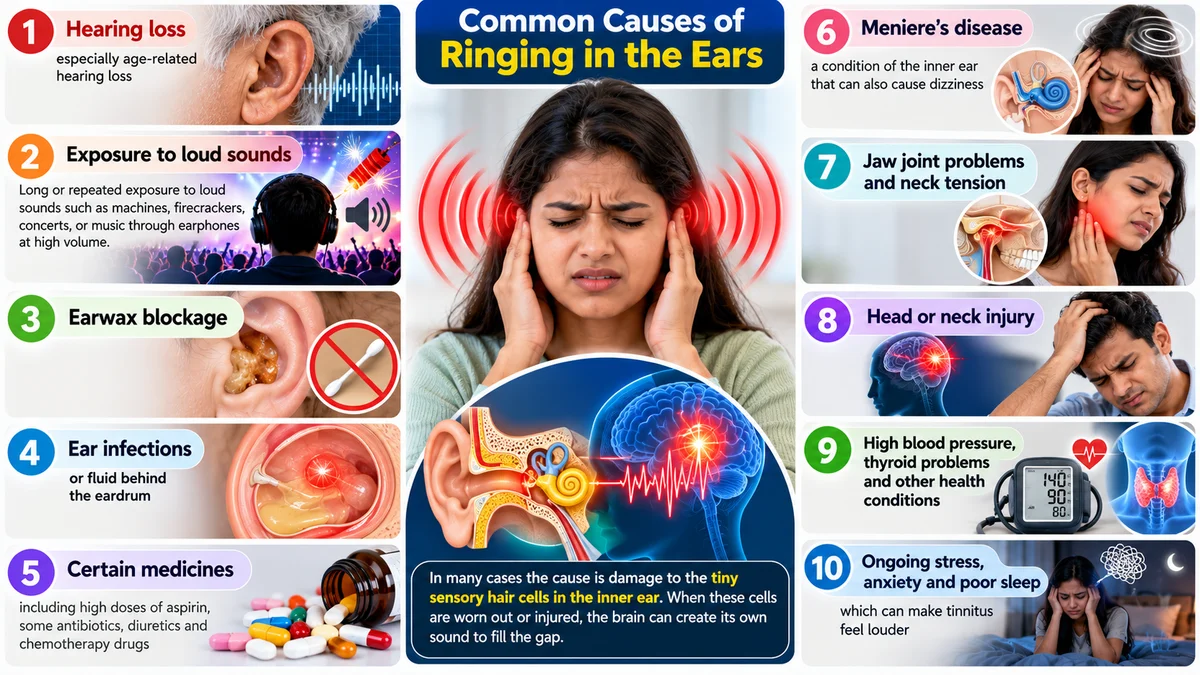
Understanding the trigger is the first step toward relief. The most common causes include:
Hearing loss, especially age-related hearing loss
Long or repeated exposure to loud sounds such as machines, firecrackers, concerts, or music through earphones at high volume
Earwax blockage
Ear infections or fluid behind the eardrum
Certain medicines, including high doses of aspirin, some antibiotics, diuretics and chemotherapy drugs
Meniere's disease, a condition of the inner ear that can also cause dizziness
Jaw joint problems and neck tension
Head or neck injury
High blood pressure, thyroid problems and other health conditions
Ongoing stress, anxiety and poor sleep, which can make tinnitus feel louder
In many cases the cause is damage to the tiny sensory hair cells in the inner ear. When these cells are worn out or injured, the brain can create its own sound to fill the gap.

When Should You See a Specialist Right Away?
Most tinnitus is not dangerous, but some patterns should be checked without delay. Book an appointment with an audiologist or an ENT doctor soon if you notice:
Tinnitus in only one ear
Sudden hearing loss along with the ringing, which needs urgent care
A pulsing sound that beats in time with your heartbeat
Dizziness, imbalance, ear pain or discharge
Tinnitus that started after a head injury
Noise that is getting worse or disturbing your sleep, mood or daily work

9 Ways to Reduce Tinnitus Irritation
1. Start With a Proper Hearing Evaluation
Because tinnitus and hearing loss often travel together, a complete hearing test is the best starting point. It shows whether hearing loss is present, how severe it is and which pitch of tinnitus you are experiencing. This guides every treatment decision that follows.
2. Treat the Underlying Cause
If the cause can be corrected, the noise may reduce or disappear. Safe removal of earwax, treatment of an ear infection, a review of your medicines with your doctor, or care for jaw, neck or blood pressure problems can make a real difference. Never stop a prescribed medicine on your own. Speak to your doctor first.
3. Try Hearing Aids if You Have Hearing Loss
When the ear receives less sound, the brain turns up its own volume, and tinnitus becomes easier to notice. Hearing aids bring back everyday sounds such as voices, footsteps and birds, which gives the brain something real to listen to and often pushes the tinnitus into the background. Many people find they pay far less attention to the ringing once their hearing is supported.
4. Use Sound Enrichment and Masking
Silence is the enemy of tinnitus. Soft background sound helps the brain relax and shifts focus away from the noise. You can use a table fan, soft music, nature sounds, a white noise machine, a radio tuned low or a sound app on your phone. Some people benefit from small ear-level devices that play gentle, steady sound all day. The background sound should stay just below the level of your tinnitus, not cover it completely.
5. Make Your Bedtime Sound-Friendly
Nights are often the hardest time because the room is quiet. Place a sound source near your bed, keep the volume low and use a timer if needed. A calm sound routine helps you fall asleep faster and wake up less often.
6. Consider Tinnitus Retraining and Habituation Therapy
This long-term approach combines counseling with low-level sound therapy. Over weeks and months the brain learns to treat tinnitus as a harmless, unimportant signal, similar to the hum of a refrigerator that you eventually stop noticing. It is especially helpful for people whose tinnitus is severe or distressing and requires patience and regular follow-up.
7. Use Counseling and Cognitive Behavioral Techniques
The distress caused by tinnitus is often bigger than the sound itself. Counseling and cognitive behavioral strategies teach you how to change thoughts and reactions to the noise, which breaks the cycle of worry, tension and louder tinnitus. Learning about how tinnitus works is a powerful relief on its own.
8. Manage Stress, Sleep and Relaxation
Stress and tiredness are well-known tinnitus amplifiers. Add simple habits to your day: slow deep breathing, gentle yoga, a short walk, a fixed sleep time, light stretching for the neck and shoulders, and time away from screens before bed. Regular exercise also improves blood flow and mood.
9. Protect Your Ears and Review Your Daily Habits
Protect your remaining hearing so the tinnitus does not get worse:
Keep earphone volume below 60 percent and take listening breaks
Use ear plugs or ear muffs around loud machines, crackers and live music
Avoid putting cotton buds, pins or ear candles inside the ear
Cut back on caffeine, nicotine and alcohol if you notice they make the noise louder
Reduce excess salt if you have high blood pressure

Does Tinnitus Have a Cure?
There is not yet a single treatment that works for everybody. However, with the right plan, most people experience a big drop in how much tinnitus bothers them. The aim of treatment is to lower the loudness you feel, improve your sleep and concentration and help you live comfortably alongside the sound.
Get Expert Tinnitus Care at VR Speech and Hearing Clinic
Every person's tinnitus is different, so your plan should be different too. At VR Speech and Hearing Clinic, Vilas Rathod, BASLP, looks at your hearing, your symptoms and your daily routine to build a practical plan that helps you hear better and feel calmer. Do not wait for the ringing to get worse. Book your hearing check-up today and take the first step toward quiet, comfortable days.
This article is for general education and does not replace medical advice. If your symptoms are sudden, one-sided or severe, consult an audiologist or ENT doctor promptly.
Frequently Asked Questions (FAQs)
1. What is the main cause of ringing in the ears?
The most common causes are hearing loss and damage from loud noise. Earwax, ear infections, certain medicines, stress and health conditions such as high blood pressure can also trigger tinnitus.
2. Can tinnitus go away on its own?
Short episodes after loud noise exposure often fade within hours or days. When tinnitus comes from hearing loss it may last longer, but it can still be managed well with the right treatment.
3. Is tinnitus a serious problem?
Usually it is not dangerous, but it should always be evaluated. One-sided tinnitus, pulsing tinnitus or tinnitus with sudden hearing loss or dizziness needs prompt attention.
4. How can I reduce tinnitus at night?
Use gentle background sound such as a fan, soft music or a white noise machine, keep your bedtime routine calm and avoid caffeine in the evening. If sleep is still disturbed, see an audiologist.
5. Do hearing aids help with tinnitus?
Yes. If tinnitus comes with hearing loss, hearing aids restore outside sounds and often make the tinnitus less noticeable.
6. Which doctor should I see for tinnitus?
Start with an audiologist for a hearing test and sound therapy planning, and an ENT doctor for any medical cause that needs treatment. The two often work together.
7. Can stress make tinnitus worse?
Yes. Stress, anxiety and lack of sleep raise the brain's attention to sound, so tinnitus feels louder. Relaxation, counseling and regular sleep can help.
8. How long does tinnitus retraining therapy take?
It is a gradual process. Many people notice improvement over several months, with regular follow-up visits and daily sound practice.