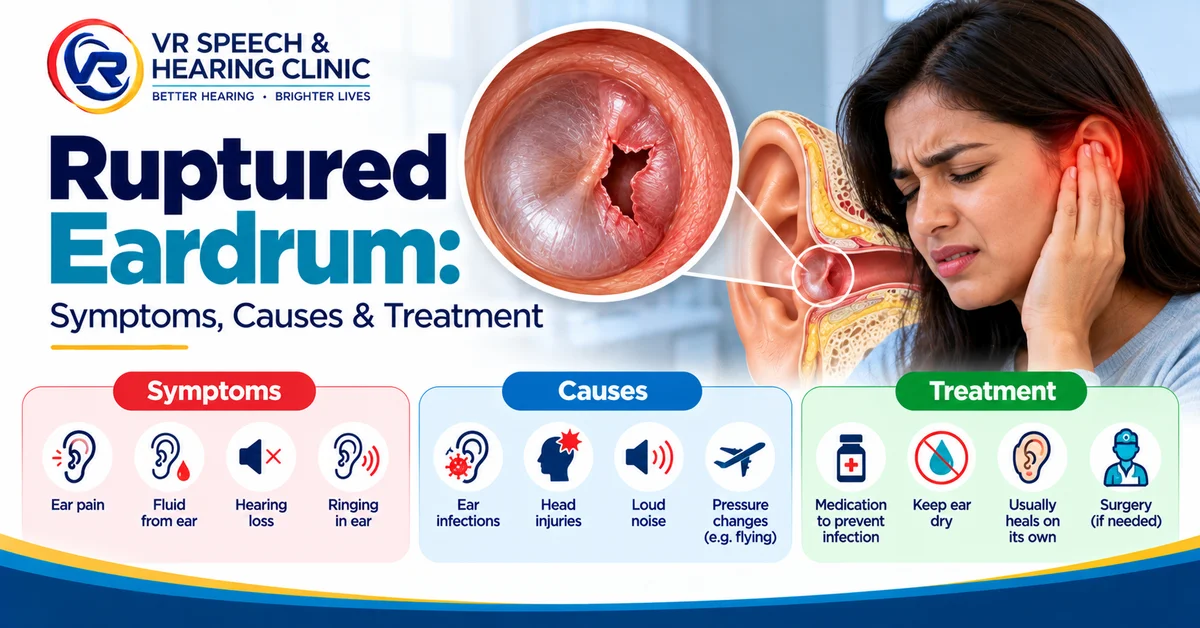
Ruptured Eardrum: Symptoms, Causes & Treatment
Ruptured Eardrum: Symptoms, Causes, Healing Time and When to Get Your Hearing Checked
A sudden sharp ear pain, a muffled sound, or fluid leaking from the ear can be alarming. These may be signs of a ruptured eardrum, also called a perforated eardrum. The good news is that most eardrum tears heal on their own. Getting the right guidance early protects your hearing and prevents infection.
At VR Speech and Hearing Clinic, Vilas Rathod (BASLP) helps patients understand what is happening in their ears and checks how well they are hearing. This guide explains the signs, causes, healing process and prevention of a ruptured eardrum.
What Is a Ruptured Eardrum?
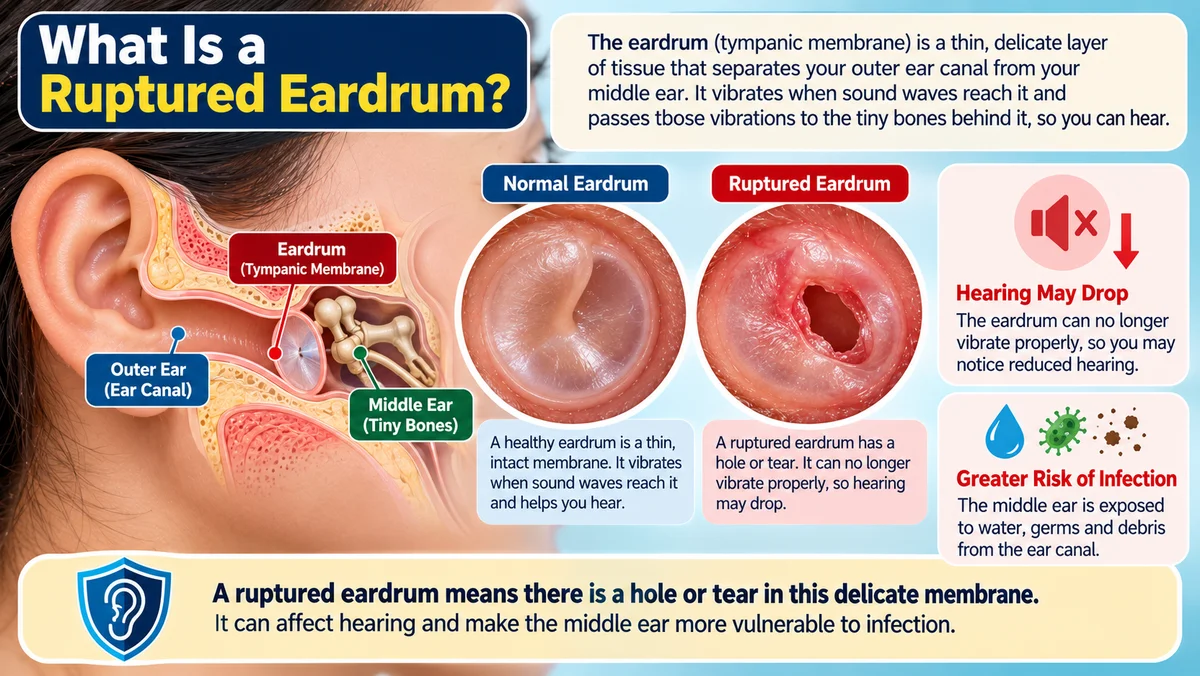
The eardrum (tympanic membrane) is a thin, delicate layer of tissue that separates your outer ear canal from your middle ear. It vibrates when sound waves reach it and passes those vibrations to the tiny bones behind it, so you can hear.
When this layer develops a hole or tear, it is called a ruptured or perforated eardrum. The eardrum can no longer vibrate properly, so hearing may drop. The middle ear is also exposed to water, germs and debris from the ear canal.
Common Symptoms of a Ruptured Eardrum
Symptoms can differ from person to person. Watch for:
Sudden ear pain that may ease quickly once the eardrum tears
Clear, watery, pus-like or bloody fluid draining from the ear
Reduced hearing or a blocked, muffled feeling in one ear
Ringing or buzzing sounds (tinnitus)
Dizziness or a spinning sensation (vertigo)
Nausea or vomiting if dizziness is strong
A feeling of fullness or pressure in the ear
If you notice any of these, do not ignore them, even if the pain disappears.
What Causes a Ruptured Eardrum?
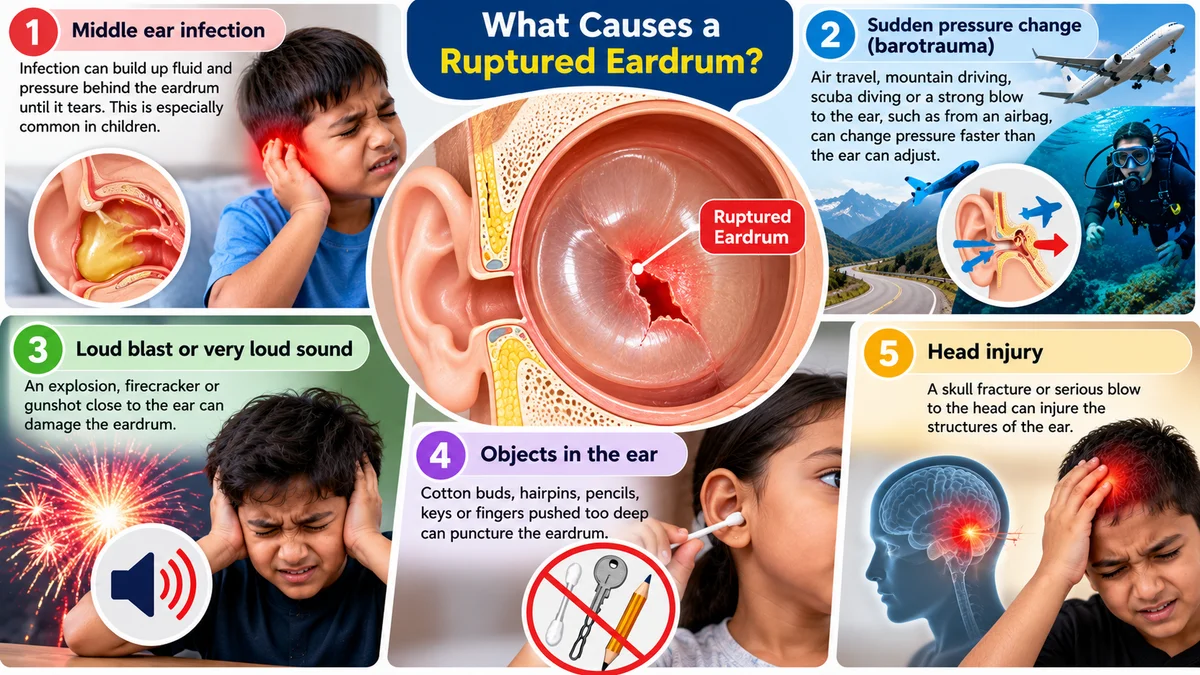
Middle ear infection. Infection can build up fluid and pressure behind the eardrum until it tears. This is especially common in children.
Sudden pressure change (barotrauma). Air travel, mountain driving, scuba diving or a strong blow to the ear, such as from an airbag, can change pressure faster than the ear can adjust.
Loud blast or very loud sound. An explosion, firecracker or gunshot close to the ear can damage the eardrum.
Objects in the ear. Cotton buds, hairpins, pencils, keys or fingers pushed too deep can puncture the eardrum.
Head injury. A skull fracture or serious blow to the head can injure the structures of the ear.
Who Is at Higher Risk?
Children and people who get frequent ear infections
People with blocked nose, cold or allergy who travel by air
Divers and frequent flyers
Anyone who regularly cleans ears with sharp or pointed objects
People exposed to loud blasts or industrial noise
Possible Complications
Most perforations cause no lasting harm, but problems can occur:
Temporary hearing loss that usually improves as the eardrum heals
Middle ear infection, because germs can pass through the hole
Skin growth (cyst) in the middle ear, which can develop if skin cells collect behind a long-standing perforation
Long-term hearing loss in larger, repeated or untreated cases
How Is a Ruptured Eardrum Diagnosed?
An ENT specialist examines the ear with a lighted instrument to see the tear. A hearing evaluation by an audiologist is then very useful to measure how much hearing has been affected. Common tests include:
Pure tone audiometry to check hearing levels
Tympanometry to assess eardrum movement and middle ear condition
Speech audiometry to see how clearly you understand words
At VR Speech and Hearing Clinic, Vilas Rathod (BASLP) can perform your hearing assessment, explain the results in simple language, and guide you on the next step with your ENT doctor.
Treatment and Healing Time
Many small tears heal naturally within a few weeks. Some larger ones take a couple of months. Your doctor may advise:
Watchful waiting and keeping the ear dry and protected
Medication if there is an infection or pain
Eardrum patch for a tear that is slow to close
Surgery (tympanoplasty) for large or non-healing perforations
Medicines and surgery are decided by the ENT doctor. Follow-up hearing tests help confirm that your hearing is recovering well.

Do’s and Don’ts While Your Eardrum Heals
Do
Keep the ear dry while bathing, using a cotton ball with petroleum jelly or a fitted earplug
Take medicines only as prescribed
Attend all follow-up visits and hearing tests
Blow your nose gently, one nostril at a time
Don’t
Put drops, oil, water or any home remedy in the ear unless your doctor advises
Use cotton buds or sharp objects inside the ear
Swim or dive until your doctor confirms the eardrum has healed
Ignore worsening pain, discharge or hearing loss
How to Prevent a Ruptured Eardrum
Treat colds, allergies and ear infections early
Avoid air travel when you are badly congested, if possible
Swallow, yawn or chew gum during flight take-off and landing to balance ear pressure
Never clean inside the ear canal with sharp or pointed items
Wear ear protection around loud machinery, crackers and other very loud sounds
Make sure children with repeated ear infections are checked regularly
When to See a Doctor Urgently
Seek prompt medical care if you have:
Severe ear pain, heavy bleeding or foul-smelling discharge
Sudden or major hearing loss
Strong dizziness or vomiting
Weakness of the face
Ear symptoms after a head injury or loud blast
Book Your Hearing Check at VR Speech and Hearing Clinic
If you or your child has ear pain, ear discharge or reduced hearing, early evaluation makes a real difference. Visit VR Speech and Hearing Clinic for a complete hearing assessment with Vilas Rathod, BASLP, and get clear, caring guidance on protecting your hearing.
This article is for general awareness and does not replace an examination by a qualified doctor.
FAQs
1. What does a ruptured eardrum feel like?
Many people feel sudden ear pain that eases quickly, followed by muffled hearing, ringing, fluid drainage or dizziness.
2. How long does a ruptured eardrum take to heal?
Most heal within a few weeks. Larger tears may take a couple of months and some need medical treatment.
3. Can a ruptured eardrum heal on its own?
Yes, small perforations often close naturally if the ear is kept dry and protected from infection.
4. Can you hear with a ruptured eardrum?
Yes, but hearing is usually reduced in that ear. The loss is often mild to moderate and temporary.
5. What are the main causes of a ruptured eardrum?
Ear infections, sudden pressure changes, loud blasts, objects pushed into the ear and head injury.
6. Can a cotton bud rupture the eardrum?
Yes. Pushing a cotton bud or any pointed object deep into the ear can puncture the eardrum.
7. Is a ruptured eardrum an emergency?
Not always, but you should see a doctor promptly. Go urgently if there is severe pain, heavy bleeding, sudden hearing loss or strong dizziness.
8. Can I swim with a ruptured eardrum?
No. Water can carry germs into the middle ear. Avoid swimming until your doctor says the eardrum has healed.
9. Will hearing return to normal after the eardrum heals?
In most cases, yes. A hearing test after healing confirms whether your hearing has fully recovered.
10. Should I get a hearing test after a perforated eardrum?
Yes. A hearing assessment shows how much hearing was affected and helps track your recovery.