Can Autism Be Cured? Facts, Therapies & Support
Can Autism Be Cured? What Parents Need to Know
If your child has recently been diagnosed with autism, or you suspect they might be on the spectrum, one question probably keeps you awake at night: can autism be cured? It is one of the most searched questions by worried parents, and it deserves a clear, honest, and compassionate answer.
The short answer is no. Autism spectrum disorder (ASD) is not an illness, so there is nothing to cure in the way an infection is cured. But that does not mean nothing can be done. With early identification, the right therapies, and a supportive environment, autistic children can build communication, independence, and confidence, and many go on to live full, meaningful lives.
At VR Speech and Hearing Clinic, we see every day how the right support changes outcomes. Here is what you need to know.
What Is Autism Spectrum Disorder?
Autism is a neurodevelopmental condition. It affects how a person processes information, communicates, and interacts with others. It is called a "spectrum" because it looks different in every person. Some autistic individuals need significant daily support, while others live independently and excel in careers.
Common features of autism include:
Delayed speech or unusual speech patterns
Limited eye contact or difficulty with back-and-forth conversation
Repetitive movements or strong attachment to routines
Sensitivity to sounds, lights, textures, or crowds
Intense interest in specific topics
Difficulty understanding gestures, tone, or social cues
Autism is present from early development, though signs often become clearer between 18 months and 3 years of age.
Why Autism Cannot Be Cured
Autism is rooted in how the brain develops and is wired. Research points to a combination of genetic and prenatal factors, not something a parent did or did not do. Because autism is a lifelong difference in neurological development rather than a disease with a single cause, there is no medicine, injection, diet, or procedure that removes it.
Any product, clinic, or person claiming to "cure autism" should be treated with caution. Unproven and sometimes dangerous claims exist, including:
Chelation therapy
Bleach-based products or "miracle" solutions
Extreme elimination diets sold as cures
Expensive supplements with no scientific backing
These are not supported by medical evidence, and some can seriously harm a child. Always speak with a qualified healthcare professional before starting any treatment.
Can Autistic Children Improve With Therapy?
Yes, and this is where hope lies. While autism itself does not go away, the challenges that come with it can be reduced significantly through early, consistent, and personalized intervention. Many children make remarkable progress in speech, behavior, learning, and social skills.
Some children who receive very early and intensive support show such strong progress that they no longer meet the diagnostic criteria later in life. This is uncommon, and it does not mean autism was "cured." It shows how powerful early support can be. The goal of therapy should never be to make a child "not autistic." It should be to help them communicate, learn, and thrive as themselves.
Why Early Intervention Matters
The brain is most adaptable in the first few years of life. Starting support early gives children the best chance to develop language, social understanding, and daily living skills. Parents who notice red flags should not wait. Signs to act on include:
No babbling or pointing by 12 months
No single words by 16 months
No two-word phrases by 24 months
Loss of previously learned words or skills
Not responding to their name
An early evaluation does not label your child. It opens the door to help.
Effective Therapies for Autism
Autism care works best as a team effort. A good plan is tailored to the child and often combines several approaches.
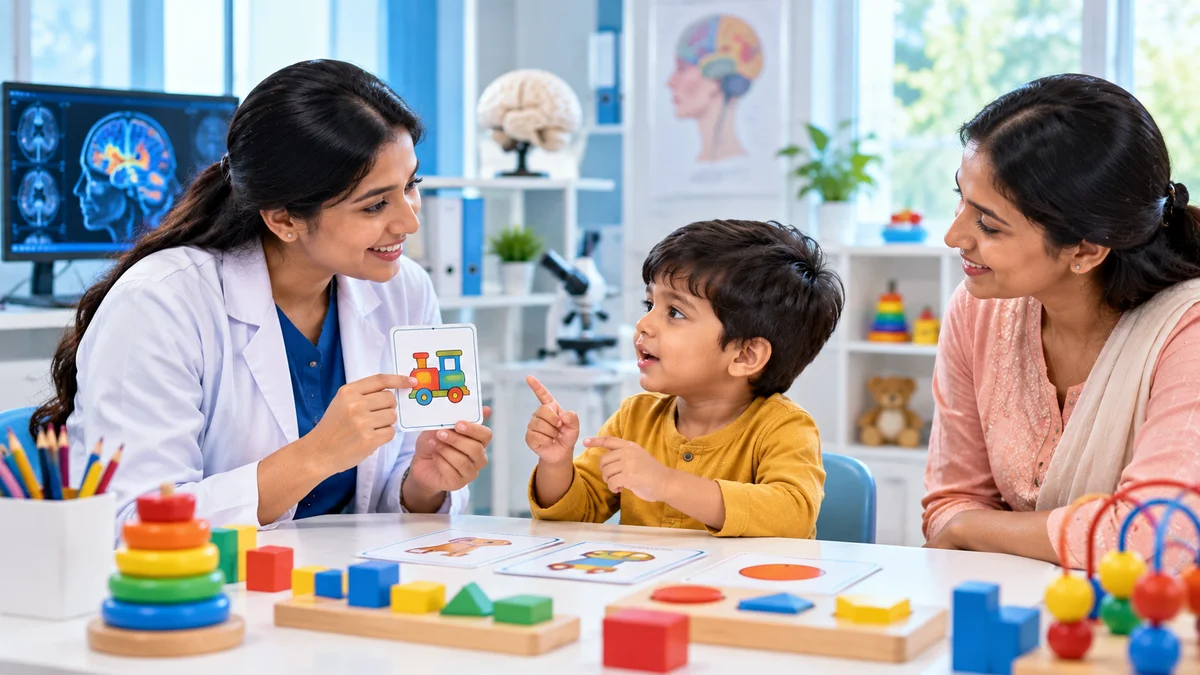
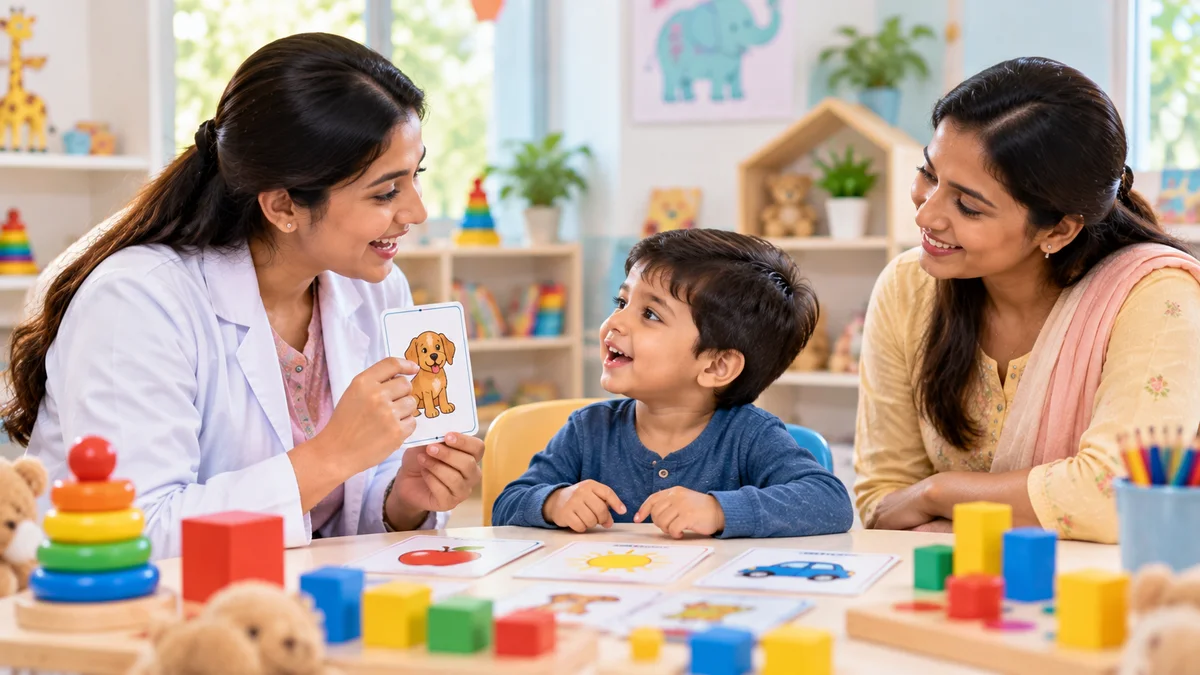
Speech and language therapy. Many autistic children struggle with speech, understanding language, or using it socially. A speech-language pathologist helps children build vocabulary, sentence structure, and conversation skills. For children who are non-speaking or minimally speaking, therapy may include augmentative and alternative communication (AAC), such as picture cards or speech-generating devices, which support rather than delay spoken language.
Occupational therapy. Occupational therapists help with fine motor skills, sensory processing, self-care, and handling everyday activities such as dressing, eating, and writing.
Behavioral and developmental therapies. Structured approaches help children learn new skills and manage challenging behaviors. Families should choose approaches that are gentle, child-centered, and respectful of the child's comfort and dignity.
Social skills training. Guided practice helps children understand emotions, take turns, make friends, and handle social situations.
Parent training and coaching. Parents are a child's most important teachers. When families learn communication strategies to use at home, progress is faster and lasts longer.
Educational support. Individualized education plans, visual schedules, and inclusive classroom strategies help children learn in ways that suit them.
The Link Between Autism and Hearing
Hearing is often overlooked in autism evaluations, but it matters. Children with hearing loss can show signs that look similar to autism, such as delayed speech, not responding to their name, and limited social interaction. In some cases hearing loss and autism occur together.
That is why a full hearing assessment is an important first step for any child with speech or communication concerns. It rules out hearing problems that could be affecting development and ensures therapy is built on accurate information. Some autistic children also have auditory processing differences or heightened sensitivity to sound, which a hearing specialist can help identify and manage.
How Parents Can Support Their Child at Home
Daily life is the best classroom. Simple habits can make a big difference:
Talk, sing, and read together every day. Narrate what you are doing and give your child time to respond.
Follow their interests. Use what they love as a bridge to communication and learning.
Use visual supports. Picture schedules and cue cards reduce anxiety and build understanding.
Keep routines predictable. Prepare your child for changes ahead of time.
Create a calm sensory space. Reduce noise and clutter when your child feels overwhelmed.
Celebrate small wins. Progress is rarely a straight line, and every step counts.
Look after yourself. Caregiver wellbeing matters. Seek support groups and rest when you can.
Shifting the Goal From "Cure" to "Support"
Many autistic adults and advocacy groups explain that autism is part of who they are, not something to be erased. Modern care focuses on acceptance, skill-building, and quality of life. When we shift the question from "How do we cure autism?" to "How do we help this child communicate, feel safe, and reach their potential?", the path becomes clearer and more hopeful.
When to Seek Professional Help
Consider booking an evaluation if your child shows delayed speech, limited response to sounds or their name, difficulty interacting with others, or any developmental concern that worries you. Trust your instincts. Parents are usually the first to notice that something is different.
A team approach, involving a speech-language pathologist, audiologist, developmental specialist, and occupational therapist, gives the most complete picture and the most effective plan.
How VR Speech and Hearing Clinic Can Help
At VR Speech and Hearing Clinic, we provide caring, evidence-based support for children with speech, language, and hearing difficulties, including those on the autism spectrum. Our services include comprehensive hearing assessments, speech and language evaluation, personalized therapy plans, and guidance for parents so that progress continues at home.
We believe every child deserves to be heard and understood. If you have concerns about your child's communication or development, reach out to our team to schedule a consultation. The sooner support begins, the more your child can gain.
Final Thoughts
So, can autism be cured? No, because autism is a natural variation in how the brain develops, not a disease. But autistic children can and do make meaningful progress with early intervention, speech therapy, family involvement, and acceptance. Avoid false promises, choose evidence-based care, and focus on helping your child grow into the most confident, communicative version of themselves.
FAQs
1. Can autism be cured completely?
No. Autism is a lifelong neurodevelopmental difference, not a disease. However, therapy and early support can greatly improve communication, behavior, and independence.
2. Can autism go away with age?
Autism does not disappear, but symptoms may change over time. With support, many children learn skills that make daily life easier. A small number of children who receive early intervention may no longer meet diagnostic criteria, though they may still have some traits.
3. What is the best treatment for autism?
There is no single best treatment. The most effective approach combines speech therapy, occupational therapy, behavioral support, parent training, and educational planning, customized to the child.
4. At what age should autism therapy start?
As early as possible. Signs can be noticed by 18 months, and starting therapy in the toddler years often leads to better outcomes.
5. Does speech therapy help children with autism?
Yes. Speech therapy improves language understanding, speaking, social communication, and, where needed, the use of alternative communication tools.
6. Can hearing loss be mistaken for autism?
Yes. Hearing loss can cause delayed speech and poor response to name, which look similar to autism. A hearing test is recommended as part of any developmental evaluation.
7. Can diet or medicine cure autism?
No. There is no diet, supplement, or medication that cures autism. Medication may sometimes be prescribed to manage related conditions such as anxiety or sleep problems, under a doctor's guidance.
8. Can autistic children live independent lives?
Many can, especially with early support. Outcomes vary, and support needs differ from person to person.
9. What causes autism?
Autism is linked to a mix of genetic and prenatal factors. It is not caused by parenting style, vaccines, or anything a parent did.
10. How do I know if my child needs an autism evaluation?
Consider one if your child has delayed speech, does not respond to their name, avoids interaction, or loses skills they once had. A professional assessment can give clarity.