Which Hearing Aid Is Best in India?
Which Hearing Aid Is Best in India?
If you or a family member has started missing parts of conversations, turning the TV volume up, or asking people to repeat themselves, you have probably searched for the best hearing aid in India. The honest answer is that no single hearing aid is best for everyone. The best device is the one that matches your type and degree of hearing loss, your lifestyle, your budget and the follow-up care you can get after buying it.
This guide explains how to choose, which brands are trusted in India, which styles suit different needs, and what to check before you buy.
Why There Is No One “Best” Hearing Aid
Hearing loss is personal. Two people can both say “I can’t hear well” and have completely different audiograms. One may struggle with high-pitched sounds like birds, doorbells and children’s voices. Another may have trouble across all pitches. A hearing aid that suits one person can feel useless or uncomfortable for the other.
The best hearing aid depends on four things:
The degree of hearing loss: mild, moderate, severe or profound.
Your daily environments: quiet home, noisy market, office meetings, temples, family gatherings or phone calls.
Your comfort and cosmetic preferences: how visible you want the device to be.
Your budget and the quality of after-sales service.
This is why a proper hearing test by a qualified audiologist should always come before choosing a device.
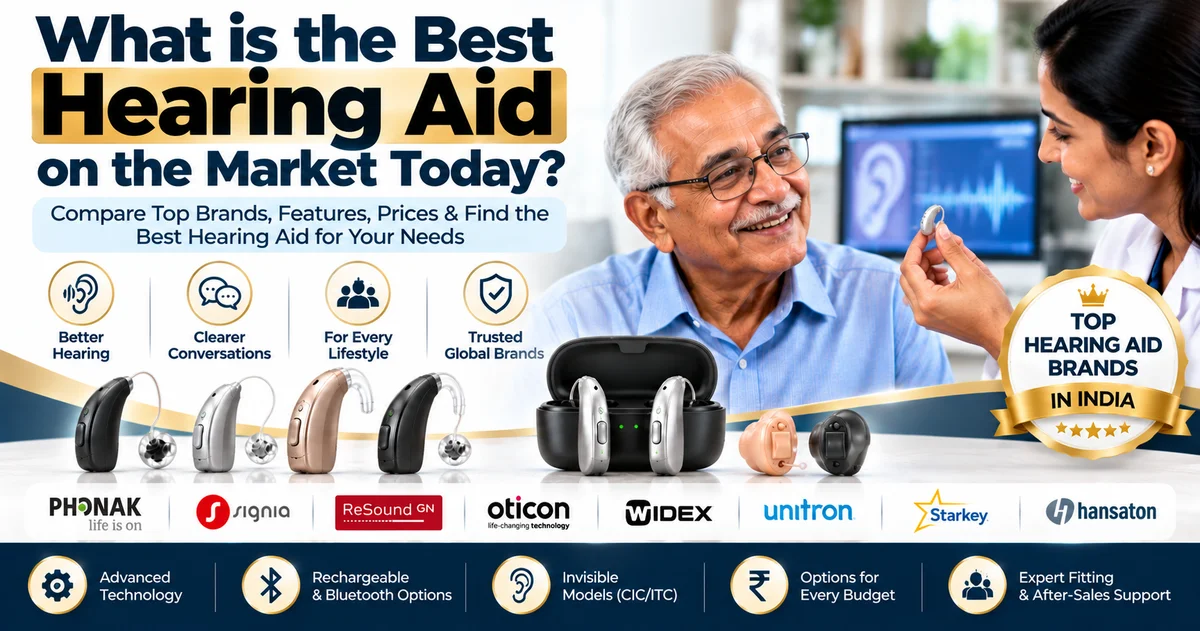
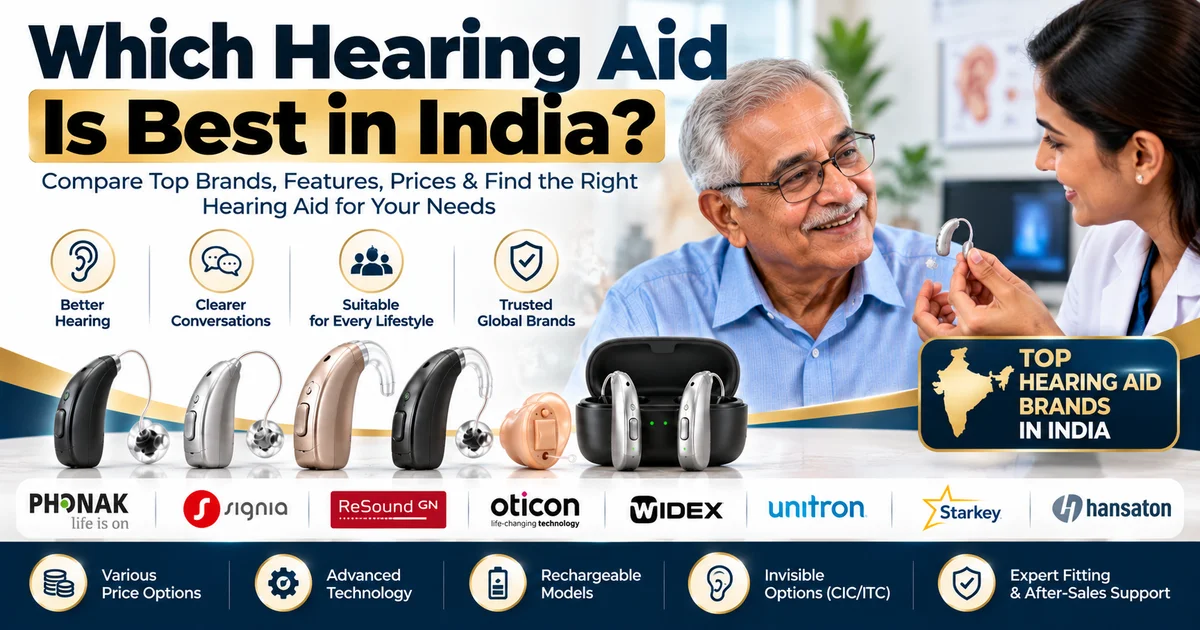
Trusted Hearing Aid Brands in India
Several global manufacturers sell in India, and all of the following are respected names.
Signia: Known for natural sound quality, strong speech clarity and good smartphone connectivity. Many models have rechargeable options, and the brand is popular for mild to severe losses.
ReSound: Praised for clear sound, excellent app control and direct streaming from phones. It is often recommended for people who spend a lot of time on calls and video meetings.
Widex: Famous for a very natural, “unprocessed” sound and for sound quality in music. Widex suits people who want rich, true-to-life hearing.
Oticon: Known for open sound processing that helps the brain pick up speech from several directions. It is a good option for people who attend busy social gatherings.
Phonak: A leader in speech-in-noise performance, with strong rechargeable and Bluetooth models. It is widely used for moderate to profound losses.
Unitron: Built around personalization, with tools that let the audiologist tailor the device to your lifestyle. It offers good value across several price bands.
Starkey: Offers advanced features such as health tracking and fall detection in some models, appealing to active seniors.
Each brand has entry-level, mid-range and premium models. A premium model from one brand is not automatically better for you than a mid-range model from another.
Types of Hearing Aids: Which Style Is Best?
Behind-the-Ear (BTE): Sits behind the ear with a tube or earmold. It is powerful, durable and easy to handle, so it works well for moderate to profound hearing loss and for elderly users who prefer larger controls.
Receiver-in-Canal (RIC): A small unit behind the ear with a thin wire to a speaker in the canal. RIC is among the most popular styles in India because it is discreet, comfortable and suits mild to severe loss. It is often the best all-round choice for first-time users.
In-the-Canal (ITC): A custom-made device that fills part of the outer ear. It is less visible than BTE and suits mild to moderate loss.
Completely-in-Canal (CIC) and Invisible-in-Canal (IIC): These sit deep in the ear canal and are almost invisible. They are good for mild to moderate loss and for people who care about appearance, though their small size means fewer features and smaller batteries.
Instant-Fit and Pocket Hearing Aids: Instant-fit models need no custom mould, so they are quick to start with. Pocket-style aids are simple and budget-friendly for people with limited dexterity or severe loss, though they are less discreet.
Rechargeable or Battery-Operated?
Rechargeable hearing aids are growing in popularity in India. You place them in a charging case overnight and avoid buying and changing tiny batteries. They suit people with weak vision or limited finger movement. Battery-operated aids are still reliable, and the batteries are easy to find. If you travel to areas with unstable power, carrying spare batteries may be more practical. Many people now pick rechargeable models for everyday convenience.
Key Features Worth Paying For
Before choosing, understand which features matter for you.
Noise reduction and speech enhancement: Essential if you spend time in busy places like markets, restaurants and family functions.
Bluetooth and smartphone connectivity: Useful for phone calls, music, videos and remote adjustments through an app.
Directional microphones: Help you focus on the person in front of you.
Tinnitus support: Some models include soothing sounds that help if you have ringing in the ears.
Water and dust resistance: Valuable in India’s humid, dusty and monsoon conditions.
Number of channels: More channels allow finer sound tuning, which matters most for complex or uneven hearing loss.
Paying for features you will never use is a common mistake. A person who lives quietly at home may be happier with a simpler, well-fitted device than with a top-end model.
Hearing Aid Price in India
Prices vary widely depending on brand, technology level and style. Basic models start at a modest price, while premium rechargeable devices with AI-based processing cost much more. Remember that hearing aids are usually bought as a pair when both ears are affected, so check whether the quoted price is for one device or two. Also ask about EMI options, warranty length, free servicing and discounts. Always confirm the current price with your clinic, since offers and models change often.
Why the Audiologist Matters as Much as the Device
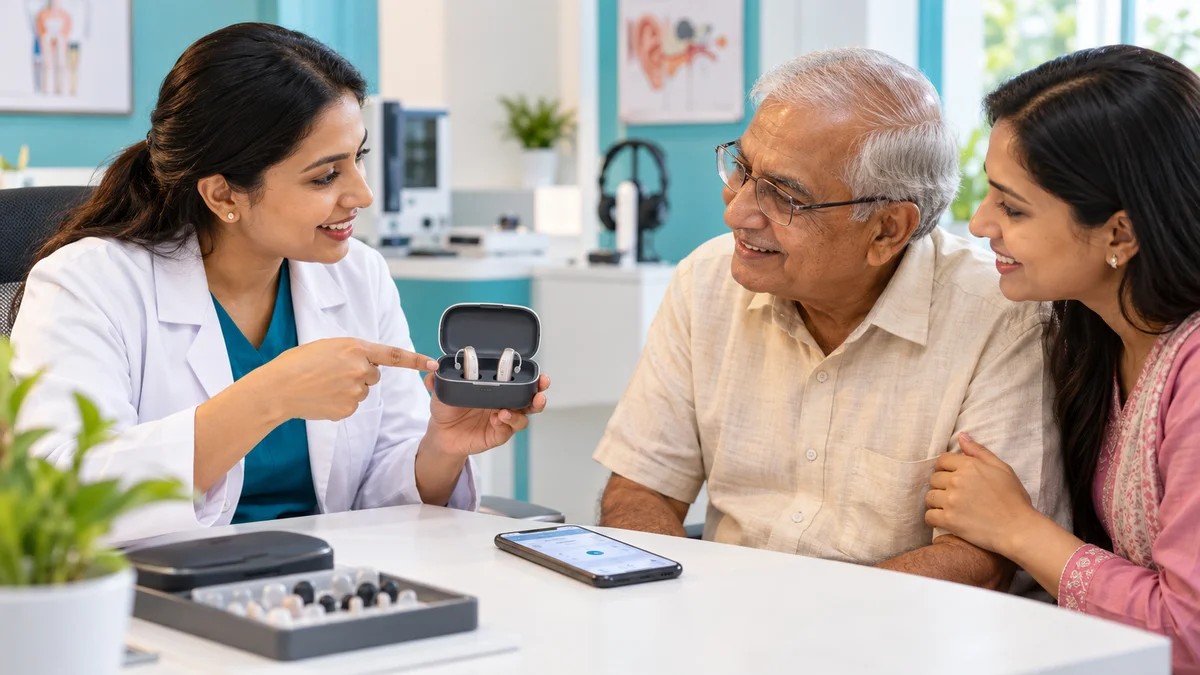
A hearing aid is only as good as its fitting. Even the most advanced device performs poorly if it is programmed incorrectly. A good audiologist will:
Perform a complete hearing evaluation.
Explain your results in simple language.
Recommend devices that suit your hearing loss and budget.
Program and fine-tune the aids to your ears.
Offer follow-up visits, cleaning and repairs.
Be careful of buying devices online or from sellers who skip the hearing test. Without proper testing and adjustment, you risk wasted money and no improvement in hearing.
Getting Used to Your Hearing Aid
Your brain needs time to relearn sounds it has been missing. In the first few weeks, everyday noises like fans, footsteps and paper rustling may seem loud. This is normal. Wear the device daily, increase wear time gradually and attend follow-up sessions so settings can be adjusted. Most people adapt within a few weeks to a few months.
Signs You May Need a Hearing Aid
You often ask people to repeat themselves.
You find it hard to follow conversations in groups or noisy places.
You turn the TV or phone volume very high.
You struggle to hear on phone calls.
Others say you speak too loudly.
You feel tired after social interactions.
If any of these sound familiar, get a hearing test soon. Early treatment protects communication, relationships and even long-term brain health.
How to Choose the Best Hearing Aid for You
Follow these simple steps:
Get a professional hearing test and keep a copy of your audiogram.
Decide your priorities: comfort, discreetness, call clarity, rechargeability or price.
Choose a style that suits your hearing loss and your ears.
Compare two or three brands and models by trying them in person.
Check warranty, trial period and servicing terms.
Select a clinic you can visit easily for follow-up care.
Hearing Aid Care in India’s Climate
Humidity, sweat and dust can shorten the life of a hearing aid. Wipe the device daily with a dry cloth, store it in a dry box overnight, keep it away from water and perfumes, and get it professionally cleaned regularly. Good care means fewer repairs and a longer life.
Where to Get Expert Hearing Aid Guidance
VR Speech and Hearing Clinic in Chhatrapati Sambhajinagar helps patients find the right hearing aid through proper testing, honest advice and personalised fitting. The clinic offers a wide range of leading brands and styles, including RIC, BTE, ITC, CIC, rechargeable and instant-fit hearing aids, along with accessories and batteries. Home hearing tests and EMI options are also available, and there is support for patients across India.
You can visit the clinic at Second Floor, Vasantrao Naik Chowk, opposite Hotel Deepali Executive, N-3, CIDCO, Chhatrapati Sambhajinagar, Maharashtra 431003, or call 9112717179 to book an appointment.
Final Verdict
So, which hearing aid is best in India? The best one is the device that fits your audiogram, your lifestyle and your budget, and that is fitted and supported by a skilled audiologist. For most first-time users with mild to severe hearing loss, a rechargeable RIC hearing aid from a trusted brand like Signia, ReSound, Widex, Oticon, Phonak or Unitron is a strong starting point. Start with a hearing test, compare options in person and choose a clinic that will stand by you after the purchase.
FAQs
Q1. Which hearing aid brand is best in India?
Signia, ReSound, Widex, Oticon, Phonak, Unitron and Starkey are all trusted. The best brand depends on your hearing loss, lifestyle and budget, so an audiologist’s recommendation matters more than the brand name.
Q2. Which type of hearing aid is best for elderly people?
BTE and RIC models are popular with seniors because they are easy to handle and powerful. Rechargeable versions remove the hassle of changing tiny batteries.
Q3. Are rechargeable hearing aids better than battery ones?
Rechargeable aids are more convenient and cost less to run over time. Battery models still work well and are easy to replace when travelling.
Q4. What is the price of a hearing aid in India?
Prices vary by brand, technology level and style. Entry-level models are affordable, and premium models cost more. Confirm current prices and whether the quote is for one ear or a pair.
Q5. Can I buy a hearing aid without a hearing test?
It is not recommended. A hearing test shows the type and degree of loss, which is essential for choosing and programming the right device.
Q6. How long does it take to get used to a hearing aid?
Most people adapt within a few weeks to a few months. Wearing the device daily and attending follow-up visits speeds up the process.
Q7. Which hearing aid is best for noisy places?
Models with strong noise reduction and directional microphones from brands like Phonak, Oticon and Signia perform well in noise, though results vary by person.
Q8. Are invisible hearing aids good?
They are discreet and comfortable for mild to moderate loss, but they have smaller batteries and fewer features than larger styles.
Q9. Does VR Speech and Hearing Clinic offer a home hearing test?
Yes, the clinic offers a home hearing test and appointment booking. Call 9112717179 to schedule.