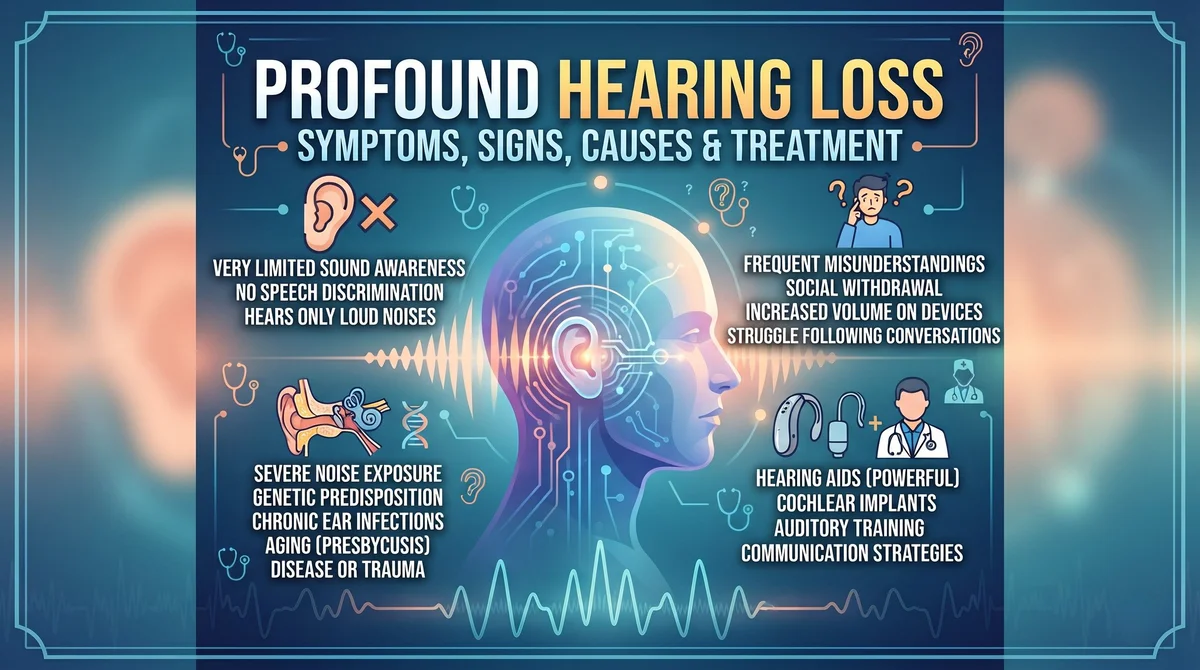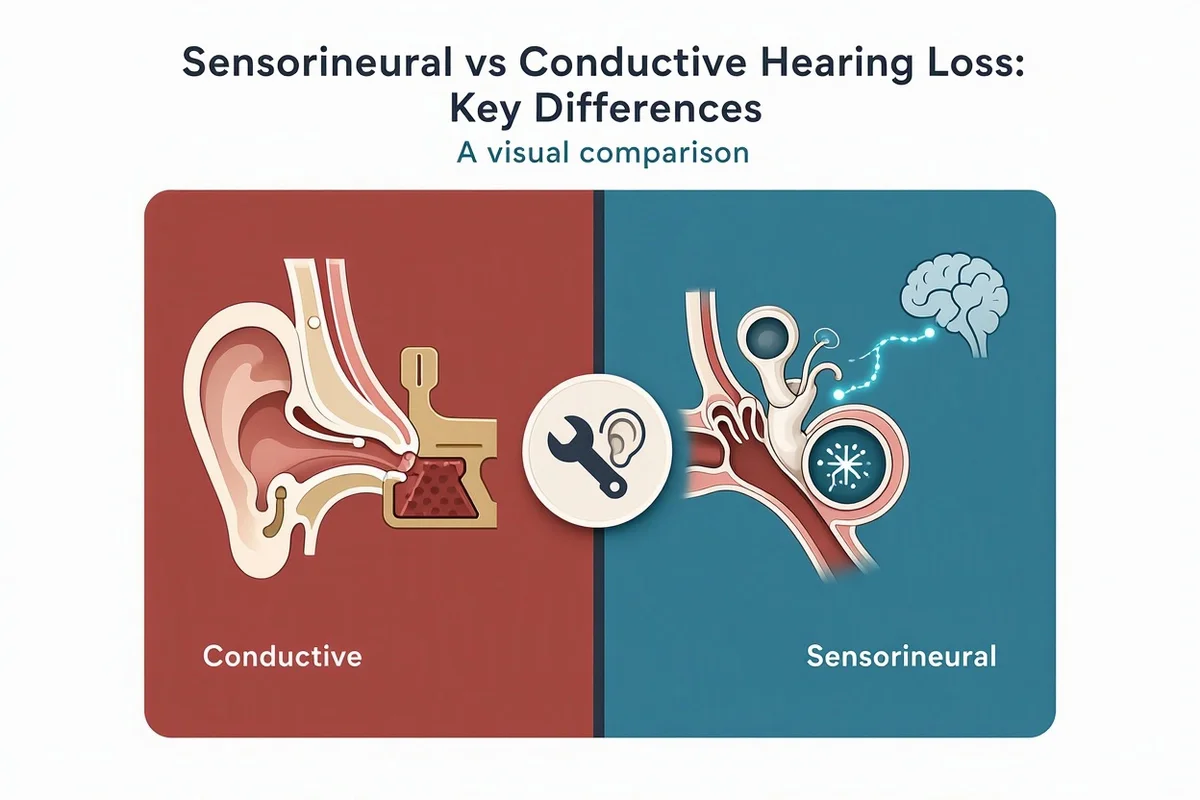
Sensorineural vs Conductive Hearing Loss: Key Differences
What Is Hearing Loss and Why Does the Type Matter?
Hearing loss affects people of every age. The World Health Organization estimates that more than 1.5 billion people worldwide live with some degree of hearing loss, yet many do not know what type they have. The first question an audiologist tries to answer is simple: where in the hearing pathway is the problem?
The answer divides most hearing loss into two main types, conductive and sensorineural. When both are present together, it is called mixed hearing loss. Understanding sensorineural vs conductive hearing loss matters because the causes, outlook and treatment are very different. Some conductive problems clear up with a simple procedure or a short course of medicine, while sensorineural hearing loss is usually permanent and is managed with hearing technology and rehabilitation.
At VR Speech and Hearing Clinic, we meet adults worried about changes in their hearing and parents concerned about their child’s listening and speech. This guide explains both types in plain language so you know what to look for and when to ask for help.
How the Ear Works
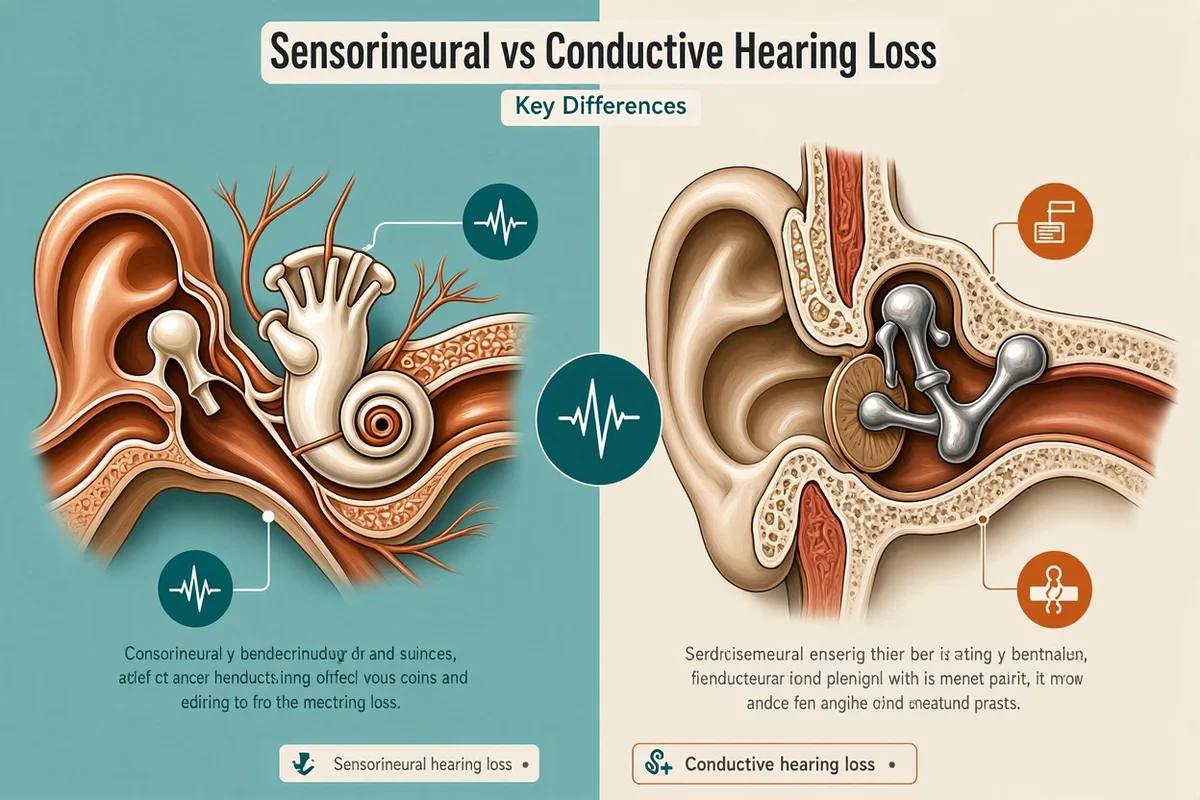
The ear has three parts. The outer ear, made up of the visible ear and the ear canal, collects sound and directs it to the eardrum. The middle ear sits behind the eardrum and contains three tiny bones, the ossicles, that carry vibrations to the inner ear. The inner ear holds the cochlea, a snail-shaped organ lined with thousands of delicate hair cells that turn vibrations into electrical signals. The auditory nerve then sends these signals to the brain, which turns them into speech, music and everyday sounds.
Hearing loss happens when something interrupts this chain. The location of the interruption decides the type.
What Is Conductive Hearing Loss?
Conductive hearing loss occurs when sound cannot pass efficiently through the outer ear or middle ear. The inner ear and nerve are healthy, but the sound that reaches them is weaker. Think of a volume knob turned down: everything is quieter, but the signal itself is still intact.
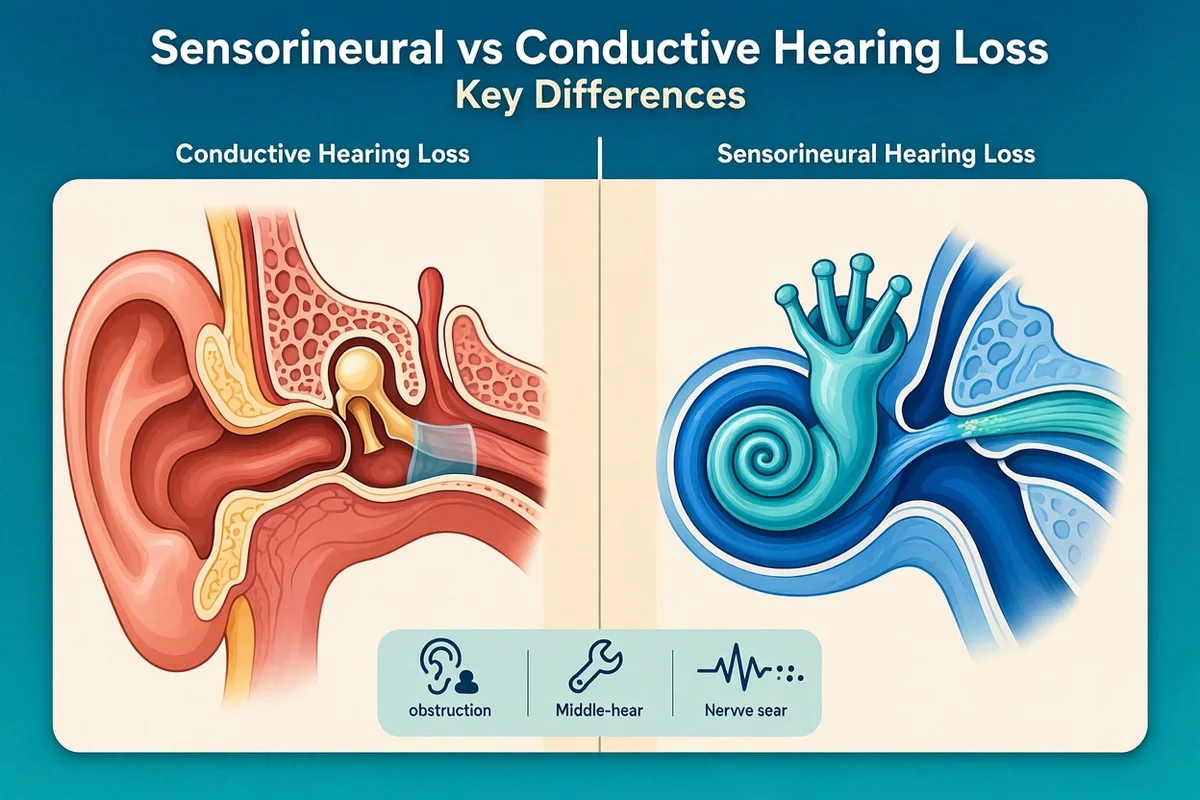
Common causes of conductive hearing loss
Earwax blockage
Middle ear infections and fluid behind the eardrum, especially in children
Swimmer’s ear and other outer ear infections
A perforated or ruptured eardrum
Eustachian tube problems linked to colds, allergies and sinus trouble
Otosclerosis, where abnormal bone growth stops the tiny stapes bone from moving
Damaged or disconnected ear bones after a head injury
Cholesteatoma, an abnormal skin growth behind the eardrum
Objects stuck in the ear canal
Birth differences, such as a narrow or absent ear canal
Symptoms of conductive hearing loss
Sounds and speech seem faint or muffled
A blocked or full feeling in the ear
Ear pain, itching or discharge
Your own voice sounds louder or booming inside your head
Hearing that changes with colds or infections
A key feature is that speech usually becomes clear once it is loud enough. Many conductive causes are temporary or medically treatable, which is why early diagnosis is so valuable.
What Is Sensorineural Hearing Loss?
Sensorineural hearing loss happens when the hair cells of the cochlea or the auditory nerve are damaged. Sound reaches the inner ear normally, but it is not converted or transmitted properly. The result is not only reduced volume but also reduced clarity, so speech may be audible but hard to understand. It is the most common type of permanent hearing loss.
Common causes of sensorineural hearing loss
Ageing (presbycusis), which usually develops slowly in both ears
Noise exposure from machinery, traffic, loud music, firecrackers or headphones played too loudly
Ototoxic medicines, including some chemotherapy drugs and certain antibiotics
Genetic and hereditary conditions
Infections such as meningitis, measles, mumps, rubella and cytomegalovirus
Complications around birth, including prematurity and severe jaundice
Head injury or trauma to the inner ear
Ménière’s disease
Acoustic neuroma, a non-cancerous growth on the hearing nerve, which typically affects one ear
Sudden sensorineural hearing loss, which often has no clear cause
If you take prescription medicines, never stop them on your own. Speak with your doctor if you are worried about side effects on your hearing.
Symptoms of sensorineural hearing loss
Difficulty following conversations, especially in noisy places such as restaurants
A feeling that people mumble
Trouble hearing high-pitched sounds such as children’s voices and birdsong
Turning the television volume up
Ringing or buzzing in the ears (tinnitus)
Tiredness from the constant effort to listen
Sudden hearing loss in one or both ears should be treated as an urgent medical problem. Prompt treatment, ideally within the first few days, gives the best chance of recovery.
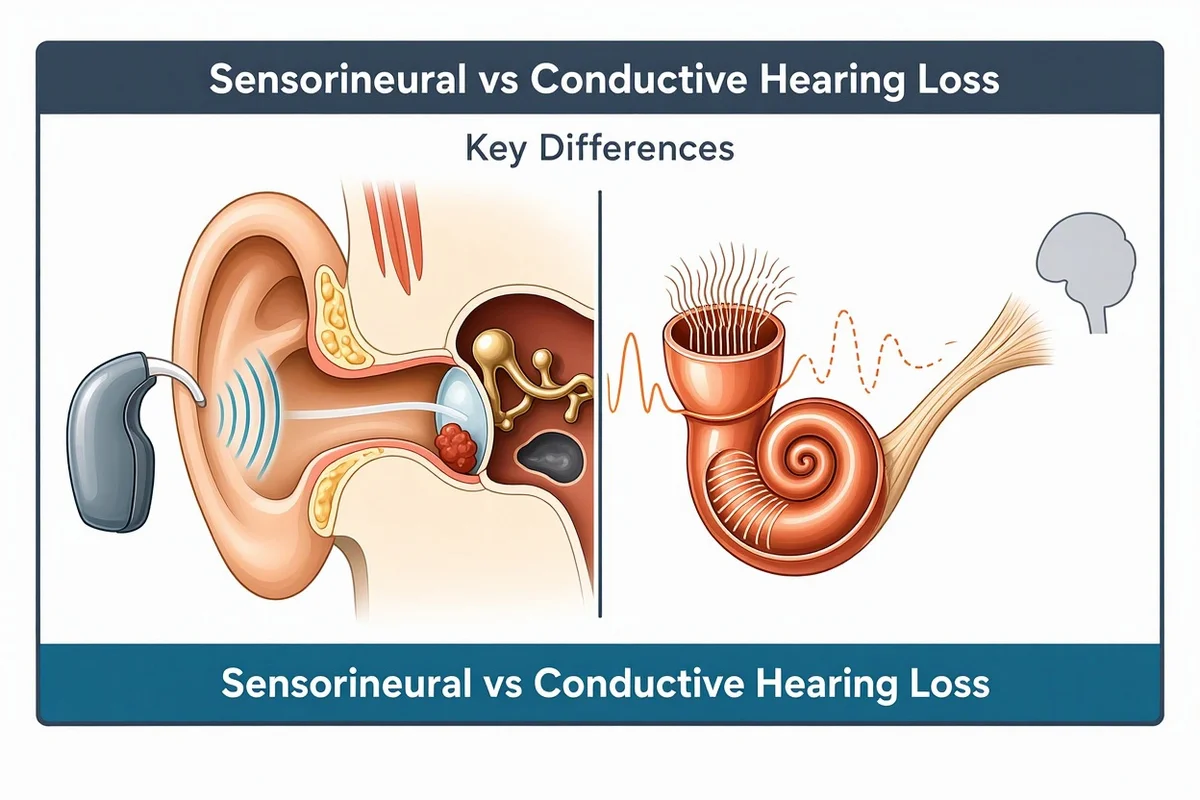
Sensorineural vs Conductive Hearing Loss: Key Differences
Where the problem is: Conductive loss affects the outer or middle ear. Sensorineural loss affects the inner ear or auditory nerve.
How sound is affected: Conductive loss mainly makes sound quieter. Sensorineural loss makes sound quieter and less clear.
Common causes: Conductive loss is linked to wax, infections, fluid, eardrum damage and bone problems. Sensorineural loss is linked to ageing, noise, genetics, infections and nerve conditions.
Permanence: Conductive loss is often temporary or reversible. Sensorineural loss is usually permanent.
Speech understanding: In conductive loss, speech becomes clear once it is loud enough. In sensorineural loss, speech can stay unclear even when it is loud.
Tinnitus: It can occur in both types but is more common and persistent in sensorineural loss.
Test results: Conductive loss shows an air-bone gap on audiometry. Sensorineural loss does not, because air and bone hearing thresholds drop together.
Main treatment: Conductive loss is treated medically or surgically, or with devices. Sensorineural loss is managed with hearing aids, cochlear implants and rehabilitation.
What Is Mixed Hearing Loss?
Mixed hearing loss means there is damage in both the outer or middle ear and the inner ear or nerve. A person with age-related sensorineural loss who develops an ear infection or a wax blockage, for example, will have a mixed picture for a while. Treatment usually addresses the conductive part first, then manages the sensorineural part with hearing aids or other devices.
How Are the Types of Hearing Loss Diagnosed?
Only a proper hearing evaluation can tell you which type you have. Symptoms overlap, so guessing at home is unreliable. A typical assessment includes:
Case history and ear examination: We ask about symptoms, medical history, noise exposure and family history, then examine the ear canal and eardrum with an otoscope.
Pure tone audiometry: You listen to soft beeps through headphones (air conduction) and through a small vibrator placed behind the ear (bone conduction). Comparing the two shows whether the loss is conductive, sensorineural or mixed.
Tympanometry: This test measures how well the eardrum and middle ear move and can reveal fluid, a perforation or stiffness.
Speech audiometry: This checks how well you recognise words, which helps predict the benefit of hearing aids.
Otoacoustic emissions and auditory brainstem response: These tests are used for babies, young children and others who cannot respond reliably.
If the results suggest a medical cause, we refer you to an ENT specialist for further evaluation or imaging.
Treatment Options for Conductive Hearing Loss
Because the inner ear is healthy, conductive hearing loss often responds well to treatment:
Professional earwax removal
Ear drops or medicines for infections
Ventilation tubes (grommets) for children with repeated fluid in the middle ear
Surgery such as eardrum repair, ear bone reconstruction or stapedotomy for otosclerosis
Hearing aids or bone conduction devices when surgery is not possible or not preferred
Treatment Options for Sensorineural Hearing Loss
Damaged hair cells do not currently regrow, so the goal is to make the best use of the hearing that remains:
Hearing aids: Modern digital hearing aids are programmed to your hearing test results, amplifying the sounds you miss while keeping loud sounds comfortable. Careful fitting and fine-tuning matter as much as the device itself.
Cochlear implants: For severe to profound loss where hearing aids give limited benefit, an implant stimulates the auditory nerve directly.
Assistive listening devices: TV streamers, amplified phones and remote microphones help in difficult listening situations.
Auditory training and speech therapy: Therapy helps children develop speech and language and helps adults adapt to new hearing devices.
Tinnitus management: Counselling, sound therapy and relaxation strategies can reduce its impact.
Urgent medical care for sudden loss: An ENT doctor may prescribe medication, which works best when started early.
Leaving hearing loss untreated has been linked with social withdrawal, poorer concentration and a higher risk of cognitive decline, so acting early protects both communication and quality of life.
Hearing Loss in Children
Children are especially prone to conductive hearing loss because of frequent ear infections and fluid behind the eardrum, often called glue ear. Even mild, temporary loss can affect attention, learning and speech development. Sensorineural hearing loss in children may be present from birth or appear later after infections or other causes. Warning signs include not responding to sounds, delayed or unclear speech, frequently saying “what?”, turning the television up and trouble at school. Early testing and intervention, including speech and language therapy, give children the best chance of developing strong communication skills.
How to Protect Your Hearing
Never insert cotton buds, pins or sharp objects into your ears
Keep ears dry after swimming and treat ear infections promptly
Wear earplugs or earmuffs around loud machinery and events
Follow the 60/60 rule: keep headphone volume at or below 60 percent and take a break after 60 minutes
Manage allergies, colds and sinus problems that affect the Eustachian tube
Keep diabetes and blood pressure under control
Get regular hearing checks, especially if you work in a noisy environment, are over 50 or notice changes
When Should You See a Hearing Specialist?
Seek urgent medical care if you notice sudden hearing loss, hearing loss after a head injury, ear pain with discharge or blood, dizziness or weakness of the face. Book a hearing test promptly if you struggle to follow conversations, hear ringing in your ears, keep turning up the volume, or if your child seems not to respond to sounds.
Book a Hearing Evaluation at VR Speech and Hearing Clinic
Whether you suspect conductive hearing loss, sensorineural hearing loss or you are simply unsure, the first step is an accurate diagnosis. At VR Speech and Hearing Clinic, our team provides comprehensive hearing evaluations, hearing aid selection and fitting, and speech and language therapy for children and adults. We explain your results clearly, build a plan around your needs and refer you to ENT specialists when medical care is required. Contact us today to schedule your appointment and take the first step towards clearer hearing.
Frequently Asked Questions
1. Which is worse, sensorineural or conductive hearing loss?
Neither is worse in every case, but their outlook differs. Conductive hearing loss is often treatable or reversible, while sensorineural hearing loss is usually permanent. Severity depends on the degree of loss rather than the type, and both can be managed well with the right care.
2. Can sensorineural hearing loss be reversed?
In most cases, no, because hair cells in the inner ear do not regrow. The exception is sudden sensorineural hearing loss, where some people regain part or all of their hearing if treated quickly. Hearing aids and cochlear implants can greatly improve communication.
3. Can conductive hearing loss become permanent?
It can if the cause is ignored. Repeated infections, a persistent eardrum perforation or untreated otosclerosis can lead to lasting hearing problems. Early treatment helps prevent this.
4. How can I tell which type of hearing loss I have?
Symptoms offer clues, but only a hearing evaluation with audiometry and tympanometry can confirm the type.
5. Do hearing aids work for both types?
In most cases, yes. Hearing aids are the main treatment for sensorineural loss and an option for conductive and mixed loss. Bone conduction devices suit people who cannot use standard hearing aids.
6. Can you have both types of hearing loss at the same time?
Yes. This is called mixed hearing loss, and it is common in older adults who also develop wax blockage or middle ear problems.
7. Is tinnitus a sign of sensorineural hearing loss?
Tinnitus is common with sensorineural loss, but it can also occur with wax or ear infections. Persistent or one-sided tinnitus should always be checked.
8. How often should I get my hearing tested?
Many adults benefit from a baseline test around age 50, or earlier with noise exposure or symptoms, followed by regular checks as your audiologist advises. Anyone who notices a change should be tested promptly.