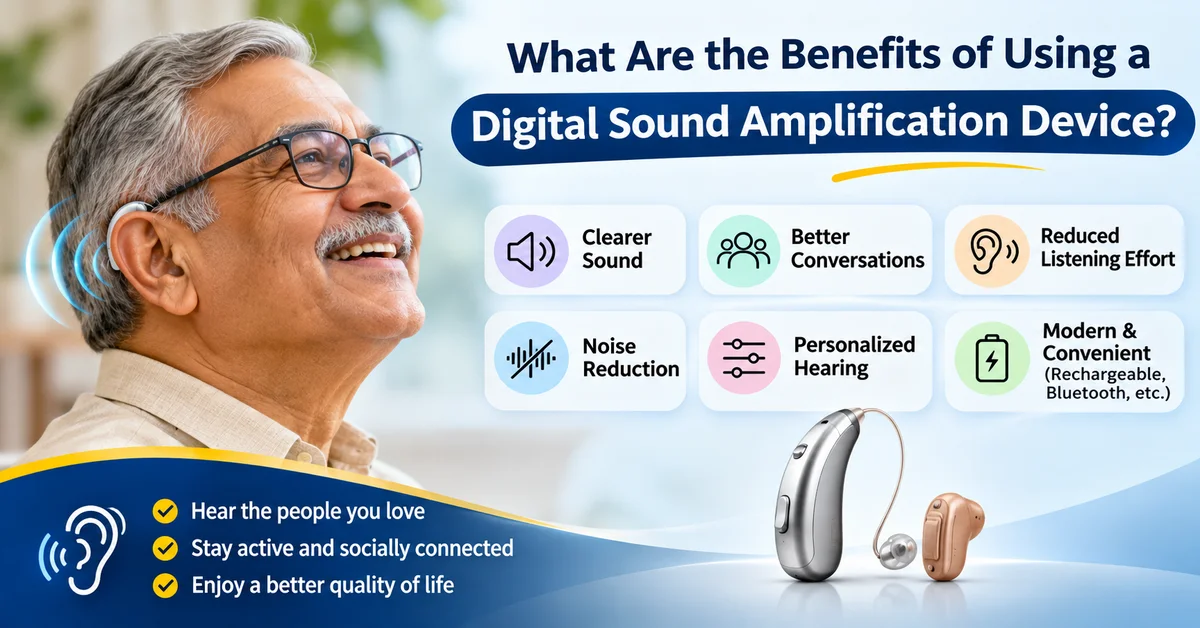
What Are the Benefits of Using a Digital Sound Amplification Device
Struggling to follow a conversation in a busy restaurant, turning the television volume higher every week, or asking people to repeat themselves again and again? These small daily frustrations are more common than most people think, and they can quietly affect confidence, relationships and safety. A digital sound amplification device is one practical way to make everyday listening easier. In this guide, VR Speech and Hearing Clinic explains the main benefits of using a digital sound amplification device, how it differs from a hearing aid, and how to decide whether it is right for you.
What Is a Digital Sound Amplification Device?
A digital sound amplification device is a small, wearable electronic product that picks up sound through a microphone, processes it digitally, and delivers a louder, clearer signal to your ear. Unlike older analog amplifiers that simply make everything louder, digital models use a built-in chip to shape the sound. Many include features such as noise reduction, feedback control, multiple listening programs and rechargeable batteries.
These products are often called personal sound amplification products, or PSAPs. They are designed for people who want a little extra volume in specific situations, such as watching television, attending a lecture, bird watching or talking with family. They are not medical devices designed to treat diagnosed hearing loss, which is an important difference we explain later in this article.
1. Clearer Speech and Easier Conversations
The most obvious benefit is better speech understanding. Digital processing boosts the sounds you need most, especially the soft consonants such as s, f, th and k that give speech its clarity. When these sounds are easier to catch, you spend less time guessing and more time actually following the conversation. Whether you are chatting at the dinner table or talking to a shopkeeper, clearer speech makes social situations feel more natural.
2. Reduced Listening Fatigue
Straining to hear is tiring. When your brain works overtime to fill in missing words, you may feel exhausted, irritable or unfocused by evening. A well-fitted digital sound amplification device reduces that effort by delivering a stronger, cleaner signal. Many users report feeling more relaxed and energetic after long social events or busy workdays because they no longer have to concentrate so hard on every word.
3. Better Hearing in Noisy Places
Restaurants, markets, traffic and family gatherings are difficult listening environments. Modern digital amplifiers often include noise reduction and directional microphones that help favour the voice in front of you over the clatter around you. Some models allow you to switch between programs for quiet rooms, crowds or outdoors. While no device can remove background noise completely, digital technology can make it noticeably more manageable than simple volume boosting.
4. Improved Safety and Awareness
Hearing is your early warning system. Being able to notice a car horn, a doorbell, a smoke alarm, footsteps behind you or a child calling from another room supports safe living at home and outdoors. A digital sound amplification device can increase awareness of these important everyday sounds, helping you feel more secure, especially if you live alone or walk in busy areas.
5. Stronger Relationships and Social Confidence
When hearing becomes difficult, many people start avoiding gatherings, phone calls and group discussions. Over time this can lead to isolation and frustration for both the listener and loved ones. Using a digital sound amplification device can bring you back into the conversation. You can respond confidently, share jokes, join family events and keep in touch with friends without constantly asking for repetition. Better communication often means better relationships and a happier outlook.
6. More Enjoyment of TV, Music and Nature
Amplification is not only about conversation. Many people use these devices to enjoy television dialogue at a comfortable volume, hear a speaker at a seminar, follow a religious service, listen to birdsong during a morning walk or enjoy a documentary without disturbing others. Because the device raises the volume for you personally, the rest of the household does not have to put up with a blaring television.
7. Easy to Use, Comfortable and Discreet
Digital sound amplifiers are usually lightweight, compact and simple to operate. Many sit comfortably behind or inside the ear, and several designs are almost invisible. Controls are generally straightforward, with a volume button, a program switch and a rechargeable battery that charges overnight. For first-time users who feel nervous about technology, this simplicity is a major advantage.
8. Budget-Friendly and Quickly Accessible
Compared with prescription hearing aids, amplification devices are typically more affordable and do not always need a lengthy fitting process. This makes them an appealing short-term or situational solution for adults with mild listening difficulty. You can start enjoying improved sound relatively quickly and decide later whether a more advanced solution is necessary.
9. Supports Mental Wellbeing and Staying Connected
Research has linked untreated hearing difficulty with social withdrawal, low mood and greater mental strain. Staying engaged with sound and conversation supports mental stimulation and emotional wellbeing. A digital sound amplification device encourages you to stay active, curious and connected, which is good for brain health at any age.
Digital Sound Amplifier vs Hearing Aid: Know the Difference
This is where professional guidance matters. A hearing aid is a regulated medical device programmed by a qualified audiologist to match your individual hearing test results. It treats specific patterns of hearing loss, frequency by frequency. A digital sound amplification device is a general-purpose product that makes sound louder for people with normal hearing or very mild hearing difficulty. It is not customised to a hearing test and is not intended to treat hearing loss.
Using an amplifier when you actually have a significant hearing loss can delay proper treatment. Over-amplification can also be harmful, since sounds that are too loud for too long may damage the ears further. That is why a hearing evaluation is the smartest first step before buying any device.
Who Can Benefit From a Digital Sound Amplification Device?
These devices may suit people who:
Find television or phone volume slightly too low
Struggle in group conversations or noisy rooms
Need extra help in specific situations such as lectures, meetings or hobbies
Have been told by a professional that their hearing is normal or only mildly reduced
Want a temporary, budget-friendly option while exploring other solutions
Tips for Choosing the Right Device
Look for adjustable volume with a safe maximum output limit, noise reduction, a comfortable fit with several ear tip sizes, a rechargeable battery and a clear return policy. Avoid products that promise to cure hearing loss or that seem to push very high volume. Most importantly, get your ears and hearing checked first, and ask a professional to review the device before you begin using it regularly.
Why Visit VR Speech and Hearing Clinic First?
The best listening outcome begins with understanding your hearing. At VR Speech and Hearing Clinic, a qualified professional can assess your hearing, explain your results in simple language and advise whether a digital sound amplification device, a prescription hearing aid or another approach is the safest choice. Professional guidance helps you avoid trial and error, protects your hearing and ensures that the device you choose fits your lifestyle and needs. Where communication difficulties go beyond hearing, speech and language support can also be recommended.
Final Thoughts
A digital sound amplification device can bring real everyday benefits: clearer speech, less listening fatigue, better awareness of your surroundings, stronger social confidence and more enjoyment of the sounds you love. Yet the best results come when the device is chosen wisely and used safely. If you or someone you love is turning up the volume, asking for repeats or avoiding social events, do not wait. Book a hearing assessment with VR Speech and Hearing Clinic and take the first step toward comfortable, confident listening.
FAQs
What is a digital sound amplification device used for?
It is used to make everyday sounds louder and clearer in situations such as conversations, watching television, attending meetings or enjoying outdoor activities. It suits people with normal hearing or very mild listening difficulty.
Is a digital sound amplifier the same as a hearing aid?
No. A hearing aid is a medical device programmed by an audiologist to your hearing test results, while a sound amplifier simply boosts sound and is not designed to treat hearing loss.
Can I use a digital sound amplification device every day?
Many people use one daily or only in certain situations. Keep the volume at a comfortable level, take listening breaks and have your hearing checked first so you know the device is suitable for you.
Who should avoid using a sound amplifier?
Anyone with diagnosed or suspected moderate to severe hearing loss, sudden hearing changes, ear pain, discharge, dizziness or ringing in one ear should see a hearing professional promptly instead of relying on an amplifier.
How do I know which device is right for me?
The most reliable way is a hearing evaluation. A professional at VR Speech and Hearing Clinic can review your results and daily listening needs and recommend the safest, most suitable option.