Sensorineural Hearing Loss: Causes, Symptoms & Treatment
Sensorineural Hearing Loss: Causes, Symptoms, Diagnosis, and Treatment
Sensorineural hearing loss is the most common type of permanent hearing loss, affecting millions of people across all age groups. Whether you have recently noticed difficulty hearing conversations in noisy environments or have been living with hearing challenges for years, understanding sensorineural hearing loss is the first step toward better hearing health.
At VR Hearing Clinic, we specialize in diagnosing and managing sensorineural hearing loss with compassionate, expert care tailored to every patient's unique needs.
What Is Sensorineural Hearing Loss?
Sensorineural hearing loss (SNHL) occurs when there is damage to the inner ear (cochlea) or to the nerve pathways that carry sound signals from the inner ear to the brain. Unlike conductive hearing loss, which involves blockages or structural problems in the outer or middle ear, sensorineural hearing loss affects the sensory and neural components of the auditory system.
This type of hearing loss is typically permanent, but its effects on your daily life can be significantly reduced with the right treatment and hearing solutions.
Types of Sensorineural Hearing Loss
Sensorineural hearing loss can be classified in several ways depending on when it occurs, how quickly it develops, and which part of the auditory system is affected.
Congenital sensorineural hearing loss is present from birth and may be caused by genetic factors or complications during pregnancy or delivery.
Acquired sensorineural hearing loss develops after birth due to aging, noise exposure, illness, or other external factors.
Sudden sensorineural hearing loss refers to a rapid loss of hearing, often occurring in one ear within 72 hours, and is considered a medical emergency requiring immediate attention.
Bilateral sensorineural hearing loss affects both ears and is commonly associated with aging and prolonged noise exposure.
Unilateral sensorineural hearing loss affects only one ear and may be linked to conditions such as acoustic neuroma or Meniere's disease.
Common Causes of Sensorineural Hearing Loss
Understanding the underlying cause of sensorineural hearing loss is essential for effective management. There are many potential causes, and in some cases, more than one factor may be involved.
Age-related hearing loss, known as presbycusis, is the leading cause of sensorineural hearing loss. As we grow older, the tiny hair cells in the cochlea gradually wear down and stop functioning. This process is natural but irreversible, and it typically affects high-frequency sounds first.
Noise-induced hearing loss is the second most common cause. Prolonged exposure to loud sounds — whether from occupational environments like construction or manufacturing, or recreational activities like concerts and headphone use — destroys the delicate hair cells in the inner ear. Unlike some types of hearing damage, noise-induced sensorineural hearing loss is largely preventable.
Genetics play a significant role in many cases of sensorineural hearing loss. Inherited mutations can affect how the cochlea develops or functions, leading to hearing loss that may be present at birth or emerge later in life.
Viral infections such as mumps, measles, meningitis, and cytomegalovirus can damage the inner ear or auditory nerve, resulting in sensorineural hearing loss that may be sudden or gradual.
Ototoxic medications, including certain antibiotics (aminoglycosides), chemotherapy drugs (cisplatin), and high doses of aspirin or loop diuretics, can be harmful to the hearing system and lead to permanent inner ear damage.
Head trauma or injury to the skull can damage the cochlea or auditory nerve, causing immediate or delayed sensorineural hearing loss.
Autoimmune inner ear disease is a rare but treatable condition in which the body's immune system mistakenly attacks the structures of the inner ear, causing fluctuating or progressive hearing loss.
Meniere's disease is an inner ear disorder characterized by episodes of vertigo, tinnitus, and fluctuating hearing loss, often associated with fluid buildup in the inner ear.
Acoustic neuroma, also called a vestibular schwannoma, is a benign tumor that grows on the vestibular nerve and can cause gradual unilateral hearing loss and tinnitus.
Signs and Symptoms of Sensorineural Hearing Loss
Sensorineural hearing loss can develop gradually or suddenly, and the symptoms may vary depending on the severity and underlying cause. Recognizing the warning signs early is critical for seeking timely treatment.
Common symptoms include difficulty understanding speech, especially in noisy environments, the sensation that others are mumbling or speaking unclearly, needing to turn up the volume on the television or phone, frequently asking people to repeat themselves, missing high-pitched sounds such as doorbells, alarms, or birds chirping, tinnitus (ringing, buzzing, or hissing sounds in the ears), and in some cases, dizziness or problems with balance.
If you or a loved one are experiencing any of these symptoms, a comprehensive hearing evaluation at VR Hearing Clinic can provide clarity and a path forward.
How Is Sensorineural Hearing Loss Diagnosed?
Accurate diagnosis is the foundation of effective treatment. At VR Hearing Clinic, our audiologists use a thorough and systematic approach to evaluating your hearing health.
The diagnostic process typically begins with a detailed case history, during which your audiologist will discuss your symptoms, medical background, noise exposure history, and any medications you may be taking.
A pure tone audiometry test is then conducted to measure your hearing sensitivity across a range of frequencies. The results are plotted on an audiogram, which clearly shows the degree and pattern of your hearing loss.
Speech audiometry evaluates how well you can hear and understand speech at different volume levels, giving important insight into your real-world hearing function.
Tympanometry and acoustic reflex testing assess the health and function of the middle ear to rule out any conductive component.
In some cases, additional imaging studies such as MRI or CT scans may be recommended to investigate structural or neurological causes of hearing loss.
Treatment Options for Sensorineural Hearing Loss
While sensorineural hearing loss is generally permanent, there are highly effective treatment options that can dramatically improve hearing ability and quality of life.
Hearing aids are the most common and accessible treatment for sensorineural hearing loss. Modern hearing aids are sophisticated devices that amplify and process sound in real time, making speech clearer and more intelligible. They come in a wide variety of styles — from discreet in-the-ear models to behind-the-ear designs — and can be customized for your specific hearing profile and lifestyle needs.
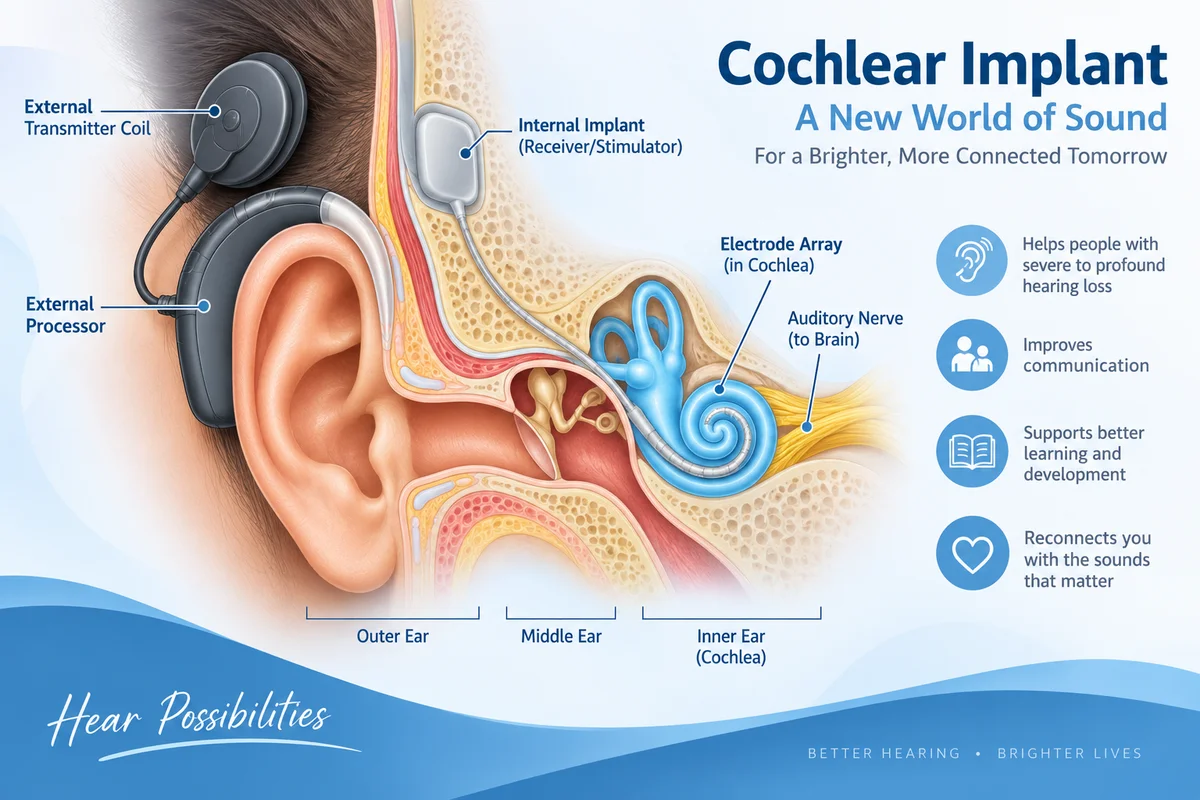
Cochlear implants are an option for individuals with severe to profound sensorineural hearing loss who do not benefit sufficiently from conventional hearing aids. A cochlear implant bypasses the damaged hair cells in the cochlea and directly stimulates the auditory nerve, providing a sense of sound to those who would otherwise hear very little.
Bone-anchored hearing systems may be suitable for patients with unilateral hearing loss or those who cannot wear conventional hearing aids. These devices transmit sound vibrations through the skull directly to the inner ear.
Sudden sensorineural hearing loss is treated as a medical emergency. Prompt intervention with corticosteroids — either oral or injected directly into the middle ear (intratympanic steroid injections) — can help restore hearing in many cases if administered quickly after onset.
Aural rehabilitation and auditory training programs help patients adjust to hearing aids and maximize their communication skills. These programs focus on listening strategies, lip-reading techniques, and counseling support.
Management of associated conditions such as Meniere's disease or autoimmune inner ear disease may involve medications, dietary changes, or specialized therapies that can help stabilize hearing and reduce symptoms.
Living with Sensorineural Hearing Loss
A diagnosis of sensorineural hearing loss does not have to limit your life. With the right support and technology, most people with sensorineural hearing loss go on to lead full, active, and socially engaged lives.
There are a number of practical strategies that can help. Informing family members, friends, and colleagues about your hearing loss allows them to communicate more effectively with you — for example, by making eye contact before speaking, speaking clearly without shouting, and reducing background noise when possible.
Assistive listening devices, such as amplified telephones, captioned phones, personal FM systems, and television streamers, can supplement hearing aids and improve access to sound in specific environments.
Regular hearing check-ups are important for monitoring changes in your hearing and ensuring your hearing devices continue to perform optimally.
Mental health and emotional wellbeing are equally important aspects of living with hearing loss. Untreated or undertreated hearing loss has been linked to social isolation, depression, and cognitive decline. Seeking professional help early and staying connected to a supportive care team makes a meaningful difference.
When to See a Hearing Specialist
You should schedule a hearing evaluation as soon as possible if you notice sudden changes in your hearing, experience hearing loss in one ear only, hear ringing or noise in your ears, feel that your hearing has been gradually getting worse, or have a family history of hearing loss.
Early intervention consistently leads to better outcomes. The sooner sensorineural hearing loss is identified and treated, the more effectively your auditory system can adapt and compensate.
Why Choose VR Hearing Clinic?
At VR Hearing Clinic, we understand that hearing loss is more than just an auditory challenge — it affects every aspect of your life, from your relationships and career to your emotional health and independence. Our team of experienced audiologists is dedicated to providing compassionate, evidence-based care using the latest diagnostic technology and hearing solutions.
We offer comprehensive hearing assessments, expert fitting and fine-tuning of hearing aids from leading brands, cochlear implant counseling and referral services, tinnitus management programs, and ongoing aftercare and support for every patient.
Whether you are coming in for your first hearing test or are looking to upgrade your current hearing devices, VR Hearing Clinic is your trusted partner in better hearing health.
Frequently Asked Questions About Sensorineural Hearing Loss
Is sensorineural hearing loss reversible?
In most cases, sensorineural hearing loss is permanent because the damaged hair cells in the inner ear do not regenerate. However, sudden sensorineural hearing loss may be partially or fully reversible with early treatment. Hearing aids and cochlear implants can effectively compensate for the hearing that has been lost.
Can sensorineural hearing loss get worse over time?
Yes, sensorineural hearing loss can progress, particularly age-related or noise-induced hearing loss. Regular monitoring and timely adjustments to your hearing devices can help you stay ahead of any changes.
Is sensorineural hearing loss the same as nerve deafness?
The two terms are often used interchangeably. Sensorineural hearing loss involves both the sensory hair cells of the cochlea and the neural pathways of the auditory nerve, which is why it is sometimes called nerve deafness or inner ear hearing loss.
Can children develop sensorineural hearing loss?
Yes. Sensorineural hearing loss can affect people of any age, including newborns and children. Early detection through newborn hearing screening programs and prompt intervention are critical for normal language and speech development.
What is the difference between sensorineural and conductive hearing loss?
Sensorineural hearing loss involves damage to the inner ear or auditory nerve, while conductive hearing loss involves a physical blockage or structural problem in the outer or middle ear. Some people have a combination of both, known as mixed hearing loss.
Take the First Step Toward Better Hearing
If you suspect you or a loved one may have sensorineural hearing loss, do not wait. Early diagnosis and treatment can make a profound difference in your quality of life. Contact VR Hearing Clinic today to schedule a comprehensive hearing evaluation with one of our expert audiologists. We are here to help you hear the world more clearly.