Safe Decibel Levels for Listening to Music: What Your Ears Need You to Know
Music is one of life's greatest pleasures — but how loud is too loud? Every day, millions of people plug in their earphones, crank up the volume, and unknowingly put their hearing at risk. The damage is silent, gradual, and — most importantly — permanent. Understanding safe decibel levels for listening to music is one of the simplest steps you can take to protect your hearing for life.
This guide covers everything you need to know: what decibel levels are safe, how long you can listen at different volumes, what happens when you overdo it, and what the World Health Organization recommends for safe listening.
What Is a Decibel and Why Does It Matter?
A decibel (dB) is the unit used to measure the intensity of sound. The scale is logarithmic, meaning every 10 dB increase represents a sound ten times more intense than the previous level. A whisper sits around 30 dB. A normal conversation runs about 60 dB. A lawnmower roars at around 90 dB. A rock concert can hit 110 dB or beyond.
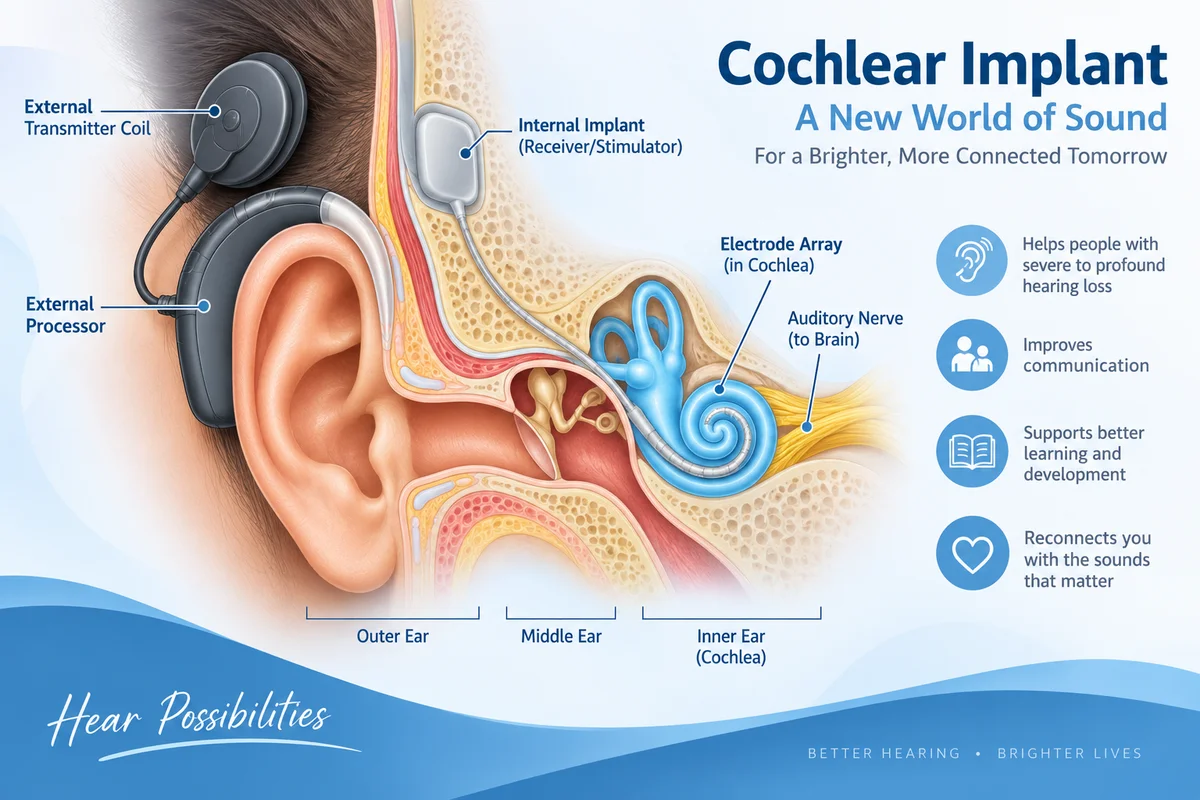
The human ear is remarkably sensitive — and remarkably fragile. The tiny hair cells inside your cochlea (inner ear) that convert sound vibrations into electrical signals for your brain do not regenerate once they are damaged. That is what makes noise-induced hearing loss so serious: it is entirely preventable but completely irreversible.
What Is a Safe Decibel Level for the Human Ear?
The broadly accepted safe threshold for continuous sound exposure is 85 decibels (dB) over an 8-hour period. Below this level, the risk of permanent hearing damage is considered negligible for most people.
Here is a general reference for common sound levels:
Sounds below 70 dB are considered safe for unlimited exposure. This includes normal conversation, background music, and ambient environmental noise.
Sounds between 70 and 85 dB carry low risk for moderate durations but should not be sustained for many hours daily without breaks.
Sounds at 85 to 90 dB are where damage begins to accumulate with prolonged exposure. Workplace noise regulations in most countries kick in at this level.
Sounds above 90 dB carry significant risk and time limits drop sharply the louder things get.
Sounds above 120 dB — like gunshots, jet engines at close range, or some concert speakers — can cause immediate and permanent damage even after a single brief exposure.
Safe Decibel Level for Listening to Music
For personal music listening, the safe decibel level is generally considered to be at or below 60 to 70 dB. Most audio experts and hearing health organizations recommend the 60/60 rule as a practical guideline: listen at no more than 60% of your device's maximum volume for no more than 60 minutes at a time before taking a break.
The challenge is that most people have no idea what volume level their earphones are actually producing. Earphones and headphones, especially in-ear models, deliver sound directly into the ear canal, which can amplify the effective loudness significantly compared to speakers across a room. What feels like a moderate volume on your phone may actually be delivering 85 dB or more directly into your ear canal.
How Long Can You Listen to 85 dB?
According to occupational health standards used by organizations such as OSHA (Occupational Safety and Health Administration) and NIOSH (National Institute for Occupational Safety and Health), 85 dB is the maximum level considered safe for 8 hours of continuous daily exposure.
However, this is for workplace environments with controlled conditions. For leisure music listening — which often involves earphones sitting directly in the ear canal — many audiologists recommend treating 85 dB as the upper ceiling rather than a comfortable everyday target.
The key principle here is the time-intensity trade-off: every 3 dB increase in sound level cuts the safe exposure time in half. This is known as the 3 dB exchange rate used by NIOSH and the WHO.
How Long Can You Listen to 95 dB a Day?
At 95 dB, safe listening time drops dramatically. Using the NIOSH 3 dB exchange rate:
At 85 dB, you have up to 8 hours of safe exposure.
At 88 dB, that drops to 4 hours.
At 91 dB, it drops to 2 hours.
At 94 dB, it drops to 1 hour.
At 95 dB, you are looking at approximately 47 to 60 minutes of safe exposure per day — and that assumes no other significant noise exposure during the rest of the day.
Many people regularly listen to music at levels between 94 and 100 dB without realizing it, which is why noise-induced hearing loss has become one of the most common preventable health conditions in the world.
How Long Can You Listen to Loud Music Without Damage?
The answer depends entirely on the volume level. There is no single "loud" — it is a spectrum. Here is a practical breakdown using the NIOSH 3 dB exchange rate:
At 80 dB: Up to several hours with manageable risk.
At 85 dB: Up to 8 hours before damage risk becomes significant.
At 88 dB: Up to 4 hours.
At 91 dB: Up to 2 hours.
At 94 dB: Up to 1 hour.
At 97 dB: Around 30 minutes.
At 100 dB: Around 15 minutes.
At 103 dB: Around 7 to 8 minutes.
At 106 dB: Around 3 to 4 minutes.
At 110 dB and above: Damage can begin in under 2 minutes.
These limits represent cumulative daily exposure. If you have already been exposed to significant noise at work or in transit, your remaining safe listening window for music is correspondingly shorter.
What Happens If You Listen to Loud Music Every Day?
Listening to loud music every day without adequate rest periods causes a progressive condition called noise-induced hearing loss (NIHL). Here is what happens inside your ears and what you may experience over time.
Short-term effects (after a single loud session): You may experience temporary threshold shift — a dullness or muffling of hearing that recovers after several hours of quiet. Tinnitus, a ringing, buzzing, or hissing sound in the ears, is another common short-term sign that your ears have been overstressed. Many people dismiss these as harmless. They are actually warning signals.
Medium-term effects (months of regular overexposure): The hair cells in the cochlea begin to sustain cumulative damage. You may notice difficulty hearing high-pitched sounds clearly, struggling to understand speech in noisy environments, and needing to turn up the TV or phone volume more than you used to.
Long-term effects (years of overexposure): Permanent sensorineural hearing loss develops. This type of hearing loss occurs in the inner ear and cannot be reversed with medication or surgery in most cases. The damage is done. You may experience difficulty understanding conversations without hearing aids, social withdrawal due to communication difficulties, persistent tinnitus that never fully resolves, and a significantly reduced quality of life.
What makes this especially concerning is that hearing loss caused by music listening tends to develop so gradually that many people do not notice it until a significant portion of their hearing is already gone.
WHO Safe Listening Levels: What the World Health Organization Recommends
The World Health Organization (WHO) has made global hearing health a major public health priority. In partnership with the International Telecommunication Union (ITU), the WHO developed the Make Listening Safe initiative and a set of safe listening standards for personal audio devices.
The WHO recommends the following for personal music listening:
The maximum safe listening level for personal audio devices is 80 dB for adults and 75 dB for children.
Total weekly exposure should not exceed 40 hours at 80 dB.
When in loud environments such as concerts or clubs where sound levels can exceed 100 dB, listeners should limit exposure to under 15 minutes without hearing protection.
Individuals should use the 60/60 rule: no more than 60% volume for no more than 60 minutes at a stretch.
The WHO also encourages device manufacturers to build in smart volume features that warn users when they have exceeded safe weekly listening doses — a feature that modern smartphones from major manufacturers now include in their health and accessibility settings.
According to WHO data, over 1 billion young people between the ages of 12 and 35 are at risk of hearing loss due to recreational noise exposure, making this one of the most urgent preventable public health challenges of our time.
90 dB Hearing Loss: Can It Be Treated?
If you have been regularly exposed to sound at or above 90 dB and are now experiencing hearing difficulties, the first step is to see an audiologist for a proper hearing evaluation.
Hearing loss caused by noise exposure is classified as sensorineural hearing loss. Currently, there is no approved medical treatment, drug, or surgical procedure that can reverse sensorineural hearing loss caused by noise damage to the cochlear hair cells.
However, there are effective management options:
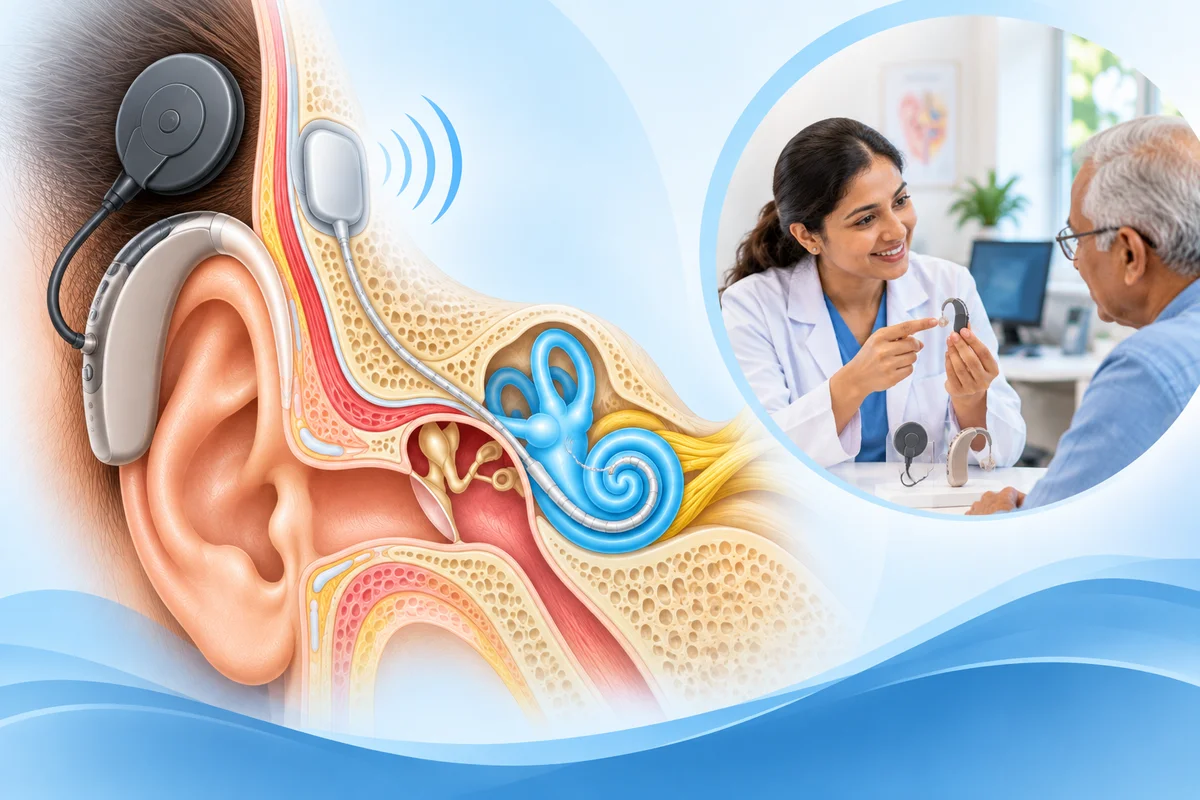
Hearing aids are the most common solution for moderate to severe sensorineural hearing loss. Modern hearing aids are discreet, powerful, and equipped with features like background noise reduction and Bluetooth streaming.
Cochlear implants are considered for cases of severe to profound hearing loss where hearing aids no longer provide sufficient benefit. They bypass the damaged hair cells and directly stimulate the auditory nerve.
Tinnitus management — for those experiencing ringing alongside hearing loss — includes sound therapy, cognitive behavioral therapy (CBT), tinnitus retraining therapy (TRT), and masking devices.
Emerging research into hair cell regeneration and gene therapy holds promise for the future, but as of now these remain experimental.
The most important message is this: if you suspect noise-induced hearing loss, stop the damage now. The hearing you have left is worth protecting, even if some has already been lost.
Practical Tips for Safe Listening
Use noise-cancelling headphones. They allow you to hear music clearly at lower volumes by blocking out background noise, removing the temptation to crank up the volume to compete with ambient sound.
Take listening breaks. Give your ears at least 10 minutes of quiet for every 60 minutes of listening.
Use the volume limiter on your device. Most smartphones allow you to set a maximum volume cap in the settings.
Follow the 60/60 rule as a baseline habit.
Use ear protection at concerts and clubs. High-fidelity earplugs designed for musicians reduce volume without distorting sound quality.
Get your hearing checked regularly, especially if you have had years of high-volume music exposure.
Conclusion
Protecting your hearing is one of the most underrated health investments you can make. The damage caused by loud music is cumulative, invisible, and permanent — but it is also almost entirely preventable with a few simple habits. Keep your music at or below 60 to 70 dB for everyday listening, follow the WHO's safe listening guidelines, take regular breaks, and have your hearing evaluated if you notice any warning signs. Your future self — and your future enjoyment of music — will thank you.
Frequently Asked Questions
What is the safest decibel level for listening to music?
The safest decibel level for everyday music listening is 60 to 70 dB. The WHO recommends staying at or below 80 dB for adults using personal audio devices. A practical rule of thumb is the 60/60 rule: listen at no more than 60% of your device's maximum volume for no more than 60 minutes at a time before taking a break.
How long can you safely listen to music at 85 dB?
At 85 dB, the maximum recommended continuous exposure is 8 hours per day according to occupational health standards. However, audiologists advise treating 85 dB as a ceiling — not a comfortable daily target — particularly when using earphones that deliver sound directly into the ear canal.
How long can you listen to music at 95 dB without damage?
At 95 dB, safe daily exposure is limited to approximately 47 to 60 minutes. Beyond this, cumulative damage to the hair cells of the inner ear becomes increasingly likely. The risk is compounded if you are also exposed to other loud environments during the same day.
What happens to your hearing if you listen to loud music every day?
Daily loud music exposure causes progressive noise-induced hearing loss. Short-term effects include temporary dulling of hearing and tinnitus (ringing in the ears). Over months and years, permanent damage to inner ear hair cells accumulates, leading to irreversible sensorineural hearing loss, chronic tinnitus, and difficulty understanding speech.
Can hearing loss from loud music be treated or reversed?
Noise-induced sensorineural hearing loss cannot currently be reversed. There is no medication or surgery that restores damaged cochlear hair cells. However, the condition can be effectively managed with hearing aids, cochlear implants for severe cases, and tinnitus therapies. Preventing further damage by reducing noise exposure is the most important step anyone with early hearing loss can take.