RBSK Free Hearing Aid for Children in Maharashtra
RBSK Free Hearing Aid for Children in Maharashtra: Complete Parent’s Guide
Hearing is the foundation of speech, language, learning, and social growth. When a child cannot hear properly, every area of development can be affected. The good news is that families in Maharashtra do not have to carry the full financial burden alone. Under the Rashtriya Bal Swasthya Karyakram (RBSK), children with hearing loss can get free screening, diagnosis, and support, including hearing aids where medically recommended.
This guide explains what RBSK is, who qualifies, how to apply, which documents you need, and how VR Speech and Hearing Clinic can help you at every step.
What Is RBSK?
Rashtriya Bal Swasthya Karyakram is a national child health programme run under the National Health Mission. It aims to identify and treat health problems in children from birth up to 18 years of age. The programme focuses on four categories, often called the “4 Ds”: defects at birth, diseases in childhood, deficiencies, and developmental delays including disabilities.
Hearing impairment is one of the key conditions covered under the “defects at birth” and “developmental delays” categories. Mobile health teams visit Anganwadi centres and government and government-aided schools to screen children. Newborns are also screened at delivery points and health facilities.
Why Early Hearing Detection Matters
The first three years of life are the most important window for brain development and language learning. A child with untreated hearing loss may:
Show delayed or unclear speech
Struggle to follow instructions
Have difficulty in school
Become withdrawn or frustrated
Face behavioural and emotional challenges
Research and clinical experience agree that children whose hearing loss is identified and managed early, ideally within the first six months of life, develop language skills much closer to their hearing peers. This is why RBSK emphasises early screening and quick referral.
Is a Hearing Aid Really Free Under RBSK in Maharashtra?
RBSK is designed so that identified children receive treatment and referral support without cost to the family at government facilities. For hearing loss, this generally includes:
Free hearing screening
Free diagnostic hearing tests (such as BERA and audiometry) at designated centres
Free medical or surgical management where needed
Hearing aids provided through government schemes, subject to the child’s audiological evaluation and the availability of devices
Referral for advanced options, such as cochlear implant surgery under eligible state and national schemes, for children with severe to profound hearing loss
Availability, device models, and waiting periods can vary by district and by year. It is always wise to confirm current details with your District Early Intervention Centre (DEIC) or district hospital before you start the process.
Who Is Eligible?
A child is generally eligible for RBSK-supported hearing services if:
The child is between birth and 18 years of age
The child has been identified with hearing loss through screening or a doctor’s referral
The audiologist or ENT specialist confirms the loss and recommends a hearing aid
The family is a resident of Maharashtra and can provide basic identity documents
Some schemes linked to hearing devices and cochlear implants may have additional conditions, such as age limits, income criteria, or disability certification. Your audiologist can help you understand which category applies to your child.
Step-by-Step Process to Get a Free Hearing Aid
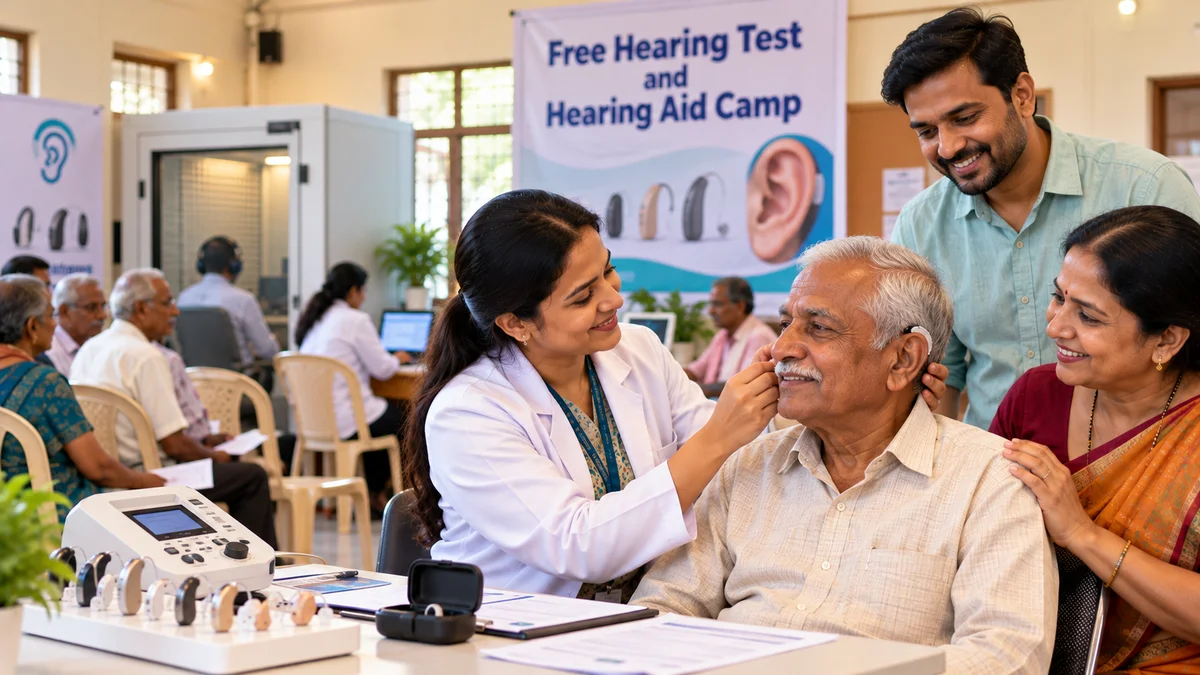
Step 1: Screening. Your child may be screened at birth, at an Anganwadi, or at school by an RBSK mobile health team. Parents can also approach the nearest primary health centre or district hospital directly if they notice warning signs.
Step 2: Referral to the DEIC. If the screening suggests a problem, the child is referred to the District Early Intervention Centre. DEICs offer a range of services under one roof, including audiology and speech therapy.
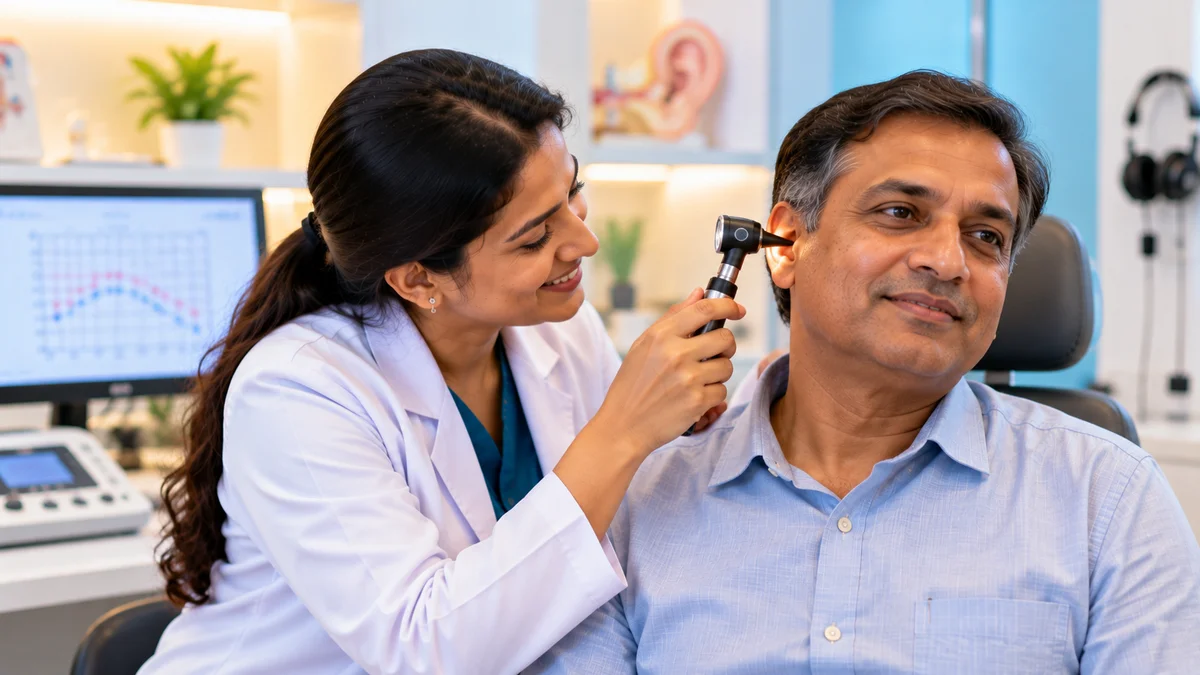
Step 3: Diagnostic evaluation. An audiologist performs detailed tests to confirm the type and degree of hearing loss. These may include BERA, OAE, impedance audiometry, and behavioural or play audiometry depending on the child’s age.
Step 4: Medical review. An ENT specialist checks for treatable causes such as ear infections or wax. Some conditions can be corrected medically or surgically, and a hearing aid may not always be needed.
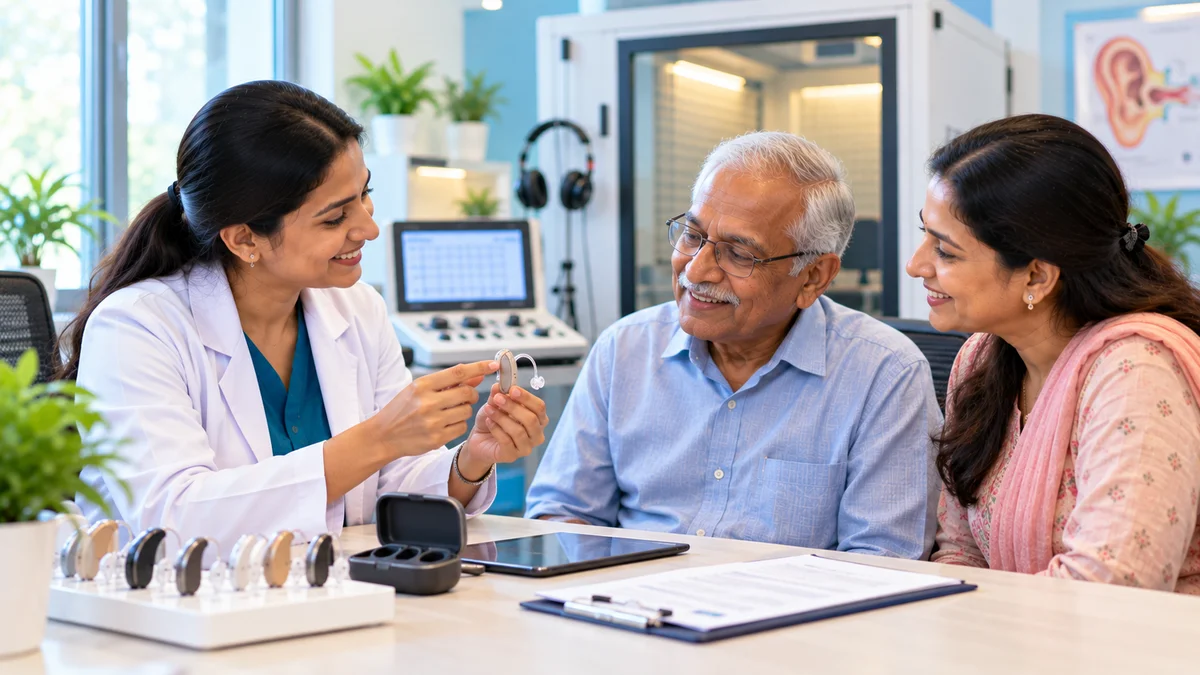
Step 5: Hearing aid recommendation. If a hearing aid is appropriate, the audiologist recommends the type and fitting suitable for your child’s hearing profile.
Step 6: Fitting and follow-up. The device is fitted, programmed, and checked. Regular follow-ups are essential, because children’s hearing needs and ear size change as they grow.
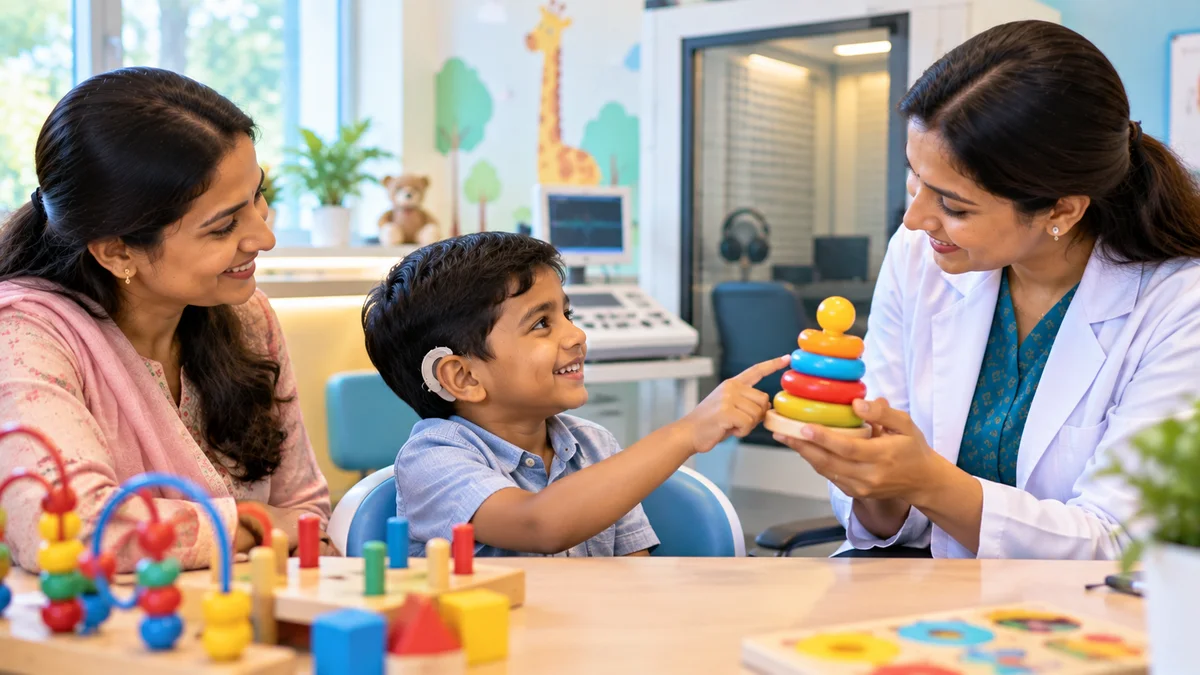
Step 7: Speech and language therapy. A hearing aid alone does not teach a child to speak. Therapy helps the child make meaningful use of sound.
Documents Usually Required
Keep these ready to avoid delays:
Child’s birth certificate or age proof
Aadhaar card of the child and parent or guardian
Residence proof
Income certificate or ration card, if requested
RBSK referral slip or doctor’s prescription
Previous hearing test reports, if any
Passport-size photographs
Document requirements can differ between districts, so a quick phone call to the DEIC can save you a second visit.
Warning Signs of Hearing Loss in Children
Parents are often the first to sense that something is wrong. Watch for these signs:
Infants (0 to 12 months)
Does not startle at loud sounds
Does not turn toward voices by 4 to 6 months
Does not babble by 9 months
Toddlers (1 to 3 years)
Does not say simple words by 12 to 15 months
Does not respond to their name
Speech is unclear or limited for their age
School-age children
Asks for repetition frequently
Turns the television volume very high
Struggles in class or seems inattentive
Complains of ear pain or ringing
If you notice any of these, do not wait. Request a hearing evaluation as soon as possible.
Types of Hearing Aids Commonly Used for Children
Children’s hearing aids are different from adult devices. Common options include:
Behind-the-ear (BTE) aids: The most common choice for children because they are durable, adjustable, and suit growing ears.
Receiver-in-canal (RIC) aids: Discreet and suitable for older children with mild to moderate loss.
Body-worn aids: Sometimes used for very young infants or specific needs.
Bone conduction devices: Used when a child has malformed ear canals or chronic ear discharge.
Your audiologist will choose the right option based on the degree of hearing loss, ear structure, lifestyle, and budget or scheme availability.
When a Hearing Aid Is Not Enough
For children with severe to profound sensorineural hearing loss who gain little benefit from hearing aids, a cochlear implant may be recommended. Government schemes support eligible children with implant surgery and rehabilitation, often within a specific age window. Early evaluation is critical, because the best results are seen when implantation happens at a young age and therapy begins immediately.
How VR Speech and Hearing Clinic Can Help
Navigating government schemes can feel overwhelming for parents who are already worried about their child. VR Speech and Hearing Clinic supports families with a caring, child-friendly approach:
Comprehensive paediatric hearing assessments
Clear explanation of test results in simple language
Guidance on RBSK, DEIC referrals, and eligible government schemes
Help with understanding documentation and the application process
Hearing aid trials, fitting, and regular programming
Speech and language therapy to build listening and speaking skills
Parent counselling and home-training guidance
Long-term follow-up as your child grows
Our goal is simple: to make sure no child misses out on hearing, speech, and learning because of delay, confusion, or cost.
Tips for Parents After the Hearing Aid Is Fitted
Make the child wear the device consistently, ideally during all waking hours
Keep the aid dry and clean, and store it in a dry box overnight
Check batteries regularly and carry spares
Talk, read, and sing to your child every day
Attend every follow-up and therapy session
Inform the school teacher so seating and classroom support can be arranged
Be patient: adapting to sound takes time and encouragement
Final Thoughts
RBSK has opened an important door for children in Maharashtra who need hearing care. When screening, diagnosis, hearing aid support, and therapy work together, a child with hearing loss can grow up to speak, learn, and thrive. If you suspect your child has a hearing problem, act today. Early action protects your child’s voice, education, and future.
To book a hearing evaluation or get guidance on RBSK support, contact VR Speech and Hearing Clinic and take the first step toward your child’s better hearing.
FAQs
1. What is RBSK?
RBSK, or Rashtriya Bal Swasthya Karyakram, is a government child health programme under the National Health Mission that screens children from birth to 18 years for defects, diseases, deficiencies, and developmental delays, including hearing loss.
2. Can my child really get a free hearing aid in Maharashtra?
Eligible children identified through RBSK and confirmed by an audiologist can receive hearing aid support through government channels, subject to scheme rules and device availability in your district.
3. Where do I go for RBSK hearing services?
Start at your nearest primary health centre, district hospital, or District Early Intervention Centre (DEIC). RBSK mobile teams also screen children at Anganwadis and schools.
4. At what age should a child’s hearing be tested?
Ideally in the first month after birth. If this was missed, test as soon as you notice any concern, and at any age.
5. Does a hearing aid cure hearing loss?
No. A hearing aid amplifies sound and helps the child access speech, but it does not cure the underlying loss. Regular therapy and follow-up are needed for the best outcomes.
6. Is speech therapy included after fitting a hearing aid?
DEICs offer therapy services, and private clinics such as VR Speech and Hearing Clinic also provide structured speech and language therapy alongside hearing aid care.
7. What if my child needs a cochlear implant?
If hearing aids do not provide enough benefit, your audiologist and ENT specialist will evaluate your child for a cochlear implant and guide you toward eligible government schemes.
8. Can older school-going children also benefit?
Yes. RBSK covers children up to 18 years, though early detection always gives better results.
9. How long does the process take?
Timelines vary based on testing, documentation, and device availability. Starting early and keeping documents ready helps avoid delays.
10. Can I consult VR Speech and Hearing Clinic before approaching the government centre?
Yes. A professional evaluation can confirm the degree of hearing loss and prepare you with the right reports and guidance for the application process.