Profound Hearing Loss Symptoms: Signs, Causes & Treatment
Hearing loss does not always arrive suddenly. For many people it builds quietly until conversations sound muffled, then distant, then almost silent. Profound hearing loss is the most severe level of hearing impairment, and spotting the symptoms early can protect communication, safety, relationships, and emotional wellbeing. If you or someone you love struggles to hear even very loud sounds, this guide explains the main profound hearing loss symptoms, their causes, how the condition is diagnosed, and which treatments can help. At VR Speech and Hearing Clinic, we see every day how early assessment leads to better outcomes.
What Is Profound Hearing Loss?
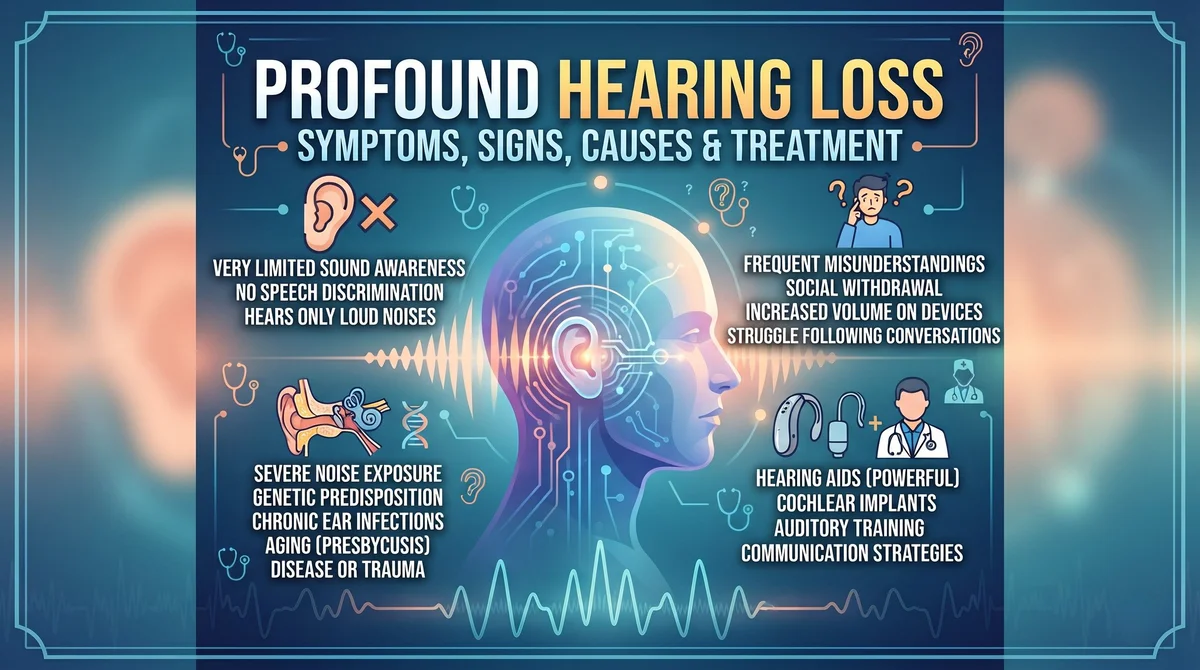
Hearing ability is measured in decibels hearing level (dB HL) during an audiometry test. Normal hearing is generally 25 dB or better. Loss is then graded as mild, moderate, moderately severe, severe, and profound. A person with profound hearing loss typically cannot hear sounds quieter than about 90 dB, which is roughly the loudness of a lawn mower or heavy city traffic. Normal conversation sits around 50 to 60 dB, so speech is simply out of reach without technology, and even with powerful hearing aids many people still struggle to understand words clearly.
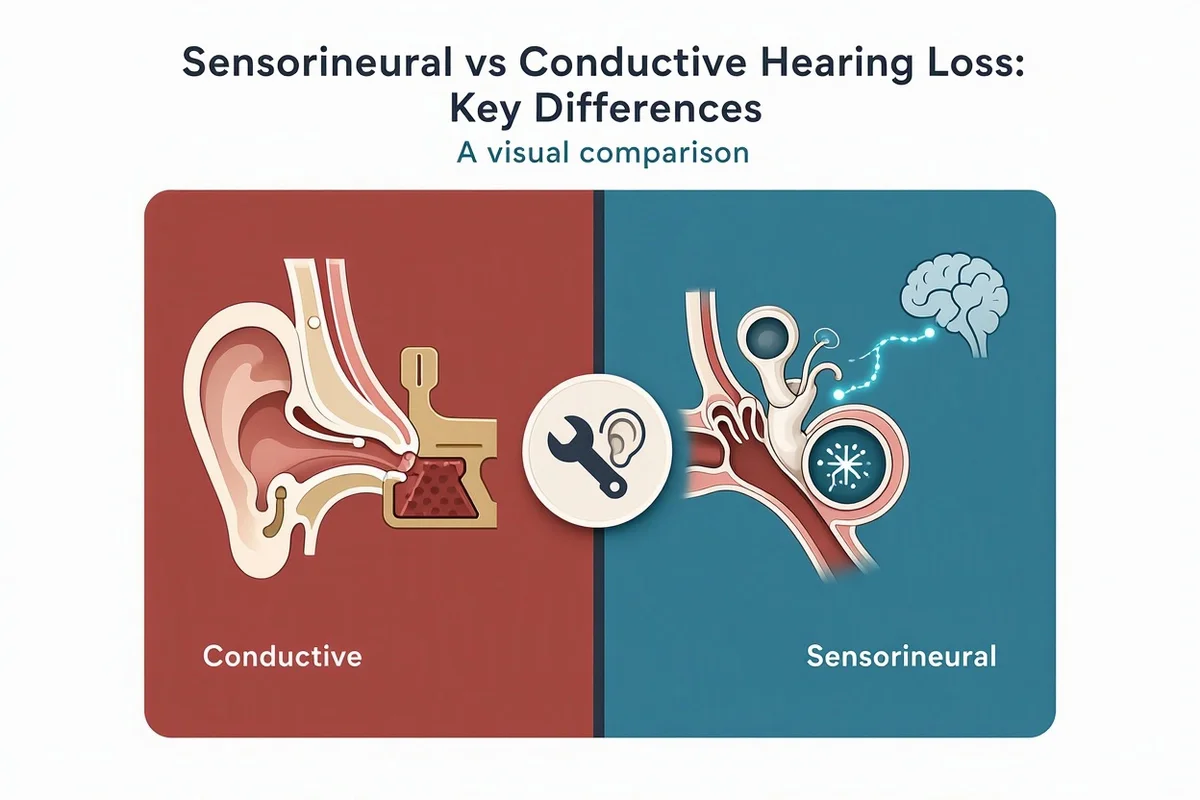
Profound hearing loss is most often sensorineural, meaning the problem lies in the inner ear or the hearing nerve. It can affect one ear or both, and it can be present from birth or develop later in life.
Common Profound Hearing Loss Symptoms in Adults
The signs below often appear together. Having one does not confirm profound hearing loss, but several together are a strong reason to book a hearing test.
You Cannot Hear Loud Everyday Sounds
Doorbells, ringing phones, car horns, barking dogs, and even smoke alarms may go unnoticed. This is one of the clearest differences between profound loss and milder degrees of hearing loss.
Speech Is Not Understood, Even When People Shout
Instead of hearing words that sound unclear, you may hear little or nothing at all. Raising the volume of a voice does not help much.
You Rely Heavily on Lip Reading and Body Language
Watching faces, mouth movements, and gestures becomes your main way of following a conversation. Many people also start asking for messages in writing or by text.
Devices Are Turned to Maximum Volume
The television, phone, or radio is set to the highest level. Family members find it uncomfortably loud, yet you still cannot follow what is being said.
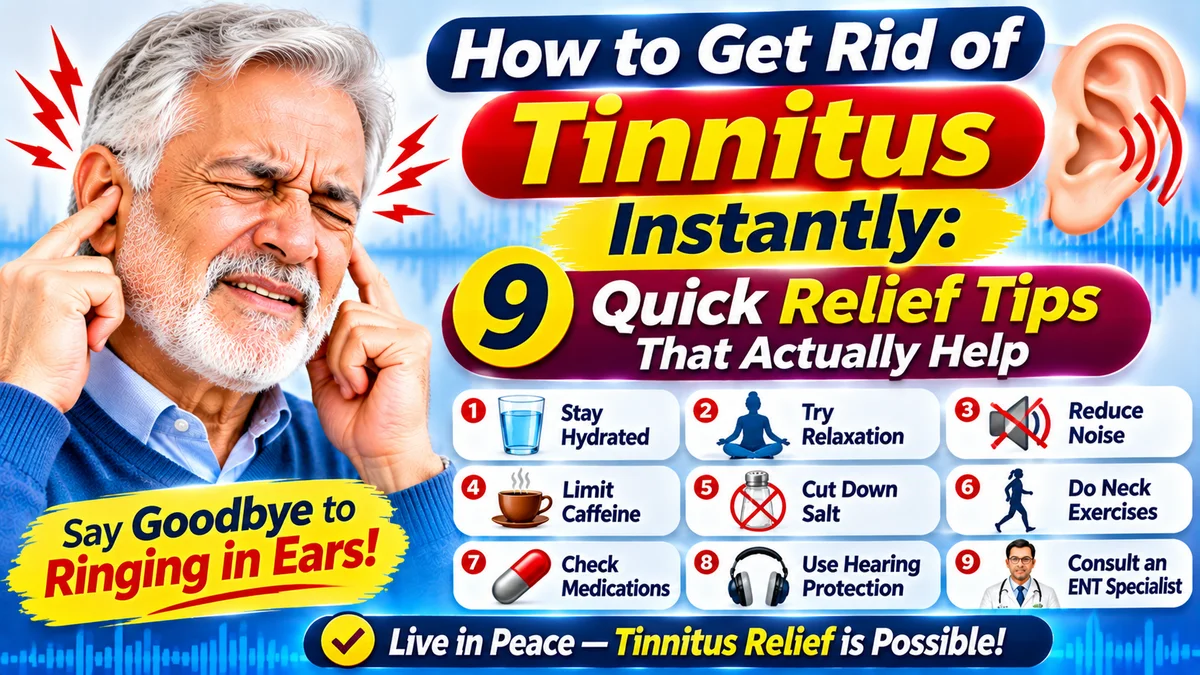
Tinnitus
Ringing, buzzing, hissing, or roaring in the ears is very common alongside profound hearing loss and is sometimes the first symptom people notice.
Dizziness or Balance Problems
The inner ear controls both hearing and balance, so damage can cause vertigo, unsteadiness, or a feeling of spinning.
Changes in Your Own Voice
When you cannot hear yourself well, your speech may become too loud, flat, or less clear over time.
Ear Fullness or Pressure
Some people describe a blocked or heavy feeling in the ear, even when there is no wax or infection.
Listening Fatigue and Social Withdrawal
Straining to catch any sound is mentally exhausting. Many people feel drained after a social event or workday, and some begin avoiding gatherings, calls, and busy places. Over time this can bring anxiety, low mood, and loneliness.
Profound Hearing Loss Symptoms in Babies and Children
Children rarely complain about not hearing, so parents and teachers need to watch for behavioural clues. Possible signs include:
No startle or blink reaction to sudden loud noises
Not turning towards a voice or familiar sound by around six months
Little or no babbling, or babbling that fades away
No first words by about 12 to 15 months
Not responding to their own name, even when called loudly
Unclear speech or a limited vocabulary for their age
Watching faces very closely and relying on gestures
Difficulty paying attention or falling behind at school
Early diagnosis matters enormously. The brain's hearing pathways develop fastest in the first few years of life, so identifying hearing loss early and starting intervention gives a child the best chance of developing speech and language. Newborn hearing screening is recommended for every baby, and any concern should still be checked after a passed screening, because some hearing loss develops later.
Sudden Profound Hearing Loss Is an Emergency
Sometimes profound hearing loss appears within hours or days, often in one ear. Many people notice it on waking, and it may come with ringing or dizziness. This is called sudden sensorineural hearing loss, and it needs urgent medical attention, ideally within 72 hours. Prompt treatment, commonly with steroid medicine prescribed by an ENT doctor, improves the chance of recovery. Do not wait to see if it settles on its own, and do not assume it is only blocked wax or a cold.
How Profound Hearing Loss Affects Daily Life
Beyond difficulty hearing, profound hearing loss can affect safety, work, education, and relationships. Missing alarms, traffic, or a knock at the door creates real risks, and communication breakdowns frustrate both the person and their family. Research has also linked untreated hearing loss in older adults with social isolation, depression, and a higher risk of cognitive decline, which is why timely support is so important.
What Causes Profound Hearing Loss?
Understanding the cause helps guide treatment. Common causes include:
Genetic conditions and problems present at birth
Infections during pregnancy, such as rubella or cytomegalovirus (CMV)
Childhood infections, including meningitis, measles, and mumps
Long-term exposure to loud noise or sudden blasts
Ototoxic medicines, which are drugs that can damage the inner ear
Head injury or skull fracture
Ménière's disease and autoimmune inner ear disease
Tumours on the hearing nerve, such as acoustic neuroma
Age-related changes that progress gradually over many years
Severe chronic ear disease or otosclerosis leading to mixed hearing loss
Sometimes no cause is found, which is called idiopathic hearing loss. Even then, effective treatment is often still possible.
How Is Profound Hearing Loss Diagnosed?
Diagnosis begins with a detailed case history and ear examination, followed by a comprehensive hearing evaluation by an audiologist. Tests may include:
Pure tone audiometry to measure the softest sounds you can hear at different pitches
Speech audiometry to check how well you understand words
Tympanometry to assess middle ear function
Otoacoustic emissions (OAE) and auditory brainstem response (ABR) testing, especially useful for babies, young children, and people who cannot respond reliably
Imaging such as MRI or CT, arranged through an ENT specialist, to examine inner ear and nerve structures
Together, these results reveal the degree, type, and pattern of hearing loss and help decide the best treatment.
Treatment and Management Options
Profound hearing loss usually cannot be reversed, but it can be managed very effectively. The right option depends on the cause, age, general health, and personal goals.
Cochlear implants. A cochlear implant bypasses damaged hair cells in the inner ear and stimulates the hearing nerve directly. Many adults and children who gain little from hearing aids can access speech sounds through an implant, followed by structured rehabilitation. A specialist team assesses candidacy.
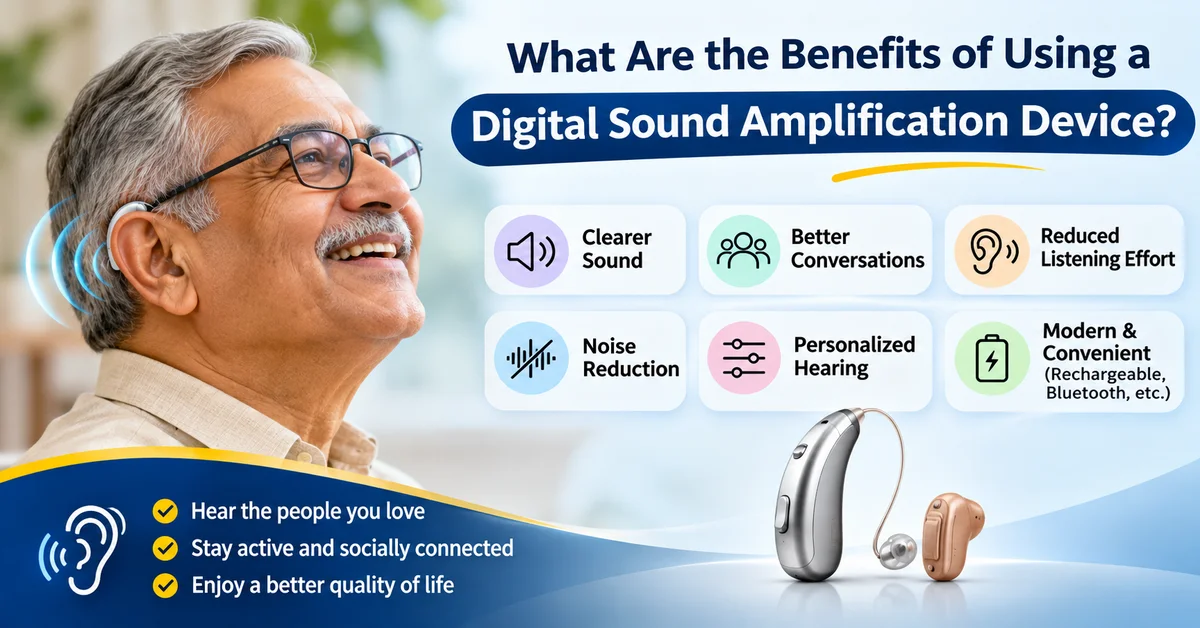
High-power hearing aids. Some people with profound loss still benefit from properly fitted, high-power devices, particularly in the early stages or while waiting for implant assessment.
Bone conduction and middle ear implants. These suit certain mixed or conductive hearing losses.
Speech and language therapy. Therapy and auditory training help adults and children make the most of residual hearing or implants, and support clearer speech and better listening skills.
Assistive devices. Vibrating alarm clocks, flashing doorbells, amplified phones, captioning apps, and FM systems make daily life safer and easier.
Communication support. Lip reading, sign language, communication strategies, and counselling help individuals and families stay connected.
When Should You See a Hearing Specialist?
Book a hearing evaluation if you cannot hear loud sounds, cannot follow speech even at close range, or notice that a child is not responding to sound or developing speech on time. Seek urgent medical care if hearing drops suddenly, or if hearing loss follows a head injury, infection, or new medicine. Early testing is quick, painless, and the first step towards the right solution.
How VR Speech and Hearing Clinic Can Help
At VR Speech and Hearing Clinic, our team understands how overwhelming a diagnosis of severe or profound hearing loss can feel. We offer thorough hearing assessments, guidance on hearing aids and implant options, speech and language therapy, and supportive counselling for patients and families. Our approach is simple: explain your results clearly, build a personalised plan, and support you at every stage of your hearing journey.
Final Thoughts
Profound hearing loss symptoms, such as missing loud sounds, relying on lip reading, tinnitus, and growing isolation, should never be ignored. The sooner hearing loss is identified, the more options you have. If you recognise these signs in yourself or a loved one, schedule a hearing evaluation at VR Speech and Hearing Clinic today and take the first step towards clearer communication.
Frequently Asked Questions
What are the first signs of profound hearing loss?
Early signs include not hearing loud everyday sounds, being unable to follow speech even at close range, ringing in the ears, and relying on lip reading. In children, a lack of response to sound and delayed speech are key warning signs.
At what decibel level is hearing loss considered profound?
Hearing loss is generally classed as profound when the softest sounds a person can hear are around 90 dB HL or louder.
Is profound hearing loss the same as total deafness?
Not always. Some people with profound loss still sense very loud sounds or vibrations, while others hear nothing at all. An audiologist can measure exactly how much hearing remains.
Can profound hearing loss be cured?
Most cases cannot be reversed, but they can be managed very well with cochlear implants, hearing aids, therapy, and assistive devices. Sudden hearing loss treated within days may partly or fully recover.
Can hearing aids help with profound hearing loss?
High-power hearing aids can help some people, but many with profound loss benefit more from cochlear implants. A full evaluation will show which option suits you.
How do I know if my baby has profound hearing loss?
Watch for no reaction to loud sounds, no turning towards voices, little babbling, and delayed first words. Ask for a hearing test as soon as you have a concern.
Is sudden hearing loss an emergency?
Yes. Sudden hearing loss should be assessed by a doctor as soon as possible, ideally within 72 hours, to give treatment the best chance of working.