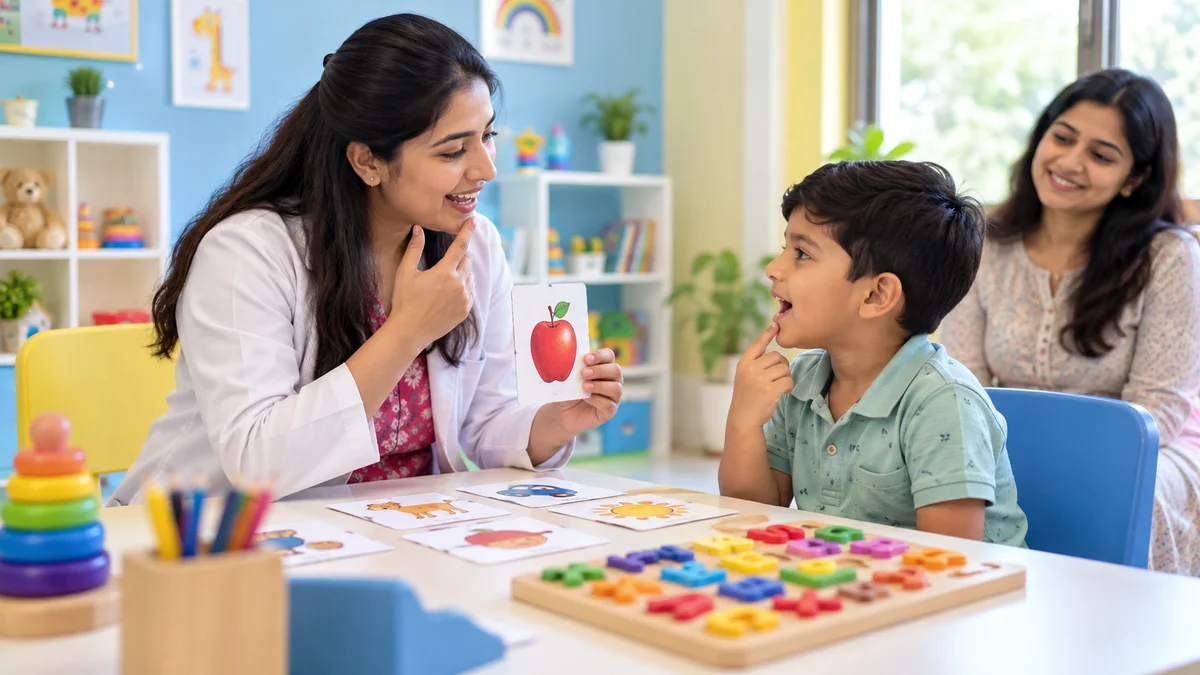
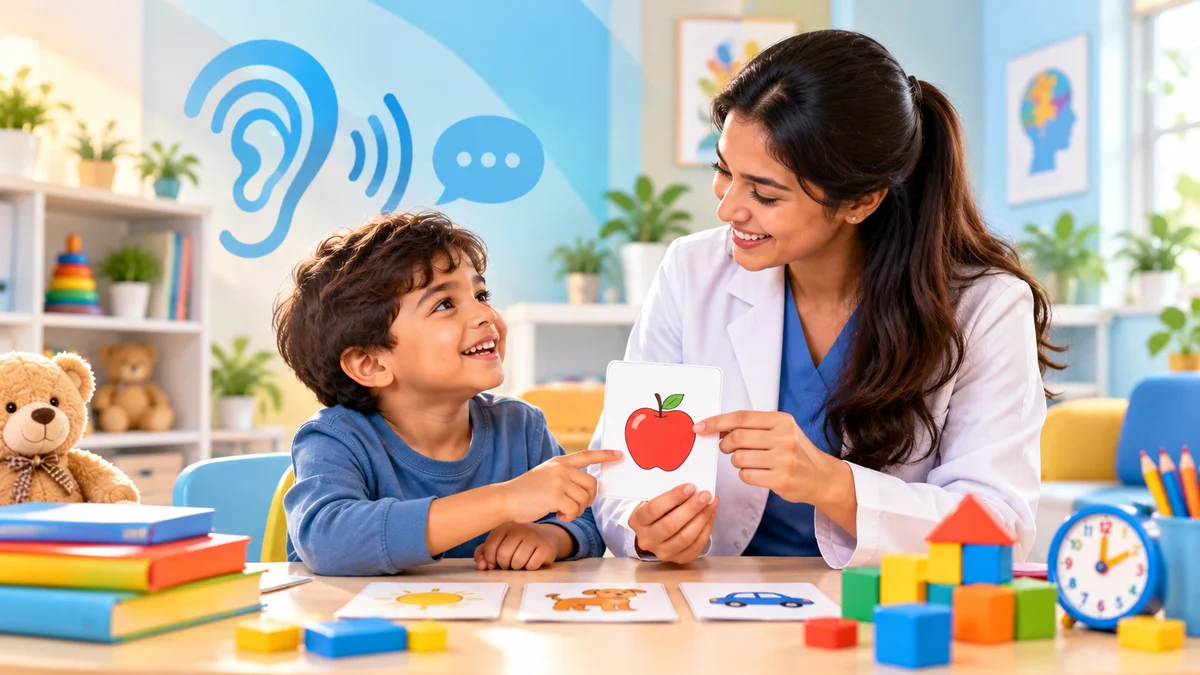
Online Speech Therapy for Autism
Online Speech Therapy for Autism Spectrum Disorder – VR Speech and Hearing Clinic
Autism Spectrum Disorder (ASD) is a lifelong neurodevelopmental condition that shapes how a person communicates, behaves, and connects with the world around them. At VR Speech and Hearing Clinic, led by Audiologist and Speech Language Pathologist Vikas Rathod and Vilas Rathod, families receive personalized, evidence-based online speech therapy designed to help children and adults with ASD build stronger communication skills and greater independence.
Since autism affects every individual differently, no single treatment plan works for everyone. This guide explains what ASD is, how it's identified, and how structured online speech therapy can make a meaningful difference in a child's development.

Understanding Autism Spectrum Disorder
ASD is described as a "spectrum" because the type and intensity of symptoms vary enormously from person to person. Some individuals speak in full sentences but struggle with back-and-forth conversation, while others may be entirely non-verbal and rely on alternative communication methods. ASD is not caused by parenting style, and it affects people across all genders, backgrounds, and communities. While there is no cure, early and consistent therapy can significantly improve a person's ability to interact, learn, and express themselves.

Recognizing the Signs of Autism
Signs of autism often appear before the age of two, though in some children they remain subtle until school age. Common indicators include limited eye contact, delayed or absent babbling and first words, difficulty responding to their name, repetitive movements or phrases, intense focus on specific objects or topics, and heightened sensitivity to sounds, textures, or lights. Some children also show a preference for routine and become distressed by sudden changes.
In older, school-aged children, signs may look different — difficulty maintaining friendships, unusual or repetitive use of language, rigid adherence to routines, and challenges reading social cues or adjusting behavior to different settings.
Severity Levels of ASD
Clinicians typically classify ASD into three levels based on how much support a person needs:
Level 1 individuals require some support and may speak fluently but struggle with reciprocal conversation and flexibility.
Level 2 individuals need substantial support, often communicating in simple sentences with noticeable difficulty initiating social interaction.
Level 3 individuals require very substantial support, with limited verbal communication and pronounced behavioral rigidity.
How Autism Is Diagnosed
Diagnosis usually involves developmental monitoring, screening at routine pediatric visits, and a comprehensive evaluation by a team that may include a pediatrician, psychologist, and Speech Language Pathologist. There is no blood test or scan for autism — diagnosis relies on careful observation of communication patterns and behavior, typically starting between 18 and 24 months of age. Importantly, a child does not need to be verbal to receive a diagnosis; specialists can assess social reciprocity, eye contact, and expression even in children who aren't yet speaking.
What Causes Autism Spectrum Disorder?
Researchers believe ASD results from a combination of genetic and environmental factors. Risk factors may include having a sibling with ASD, advanced parental age, co-occurring genetic conditions, and low birth weight. Parenting choices do not cause autism.
Treatment Approaches for ASD
Because autism affects each person differently, treatment usually combines several therapeutic approaches:
Behavioral therapy, such as Applied Behavior Analysis, helps reshape repetitive or challenging behaviors into more functional ones.
Educational therapy supports structured learning alongside social and communication skill-building.
Speech and language therapy addresses verbal and non-verbal communication, which is often significantly affected at moderate to severe severity levels.
Family therapy helps parents and siblings navigate the emotional and practical challenges of supporting a child with ASD.
Creative therapies, including music, art, and movement-based therapy, can also support emotional expression and engagement.
There is currently no medication that cures autism, though doctors may prescribe medication to manage co-occurring issues like anxiety, attention difficulties, or irritability.
When Should Therapy Begin?
Early intervention matters. According to leading health authorities, therapy ideally begins before or during preschool age, when the brain's plasticity allows for faster and more lasting progress. Starting therapy as early as 18 months to 2 years gives a child the best opportunity to build foundational communication skills.
Why Speech Therapy Matters for Autism
Speech and language therapy is one of the most impactful interventions for children with ASD. A qualified Speech Language Pathologist evaluates a child's current communication strengths and challenges, then builds a tailored plan. Core focus areas typically include:
Verbal communication — helping children express thoughts clearly and confidently.
Non-verbal communication — teaching appropriate gestures, facial expressions, and body language.
Pragmatic language — understanding the right time, place, and way to say things in social contexts.
Conversational skills — practicing back-and-forth exchanges, questions, and responses.
Prosody — developing natural vocal tone and rhythm instead of flat or monotone speech.
Social interaction — building the skills needed to form friendships and participate in group settings.
Grammar and sentence structure — correcting language patterns through natural, engaging practice.
For children who are non-verbal, therapists introduce alternative communication tools such as sign language, picture exchange systems, or speech-generating devices, ensuring every child has a way to express their needs.
How VR Speech and Hearing Clinic Supports Families
At VR Speech and Hearing Clinic, therapy plans are shaped around the child's age, communication level, and severity of ASD:
For children under 3 years, parents work closely with the therapist, learning techniques to practice at home between sessions.
For children aged 3 to 6 years, both parent and child participate directly in guided video sessions.
For children aged 7 and above, sessions often involve the child working more independently with the therapist, while parents remain informed and involved.
For adults on the spectrum, therapy is adapted to individual communication goals, with family involvement available when helpful.
Vikas Rathod and Vilas Rathod bring combined expertise as Audiologist and Speech Language Pathologist, ensuring assessments consider both hearing and communication development — an important distinction, since hearing difficulties can sometimes complicate or mimic communication delays seen in autism.
How Parents Can Support Their Child
Parents play a central role in a child's progress. Some ways to help include:
Starting therapy as soon as signs are noticed, rather than waiting for a referral.
Learning about ASD from credible sources and asking questions during appointments.
Building a consistent care team of therapists, educators, and healthcare providers.
Maintaining a structured daily routine at home to provide a sense of security.
Practicing positive reinforcement to encourage new skills.
Paying attention to a child's unique non-verbal cues and communication triggers.
Seeking support groups or counseling to manage the emotional demands of caregiving.
Questions to Ask Your Child's Therapist
Why do you believe my child does or doesn't show signs of autism?
How severe is my child's condition likely to be?
What changes might we expect as they grow older?
How will this affect their communication and education?
Where can I find additional resources and support?
Final Thoughts
Autism Spectrum Disorder looks different in every individual, which is why personalized care matters. Online speech therapy through VR Speech and Hearing Clinic gives families access to expert, flexible support from the comfort of home. Under the guidance of Vikas Rathod and Vilas Rathod, Audiologist and Speech Language Pathologist, children and adults with ASD can build stronger communication skills, greater confidence, and a better quality of life — one session at a time.
FAQs
Q1. What is Autism Spectrum Disorder?
ASD is a lifelong neurodevelopmental condition that affects communication, behavior, and social interaction, with symptoms varying widely from person to person.
Q2. Can online speech therapy really help children with autism?
Yes. Online speech therapy allows a certified Speech Language Pathologist to assess communication needs and deliver structured, consistent sessions remotely, which is especially convenient for young children and families.
Q3. At what age should therapy for autism begin?
Ideally before or around preschool age, though therapy can begin as early as 18 months and remains beneficial at any age.
Q4. Is autism curable?
There is no cure for autism, but therapy can significantly reduce symptoms' impact and improve communication, behavior, and independence.
Q5. Do non-verbal children benefit from speech therapy?
Yes. Therapists use alternative communication methods like picture exchange systems, sign language, and speech-generating devices to help non-verbal children communicate effectively.
Q6. How is VR Speech and Hearing Clinic different?
Led by Vikas Rathod and Vilas Rathod, Audiologist and Speech Language Pathologist, the clinic combines hearing and speech expertise to create individualized therapy plans for every age group.