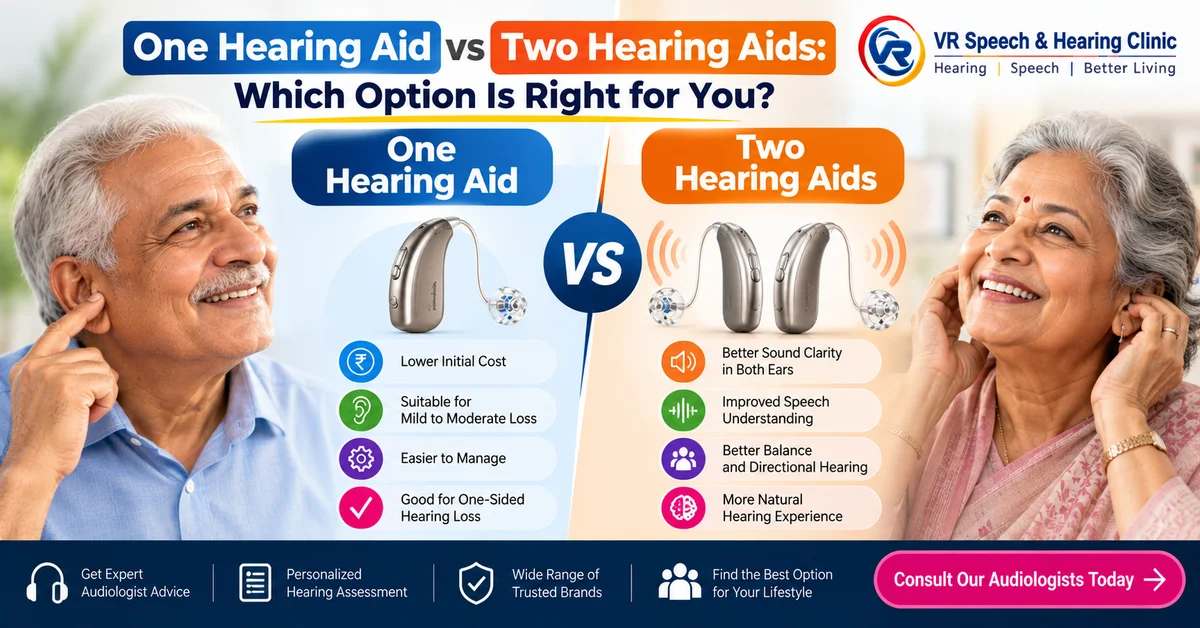
One Hearing Aid vs Two Hearing Aids: Which Option Is Right for You?
Hearing Aid Machine for One Ear vs. Two Ears: Which Option Is Better?
Choosing a hearing aid machine is a big decision, and one of the most common questions people ask is whether they need one hearing aid or two. The answer depends on the type and degree of hearing loss, lifestyle needs, and budget. This guide breaks down everything you need to know to make an informed choice.
Understanding Hearing Loss in One Ear vs Both Ears
Hearing loss can affect one ear (unilateral) or both ears (bilateral). Unilateral hearing loss may result from an ear infection, injury, or a condition affecting only one side, while bilateral hearing loss, the more common type, usually develops gradually due to ageing, prolonged noise exposure, or genetic factors. Knowing which type you have is the first step, since it directly determines whether one hearing aid or a pair will serve you best. A proper hearing test is essential before making this decision, as self-diagnosis often leads to the wrong choice of device.

One Hearing Aid vs Two Hearing Aids: A Detailed Comparison
A single hearing aid may seem like the simpler and more affordable option, but it doesn't always deliver the full benefit your ears and brain need. Our brain is wired to process sound from both ears simultaneously, a phenomenon called binaural hearing. When only one ear receives amplified sound, the brain struggles to combine information properly, which can affect clarity, direction sensing, and overall listening comfort. Two hearing aids, on the other hand, work together to create a balanced, natural hearing experience, closely mimicking how our ears function without any hearing loss.
Why Audiologists Usually Recommend Two Hearing Aids
For most people with hearing loss in both ears, audiologists recommend binaural (two-device) fittings. Here's why:
1. Better Sound Localisation
With two hearing aids, the brain receives sound signals from both sides, allowing it to judge where a sound is coming from. This is especially important for safety, such as noticing traffic from either direction or locating someone calling your name in a crowd. A single hearing aid limits this ability significantly, since one ear is left without amplified input.
2. Improved Speech Understanding in Noise
Understanding speech in noisy places, restaurants, gatherings, or busy streets, is one of the toughest challenges for people with hearing loss. Two hearing aids allow the brain to filter out background noise more effectively by comparing input from both ears, making conversations clearer even in challenging environments. This benefit is one of the biggest reasons audiologists push for binaural fitting over a single device.
3. More Natural and Balanced Hearing
When both ears are aided, sound feels more balanced and natural. There's no sensation of favouring one side, and volume levels feel more even. Many users report that binaural hearing aids make sounds feel "fuller" and closer to how they remember hearing before their loss progressed.
4. Prevents Auditory Deprivation
Auditory deprivation is a lesser-known but important concept. When one ear goes without amplification for an extended period, the brain's ability to process sound from that ear can decline over time, even if the ear itself is capable of hearing with proper support. Fitting both ears early helps preserve the brain's listening pathways and prevents this gradual decline.
5. Reduced Listening Fatigue
Straining to hear with just one aided ear takes a toll. Over the day, this extra effort leads to mental fatigue, irritability, and reduced concentration. Two hearing aids share the listening load between both ears, reducing strain on the brain and making it easier to stay engaged throughout the day, whether at work, social gatherings, or at home.
When Is One Hearing Aid Enough?
While two hearing aids are usually recommended, there are specific situations where a single device makes sense:
Unilateral hearing loss: If only one ear has hearing loss and the other has normal hearing, a single hearing aid for the affected ear may be sufficient.
Single-sided deafness: In cases of profound loss in one ear, a CROS (Contralateral Routing of Signal) hearing aid system may be more appropriate than a standard aid.
Budget constraints: Some people start with one hearing aid due to cost, planning to add a second later. While understandable, this approach should be discussed carefully with an audiologist, since delaying the second device can affect long-term outcomes.
Personal comfort or trial period: A few first-time users prefer starting with one device to adjust before committing to a pair.
It's important to note that these are exceptions rather than the rule. The vast majority of people with hearing loss in both ears benefit far more from wearing two hearing aids than one.
Hearing Aid Machine Price: One Device vs Two Devices
Cost is often the deciding factor for many families. A single hearing aid naturally costs less upfront than a pair, and this can make it tempting to choose just one device, especially for entry-level or mid-range hearing aid machines. However, it's worth considering the value over time rather than only the initial price.
Two hearing aids, while costing more initially, often provide better long-term value because they:
Reduce the need for future upgrades caused by auditory deprivation in the unaided ear
Improve overall satisfaction, meaning fewer complaints and returns
Offer a more complete solution that addresses hearing needs comprehensively, rather than partially
Many clinics also offer bundled pricing, EMI options, or package deals on pairs of hearing aids, which can make the cost difference smaller than expected. It's a good idea to ask your audiologist or clinic about available financing options and any insurance coverage that may apply to hearing aid machines.
How an Audiologist Helps You Decide
The right choice between one or two hearing aids isn't something to decide alone. A qualified audiologist will:
Conduct a detailed hearing assessment for both ears
Identify the type, degree, and pattern of your hearing loss
Discuss your lifestyle, communication needs, and listening environments
Recommend the most suitable hearing aid machine, or pair, based on test results
Guide you through pricing, financing, and trial options available at the clinic
This personalised, professional guidance ensures you invest in a solution that actually improves your quality of life rather than settling for a compromise based on price alone.
Conclusion
Choosing between one hearing aid and two ultimately comes down to your specific type of hearing loss and individual needs. While a single device may work for unilateral hearing loss or certain special cases, most people with hearing loss in both ears benefit significantly more from wearing two hearing aids. Better sound localisation, improved speech clarity, natural balanced hearing, and reduced fatigue are just some of the advantages that make binaural hearing aids the preferred choice among audiologists worldwide. Visiting a trusted clinic for a proper hearing evaluation is the best way to determine which option truly suits you.
FAQs
1. Is it okay to wear just one hearing aid if I have hearing loss in both ears?
It's possible, but not ideal. Wearing one hearing aid when both ears have hearing loss can lead to imbalance, poor sound localisation, and long-term decline in the unaided ear's ability to process sound.
2. Will two hearing aids cost double the price of one?
Not necessarily. Many clinics offer bundled pricing or package deals for pairs, which can make the total cost lower than buying two devices separately at full price.
3. Can I start with one hearing aid and add a second one later?
Yes, this is possible, but it's best discussed with your audiologist, as delaying the second device may affect how well your brain adapts to sound from that ear over time.
4. How do I know if I need one hearing aid or two?
A complete hearing test conducted by an audiologist will determine the type and degree of hearing loss in each ear and guide the recommendation for one or two devices.
5. Do two hearing aids really help with understanding speech better?
Yes. Two hearing aids allow the brain to compare sound from both ears, which significantly improves the ability to understand speech, especially in noisy environments.