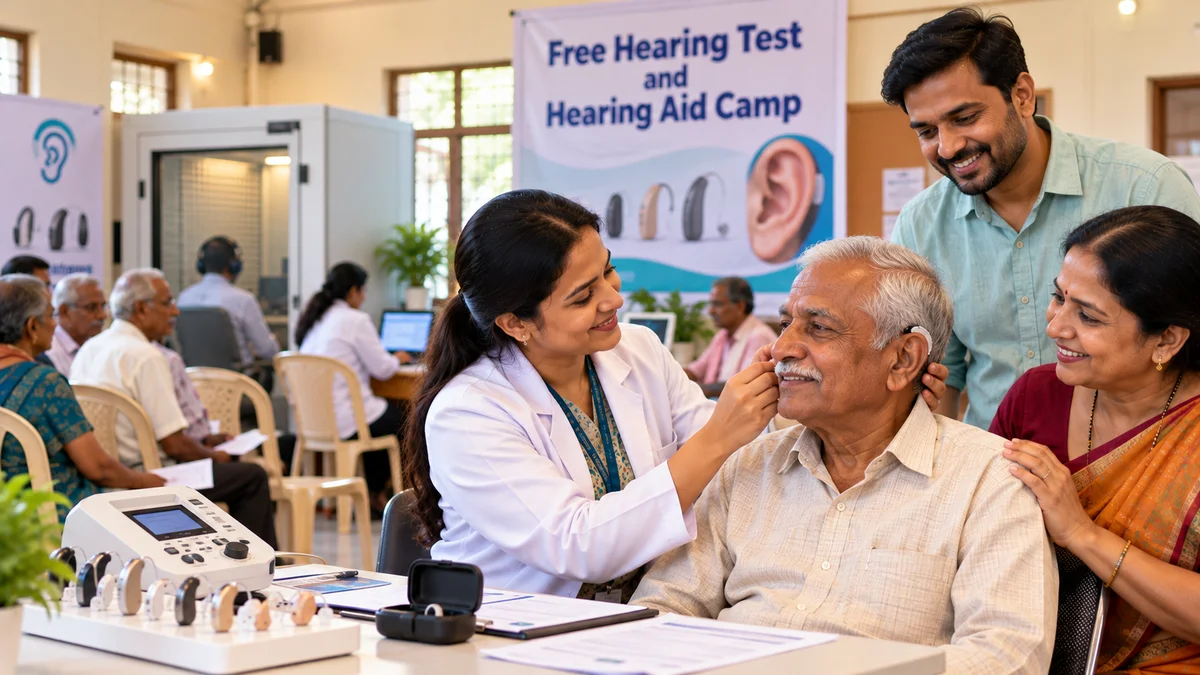
Maharashtra Noise Pollution: Traffic, Festivals & Your Hearing Health
Maharashtra Noise Problem: Traffic, Festivals and Your Hearing
Maharashtra is one of India's most vibrant states, home to bustling cities like Mumbai, Pune, Nagpur, and Nashik. But beneath the energy of honking traffic, crowded markets, and joyous festivals lies a growing public health concern that often goes unnoticed until it's too late: noise pollution. From the relentless hum of city traffic to the thunderous celebrations of Ganesh Chaturthi and Diwali, the state's soundscape has quietly become one of the loudest in the country, and it is taking a toll on the hearing health of millions.
At VR Speech and Hearing Clinic, we regularly meet patients who never imagined that years of everyday noise exposure could lead to permanent hearing damage. This article explores why Maharashtra's noise problem is more serious than most people realize, and what you can do to protect your ears before the damage becomes irreversible.

The Scale of Maharashtra's Noise Problem
Maharashtra consistently ranks among the noisiest states in India. Mumbai, in particular, has been flagged repeatedly for exceeding permissible noise limits set by the Central Pollution Control Board. Residential areas are supposed to stay below 55 decibels during the day and 45 decibels at night, while commercial zones have a limit of 65 decibels. Yet on any given day, traffic intersections in Mumbai, Pune, Thane, and Nagpur regularly cross 80 to 90 decibels, and during major festivals, readings have been recorded well above 100 decibels in some pockets.
To put this in perspective, prolonged exposure to sounds above 85 decibels can begin to damage the delicate hair cells inside the inner ear. Sounds above 100 decibels, if experienced repeatedly or for extended periods, can cause harm within minutes. Given that many residents commute for one to two hours daily through honking traffic, and that festival season noise can last for days or weeks, the cumulative exposure adds up far more than people assume.
Traffic Noise: The Silent Everyday Threat
Unlike a one-time loud event, traffic noise is chronic. It is present every single day, often for hours at a stretch, and most people don't think of it as a health hazard because it feels so ordinary.
In cities like Mumbai and Pune, honking has become a cultural habit rather than an emergency signal. Two-wheelers, auto-rickshaws, buses, and trucks all contribute to a constant layer of sound that rarely dips below harmful levels during peak hours. Traffic signals, flyovers, and congested junctions become hotspots where decibel levels spike sharply and repeatedly.
The health effects of chronic traffic noise extend beyond hearing loss. Studies have linked long-term exposure to elevated ambient noise with increased stress hormone levels, disturbed sleep, higher blood pressure, and reduced concentration. For commuters who spend significant time on the road, whether driving, riding, or simply walking along busy streets, the ears are absorbing this noise continuously, often without any protection at all.
Children walking to school along busy roads, delivery workers on two-wheelers, traffic police, and street vendors are among the most exposed groups, and many of them have no idea that their daily environment is quietly straining their auditory system.
Festival Noise: A Concentrated Burst of Risk
Maharashtra's festivals are culturally rich and deeply meaningful, but they also bring some of the highest noise levels recorded anywhere in the country. Ganesh Chaturthi, with its immersive processions, dhol-tasha troupes, and loudspeakers, transforms entire neighborhoods into high-decibel zones for days at a time. Diwali firecrackers, wedding processions, and Navratri celebrations add further spikes throughout the year.
Dhol-tasha performances, a beloved part of Maharashtrian festival culture, have been measured at noise levels exceeding 100 to 115 decibels at close range. Firecrackers used during Diwali can produce sudden bursts well above 125 decibels, which is loud enough to cause immediate and sometimes permanent damage to hearing, especially for people standing nearby without ear protection.
What makes festival noise particularly risky is its sudden, unpredictable, and highly concentrated nature. A firework bursting close to the ear, or standing beside a dhol group for an extended procession, can cause acoustic trauma in a single exposure. Children, whose ear canals and auditory systems are still developing, are especially vulnerable during these celebrations.
How Noise Damages Your Hearing
To understand why this matters, it helps to know what happens inside the ear during loud noise exposure. The inner ear contains thousands of tiny hair cells that convert sound vibrations into electrical signals the brain can interpret. These hair cells do not regenerate once damaged. Repeated or intense noise exposure bends, fatigues, and eventually destroys these cells, leading to a condition called noise-induced hearing loss.
This type of hearing loss often develops gradually and painlessly, which is exactly what makes it dangerous. Many people don't notice anything wrong until they start struggling to follow conversations in noisy places, need the television volume turned up more than before, or begin experiencing a persistent ringing sound known as tinnitus. By the time these symptoms appear, meaningful damage has often already occurred.
Warning Signs You Shouldn't Ignore
Being aware of early warning signs can make a significant difference in protecting your hearing long term. Common indicators include a ringing, buzzing, or hissing sound in the ears after exposure to loud environments, temporary muffled hearing following a noisy event such as a festival procession or long commute, difficulty understanding speech in crowded or noisy settings, needing to ask people to repeat themselves frequently, and a general sense that sounds feel less clear or sharp than they used to.
If any of these signs sound familiar, it is worth getting a professional hearing evaluation rather than assuming it will pass on its own. Early detection allows for far more effective management than waiting until hearing loss becomes significant.
Practical Steps to Protect Your Hearing
The good news is that noise-induced hearing loss is largely preventable with simple, consistent habits.
During daily commutes, consider using noise-cancelling or noise-reducing earphones rather than turning up music volume to overcome traffic sounds, since this often leads to double the noise exposure. If you ride a two-wheeler frequently, look into helmets designed to reduce wind and traffic noise. Try to avoid lingering at high-traffic intersections longer than necessary, and keep car windows up when travelling through particularly congested or noisy stretches.
During festivals, use earplugs when attending processions, dhol-tasha performances, or firework displays, especially if you plan to stand close to the source of the sound. Keep children at a safe distance from loudspeakers and firecrackers, and consider protective earmuffs for younger family members who are more sensitive to loud bursts of sound. Take short breaks away from the loudest areas during long celebrations to give your ears periods of rest.
At home and work, be mindful of the cumulative volume of television, music, and headphone use, particularly if you are already exposed to significant outdoor noise during the day. Following the general guideline of keeping personal audio devices at no more than 60 percent volume for limited durations can help reduce overall daily exposure.
Perhaps most importantly, make hearing check-ups a regular part of your health routine, not something you only consider after noticing a problem. Just as people get periodic eye tests, periodic hearing assessments can catch early changes before they become permanent.
Why Professional Hearing Care Matters
Many people underestimate how much noise exposure accumulates over months and years, particularly in a state as densely populated and festival-active as Maharashtra. Self-diagnosis is unreliable because early hearing loss is often subtle and can be mistaken for simple tiredness or a temporary issue after a loud event.
A comprehensive hearing evaluation by trained audiologists can measure your hearing thresholds accurately, identify whether any noise-related damage has already occurred, and guide you on appropriate protective measures based on your specific lifestyle and exposure levels. For those who already show early signs of hearing loss, timely intervention including hearing aids, sound therapy for tinnitus, or counselling on protective strategies can prevent further deterioration and significantly improve quality of life.
Protecting Maharashtra's Hearing, One Ear at a Time
Maharashtra's traffic and festival culture are not going to quiet down anytime soon, and they shouldn't have to. The goal isn't to eliminate the vibrancy that makes cities like Mumbai and Pune so alive, but to become more conscious of how that vibrancy affects our bodies, particularly our hearing, which rarely gives obvious warning signs until damage is already done.
Simple daily habits, protective gear during high-noise events, and regular professional hearing check-ups can go a long way in preserving your hearing for the years ahead. At VR Speech and Hearing Clinic, our team is committed to helping the community understand these risks and access the care needed to protect one of our most valuable senses.
If you or a loved one experiences ringing in the ears, muffled hearing after loud events, or difficulty following conversations in noisy environments, don't wait for the problem to worsen. A timely hearing assessment could make all the difference.
Frequently Asked Questions
1. How loud does noise need to be before it damages hearing?
Sounds above 85 decibels can begin causing damage with prolonged exposure, while sounds above 100 to 120 decibels, such as firecrackers or close-range dhol performances, can cause harm within seconds or minutes.
2. Can hearing loss from traffic noise be reversed?
Noise-induced hearing loss caused by damaged inner ear hair cells is generally permanent, which is why prevention and early detection are far more effective than trying to treat it after it develops.
3. Are children more vulnerable to festival noise than adults?
Yes, children's ear canals and auditory systems are still developing, making them more susceptible to damage from sudden loud sounds such as firecrackers and amplified music.
4. What are the early signs of noise-induced hearing loss?
Common early signs include ringing or buzzing in the ears, temporary muffled hearing after loud events, difficulty following conversations in noisy places, and frequently asking others to repeat themselves.
5. How often should I get my hearing tested if I live in a noisy city?
For those regularly exposed to high traffic or festival noise, an annual hearing check-up is a reasonable starting point, with more frequent testing recommended if you notice any warning signs.
6. Do earplugs really make a difference during festivals?
Yes, properly fitted earplugs can significantly reduce the intensity of sound reaching the inner ear, lowering the risk of both temporary and permanent hearing damage during high-noise celebrations.