Is Hearing Aid Covered Under Ayushman Bharat?
Is a Hearing Aid Covered Under Ayushman Bharat? What PM-JAY Really Pays For
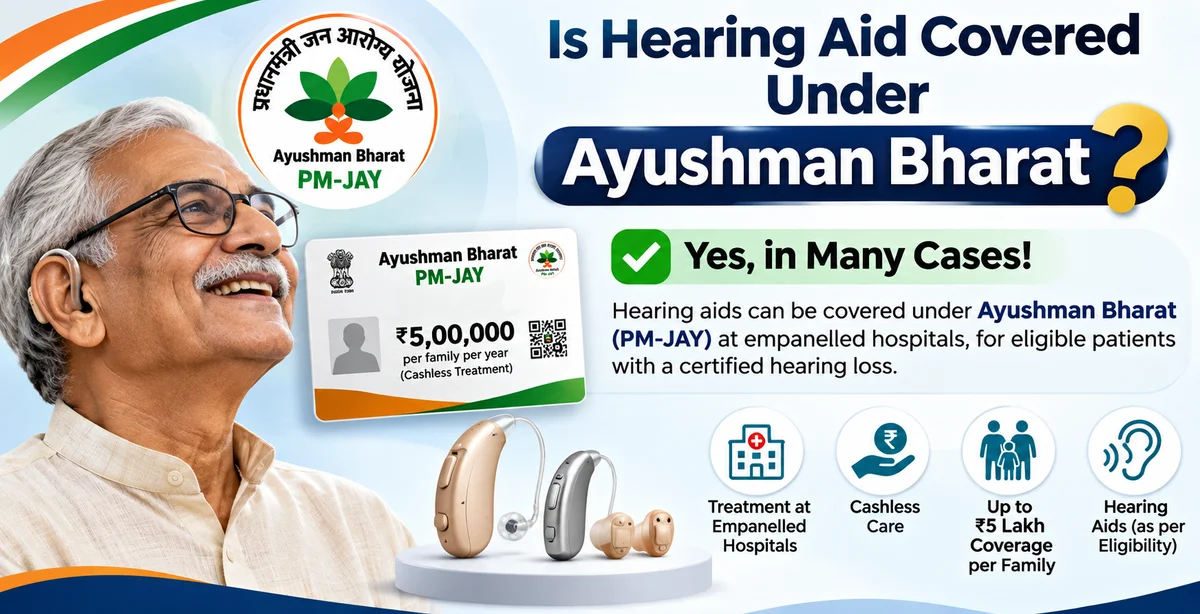
Hearing loss rarely announces itself. It creeps in slowly, and by the time a family decides to act, the next worry is cost. If your household holds an Ayushman Bharat card, you may be asking: is hearing aid covered under Ayushman Bharat? The honest answer is no. The PM-JAY card pays for hospital admission, not for a hearing aid that is fitted at a clinic and taken home. The good news is that other government routes exist. This guide explains each one in plain language so you can decide your next step with confidence.
The Short Answer: Does Ayushman Bharat Cover Hearing Aids?
No. Ayushman Bharat Pradhan Mantri Jan Arogya Yojana (PM-JAY) is a hospitalisation scheme. It offers eligible families cashless cover of up to ₹5 lakh per year for secondary and tertiary care at empanelled hospitals. A hearing aid is an outpatient device. You are tested, fitted and counselled over a few clinic visits without being admitted, so the cost does not fall under the scheme.
This is why the Ayushman card hearing aid question confuses so many people. The card is valuable, but it is built for surgeries and inpatient treatment. It was never designed to pay for everyday assistive devices such as spectacles, dentures or hearing aids.
What Does the PM-JAY Card Actually Cover?
PM-JAY covers listed procedures that need a hospital stay, such as heart surgery, cancer treatment, joint replacement and many other conditions. Treatment is cashless, so eligible patients usually do not pay at the hospital counter for covered care.
What the card generally does not cover includes routine outpatient consultations, standalone devices and anything outside a package-listed hospital procedure. A hearing aid is a standalone device, so it falls outside the scheme. If a hospital or dealer tells you otherwise, ask for the package name and code in writing before you pay or proceed.
Is Cochlear Implant Surgery Covered Under Ayushman Bharat?
A cochlear implant is a surgically placed device for people with severe to profound hearing loss who get little benefit from hearing aids. It is not the same as a hearing aid, and the funding picture is different.
Cochlear implants are not a standard part of the core PM-JAY procedure list, and whether you can use the card for one depends on your state and the hospital’s enrolment. Separately, the central ADIP scheme can fund cochlear implant surgery for eligible children at empanelled hospitals, with support that may include the implant, the operation and a year of rehabilitation. Age, disability and income conditions apply.
Because this is a high-cost procedure, never assume cover. Ask the hospital’s Ayushman help desk to confirm approval in writing, and keep copies of all hearing test reports. Some ENT surgeries, such as repair of a perforated eardrum, may also be listed under state or national packages. Even then, a hearing aid worn after surgery remains a separate purchase.
Does the Ayushman Vay Vandana Card Cover Hearing Aids for Seniors?
Age-related hearing loss is very common after 60, so many families ask about the Ayushman Vay Vandana card. Ayushman Bharat now gives seniors an additional ₹5 lakh of cover. Citizens aged 70 and above are eligible regardless of income, which is a welcome step. However, the card still works as hospitalisation insurance. It does not become a hearing aid grant. Seniors from low-income families can look at ADIP or the Rashtriya Vayoshri Yojana, which is available to senior citizens whose monthly income is below ₹15,000, or buy a hearing aid privately.
Which Government Scheme Gives Free Hearing Aids? The ADIP Scheme
The scheme to look at for a free hearing aid is ADIP, short for Assistance to Disabled Persons for Purchase and Fitting of Aids and Appliances. It is run by the Department of Empowerment of Persons with Disabilities and is usually delivered through ALIMCO and distribution camps. Under the published norms:
Monthly income up to ₹22,500: the full cost of the aid is covered.
Monthly income from ₹22,501 to ₹30,000: 50 percent of the cost is covered.
The applicant needs at least 40 percent benchmark disability, backed by a disability certificate and a UDID card or enrolment number.
Aids supplied are basic models chosen to be functional and affordable, not premium devices.
Documents usually include an Aadhaar card, income proof, UDID details and an audiogram, along with passport photographs and the disability certificate. Rules and camp schedules can change, so confirm the latest details with your district social welfare office or ALIMCO before you plan around the scheme.
Other Ways to Reduce the Cost of a Hearing Aid
Central government employees and pensioners can claim hearing aid reimbursement under CGHS up to a fixed ceiling, and insured workers may receive aids under ESIC rules. Both usually need a recommendation from an ENT specialist or an authorised doctor. Most private health insurance policies exclude hearing aids, so read the exclusions list in your policy before assuming otherwise. If none of these apply, choose a clinic that offers a trial period and easy EMI options so that the expense is spread out and the decision is never rushed.
Why a Hearing Test Should Come First
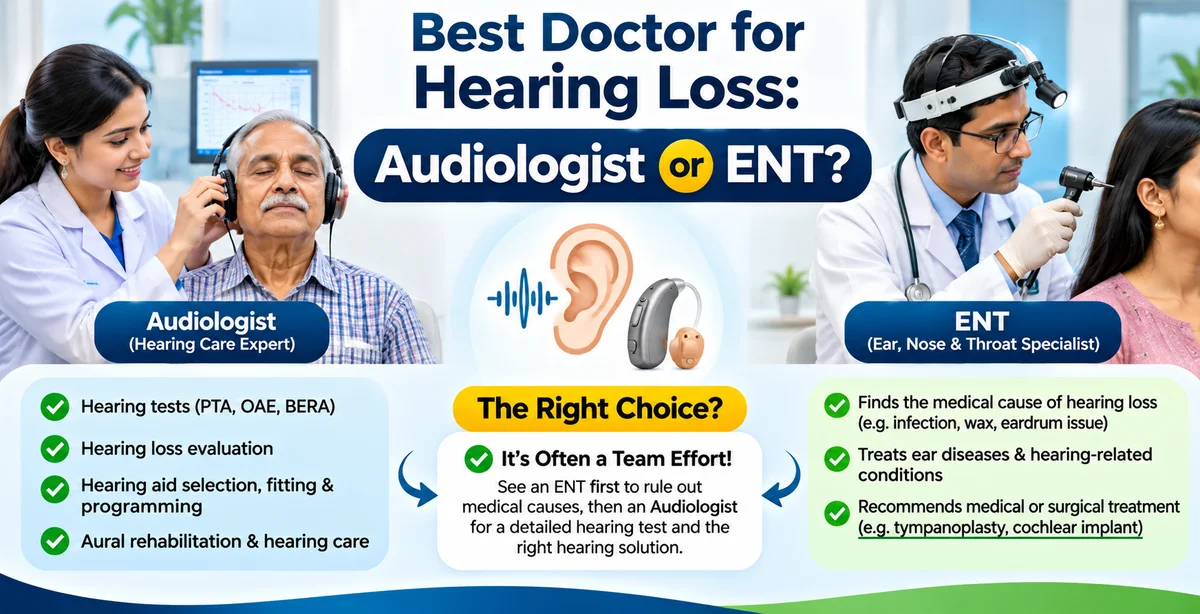
Before you apply to any scheme, you need an audiogram. This test measures the type and degree of hearing loss, and it is usually needed for ADIP, for reimbursement claims and for any cochlear implant evaluation. It also tells you whether you need a hearing aid at all, or whether wax, fluid or an infection is the real problem. A proper test saves time, money and repeat visits.
When Not to Wait for Paperwork
Some ear symptoms need a doctor the same day. These include sudden hearing loss in one ear, severe ear pain, discharge or bleeding from the ear, high fever, dizziness with vomiting, or weakness on one side of the face. Sudden sensorineural hearing loss is a medical emergency, and early treatment gives the best chance of recovery. Do not put cotton buds, oils or home remedies into the ear while you sort out scheme paperwork.
How VR Speech and Hearing Clinic Can Help
At VR Speech and Hearing Clinic, we help you understand where you stand before you spend anything. Our team carries out a detailed hearing evaluation, explains your audiogram in simple language, and tells you honestly whether a scheme such as ADIP is likely to suit your case or whether a privately fitted hearing aid will serve you better. If you choose a hearing aid, we guide you through selection, fitting, follow-up and counselling so that the device genuinely helps in daily life. Children with delayed speech or language can also be assessed, because hearing and speech development are closely linked. Book a hearing test today and take the first step towards clearer hearing.
Frequently Asked Questions
Is a hearing aid covered under the Ayushman Bharat card?
No. PM-JAY covers hospital admission and listed surgeries, not hearing aids bought for daily use. For a free or subsidised device, explore the ADIP scheme.
Can I get a free hearing aid in India?
Yes, through the ADIP scheme if you meet the disability and income conditions. You need a disability certificate showing at least 40 percent benchmark disability, along with income proof and an audiogram.
Does Ayushman Bharat cover cochlear implants?
Not universally. Some state packages and the ADIP cochlear implant programme may support eligible children. Confirm approval with the hospital before surgery.
Does the Vay Vandana card cover hearing aids for senior citizens?
No. It gives citizens aged 70 and above hospitalisation cover regardless of income, but it does not pay for hearing aids.
Which documents are needed for a government hearing aid?
Usually an Aadhaar card, UDID or disability certificate, income proof, passport photographs and an audiogram. Requirements can vary by agency.