How to Wear Headphones Without Damaging Your Ears
How to Wear Headphones Without Damaging Your Ears
Headphones and earphones are part of daily life. We use them for music, online classes, video calls, gaming, workouts, and long commutes. But the same device that entertains you can quietly harm your hearing if used the wrong way. Hearing damage from headphones builds up slowly and painlessly, and by the time you notice it, some of it may be permanent.
The good news is that you don’t have to give up your headphones. With a few smart habits, you can enjoy them and protect your ears. This guide covers how to wear headphones safely, which habits to avoid, and when to see a hearing specialist.
Why Headphones Can Damage Your Ears
Inside your inner ear is the cochlea, which contains thousands of tiny hair cells. These cells convert sound vibrations into signals your brain understands. When sound is too loud, or you listen for too long, these hair cells get overworked and can be damaged. Unlike skin or bones, they do not grow back. Once they are gone, the hearing loss is permanent.
Headphones, especially in-ear earphones, deliver sound close to the eardrum. That means even a moderate volume setting can be more intense than it feels. Add long listening hours, noisy surroundings, and high volume, and the risk rises quickly.
Health experts warn that sounds at or above 85 decibels can harm hearing over time. Many smartphones and headphones can easily reach 100 decibels or more at full volume. At that level, damage can begin in well under an hour.
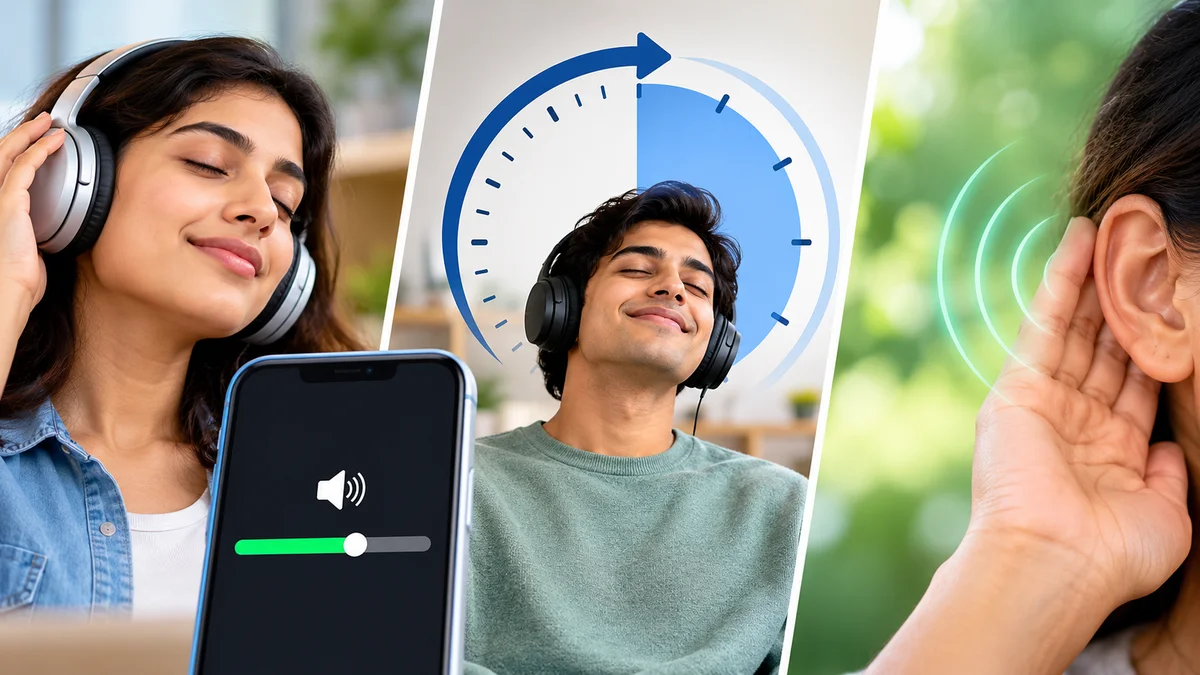
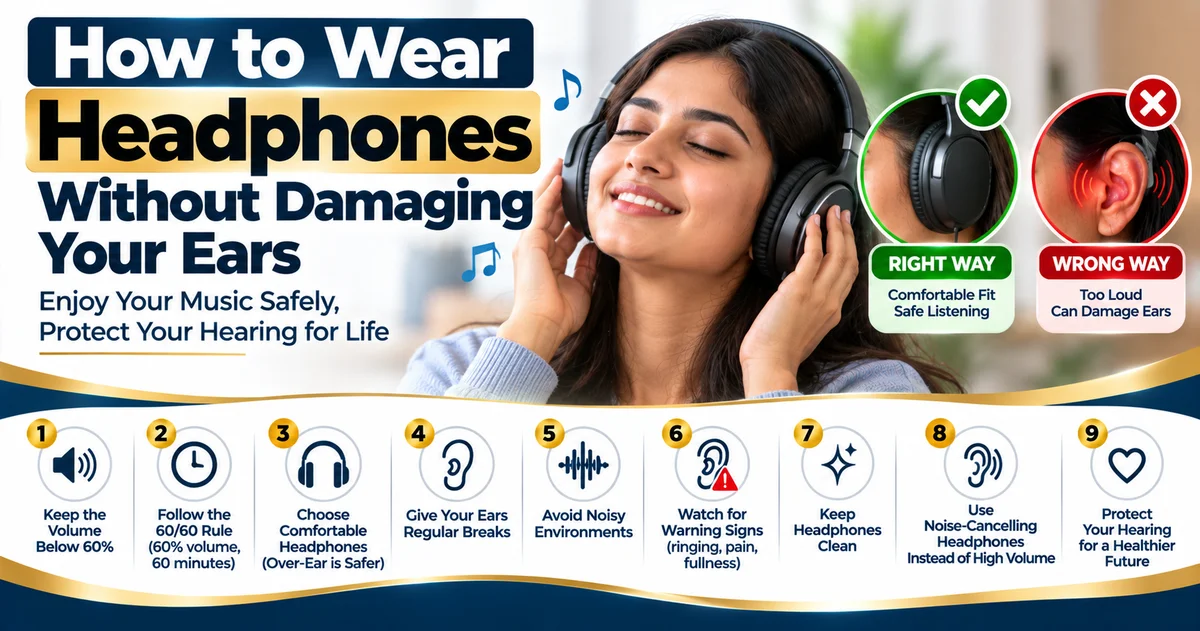
Follow the 60/60 Rule
The easiest way to protect your hearing is the 60/60 rule:
Keep your volume at no more than 60 percent of the maximum.
Listen for no more than 60 minutes at a stretch, then give your ears a break.
A 5 to 10 minute rest lets your ears recover. If you listen for hours daily, spread your sessions across the day instead of listening continuously.
Many phones now show a headphone safety indicator or warn you when the volume is too high. Don’t ignore it. If your device has a “reduce loud sounds” setting, turn it on.
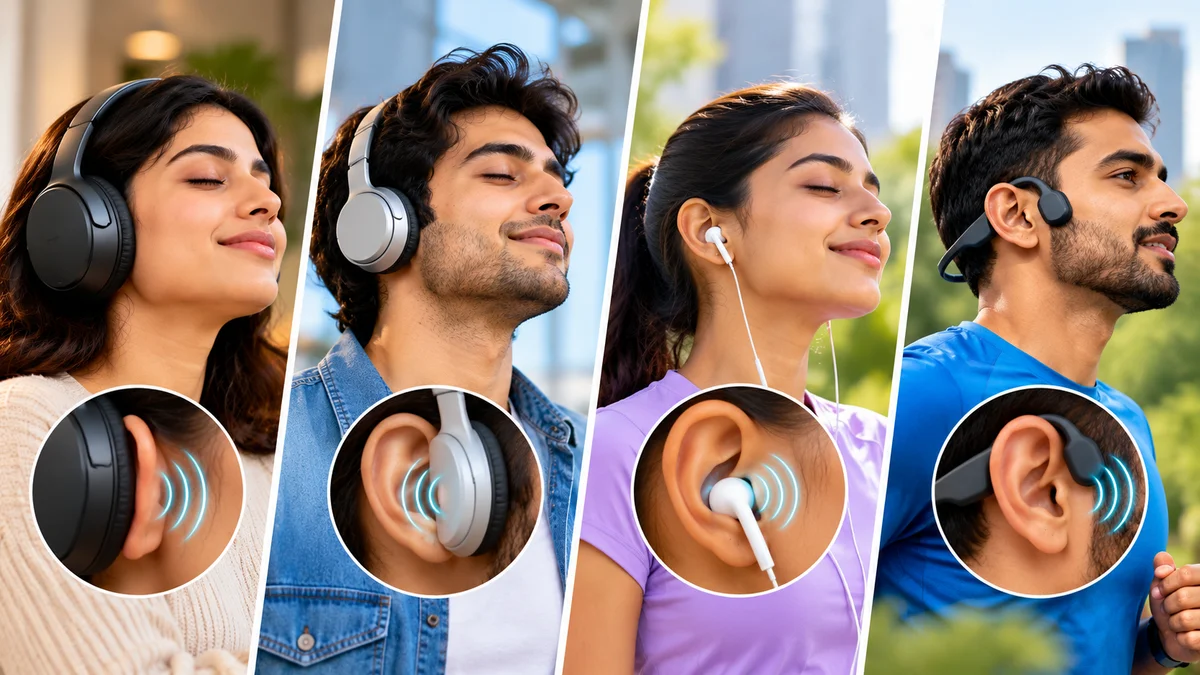
Choose the Right Type of Headphones
Not all headphones affect your ears equally.
Over-ear and on-ear headphones sit outside the ear canal, so sound travels a little farther before it reaches the eardrum. They are generally gentler on the ears and less likely to cause ear canal irritation.
In-ear earphones and earbuds sit inside the canal, closer to the eardrum. They can increase sound pressure and trap moisture and wax. If you prefer earbuds, take extra care with volume and cleanliness.
Noise-cancelling headphones are a smart choice. In noisy places like buses, trains, and busy roads, people turn the volume up to drown out background sound. Noise cancellation lowers outside noise, so you can listen at a much lower, safer volume.
Bone conduction headphones leave the ear canal open and are useful for runners and cyclists who need to stay aware of traffic. You still need to keep the volume sensible.
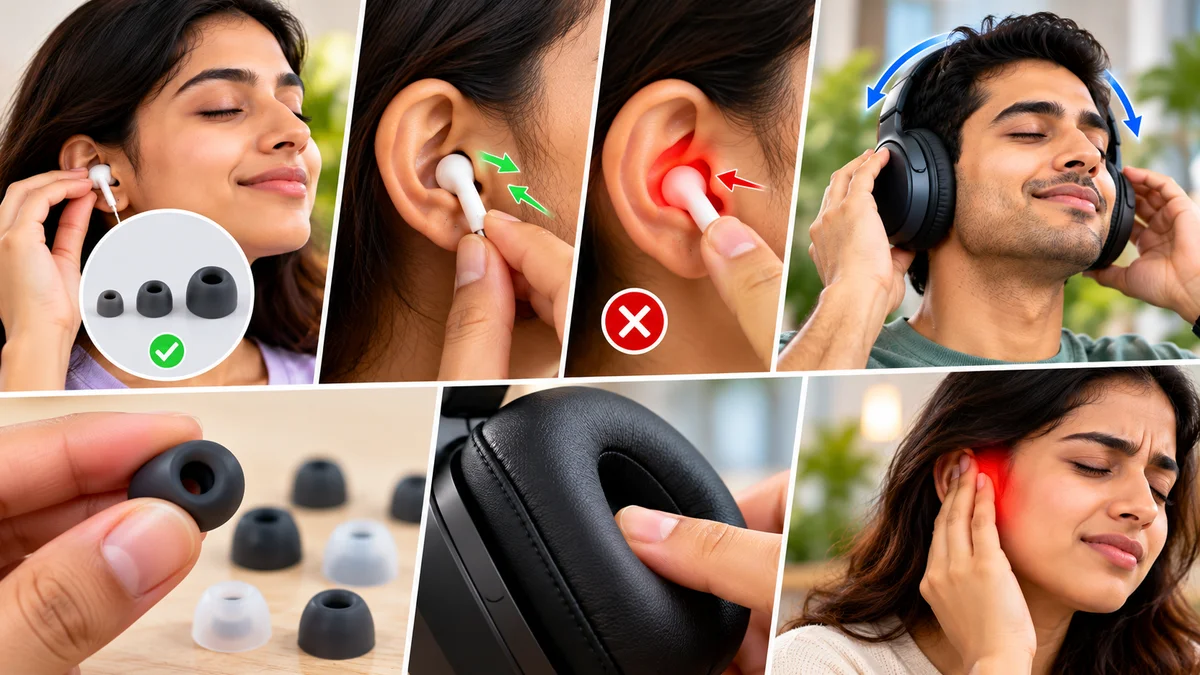
Get the Fit Right
A poor fit makes you raise the volume and can hurt your ears physically.
Pick ear tips in the right size. Tips that are too small let sound leak out, and tips that are too large cause pain and pressure.
Insert earbuds gently. Never push them deep into the ear canal.
Adjust the headband of over-ear headphones so they sit comfortably without squeezing your head or ears.
If your ears ache after use, the fit is wrong or the headphones are too tight. Stop and adjust.
Choose headphones with soft cushioning. Cheap, hard earbuds can irritate the delicate skin inside the ear.
Keep the Volume Safe in Noisy Places
Background noise is one of the biggest reasons people damage their hearing. On a crowded road, in a market, or at the gym, it’s tempting to crank up the volume.
A simple test: if the person next to you can hear your music, or if you cannot hear someone speaking to you from an arm’s length away, your volume is too high.
Use noise-cancelling headphones in loud places, and set your volume in a quiet room first. Then avoid raising it later. Your ears adjust over time, so loud sound starts to feel normal even while it keeps doing harm.
Take Regular Listening Breaks
Think of your ears like muscles. Continuous work without rest leads to fatigue. After a long session, your ears may feel full, sound may seem dull, or you may notice a faint ringing. These are signs your ears need rest.
Build breaks into your routine:
Remove your headphones for a few minutes every hour.
Avoid wearing headphones while sleeping.
Spend some time every day in natural quiet.
Avoid using headphones for many hours in a row during online classes or work calls. Use speakers when possible.
Keep Your Headphones and Ears Clean
Hygiene matters as much as volume. Earbuds and headphones can carry bacteria, and wearing them for long hours creates a warm, moist environment where germs thrive. This can lead to ear infections, itching, and irritation.
Wipe your headphones with a soft, slightly damp cloth regularly.
Clean ear tips with mild soap and water, and dry them fully before use.
Never share earphones. Sharing spreads infections.
Take earbuds out if your ears feel wet or sweaty after exercise.
Do not use cotton buds, hairpins, or sharp objects to clean your ears. They can push wax deeper or injure the eardrum.
Earwax is natural and protects your ear. Earbuds can push wax inward and cause blockage. If you feel a blocked ear, muffled hearing, or pain, have it checked by a professional instead of trying to fix it at home.
Avoid Common Headphone Mistakes
Many people harm their ears without realizing it. Watch out for these habits:
Listening at maximum volume to “feel the music”.
Wearing earbuds for several hours without a break.
Sleeping with earphones in.
Using headphones while your ear is infected or painful.
Buying very cheap earphones with poor sound quality, which often distort sound and tempt you to turn it up.
Ignoring ringing, fullness, or muffled sound.
Using headphones to block out noise in loud places by raising the volume.
Special Care for Children and Teenagers
Young people are especially at risk. Children’s ears are more sensitive, and many students now spend hours daily on headphones for online learning, gaming, and entertainment. Parents should:
Choose volume-limiting headphones designed for children.
Set device volume limits through settings.
Encourage regular breaks.
Teach kids to speak up if their ears feel uncomfortable.
Early habits protect hearing for life.
Warning Signs of Headphone-Related Hearing Damage
Hearing loss from loud sound often develops gradually. See an audiologist if you notice:
Ringing, buzzing, or hissing in the ears (tinnitus)
Muffled or dull sound after using headphones
A feeling of fullness or pressure in the ear
Trouble following conversations, especially in noisy places
Needing to turn up the TV or phone volume more than before
Ear pain, discharge, or recurring itching
Ringing that goes away after a few hours is still a warning. It means your ears were overexposed. Repeated exposure can make the damage permanent.
When to Visit a Hearing Specialist
Regular hearing checks are a good idea, especially if you use headphones daily, work in noisy environments, or have a family history of hearing loss. A hearing test is quick, painless, and can catch problems early, when they are easiest to manage.
If you are in Chhatrapati Sambhajinagar and have concerns about your hearing, ear discomfort, or ringing in your ears, you can consult the experts at VR Speech and Hearing Clinic. The clinic offers hearing evaluations and guidance on safe listening habits and ear care.
VR Speech and Hearing Clinic
Second Floor, Vasantrao Naik Chowk, Opposite Hotel Deepali Executive, N-3, CIDCO, Chhatrapati Sambhajinagar, Maharashtra 431003
Quick Checklist for Safe Headphone Use
Keep volume below 60 percent
Listen for no more than 60 minutes at a time
Use noise-cancelling headphones in loud places
Choose a comfortable, well-fitting pair
Clean your headphones regularly
Never share earbuds
Take daily listening breaks
Get your hearing checked regularly
Final Thoughts
Your hearing is precious, and it cannot be replaced once lost. Headphones are not the enemy. Careless use is. By keeping the volume low, taking breaks, choosing the right type, keeping things clean, and paying attention to warning signs, you can enjoy your favorite music, podcasts, and calls for years to come. If something feels off, don’t wait. Early advice from a hearing professional can make all the difference.
FAQs
1. Is it safe to use headphones every day?
Yes, as long as you keep the volume moderate (below 60 percent), take regular breaks, and keep your headphones clean.
2. Which is safer for the ears: earphones or headphones?
Over-ear headphones are generally gentler because they sit outside the ear canal. Earbuds can be safe too if you control volume and listening time.
3. What is the 60/60 rule for headphones?
Listen at no more than 60 percent volume for no more than 60 minutes at a time, then rest your ears.
4. Can headphones cause permanent hearing loss?
Yes. Listening to loud sound for long periods can damage the inner ear’s hair cells, and this damage is permanent.
5. Do noise-cancelling headphones protect hearing?
They can help, because they reduce background noise and let you listen at lower volumes.
6. Is it bad to sleep with earphones on?
Yes. It can cause ear irritation, trap moisture, increase infection risk, and put pressure on the ear.
7. How do I know if my volume is too high?
If others can hear your music, or you cannot hear people speaking nearby, it is too loud.
8. What are the first signs of hearing damage?
Ringing in the ears, muffled sound, a feeling of fullness, and difficulty understanding speech in noise.
9. How often should I clean my earphones?
Wipe them weekly, or more often if you use them daily or while exercising.
10. When should I see an audiologist?
See one if you have ringing, ear pain, muffled hearing, or any change in hearing, or if you simply want a routine check.