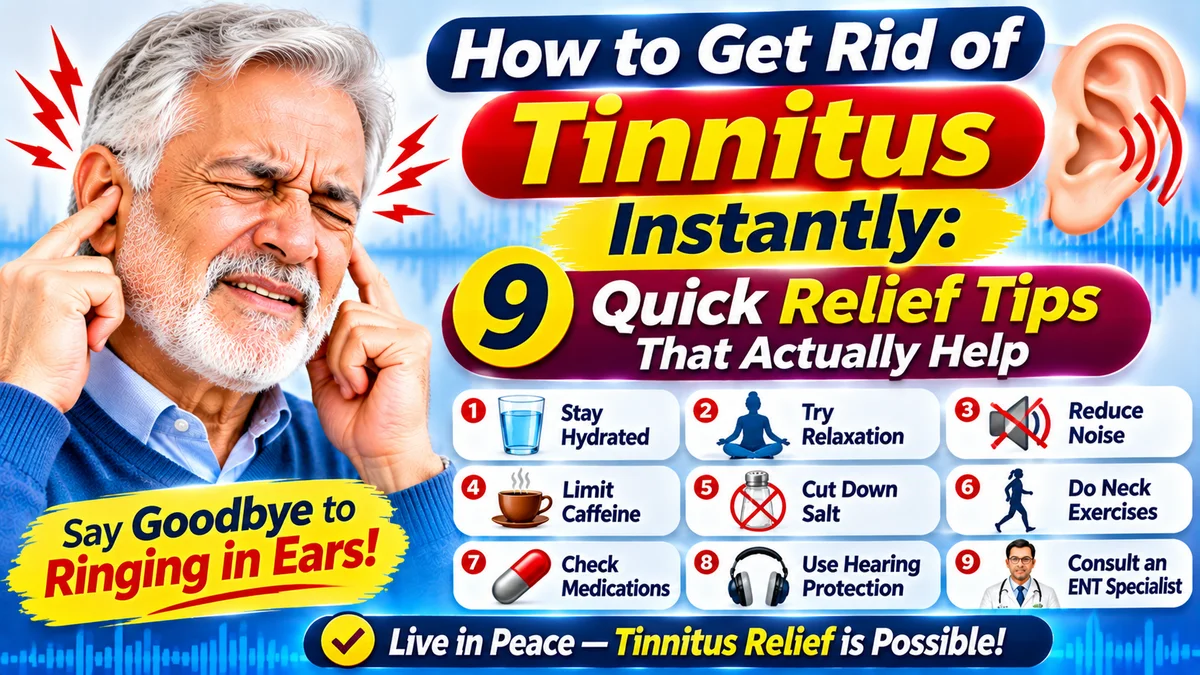
How to Get Rid of Tinnitus Instantly: 9 Quick Relief Tips That Actually Help
That constant ringing, buzzing, or hissing in your ears can turn a quiet evening into a stressful one. If you have searched for how to get rid of tinnitus instantly, you are not alone. Millions of people experience tinnitus, and nearly all of them want the same thing: relief right now.
Here is the honest answer from hearing care professionals. Tinnitus is a symptom, not a disease, so there is no single switch that turns it off permanently for everyone. The good news is that there are proven ways to calm the sound within minutes, make it feel much quieter, and stop it from controlling your day. In this guide, VR Speech and Hearing Clinic explains what tinnitus is, what triggers it, nine quick relief techniques, long-term treatment options, and when it is time to see an audiologist.
What Is Tinnitus?
Tinnitus is the perception of sound when no external sound is present. People describe it as ringing, buzzing, hissing, humming, clicking, or whooshing. It may affect one ear or both, and it can be constant or come and go.
Tinnitus happens when the hearing system and the brain send mixed signals. Damaged hair cells in the inner ear, for example, can send irregular signals to the brain, which then interprets them as sound. In most cases, only you can hear it. In rare cases, a doctor can also hear a sound linked to blood flow or muscle movement near the ear. Because tinnitus is usually connected to an underlying cause, finding that cause is the first step toward lasting relief.
Common Causes of Tinnitus
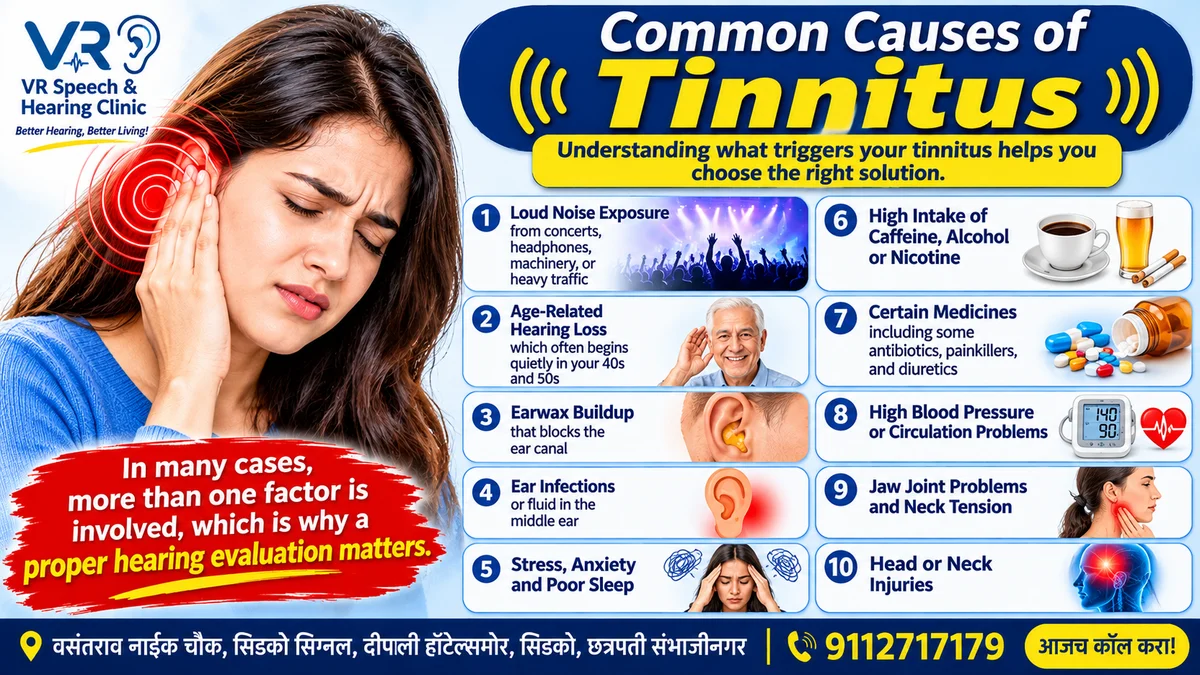
Understanding what triggers your tinnitus helps you choose the right solution. The most common causes include:
Loud noise exposure from concerts, headphones, machinery, or heavy traffic
Age-related hearing loss, which often begins quietly in your 40s and 50s
Earwax buildup that blocks the ear canal
Ear infections or fluid in the middle ear
Stress, anxiety, and poor sleep
High intake of caffeine, alcohol, or nicotine
Certain medicines, including some antibiotics, painkillers, and diuretics
High blood pressure or circulation problems
Jaw joint problems and neck tension
Head or neck injuries
In many cases, more than one factor is involved, which is why a proper hearing evaluation matters.
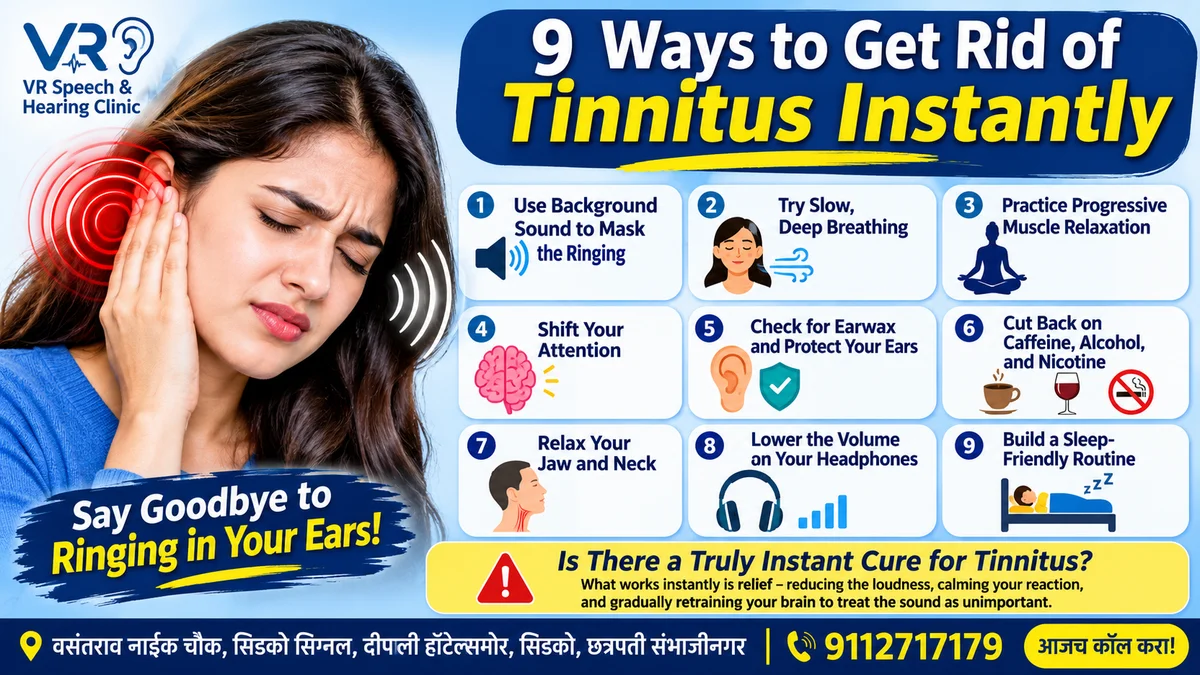
9 Ways to Get Rid of Tinnitus Instantly
The techniques below will not cure the underlying cause, but they can quiet the sound and calm your reaction to it quickly. Try them one at a time and notice which ones work best for you.
1. Use Background Sound to Mask the Ringing
Tinnitus feels loudest in silence. Playing soft background sound such as a fan, rain, ocean waves, or white noise reduces the contrast between the ringing and your surroundings. Keep the volume just below the level of your tinnitus so the sound blends in rather than competes with it. Many people feel noticeable relief within minutes, which is why this is usually the first technique audiologists suggest.
2. Try Slow, Deep Breathing
Stress makes tinnitus louder, and loud tinnitus creates more stress. Break the cycle with slow breathing. Inhale through your nose for four counts, hold for four, and exhale gently for six. Repeat for three to five minutes. Calming your nervous system can reduce how intensely you notice the sound, and it works anywhere, even at your desk.
3. Practice Progressive Muscle Relaxation
Tense and then release each muscle group, starting from your toes and moving up to your calves, shoulders, jaw, and face. Many people with tinnitus carry hidden tension in the jaw and neck. Releasing it can ease the ringing in minutes and leave your whole body feeling calmer.
4. Shift Your Attention
Your brain can learn to filter out tinnitus when it is busy with something else. Listen to music you enjoy, call a friend, cook, walk outside, or focus on a puzzle. Distraction does not cure tinnitus, but it can make the sound fade into the background almost instantly. The less attention you give it, the less power it has.
5. Check for Earwax and Protect Your Ears
Excess earwax can cause or worsen ringing. Do not use cotton buds, hairpins, or ear candles, which can push wax deeper or damage the eardrum. If you suspect a blockage, have your ears examined and cleaned safely by a professional. Many people notice the sound improve right after a blockage is removed.
6. Cut Back on Caffeine, Alcohol, and Nicotine
These stimulants can increase tinnitus loudness in some people. If your ringing spikes after coffee, energy drinks, or a night out, reduce your intake and see how your ears respond over a few days. Staying well hydrated and eating regular meals also helps keep your symptoms steady.
7. Relax Your Jaw and Neck
Jaw clenching and neck stiffness can trigger what is known as somatic tinnitus. Gently massage the muscles in front of your ears, stretch your neck slowly from side to side, and avoid chewing gum. If the sound changes when you move your jaw or neck, mention it to your audiologist, because it can point toward the cause.
8. Lower the Volume on Your Headphones
Loud headphones can make tinnitus worse almost immediately. Follow the 60-60 rule: listen at no more than 60 percent volume for no more than 60 minutes at a time. Take quiet breaks to let your ears recover. If you work in a noisy place, wear proper ear protection every day.
9. Build a Sleep-Friendly Routine
Tinnitus often feels worst at night, when everything else is quiet. Use a soft sound machine or a pillow speaker, keep your bedroom cool and dark, and avoid screens before bed. Better sleep lowers stress and helps your brain tune the ringing out. A consistent bedtime also makes tinnitus feel less demanding over time.
Is There a Truly Instant Cure for Tinnitus?
Be careful with products that promise an instant, permanent cure. Pills, supplements, and online gadgets that claim to erase tinnitus in seconds are not supported by strong evidence. What works instantly is relief: reducing the loudness, calming your reaction, and gradually retraining your brain to treat the sound as unimportant. Permanent improvement usually depends on treating the underlying cause, such as wax, infection, hearing loss, or stress.
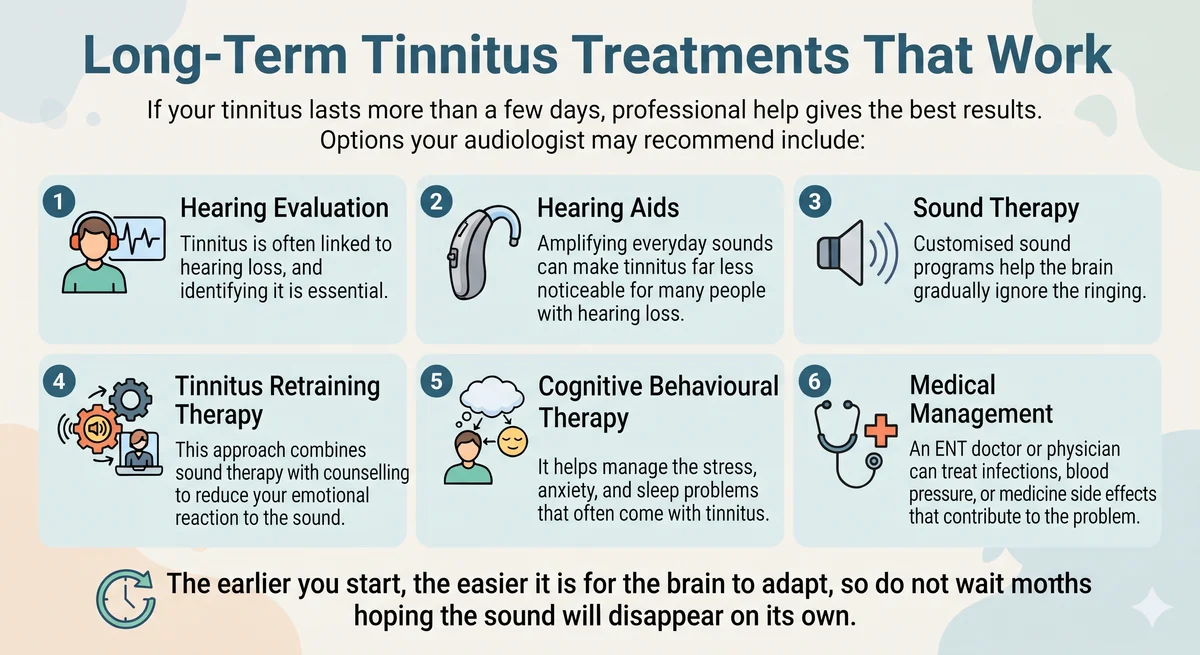
Long-Term Tinnitus Treatments That Work
If your tinnitus lasts more than a few days, professional help gives the best results. Options your audiologist may recommend include:
Hearing evaluation: Tinnitus is often linked to hearing loss, and identifying it is essential.
Hearing aids: Amplifying everyday sounds can make tinnitus far less noticeable for many people with hearing loss.
Sound therapy: Customised sound programs help the brain gradually ignore the ringing.
Tinnitus retraining therapy: This approach combines sound therapy with counselling to reduce your emotional reaction to the sound.
Cognitive behavioural therapy: It helps manage the stress, anxiety, and sleep problems that often come with tinnitus.
Medical management: An ENT doctor or physician can treat infections, blood pressure, or medicine side effects that contribute to the problem.
The earlier you start, the easier it is for the brain to adapt, so do not wait months hoping the sound will disappear on its own.
When to See a Doctor or Audiologist Right Away
Most tinnitus is not dangerous, but some signs need prompt attention. Book an appointment immediately if you notice:
Sudden ringing together with sudden hearing loss
Tinnitus in only one ear
A pulsing sound that beats in time with your heartbeat
Dizziness, vertigo, or balance problems
Ear pain, discharge, or facial weakness
Tinnitus that began after a head injury
Ringing that lasts more than a week or disrupts your sleep, work, or mood
Sudden hearing loss is a medical emergency, and treatment works best when started within the first few days.
Why Choose VR Speech and Hearing Clinic for Tinnitus Care
At VR Speech and Hearing Clinic, tinnitus is treated as more than just a sound. Our audiologists begin with a detailed case history and a complete hearing evaluation to understand what is triggering your symptoms. From there, we create a personalised plan that may include counselling, sound therapy, hearing solutions, and guidance on everyday lifestyle changes. When a medical cause needs attention, we guide you toward the right ENT specialist.
You do not have to live with the constant noise. Whether your tinnitus started yesterday or years ago, expert guidance can help you take back quiet, focus, and good sleep.
Final Thoughts
There may be no magic button to get rid of tinnitus instantly, but there are many practical ways to quiet it within minutes: masking sound, deep breathing, relaxation, less caffeine, safer listening habits, and better sleep. For lasting results, you need to find out why it is happening, and a hearing check is the smartest first step. Book your appointment with VR Speech and Hearing Clinic today and start your journey toward calmer, quieter ears.
Frequently Asked Questions (FAQs)
1. Can tinnitus go away on its own? Yes. Short-term tinnitus caused by loud noise, earwax, or stress often fades within hours or days. If the ringing lasts longer than a week, or keeps returning, get your hearing checked.
2. Is there a permanent cure for tinnitus? There is no single cure that works for everyone. However, treating the underlying cause and using sound therapy, counselling, or hearing aids can reduce tinnitus to the point where many people barely notice it.
3. What is the fastest way to stop ringing in the ears at night? Play soft background sound, practise slow breathing, keep your room cool and dark, and avoid caffeine in the evening. A pillow speaker or sound machine can make a big difference.
4. Can hearing aids help with tinnitus? Yes. If your tinnitus is linked to hearing loss, hearing aids bring back everyday sounds, which helps the brain pay less attention to the ringing.
5. Can stress cause tinnitus? Stress rarely causes tinnitus on its own, but it can trigger it or make it much louder. Relaxation techniques and good sleep often bring noticeable relief.
6. When is tinnitus an emergency? Seek urgent care if tinnitus appears with sudden hearing loss, severe dizziness, facial weakness, or after a head injury. A pulsing sound or ringing in one ear only also needs a prompt check-up.
7. Which specialist should I visit for tinnitus? Start with an audiologist for a full hearing evaluation. If a medical issue is suspected, you may also be referred to an ENT doctor.