How Do Digital Hearing Aids Work? Tech Explained
Understanding the Technology Behind Digital Hearing Aids
When you look at a modern hearing device, it is easy to underestimate the sheer computing power hidden inside its tiny, discreet casing. Gone are the days when hearing assistance meant wearing a bulky amplifier that made every sound—from a dropping pin to a roaring siren—uncomfortably loud. Today’s devices are sophisticated, custom-programmed microcomputers.
If you have ever searched online for "how-do-digital-hearing-aids-work," you are likely looking for more than just a basic overview. You want to understand the intricate science of sound processing, the nuanced capabilities of modern microchips, and how these tiny marvels can drastically improve quality of life. This comprehensive guide will take you on a deep dive into the technology, features, and real-world applications of modern audiological devices.

The Core Question: How Do Digital Hearing Aids Work?
To truly answer the query of how-do-digital-hearing-aids-work, we have to follow the journey of a sound wave from the environment into your ear canal.
Unlike older technologies that simply turned up the volume on the world, modern digital hearing aids analyze, manipulate, and recreate sound in real-time. They perform millions of calculations per second to deliver an optimized auditory experience. Here is the step-by-step breakdown of that process:
1. The Microphone (Capturing the Sound)
The journey begins at the microphone. Most modern devices actually have two or more microphones. These components capture acoustic energy (sound waves) from the environment and convert it into an electrical signal.
2. The Analog-to-Digital Converter (Digitizing the Signal)
Once the sound is an electrical signal, it passes through an Analog-to-Digital Converter (ADC). This is where the magic of digital technology begins. The ADC translates the continuous electrical wave into a binary code—a series of 1s and 0s. This digital format allows the microchip to manipulate the sound with extreme precision.
3. The Microchip (Processing the Sound)
This is the "brain" of the operation. Utilizing advanced digital signal processing technology, the microchip reads the binary code and instantly categorizes the sounds. It identifies which sounds are speech, which are background noise, and which are sudden, jarring impacts. Based on the user's specific hearing loss profile, the chip applies a complex set of algorithms to amplify what is needed and suppress what is not.
4. The Digital-to-Analog Converter (Reversing the Process)
Once the sound has been cleaned up, balanced, and amplified by the microchip, it must be converted back into an acoustic form that the human ear can understand. The Digital-to-Analog Converter (DAC) translates the optimized binary code back into an analog electrical signal.
5. The Receiver (Delivering the Sound)
Finally, the signal is sent to the receiver (which is essentially a tiny, highly efficient speaker). The receiver converts the electrical signal back into acoustic sound waves and directs them into the ear canal, allowing the user to hear a crisp, clear, and perfectly balanced world.

The Evolution of Sound: Analog vs Digital Hearing Aids Comparison
To appreciate where we are today, we must look back at where we started. When looking at an analog vs digital hearing aids comparison, the differences are as vast as comparing a standard magnifying glass to a modern smart telescope.
The Era of Analog
Analog hearing aids were the standard for decades. They worked by taking a continuous sound wave and making it larger. While some later analog models had basic programmable settings, their fundamental flaw remained: they amplified everything.
If you were sitting in a busy restaurant wearing an analog device, the voice of the person across the table would be amplified—but so would the clattering of plates, the hum of the air conditioner, and the chatter of the table next to you. This often resulted in sensory overload, leading many users to turn down the volume or take the devices out entirely in noisy environments.
The Digital Revolution
So, why are digital hearing aids better than analog? The answer lies in selectivity.
Digital technology allows the device to slice incoming sound into different frequency bands or "channels." Instead of a blanket amplification, digital devices act like an intelligent equalizer. If you have high-frequency hearing loss (which makes it hard to hear consonants like "s," "f," and "th"), a digital device will amplify those specific high pitches while leaving the low-pitch background hums alone.
Furthermore, digital processing introduces "smart" features that simply were not possible with analog circuitry. These devices can learn your preferences, adapt to your environment, and communicate seamlessly with other modern technology.
Inside the Mini-Computer: Features That Transform Hearing
The reason digital hearing aids are so life-changing is due to the specific algorithms and software features programmed into their microchips. Let's explore the core technologies that work silently behind the scenes.
Improving Sound Quality with Multi-Channel Processing
One of the most significant advancements in audiology is improving sound quality with multi-channel processing.
Human hearing spans a wide range of frequencies, typically measured from 20 Hertz (low pitch) to 20,000 Hertz (high pitch). Hearing loss is rarely uniform; you might have perfect hearing in the low frequencies but severe loss in the high frequencies.
Multi-channel processing splits the incoming sound spectrum into distinct frequency bands. Modern devices can have anywhere from 4 to 48 channels. This allows the microchip to apply different rules to different pitches. For example, if a dog barks (a broad-spectrum sound) and a bird chirps (a high-frequency sound) at the same time, the processor can treat those sounds independently, applying the exact amount of amplification required for each specific channel based on your unique hearing profile.

Directional Microphone Technology for Speech Clarity
Have you ever struggled to hear a conversation in a crowded room? This is the most common complaint among individuals with hearing loss. Digital devices solve this using directional microphone technology for speech clarity.
Most digital aids feature two microphones on each device. By measuring the microsecond difference in the time it takes for a sound to hit the first microphone versus the second, the microchip can determine exactly where the sound is coming from.
If the device detects speech coming from directly in front of you (where you are presumably looking), it will focus its sensitivity forward. Simultaneously, it will reduce the sensitivity to sounds coming from behind and to the sides. This creates a "beam" of listening focus, drastically improving your ability to understand speech in noisy environments.
Advanced Background Noise Reduction Features
Directional microphones work hand-in-hand with advanced background noise reduction features.
But how digital processors filter ambient sounds is a masterclass in acoustic physics. The microchip constantly analyzes the incoming audio signal, looking for patterns. Speech has a highly variable pattern; it modulates quickly in volume and pitch. Background noise—like a car engine, an airplane cabin, or a refrigerator hum—tends to be "steady-state" or continuous.
When the microchip identifies a steady-state noise, it employs a technique called "spectral subtraction." It instantly reduces the amplification in the specific frequency channels where that noise is occurring, all without lowering the volume of the variable speech signals happening at the same time. This happens in fractions of a millisecond.
Hearing Aid Feedback Cancellation Systems
If you knew someone with older hearing aids, you likely remember the high-pitched whistling sound their devices would occasionally make. This is called "feedback." It happens when amplified sound leaks out of the ear canal, re-enters the microphone, and gets amplified again in an infinite, screeching loop.
Modern devices utilize highly sophisticated hearing aid feedback cancellation systems. When the digital processor detects the specific signature of a feedback loop beginning to form, it generates an identical sound wave but flips it 180 degrees out of phase. In the world of physics, when two identical but out-of-phase sound waves collide, they cancel each other out completely. This is the exact same technology used in noise-canceling headphones, ensuring your devices never whistle, even when you give someone a hug or put on a hat.
Automatic Volume Control in Modern Hearing Devices
In the past, users had to constantly fiddle with tiny dials on their devices to adjust the volume as they moved from a quiet room to a noisy street. Today, automatic volume control in modern hearing devices (technically known as Wide Dynamic Range Compression, or WDRC) handles this seamlessly.
WDRC monitors the environment and adjusts the gain (amplification) automatically. It takes soft sounds (like a whisper or leaves rustling) and amplifies them enough to be heard. However, it takes loud sounds (like a slamming door) and compresses them so they do not become painfully loud. It ensures that all sounds fit comfortably within the user's usable hearing range without any manual adjustments.

The Science of Sound: Understanding Amplification and Audiology
To fully grasp the benefits of these features, one must have a basic understanding sound amplification levels. Sound is measured in decibels (dB). A normal conversation sits around 60 dB, a whisper around 30 dB, and a lawnmower around 90 dB.
When a person experiences sensorineural hearing loss (damage to the tiny hair cells in the inner ear), their "threshold" for hearing goes up. They might not hear anything below 40 dB. However, their "tolerance" for loud sounds often remains the same. A 100 dB sound is just as uncomfortably loud to them as it is to someone with normal hearing. This creates a narrowed "dynamic range" of hearing.
Digital hearing aids manage this narrowed range beautifully. They do not just add a flat 40 dB to everything. If they did, an 80 dB shout would become a 120 dB roar, causing physical pain. Instead, they apply non-linear amplification—giving a lot of help to soft sounds, a little help to medium sounds, and zero amplification to loud sounds.
The Role of the Audiologist in Device Programming
While the technology inside the device is incredible, a microchip is only as good as the instructions it is given. This highlights the vital role of the audiologist in device programming.
Hearing loss is as unique as a fingerprint. When you purchase a digital hearing aid, an audiologist or licensed hearing instrument specialist uses the results of your hearing test (audiogram) to program the microchip. They utilize specialized software to input your prescription.
Furthermore, a skilled audiologist will perform "Real Ear Measurements" (REM). Because every ear canal has a different shape and volume, sound resonates differently in every ear. During REM, the audiologist places a tiny probe microphone deep into your ear canal alongside the hearing aid to measure exactly what the device is delivering to your eardrum. They then fine-tune the programming to ensure the sound matches your precise medical prescription. This level of customization is why professionally fitted devices drastically outperform over-the-counter amplifiers.
Smart Adaptation: Adjusting to Your World
Life doesn't happen in a soundproof booth. We move through countless different acoustic environments every single day.
Adjusting Hearing Aid Settings for Different Environments
One of the hallmarks of premium digital technology is its ability to adapt on the fly. Adjusting hearing aid settings for different environments used to require pushing a button on the device to switch from "Quiet Mode" to "Restaurant Mode."
While manual overrides are still available (usually via a smartphone app), modern devices use artificial intelligence and machine learning to scan the environment hundreds of times per second.
In a quiet living room: The device expands its microphone pickup to a 360-degree radius, allowing you to hear a clock ticking, a partner speaking from another room, and the subtle sounds of your home.
In a windy park: The device detects the turbulent sound of wind hitting the microphones. It instantly applies a wind-noise reduction algorithm, suppressing the low-frequency rumble of the wind so you can still hear the person walking next to you.
In a live theater or concert: The device switches to a "Music" program. Music has a much wider dynamic range than speech. The processor turns off its noise-reduction and feedback-cancellation features (which can sometimes mistake sustained musical notes for feedback or noise) to deliver a rich, full-fidelity acoustic experience.

Connectivity and Power: The Modern User Experience
The digital revolution did more than just improve sound processing; it turned hearing aids into powerful, connected, lifestyle wearables.
Connecting Hearing Aids to Smartphones via Bluetooth
One of the most requested features by modern consumers is connectivity. Connecting hearing aids to smartphones via bluetooth has fundamentally changed how users interact with their devices and the world around them.
Through Bluetooth technology (specifically protocols like Apple’s MFi and Android’s ASHA), hearing aids can connect directly to your mobile device. This offers several massive advantages:
Direct Streaming: Phone calls, podcasts, audiobooks, and music stream directly from your phone into your hearing aids in stereo sound. It is essentially like wearing a pair of custom-fitted, medical-grade AirPods.
App Control: Users can download an app provided by the manufacturer to discreetly control their devices. You can adjust the volume, change environmental programs, check battery life, and even tweak the equalizer (bass, mid, treble) right from your smartphone screen.
Find My Hearing Aid: Because they are connected via Bluetooth, many apps feature a tracking system. If you misplace a device, your phone's GPS can help you locate the exact spot it was last connected.
Integrating with Assistive Listening Devices
Beyond smartphones, digital hearing aids can connect to a wide ecosystem of assistive listening devices.
TV Streamers: These small boxes plug into your television and beam the audio directly to your hearing aids. This allows you to watch TV at a volume that is perfect for your specific hearing loss, while the rest of the family listens at a standard volume from the TV speakers.
Remote Microphones: In extremely noisy environments or lecture halls, a remote microphone can be a lifesaver. You can clip a small microphone to your spouse's collar in a loud restaurant, or ask a lecturer to wear one. The microphone picks up their voice at the source and streams it wirelessly across the room directly into your ears, bypassing the room's background noise entirely.
The Benefits of Rechargeable Hearing Aid Batteries
For decades, hearing aid wearers were tethered to tiny, disposable zinc-air batteries. These batteries were difficult to handle for those with dexterity issues, lasted only a few days, and created significant environmental waste.
Today, the industry has experienced a lithium-ion revolution. The benefits of rechargeable hearing aid batteries are profound:
Convenience: You simply place the devices in their charging case before bed, much like a smartphone, and wake up to a full day of power.
Weather Resistance: Because rechargeable devices do not require a battery door that opens and closes, they can be sealed tightly. This makes modern rechargeable hearing aids highly resistant to dust, sweat, and moisture (often boasting IP68 ratings).
Consistent Power Delivery: As disposable batteries drain, their voltage can fluctuate, sometimes affecting the performance of power-hungry features like Bluetooth streaming. Lithium-ion batteries provide a steady, consistent voltage until they are depleted, ensuring peak performance all day.
Eco-Friendly: By eliminating the need for hundreds of disposable batteries per year, rechargeable options are vastly better for the environment.
Finding Your Fit: How to Choose the Right Hearing Aid Style
With all this incredible technology available, the next step is determining the physical form factor that best suits your needs. Knowing how to choose the right hearing aid style involves balancing your level of hearing loss, your anatomical ear shape, your lifestyle, and your cosmetic preferences.
Here is a breakdown of the primary styles available today:
Receiver-in-Canal (RIC) / Receiver-in-the-Ear (RITE)
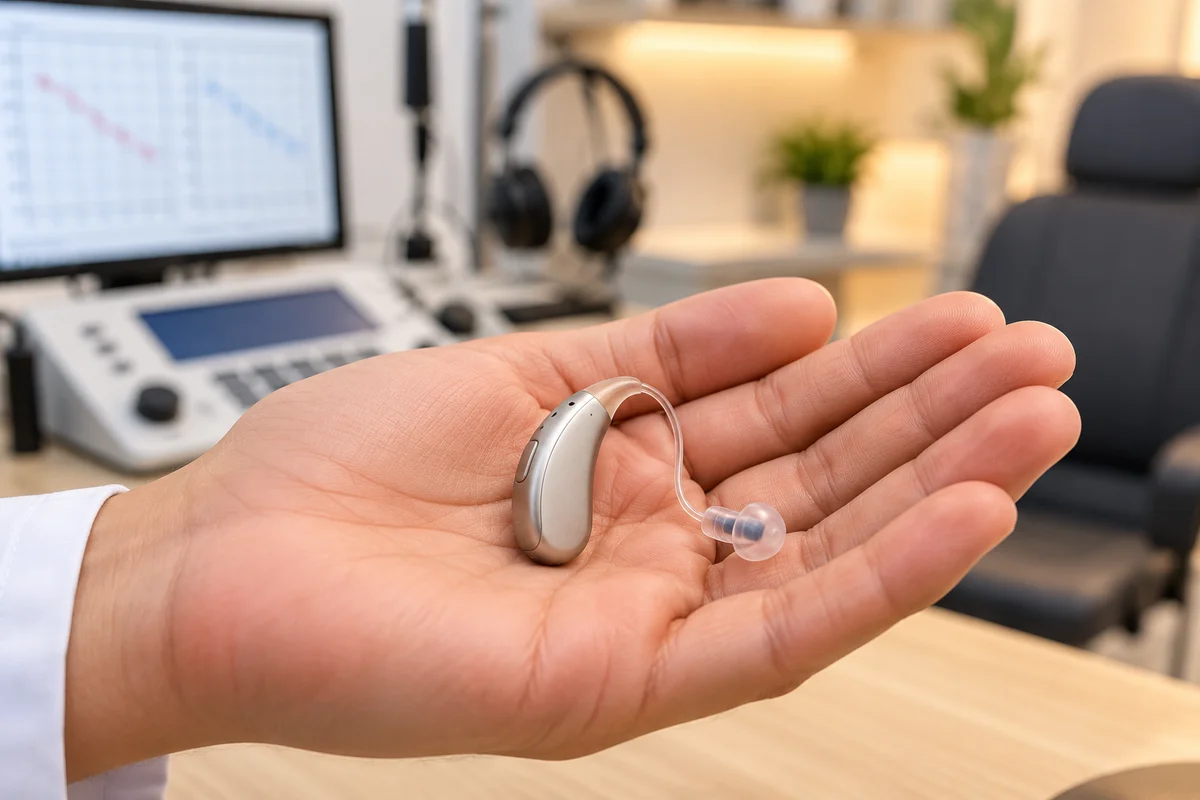
This is currently the most popular style on the market. In a RIC device, the main body of the hearing aid (containing the microphones, processor, and battery) sits discreetly behind the ear. A nearly invisible wire runs down into the ear canal, connecting to a tiny receiver (speaker) that sits inside the ear.
Pros: Highly discreet, exceptionally comfortable, leaves the ear canal partially open for a natural sound quality, and accommodates a wide range of hearing losses.
Cons: The receiver in the ear is susceptible to earwax and moisture buildup, requiring regular cleaning.
Behind-the-Ear (BTE)
Similar to a RIC, a BTE device sits behind the ear. However, all the electronic components—including the receiver—are housed in the casing behind the ear. The sound is directed into the ear via a clear plastic tube connected to a custom-molded earpiece.
Pros: Unmatched durability, capable of housing larger batteries for longer life, and provides the maximum amount of amplification (making it the best choice for severe-to-profound hearing loss). Often the standard choice for children.
Cons: Slightly larger and more visible than RIC models.
In-the-Ear (ITE)
These devices are custom-molded to fit the outer bowl of your ear (the concha). All components are housed within this single plastic shell.
Pros: Easier to handle and insert for individuals with dexterity issues (such as arthritis). Large enough to feature physical volume wheels or program buttons.
Cons: Highly visible. Because the microphones are inside the ear, they can sometimes pick up wind noise more easily than behind-the-ear models.
Completely-in-Canal (CIC) and Invisible-in-the-Canal (IIC)
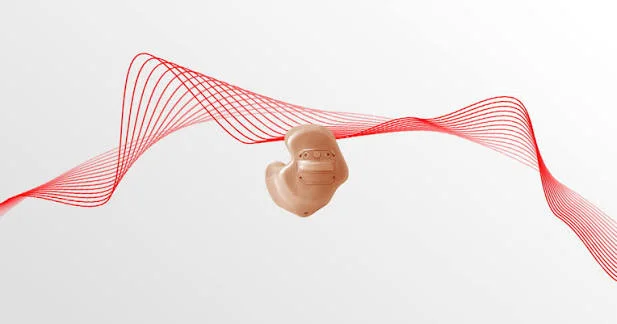
These are the smallest custom hearing aids available. They are molded to fit deep inside the ear canal, with IIC models resting so deep they are virtually invisible from the outside. A small transparent string is attached to pull them out.
Pros: Unmatched cosmetic appeal. Because the microphone sits deep in the canal, it utilizes the natural acoustics of the outer ear for excellent sound localization.
Cons: Too small to accommodate Bluetooth technology or rechargeable batteries. Not powerful enough for severe hearing losses. Highly susceptible to earwax damage.
Making the Decision
When deciding on a style, it is crucial to consult with your audiologist. While you may want an invisible device, your specific type of hearing loss or the shape of your ear canal might make a RIC or BTE a more effective medical choice. The goal is always to maximize speech comprehension and comfort.
Actionable Tips for New Hearing Aid Users
If you are transitioning to digital hearing technology for the first time, it is important to set yourself up for success. Acquiring the devices is only the first step; training your brain to use them is the second.
1. Understand the Acclimatization Period
When you have untreated hearing loss, your brain forgets what certain sounds are like. When a digital hearing aid suddenly reintroduces the sound of the refrigerator humming, your footsteps on the floor, or the rustling of a newspaper, it can feel overwhelmingly loud.
This is normal. It takes the brain’s auditory cortex roughly 30 to 60 days to adapt to these new neural inputs. Be patient. Wear your devices in quiet environments first, gradually working your way up to noisier situations.
2. Wear Them Consistently
Hearing aids are not like reading glasses that you only put on when you need them. To allow your brain to undergo the necessary neuroplasticity (rewiring) to process sound effectively, you must wear them from the moment you wake up until the moment you go to sleep.
3. Keep Them Clean and Dry
Digital hearing aids are high-tech microcomputers sitting in a warm, moist environment (your ear canal) all day.
Wipe them down nightly with a dry, microfiber cloth.
Use a small brush to clear earwax away from the receiver and microphone ports.
Consider investing in an electronic hearing aid dehumidifier to draw out moisture overnight.
4. Advocate for Fine-Tuning
Do not be afraid to return to your audiologist. If a specific sound is bothering you, or if you are still struggling in a specific environment, your audiologist can plug the devices back into their software and adjust the digital signal processing. It often takes two or three adjustment appointments to achieve the perfect bespoke sound profile.
Conclusion: Embracing the Digital Auditory World
The leap from older analog amplifiers to modern, programmable microchips has completely transformed audiological care. By understanding the intricate layers of this technology—from the initial digitization of sound waves to the real-time, AI-driven adjustments that filter out background noise—we can appreciate just how miraculous these devices truly are.
Whether it is the convenience of Bluetooth streaming, the environmental benefits of lithium-ion batteries, or the sheer acoustic brilliance of multi-channel processing and directional microphones, today's digital hearing aids are designed to integrate seamlessly into your life. They do not just make the world louder; they make the world clearer, sharper, and infinitely more accessible.
If you or a loved one is experiencing hearing loss, do not let outdated perceptions of hearing technology hold you back. The digital revolution has arrived, and it sounds absolutely incredible. Reach out to a certified audiologist to test your hearing, explore these technological marvels, and take the first step toward reconnecting with the sounds, conversations, and people you love.