How Did Beethoven Compose Music Despite Being Deaf?
How Did Beethoven Compose Music Despite Being Deaf?
Ludwig van Beethoven is widely regarded as one of the greatest composers in the history of Western music. What makes his story even more extraordinary is that he composed some of his most celebrated works — including his iconic Ninth Symphony — after losing almost all of his hearing. For patients and families navigating hearing loss today, Beethoven's story offers both inspiration and important insights into how the human brain and body can adapt. At VR Hearing Clinic, we believe understanding these remarkable mechanisms can help demystify hearing loss and encourage people to seek the support they need.
The Timeline of Beethoven's Hearing Loss
Beethoven began experiencing hearing difficulties as early as his late twenties, around 1796 to 1800. He noticed a persistent ringing in his ears — a condition we now recognize as tinnitus — along with a gradual decline in his ability to hear high-pitched sounds. By 1814, his hearing had deteriorated so severely that he could no longer perform as a concert pianist. By 1818, he was almost entirely deaf, relying on conversation books — small notebooks where visitors would write their questions and comments — to communicate with the people around him.
Despite this devastating progression, Beethoven composed prolifically throughout his years of hearing loss. His late string quartets, the Missa Solemnis, and the Ninth Symphony were all written during the period when he could hear little to nothing of the external world. How was this possible?
The Role of Bone Conduction
One of the most visually striking methods Beethoven reportedly used was biting down on a wooden rod or metal rod attached to his piano while he played. By doing this, he could feel and partially perceive the vibrations of the music traveling directly through his jawbone to his inner ear — a phenomenon known as bone conduction.
Bone conduction bypasses the outer and middle ear entirely, transmitting sound vibrations directly through the bones of the skull to the cochlea in the inner ear. This is the same principle behind modern bone conduction hearing devices and certain hearing aids used today. For patients with conductive hearing loss or single-sided deafness, bone conduction technology remains one of the most effective hearing solutions available.
The Power of Auditory Memory
Beyond bone conduction, Beethoven's remarkable ability to compose while deaf was rooted in a lifetime of deeply ingrained auditory memory. By the time his hearing failed, he had spent decades immersed in music. He had an extraordinary ability to imagine and mentally "hear" sounds with tremendous accuracy — what audiologists and neuroscientists today refer to as auditory imagery or inner hearing.
The human brain builds rich neural networks for sound through years of listening experience. These networks do not simply disappear when hearing fades. Beethoven could mentally construct entire orchestral scores — hearing the swell of strings, the punch of brass, and the shimmer of woodwinds — entirely within his imagination, because those neural pathways remained intact even as his peripheral hearing deteriorated.
This insight has profound implications for hearing health today. It underscores why early intervention in hearing loss is so important. The longer the auditory system remains stimulated and active, the stronger and more resilient those neural pathways become. Conversely, untreated hearing loss over many years can lead to auditory deprivation — a gradual weakening of the brain's ability to process sound — which is one reason audiologists recommend addressing hearing loss as early as possible rather than waiting.
Understanding Beethoven's Type of Hearing Loss
Medical historians and audiologists have debated the exact cause of Beethoven's hearing loss for generations. Several theories exist, including lead poisoning (Beethoven's hair samples, examined posthumously, showed extremely high lead levels), autoimmune inner ear disease, otosclerosis (an abnormal bone growth in the middle ear), or Paget's disease of bone. A 2021 genetic analysis of authenticated locks of Beethoven's hair suggested genetic risk factors for cardiovascular disease, which may also have contributed to his hearing decline.
What is notable from a clinical perspective is that Beethoven retained some perception of low-frequency sounds longer than high frequencies — a pattern consistent with certain types of sensorineural hearing loss. He could feel bass vibrations through the floor and through physical contact with instruments even when he could no longer perceive treble tones acoustically. This is why he reportedly sawed off the legs of his piano so it sat directly on the floor, allowing vibrations to travel through the floorboards and into his body as he composed.
What Beethoven's Story Teaches Us About Hearing Health
Beethoven's experience illustrates several key principles that remain central to modern audiology and hearing care.
First, hearing loss is not a single, uniform condition. It exists on a spectrum, affects different frequencies differently, and progresses at varying rates depending on the underlying cause. Understanding the specific nature and pattern of an individual's hearing loss is essential to finding the right treatment or support.
Second, the brain's adaptability — what neuroscientists call neuroplasticity — is remarkable. The auditory cortex can reorganize in response to changes in sensory input. Beethoven's case is an extreme example of the brain compensating for peripheral hearing loss by relying on memory, imagination, and alternative sensory pathways such as vibrotactile perception (feeling vibrations through touch).
Third, untreated hearing loss can have wide-ranging consequences beyond the ears themselves. Beethoven struggled profoundly with social isolation, depression, and anxiety as his hearing declined. He famously wrote the Heiligenstadt Testament in 1802 — a deeply personal letter to his brothers in which he contemplated suicide before resolving to continue living for the sake of his art. Social isolation caused by untreated hearing loss is a recognized risk factor for depression and cognitive decline in modern patients as well, which is why hearing care is inseparable from overall mental and emotional health.
Fourth, technology and adaptation can make an enormous difference. Beethoven intuitively discovered bone conduction on his own. Today, patients have access to a wide range of advanced hearing solutions — from digital hearing aids and cochlear implants to bone-anchored hearing devices — that can restore or supplement hearing in ways Beethoven could never have imagined.
Modern Hearing Solutions Inspired by Science
At VR Hearing Clinic, we draw on decades of advances in audiology to help patients manage and treat hearing loss at every stage. Whether you are experiencing the early signs of hearing decline, managing tinnitus, or exploring assistive listening devices, our team is here to guide you with personalized, evidence-based care.
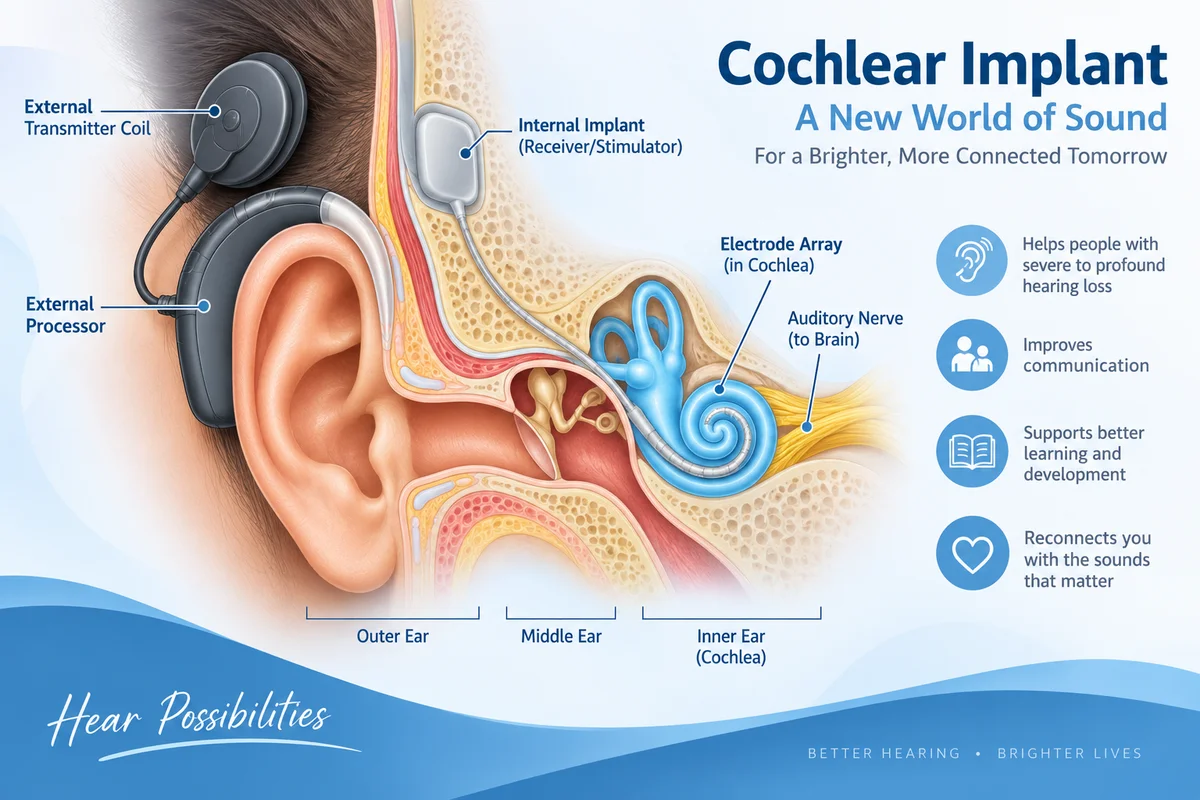
Bone conduction hearing devices — inspired by the same principle Beethoven used with his piano rod — are now sophisticated, comfortable, and highly effective for eligible patients. Digital hearing aids use advanced signal processing to amplify exactly the frequencies an individual needs, drawing on the same understanding of frequency-specific hearing loss that helps us make sense of Beethoven's story. Cochlear implants can restore meaningful hearing even in cases of profound sensorineural hearing loss, working by directly stimulating the auditory nerve and bypassing damaged hair cells in the inner ear.
Early evaluation is always the most powerful step. The earlier hearing loss is identified and addressed, the better the brain can maintain and strengthen its auditory pathways — maximizing the benefit of any treatment.
When Should You Seek a Hearing Evaluation?
You should consider scheduling a hearing assessment if you notice any of the following signs: difficulty following conversations in noisy environments, frequently asking people to repeat themselves, ringing or buzzing sounds in your ears (tinnitus), the feeling that people are mumbling, needing to turn up the television or radio louder than others prefer, or difficulty hearing high-pitched sounds such as doorbells, birdsong, or consonant sounds in speech.
Beethoven ignored his hearing problems for years, partly out of shame and partly out of fear of what the diagnosis might mean for his career. Modern hearing care removes those barriers. Hearing evaluations are non-invasive, painless, and provide invaluable information that can meaningfully improve quality of life.
Conclusion: Lessons from a Musical Genius
Beethoven's ability to compose breathtaking music despite near-total deafness is one of history's most extraordinary examples of human resilience and neurological adaptability. His story illuminates the science of bone conduction, auditory memory, and the brain's remarkable capacity to compensate for sensory loss. It also reminds us that hearing loss, when left unaddressed, carries real emotional and social costs.
At VR Hearing Clinic, we are committed to helping every patient find their own path through hearing loss — with compassion, clinical expertise, and the best available technology. If you or a loved one is experiencing changes in hearing, we warmly invite you to reach out to our team and take the first step toward better hearing health.