Hearing Loss: Types, Causes, Symptoms, and Treatment Options
Hearing Loss: Types, Causes, Symptoms, and Treatment Options
Understanding the Different Degrees and Classifications of Hearing Loss
Hearing loss is one of the most common sensory conditions affecting millions of people worldwide. Whether gradual or sudden, mild or profound, hearing loss can significantly impact daily communication, quality of life, and emotional well-being. This comprehensive guide covers everything you need to know about the types, causes, symptoms, degrees, and treatment options for hearing loss.
What Is Hearing Loss?
Hearing loss refers to a partial or total inability to hear sound in one or both ears. It can occur at any age, from birth through adulthood, and may develop gradually over time or appear suddenly. The condition ranges from mild difficulty hearing soft sounds to complete deafness.
Hearing loss is not a single condition. It is a spectrum with many underlying causes, mechanisms, and degrees of severity. Understanding the specific type and degree of hearing loss is the first step toward finding the right treatment or management approach.
Types of Hearing Loss
There are three primary types of hearing loss, each involving a different part of the auditory system.
Sensorineural Hearing Loss
Sensorineural hearing loss is the most common type and occurs when there is damage to the inner ear (cochlea) or the auditory nerve pathways leading to the brain. This type of hearing loss is typically permanent and affects the ability to hear soft sounds as well as the clarity of speech.
Sensorineural hearing loss can be present from birth (congenital) or develop over time due to aging, noise exposure, illness, or medication. It accounts for the vast majority of adult hearing loss cases worldwide.
Conductive Hearing Loss
Conductive hearing loss occurs when sound cannot travel efficiently through the outer or middle ear to reach the inner ear. Common causes include earwax blockage, fluid in the middle ear, ear infections, a perforated eardrum, or problems with the small bones (ossicles) in the middle ear.
Unlike sensorineural hearing loss, conductive hearing loss is often temporary and may be treatable with medication, minor procedures, or surgery.
Mixed Hearing Loss
Mixed hearing loss is a combination of both sensorineural and conductive hearing loss. It means there is damage or dysfunction in both the outer or middle ear and the inner ear or auditory nerve. Treatment typically addresses both components depending on the underlying cause.
Hearing Loss Classification and Degrees
Audiologists classify hearing loss based on the softest sound a person can hear, measured in decibels (dB). Understanding the degree of hearing loss helps determine the most appropriate management plan.
Normal hearing is typically defined as the ability to hear sounds at 0 to 25 dB. Beyond that threshold, hearing loss is classified as follows:
Mild hearing loss (26–40 dB): A person may struggle to follow speech in noisy environments or hear soft voices and whispered sounds. Conversations in quiet settings may still be manageable.
Moderate hearing loss (41–55 dB): Difficulty understanding speech without hearing aids becomes noticeable. The person may frequently ask others to repeat themselves.
Moderately severe hearing loss (56–70 dB): Most conversational speech is difficult to understand without amplification. The impact on daily life becomes significant.
Severe hearing loss (71–90 dB): Very loud sounds may still be heard, but normal speech is largely inaudible without hearing aids or other assistive devices.
Profound hearing loss (91 dB and above): Only extremely loud sounds may be perceived. This level of hearing loss is sometimes referred to as deafness. Sign language or cochlear implants are commonly used communication tools.
Hearing Loss Symptoms
Recognizing the early signs of hearing loss is crucial for timely intervention. Symptoms can vary depending on the type and degree of loss but commonly include:
Difficulty understanding speech, especially in noisy environments or group conversations
Frequently asking people to repeat themselves
Turning up the volume on the television or radio higher than others find comfortable
Difficulty hearing on the phone
Trouble distinguishing high-pitched sounds such as children's voices or birdsong
A sensation of fullness or pressure in the ear
Ringing, buzzing, or humming sounds in the ears, known as tinnitus
Muffled or distorted sound perception
Withdrawing from conversations or social situations due to difficulty following speech
Hearing loss in one ear, known as unilateral hearing loss, may be harder to detect because the other ear compensates. However, difficulty locating where sounds are coming from is a common indicator.
Causes of Hearing Loss
Hearing loss has many possible causes, and identifying the root cause is essential for effective treatment.
Sensorineural Hearing Loss Causes
Age-related hearing loss (presbycusis): Gradual deterioration of the inner ear is the most common cause of sensorineural hearing loss in older adults.
Noise-induced hearing loss: Prolonged or repeated exposure to loud sounds damages the hair cells in the cochlea. Hearing loss from noise is called noise-induced hearing loss (NIHL) and is entirely preventable.
Genetics and congenital factors: Some individuals are born with hearing loss due to genetic conditions or complications during pregnancy.
Viral infections: Illnesses such as meningitis, measles, and mumps can damage the auditory system.
Ototoxic medications: Certain antibiotics, chemotherapy drugs, and diuretics can harm the inner ear as a side effect.
Head trauma: Injury to the skull or temporal bone can damage the cochlea or auditory nerve.
Autoimmune conditions: The immune system mistakenly attacks inner ear structures in some individuals.
Conductive Hearing Loss Causes
Ear infections (otitis media or otitis externa)
Buildup of earwax (cerumen impaction)
Fluid behind the eardrum
Eustachian tube dysfunction
Perforated or ruptured eardrum
Otosclerosis (abnormal bone growth in the middle ear)
Foreign objects in the ear canal
Noise-Induced Hearing Loss
Noise-induced hearing loss is one of the most prevalent and entirely preventable causes of hearing damage. Consistent exposure to sounds above 85 decibels, whether from industrial machinery, power tools, concerts, or earbuds at high volume, gradually destroys the delicate hair cells in the cochlea that convert sound vibrations into nerve signals.
Once these hair cells are destroyed, they do not regenerate. This makes noise-induced hearing loss a permanent condition in most cases. Protective measures such as earplugs, earmuffs, and reducing exposure time to loud environments are the most effective means of prevention.
Hearing Loss ICD-10 Codes
For medical documentation and billing purposes, hearing loss is classified under specific ICD-10 codes. The most commonly used categories include:
H90: Conductive and sensorineural hearing loss
H90.0 – H90.2: Conductive hearing loss, bilateral and unilateral
H90.3 – H90.5: Sensorineural hearing loss, bilateral and unilateral
H90.6 – H90.8: Mixed conductive and sensorineural hearing loss
H91: Other and unspecified hearing loss
H91.1: Presbycusis (age-related hearing loss)
Correct coding supports accurate diagnosis, treatment planning, and insurance coverage. Always consult a qualified audiologist or physician for proper documentation.
Management of Sensorineural Hearing Loss
While sensorineural hearing loss is generally not reversible, effective management strategies significantly improve quality of life and communication ability.
Hearing aids are the most common and effective management tool for sensorineural hearing loss. Modern hearing aids are highly sophisticated digital devices that amplify and process sound to match the specific pattern of an individual's hearing loss. They come in a range of styles from behind-the-ear to nearly invisible in-the-canal designs.
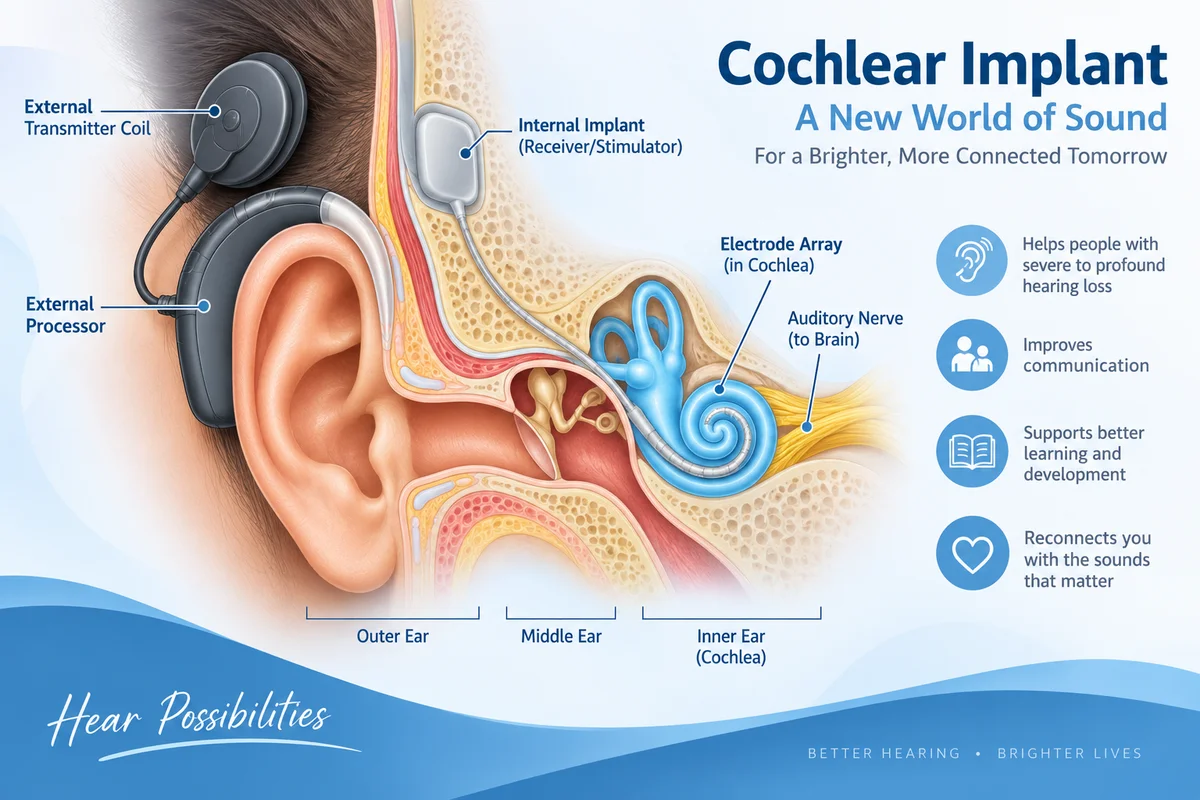
Cochlear implants are surgically implanted electronic devices that bypass damaged hair cells and directly stimulate the auditory nerve. They are recommended for individuals with severe to profound sensorineural hearing loss who receive limited benefit from hearing aids.
Auditory rehabilitation involves working with a specialist to improve listening skills, speech reading, and communication strategies. This is often combined with hearing aids for the best outcomes.
Assistive listening devices (ALDs) such as FM systems, loop systems, captioned telephones, and vibrating alert systems help in specific listening situations where hearing aids alone may not be sufficient.
Hearing Loss Treatment Options
Treatment for hearing loss depends on its type, severity, and underlying cause.
Medical treatment: Conductive hearing loss caused by infection or fluid may respond well to antibiotics or antihistamines. Sudden sensorineural hearing loss is often treated with a course of corticosteroids to reduce inflammation, with the best results achieved when treatment begins within 72 hours of onset.
Surgical options: Conditions such as otosclerosis, a perforated eardrum, or problems with the ossicles may be correctable through surgery. Cochlear implant surgery is an option for those with profound sensorineural hearing loss.
Hearing aids: As noted above, hearing aids are the primary non-surgical management tool for most types of permanent hearing loss.
Earwax removal: When conductive hearing loss is caused by impacted earwax, professional earwax removal by a trained audiologist or clinician can restore normal hearing quickly and safely.
Lifestyle and prevention: Protecting your hearing through the consistent use of ear protection in noisy environments, maintaining safe listening levels with personal audio devices, and having regular hearing checks are among the most impactful long-term strategies.
Beethoven and Hearing Loss: A Historical Perspective
One of the most remarkable examples of living with hearing loss is Ludwig van Beethoven, the legendary composer who began losing his hearing in his late 20s and was almost completely deaf by his 40s. Beethoven continued to compose some of his greatest masterpieces, including his Ninth Symphony, entirely without hearing. He used sounding boards attached to his piano to feel vibrations and relied on his profound musical memory and theoretical knowledge to continue creating.
Beethoven's story remains an enduring testament to resilience and adaptation in the face of profound hearing loss, and it continues to inspire those navigating their own hearing journeys today.
What to Say When Someone Experiences a Loss
If someone you care about is dealing with hearing loss, emotional support matters as much as practical guidance. Rather than saying "sorry to hear about your loss" in a general sense, acknowledge their specific experience. Let them know you are willing to communicate in ways that are comfortable for them, whether that means speaking more clearly, reducing background noise, or facing them directly when talking.
Encouraging them to seek professional evaluation early can make a meaningful difference in their outcomes.
When to See a Hearing Specialist
You should schedule a hearing evaluation if you or a loved one:
Notices difficulty understanding speech in everyday situations
Has been exposed to loud noise over many years
Experiences sudden hearing loss in one or both ears
Hears ringing, buzzing, or other sounds in the ears (tinnitus)
Is over 60 years of age and has not had a recent hearing test
Has a family history of hearing loss
Early diagnosis and intervention lead to significantly better long-term outcomes. The sooner hearing loss is identified and managed, the easier it is to adapt and maintain strong communication and quality of life.
Conclusion
Hearing loss is a complex, multifaceted condition that affects people across all ages and backgrounds. Whether you are dealing with sensorineural hearing loss, conductive hearing loss, or a combination of both, understanding the type, degree, causes, and available treatment options is the foundation of effective care.
At VR Hearing Clinic, our team of experienced audiologists is dedicated to providing comprehensive hearing evaluations, personalized hearing aid fittings, and ongoing support to help you or your loved ones hear better and live fully. Early action makes all the difference. Reach out today to schedule your hearing assessment.