Hearing Loss: Understanding the Condition and Finding Help
Hearing Loss: Understanding the Condition and Finding Help
Hearing loss is one of the most common health conditions in the world today, yet it remains widely misunderstood and often ignored until it starts affecting daily life in serious ways. Whether it happens gradually with age, suddenly due to an infection, or is present from birth, hearing loss changes the way a person connects with family, friends, and the world around them. At VR Speech and Hearing Clinic in Ahilyanagar, we meet people every day who have lived with unaddressed hearing difficulties for years simply because they didn't know where to start or assumed nothing could be done. This article is meant to change that. We will walk through what hearing loss actually is, why it happens, how to recognize it early, and most importantly, what real solutions look like.
What Is Hearing Loss?
Hearing loss refers to a partial or complete inability to hear sounds in one or both ears. It can range from mild, where a person struggles to catch certain words in a noisy room, to profound, where even loud sounds go unnoticed. Hearing is a complex process that involves the outer ear collecting sound waves, the middle ear amplifying them, and the inner ear converting them into electrical signals that travel to the brain. A problem at any point in this chain can result in hearing loss, and the type of hearing loss a person experiences depends on exactly where that breakdown occurs.
Many people assume hearing loss is something that only affects the elderly, but this is far from accurate. Hearing loss can affect newborns, children, working professionals, and people in their thirties and forties, often due to reasons that have nothing to do with age. Recognizing this is the first step toward taking hearing health seriously at any stage of life.
The Three Main Types of Hearing Loss
Understanding the type of hearing loss a person has is essential because it directly determines the treatment approach. There are three broad categories.
Conductive hearing loss occurs when sound is unable to pass efficiently through the outer or middle ear. This can happen due to earwax buildup, fluid behind the eardrum, ear infections, a perforated eardrum, or abnormalities in the tiny bones of the middle ear. The good news is that conductive hearing loss is often treatable through medical or surgical intervention, and hearing can sometimes be fully restored.
Sensorineural hearing loss is the most common type and involves damage to the inner ear, specifically the tiny hair cells in the cochlea, or to the auditory nerve that carries sound signals to the brain. This type of hearing loss is usually permanent and can result from aging, prolonged noise exposure, genetic factors, certain illnesses, or ototoxic medications. While it cannot typically be reversed, sensorineural hearing loss responds very well to hearing aids and other assistive technology.
Mixed hearing loss is a combination of both conductive and sensorineural hearing loss, meaning there is a problem in both the outer or middle ear as well as the inner ear or auditory nerve. Treatment for mixed hearing loss usually involves addressing the conductive component first, followed by long-term management of the sensorineural portion.
Common Causes of Hearing Loss
Hearing loss doesn't have a single cause. Instead, it results from a wide range of factors that can act alone or combine over time.
Age-related hearing loss, known medically as presbycusis, is one of the most frequent causes and develops gradually as the structures inside the ear naturally wear down over decades of use. It typically affects both ears equally and progresses slowly, which is why many people don't notice it until family members point it out.
Noise-induced hearing loss is becoming increasingly common, especially among younger populations. Constant exposure to loud environments, whether from industrial machinery, construction work, loud music through earphones, or traffic noise, can permanently damage the delicate hair cells in the inner ear. Unlike a sudden loud bang, this kind of damage builds up quietly over months and years.
Ear infections, particularly in children, are a major cause of temporary and sometimes permanent hearing loss if left untreated. Fluid buildup behind the eardrum from repeated infections can affect a child's speech and language development if not addressed early.
Genetic and hereditary factors play a role in a significant number of cases, particularly in congenital hearing loss present from birth. Family history of hearing difficulties is an important indicator that should prompt earlier screening.
Certain medications, referred to as ototoxic drugs, can damage hearing as a side effect. These include some antibiotics, chemotherapy drugs, and high doses of certain pain relievers. Patients undergoing long-term treatment with such medications should have their hearing monitored regularly.
Other causes include head injuries, tumors affecting the auditory nerve, illnesses such as measles or meningitis, and exposure to certain chemicals in industrial settings. Diabetes and cardiovascular disease have also been linked to a higher risk of hearing loss due to their effects on blood flow to the inner ear.
Recognizing the Early Signs
One of the biggest challenges with hearing loss is that it often develops so gradually that the person experiencing it is the last to notice. Family members and friends frequently pick up on the signs long before the individual admits there might be a problem. Common early indicators include frequently asking people to repeat themselves, turning the television or radio volume higher than others find comfortable, struggling to follow conversations in restaurants or other noisy places, and feeling like people are mumbling rather than speaking clearly.
Other signs include difficulty hearing on the phone, avoiding social situations because conversations feel exhausting, ringing or buzzing in the ears known as tinnitus, and children who seem inattentive at school or slow to develop speech. If any of these signs sound familiar, whether in yourself or a loved one, it is worth scheduling a proper hearing evaluation rather than waiting for the problem to worsen.
Why Untreated Hearing Loss Is a Serious Concern
It is tempting to think of hearing loss as a minor inconvenience, something that can be managed by simply speaking louder or turning up the television. In reality, untreated hearing loss has far-reaching consequences that extend well beyond communication difficulties. Research has consistently linked untreated hearing loss to increased risk of cognitive decline and dementia, as the brain receives less auditory stimulation over time. It is also associated with higher rates of social isolation and depression, since people naturally begin withdrawing from conversations and gatherings that feel frustrating or embarrassing.
In children, untreated hearing loss can significantly delay speech and language development, affecting academic performance and social confidence at a critical stage of growth. In working adults, hearing difficulties can impact job performance, workplace communication, and career advancement. There is also a safety dimension, as reduced hearing can make it harder to notice alarms, approaching vehicles, or verbal warnings.
The encouraging part of this picture is that early intervention dramatically reduces these risks. The sooner hearing loss is identified and managed, the better the outcomes across every one of these areas.
How Hearing Loss Is Diagnosed
A proper hearing evaluation is a straightforward, painless process that provides a clear picture of exactly what is happening in each ear. At VR Speech and Hearing Clinic, the diagnostic process typically begins with a detailed discussion of the patient's history, including any exposure to noise, family history of hearing issues, and specific difficulties they have been experiencing.
This is followed by a pure tone audiometry test, which measures the softest sounds a person can hear at different pitches, producing a chart known as an audiogram that clearly shows the type and degree of hearing loss present. Tympanometry may also be used to assess the health and mobility of the eardrum and detect issues like fluid buildup or eardrum perforation. Speech audiometry tests how well a person understands spoken words at different volumes, which is particularly useful for understanding real-world listening difficulties. For children or individuals who cannot participate in standard testing, specialized pediatric and behavioral testing methods are used to gather accurate results.
Once testing is complete, the results are explained clearly, without confusing medical jargon, so patients fully understand their hearing status and the options available to them.
Treatment Options Available Today
The right treatment for hearing loss depends entirely on its type, severity, and underlying cause, which is why a proper diagnosis always comes first. For conductive hearing loss caused by wax buildup, infection, or fluid, medical treatment or minor procedures can often restore hearing completely. Ear infections may require antibiotics or ear tubes in cases of recurrent fluid buildup, particularly in children.
For sensorineural hearing loss, hearing aids remain the most effective and widely used solution. Modern hearing aids have advanced significantly from older models, now offering features like noise reduction, directional microphones for better hearing in crowds, Bluetooth connectivity for phone calls and streaming, and rechargeable batteries that eliminate the hassle of frequent replacements. Devices are custom-fitted and programmed to match each individual's specific hearing profile, ensuring a natural and comfortable listening experience rather than simply amplifying all sound indiscriminately.
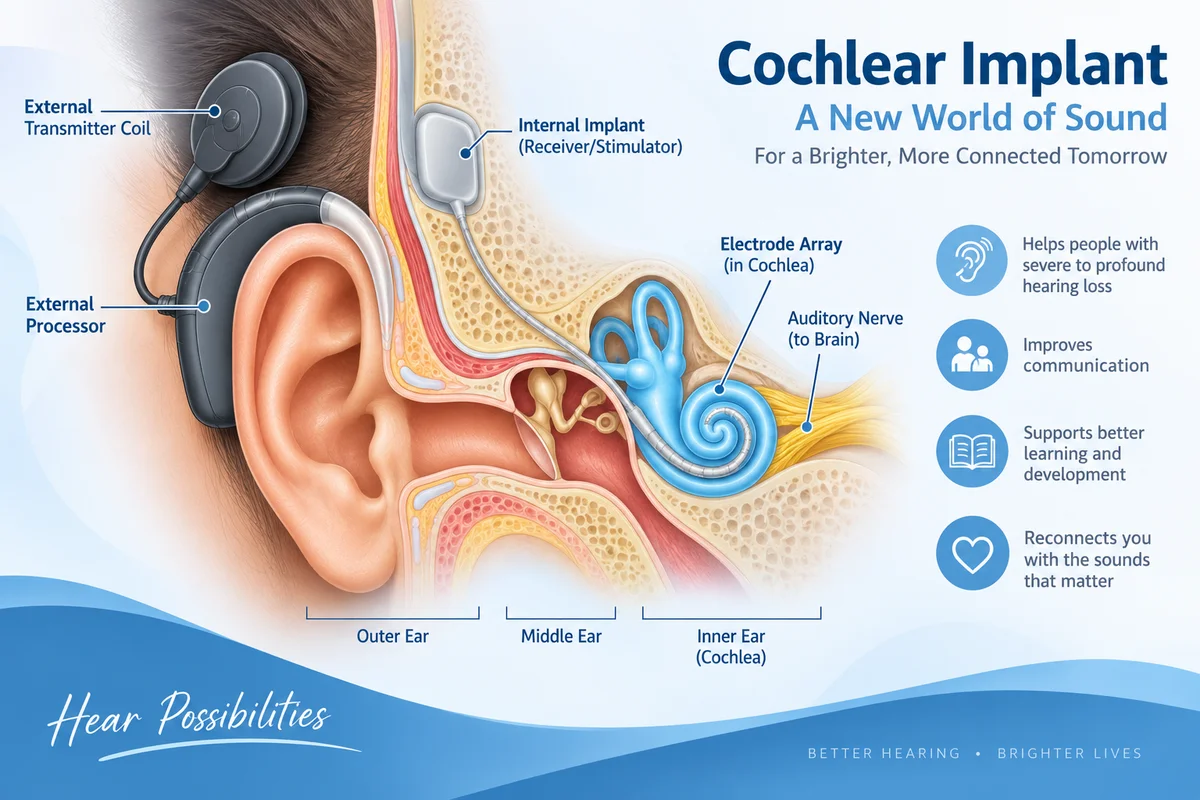
For more severe or profound sensorineural hearing loss where hearing aids provide limited benefit, cochlear implants may be recommended. These devices bypass damaged portions of the ear entirely and directly stimulate the auditory nerve, offering a valuable option for individuals who would otherwise have very limited access to sound.
Assistive listening devices, such as amplified phones, alerting systems, and FM systems for classrooms, can also complement hearing aids or serve as standalone solutions depending on individual needs. For children with hearing loss affecting speech development, structured speech and language therapy plays a crucial role alongside audiological treatment, helping build clear communication skills during critical developmental years.
The Role of a Qualified Audiologist
Choosing where to seek help for hearing loss matters just as much as recognizing the problem itself. A qualified audiologist brings specialized training in diagnosing hearing conditions accurately and recommending solutions tailored to the individual rather than offering generic fixes. This is particularly important because two people with seemingly similar hearing complaints can have entirely different underlying causes requiring different treatment paths.
At VR Speech and Hearing Clinic, every patient receives a thorough, individualized evaluation rather than a one-size-fits-all approach. The clinic's approach combines accurate diagnostic testing with clear communication, ensuring patients and their families understand exactly what is happening and what their realistic options look like, without pressure or confusion.
Hearing Health in Ahilyanagar and Surrounding Areas
Access to quality audiology care has historically been limited in many parts of Maharashtra outside major metro cities, leaving families in Ahilyanagar and nearby regions with fewer nearby options for proper hearing evaluation and treatment. VR Speech and Hearing Clinic was established to close that gap, bringing comprehensive hearing and speech services directly to the local community rather than requiring long travel to larger cities for basic diagnostic care.
Local awareness around hearing health also tends to lag behind other areas of healthcare, with many families unaware that early evaluation for children's speech delays or elderly hearing difficulties is both accessible and affordable nearby. Part of the clinic's mission is educating the community about these realities, encouraging people to treat hearing health with the same seriousness given to vision or dental care.
When Should You Get a Hearing Test?
Hearing tests are not just for people who already suspect a problem. Certain life stages and circumstances call for proactive screening regardless of whether symptoms are noticeable. Newborns should undergo hearing screening shortly after birth, as early detection of congenital hearing loss dramatically improves speech and language outcomes. Adults over the age of fifty are generally advised to have their hearing checked every few years, since age-related decline often progresses without obvious symptoms in its early stages.
Anyone regularly exposed to loud environments, whether through occupation or lifestyle, should have periodic hearing checks regardless of age. Individuals experiencing tinnitus, sudden hearing changes, or a family history of hearing loss should not wait for symptoms to worsen before seeking evaluation. Simply put, if there is ever a doubt about hearing health, a test is a quick and worthwhile step.
Living Well With Hearing Loss
A hearing loss diagnosis is not the end of clear communication or an active social life. With the right combination of appropriate treatment, consistent use of hearing devices when recommended, and small adjustments like facing the person speaking or reducing background noise during conversations, most people with hearing loss continue to live full, engaged lives. Support from family members also plays an important role, and simple habits such as speaking clearly rather than louder, maintaining eye contact, and minimizing background distractions can make daily interactions significantly easier for someone managing hearing loss.
Adjusting to hearing aids, for those who need them, does take a short period of adaptation as the brain relearns to process amplified sound. This is completely normal, and ongoing support from an audiologist during this adjustment period makes a significant difference in long-term satisfaction and consistent use.
Taking the First Step
The most important message around hearing loss is this: waiting rarely helps, and acting early almost always does. Whether the concern is a parent struggling to follow conversations at family gatherings, a child who seems inattentive at school, or persistent ringing in the ears that won't go away, a simple hearing evaluation provides clarity and a clear path forward.
VR Speech and Hearing Clinic in Ahilyanagar offers professional, judgment-free hearing assessments and personalized treatment planning for patients of all ages. There is no need to continue guessing about hearing difficulties or assuming nothing can be done. A single appointment can provide answers, and in most cases, a practical solution that restores confidence in everyday communication.
Frequently Asked Questions
1. What are the first signs of hearing loss I should watch for?
Common early signs include frequently asking others to repeat themselves, increasing the television volume beyond what others find comfortable, difficulty following conversations in noisy places, and a sensation that people around you are mumbling.
2. Is hearing loss only related to old age?
No. While age-related hearing loss is common, hearing loss can affect people of any age due to noise exposure, infections, genetics, certain medications, or illness. Children can also be born with hearing loss or develop it during early childhood.
3. Can hearing loss be cured completely?
It depends on the type. Conductive hearing loss caused by wax buildup, infection, or fluid can often be fully treated. Sensorineural hearing loss, which involves inner ear or nerve damage, is usually permanent but can be effectively managed with hearing aids or other devices.
4. How long does a hearing test take?
A comprehensive hearing evaluation typically takes between thirty minutes to an hour, depending on the tests required. The process is painless and does not involve any needles or invasive procedures.
5. At what age should children have their first hearing test?
Newborns should ideally be screened shortly after birth. If missed, hearing evaluation is recommended any time a parent notices delayed speech, inattentiveness, or lack of response to sounds.
6. Are modern hearing aids noticeable or uncomfortable?
Modern hearing aids are significantly smaller, more discreet, and more comfortable than older models. Many are custom-fitted to the individual's ear and are barely visible during daily use.
7. How often should hearing be tested after the age of fifty?
It is generally recommended to have a hearing evaluation every two to three years after age fifty, or sooner if any symptoms of hearing difficulty are noticed.
8. Does VR Speech and Hearing Clinic offer treatment for both children and adults?
Yes, the clinic provides comprehensive audiology and speech therapy services for patients across all age groups, from newborn hearing screening to adult and elderly hearing care.