Hearing Loss Symptoms: Common Signs, Age-Wise Clues, and When to Seek Help
Hearing Loss Symptoms: Common Signs, Age-Wise Clues, and When to Seek Help
Hearing loss often develops gradually, so it can be easy to miss the early warning signs. You may feel like people are “mumbling,” struggle to follow conversations in a noisy place, or keep increasing the volume on your phone or TV. Recognising hearing loss symptoms early is important because timely testing and support can improve communication, safety, and overall quality of life.
Note: This article is for general information and is not a substitute for medical advice. If you suspect sudden hearing loss or severe symptoms, seek urgent medical care.
Hearing Loss Symptoms
Introduction
Hearing loss can affect one ear or both, and it may be temporary (for example, due to earwax or an ear infection) or long-term (such as age-related hearing loss). Symptoms vary by person, but most people notice changes in how clearly they hear speech, how comfortable they feel in noisy environments, and how much effort it takes to keep up with everyday sounds.
Common Symptoms of Hearing Loss
Difficulty understanding speech (especially in noise)
One of the most common signs of hearing loss is struggling to understand what people are saying—particularly in places with background noise like markets, restaurants, offices, family gatherings, or on public transport. You may hear that someone is speaking, but the words feel unclear or incomplete.
Conversations feel tiring because you have to concentrate harder.
Women’s and children’s voices may be harder to understand.
You may miss softer consonant sounds (like “s,” “f,” “t,” “k”), making words sound similar.
Frequently asking others to repeat themselves
If you often say “What?” “Pardon?” or ask people to repeat or speak more slowly, it may be a sign that your ears are not picking up certain sound frequencies. Friends and family might notice the pattern before you do.
You may rely more on lip reading or watching facial expressions.
You may respond incorrectly because you misheard a word or number.
You may avoid conversations to prevent embarrassment.
Increasing volume on devices
Turning the TV, radio, or phone volume higher than others prefer is a classic symptom. If people around you comment that the volume is “too loud,” it can be an early indicator of hearing loss.
Needing subtitles more frequently.
Using speakerphone because normal phone calls feel unclear.
Difficulty hearing doorbells, alarms, or microwave beeps.
Sounds seem muffled or distant
Many people describe hearing loss as if their ears are blocked or as if sounds are coming through cotton. This can occur with earwax buildup, middle ear fluid, or sensorineural hearing loss (related to the inner ear).
Difficulty hearing certain everyday sounds
You might stop noticing sounds you previously heard easily, such as:
Footsteps in another room
Birds chirping
Pressure cooker whistles at a distance
Turn signals in a car
Social withdrawal and communication strain
Because hearing loss makes communication harder, people may begin to avoid calls, meetings, and social events. Over time, this can affect relationships, confidence, and mental wellbeing.
Signs Specific to Age Groups
Symptoms in children
In children, hearing loss may show up as speech or learning difficulties rather than direct complaints about hearing. Watch for:
Delayed speech and language development
Not responding consistently when called
Turning one ear toward sounds or the TV
Inattentiveness or behavioural changes at school
Difficulty following instructions, especially in noisy classrooms
Frequent ear infections or ear pain
If you suspect hearing loss in a child, early assessment is important for language development and school performance.
Symptoms in adults
Adults often notice hearing problems first at work or in social settings:
Difficulty understanding colleagues in meetings
Struggling to follow group conversations
Needing to sit closer to the speaker
Mishearing words, names, or numbers (important during calls and travel)
Symptoms in seniors
Age-related hearing loss (presbycusis) commonly affects higher-pitched sounds first and tends to develop gradually. In seniors, you may see:
More difficulty understanding speech than hearing “volume”
Increased isolation because conversations feel frustrating
Balance concerns (sometimes linked to inner ear issues)
Greater safety risks from missing alarms, horns, or announcements
Hearing checks are a useful routine health step as people age, especially if family members notice changes.
Associated Symptoms
Tinnitus (ringing or buzzing in the ear)
Tinnitus is commonly associated with hearing loss. It may sound like ringing, buzzing, hissing, whistling, or humming in one ear or both. Tinnitus can be occasional or constant, and it may become more noticeable in quiet environments (like bedtime).
Sensitivity to sounds (hyperacusis) or discomfort with loud noise
Some people with hearing difficulties also become uncomfortable with loud or sudden sounds. This can happen when the auditory system is under stress or when hearing levels vary across frequencies.
Ear fullness, pressure, pain, or drainage
These symptoms may point to a middle ear issue such as infection, fluid, or earwax buildup. While they can be temporary, they still deserve evaluation—especially if hearing changes occur along with fever, severe pain, or discharge.
Dizziness or balance problems
If hearing loss is accompanied by vertigo, imbalance, or nausea, it could involve the inner ear. Because there are many potential causes, a clinician should assess persistent or severe symptoms.
When to Seek Help
Early indicators that it’s time for a hearing test
Consider booking a hearing evaluation (with an ENT specialist or audiologist) if you notice:
You struggle in noisy places more than before
You frequently ask others to repeat
You keep increasing device volume
People comment that you speak louder than usual
You feel tired after conversations
You have ongoing tinnitus
Urgent signs—seek medical care quickly
Some symptoms require prompt assessment:
Sudden hearing loss in one or both ears (over hours or within a day)
Hearing loss with severe dizziness/vertigo
Hearing changes after head injury
Hearing loss with severe ear pain, swelling, or discharge
New hearing loss along with neurological symptoms (facial weakness, severe headache, confusion)
Sudden hearing loss can be a medical emergency—early treatment can make a difference.
The Role of Hearing Aids
How hearing aids help
Hearing aids are small electronic devices that amplify sound and help make speech clearer. Modern devices can be tuned to your hearing test results and may include features such as noise reduction, directional microphones, and Bluetooth connectivity for calls and media.
Benefits can include:
Improved understanding of speech, especially when face-to-face
Reduced listening effort and fatigue
Better participation in family, work, and social life
Support for safety and awareness of important sounds
Types of hearing aids
Your audiologist can recommend an option based on your hearing level, ear anatomy, lifestyle, and budget. Common styles include:
Behind-the-ear (BTE): Sits behind the ear with a tube or thin wire to the ear canal; suitable for many hearing levels.
Receiver-in-canal (RIC): A discreet style with the speaker in the ear canal; often comfortable and popular for mild to moderate loss.
In-the-ear (ITE) / in-the-canal (ITC): Custom-fitted to the ear; visibility and power vary by model.
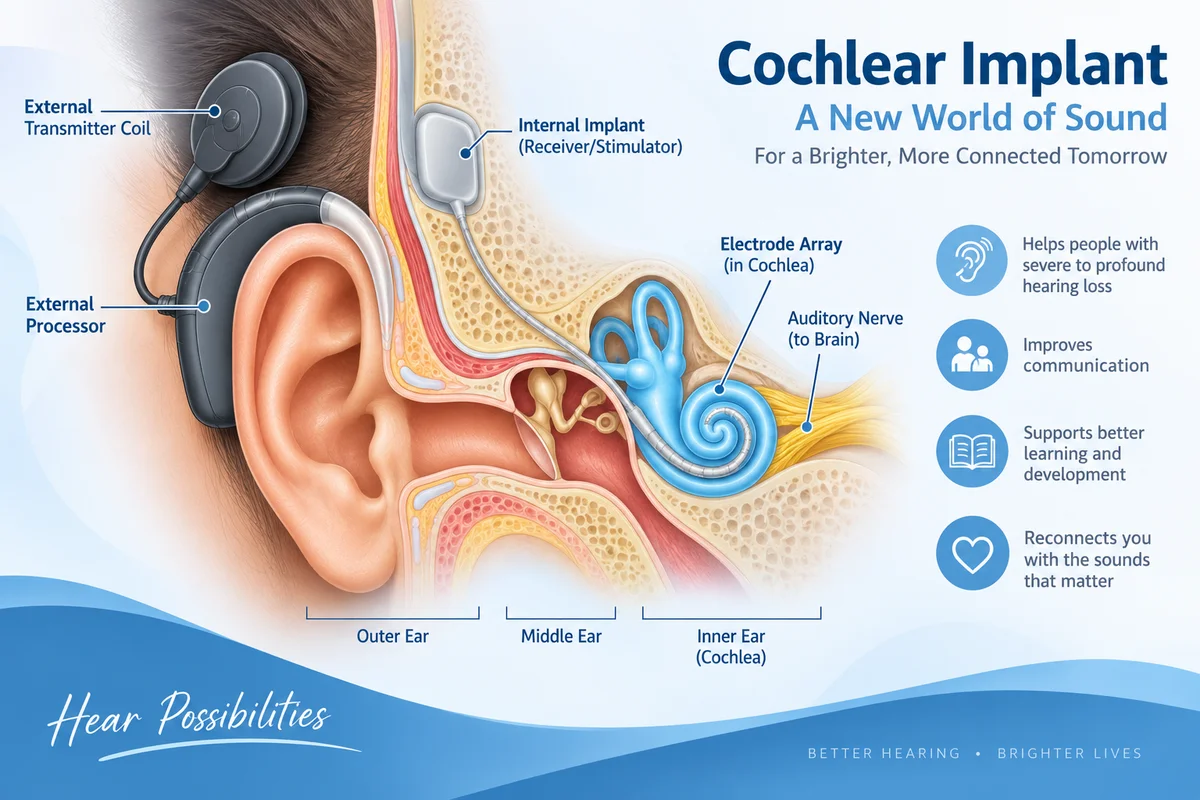
In some cases, other solutions may be recommended—such as medical treatment for earwax or infection, assistive listening devices, or evaluation for implantable options.
Conclusion
Common hearing loss symptoms include difficulty understanding speech (especially in noise), asking for repetition, and raising the volume on devices. Children may show speech or learning delays, while adults and seniors often notice communication strain and social withdrawal. If symptoms are affecting daily life—or if hearing changes occur suddenly—getting a professional assessment is the safest next step.
If you’d like, share the age group (child/adult/senior) and the symptoms you’re noticing, and I can help you turn this into a more targeted article for your audience in India (including FAQs and a checklist).