Hearing Loss Research 2026: Latest Findings
Hearing health has moved from the sidelines of medical research to centre stage in 2026. This year alone has brought genuine gene therapy breakthroughs, large-scale studies linking hearing aids to lower dementia risk, and fresh evidence about how early warning signs like tinnitus can predict long-term ear damage. For the millions of Indians living with untreated hearing loss, these findings carry a simple message: hearing care is no longer just about convenience, it is about protecting the brain and overall quality of life for decades to come. At VR Speech and Hearing Clinic in Aurangabad, we track this research closely so our patients always receive advice grounded in the newest science, not outdated assumptions. Here is a complete round-up of what researchers have discovered so far in 2026, and what it means for you.

Gene Therapy Moves From Theory to Clinical Reality
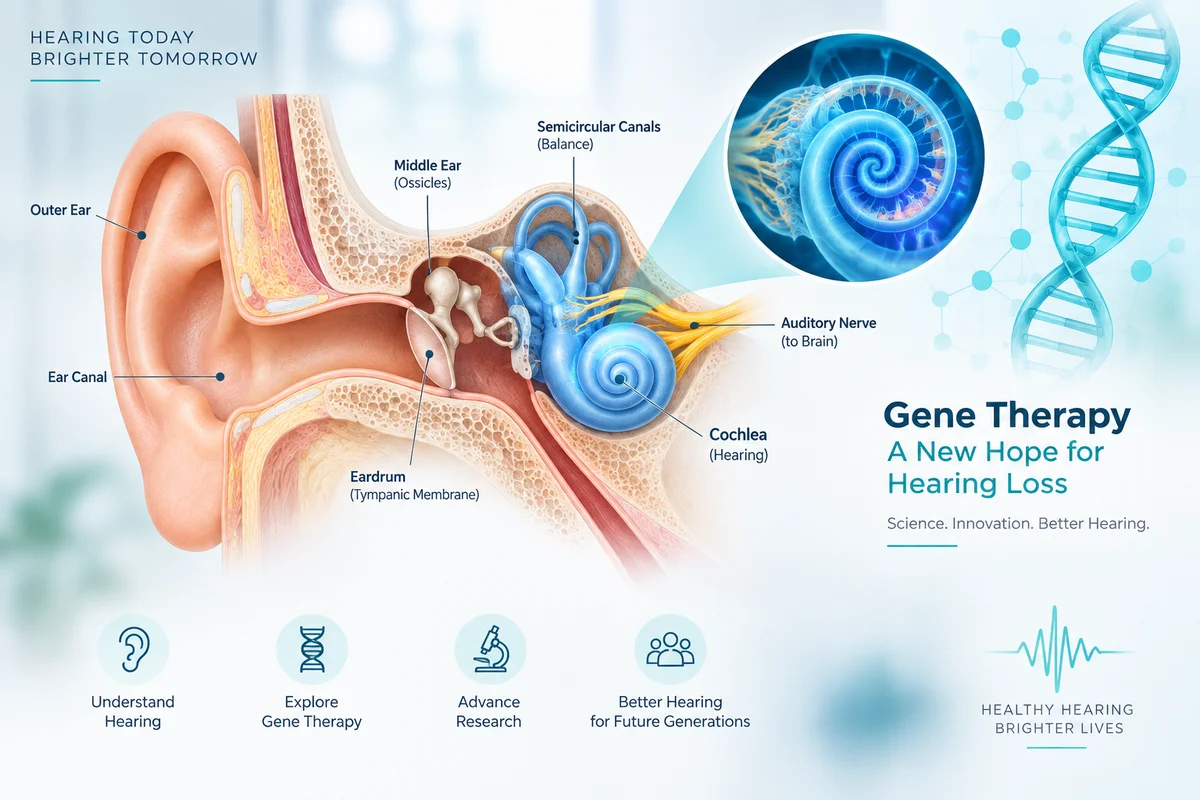
Perhaps the single biggest shift in hearing science this year is that gene therapy for hearing loss has stopped being a distant research goal and become an approved medical treatment. Regulators have now cleared a gene therapy aimed specifically at patients carrying a mutation in the OTOF gene, a genetic cause of severe to profound hearing loss present from birth. The therapy works by delivering a corrected copy of the faulty gene directly into the inner ear using a viral carrier, restoring the ability of hair cells to properly process sound signals.
Clinical results have been striking. In several documented cases, patients who were born deaf began responding to sound within just weeks of receiving a single injection. While this treatment currently applies only to one specific genetic pathway, scientists widely view its approval as a turning point, proof that certain forms of sensorineural hearing loss once assumed to be permanent can, in fact, be reversed. Researchers are now actively studying whether similar gene-editing approaches can be adapted for other inherited causes of inner ear damage, opening the door to broader applications in coming years.
Scientists Identify the Genetic "Switches" Behind Hair Cell Function
Alongside gene therapy, foundational research is uncovering exactly how the inner ear regulates itself at a genetic level. Investigators working on hearing restoration projects have identified gene enhancers, essentially molecular switches, that activate exclusively within the supporting cells of the ear. This discovery matters because supporting cells play a crucial role in maintaining and potentially regenerating the sensory hair cells responsible for converting sound vibrations into the electrical signals our brain interprets as sound.
Understanding these switches gives scientists a far more precise map for designing future therapies, ones that could target damaged cells without disturbing healthy surrounding tissue. Researchers are also studying why some animal species can naturally regrow damaged hair cells while humans cannot, with the long-term goal of unlocking similar regenerative capacity in people.
Hearing Aids Linked to Significantly Lower Dementia Risk
Some of the most consequential research published in 2026 concerns the connection between hearing loss, hearing aid use, and cognitive decline. A large-scale study analysing data from more than 61,000 adults across 33 countries found that people who used hearing aids effectively had a measurably lower risk of probable dementia compared to non-users. Crucially, the benefit was strongest among those who experienced genuine improvement in their daily hearing ability, reinforcing that simply owning a device is not enough. It needs to be properly fitted and consistently worn.
A separate large observational study following nearly 2,800 older adults for seven years found that those prescribed hearing aids had a substantially lower long-term risk of developing dementia, even though their scores on standard memory and thinking tests did not improve in the short term. Researchers described this disconnect as important: hearing aids may protect the brain over the long run even when immediate cognitive test results look unchanged.
According to major dementia research bodies, hearing loss remains one of the most significant modifiable risk factors for dementia, ranking alongside high cholesterol, low education, and social isolation. With dementia cases projected to rise sharply worldwide in the coming decades, researchers are calling for hearing care to be integrated far more seriously into public health and healthy ageing strategies, particularly in countries where access to affordable hearing aids is still limited.
Tinnitus Confirmed as an Early Warning Sign
New research this year has reinforced something audiologists have long suspected: that ringing, buzzing, or hissing in the ears, known medically as tinnitus, is often the earliest detectable sign of hearing damage, appearing before measurable hearing loss shows up on a standard hearing test. Studies examining noise exposure in younger populations found that brief tinnitus after loud music or noisy environments signals vulnerability to what scientists call hidden hearing loss, damage to the nerve pathways that carry sound signals to the brain, which conventional hearing tests may not immediately detect.
This hidden nerve damage tends to deepen over a person's lifetime, gradually worsening hearing ability even when early symptoms seem to resolve. Unlike some other forms of hearing loss, this type of nerve injury cannot be reversed once it occurs, which is why researchers stress that prevention through consistent use of ear protection in loud environments remains the only reliable safeguard.
The Heart-Hearing Connection Gains More Evidence
Cardiovascular health continues to emerge as an unexpected but important factor in hearing outcomes. Research tracking thousands of adults over several years found that people with healthier blood pressure, cholesterol, blood sugar, and body weight profiles experienced significantly less hearing decline over time compared to those with poorer cardiovascular health. Each improvement across these health markers correlated with better long-term hearing outcomes, suggesting that the tiny blood vessels supplying the inner ear are sensitive to the same risk factors that affect heart health.
Hearing Loss and Cognitive Decline: A Stronger Evidence Base
A comprehensive umbrella review published in 2026, synthesising results from numerous prior meta-analyses, confirmed that adult hearing loss is significantly associated with increased risk of cognitive impairment and dementia. By pooling evidence across a large number of studies rather than relying on any single trial, this research adds considerable weight to calls for hearing screening to be treated as a standard part of cognitive health assessments in older adults, not an afterthought.
What These Findings Mean for Patients in Aurangabad
These research developments carry a consistent, practical message for anyone experiencing hearing changes: earlier detection and consistent treatment produce measurably better outcomes, for hearing, for brain health, and for overall quality of life. Waiting years before seeking help, as many patients still do, allows underlying damage to progress and reduces the long-term protective benefits that timely intervention can offer.
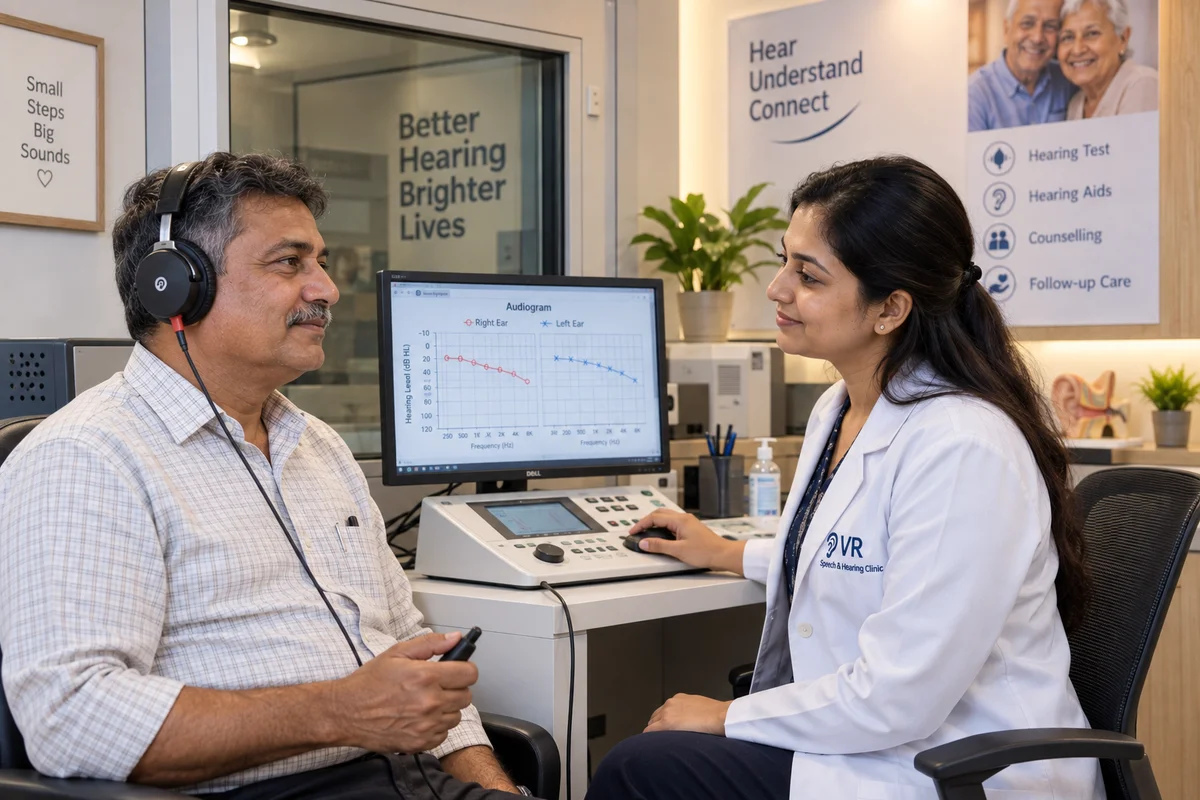
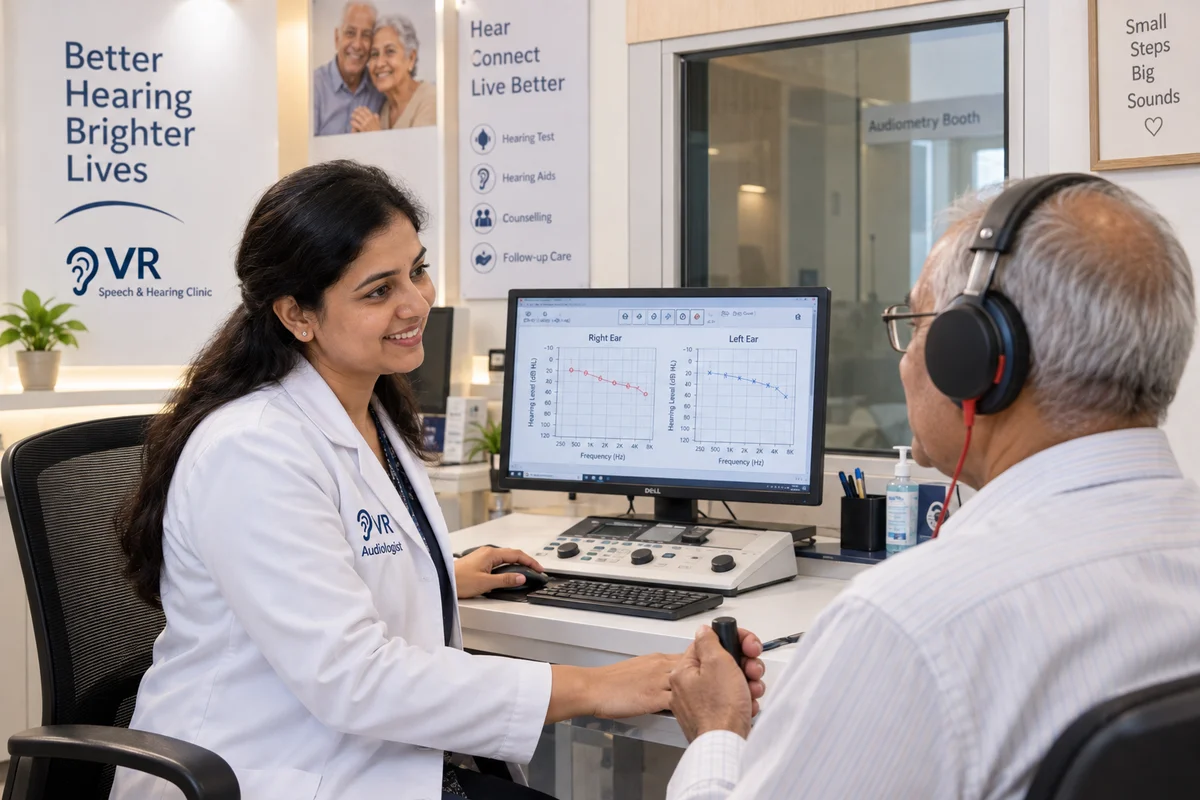
At VR Speech and Hearing Clinic, we combine this evolving global research with personalised care for patients across Aurangabad and Ahilyanagar. Whether you are noticing early signs like occasional ringing in the ears, struggling to follow conversations in noisy settings, or supporting an ageing parent who has been avoiding a hearing test, our audiologists offer comprehensive diagnostic evaluations, guidance on the latest hearing aid technology, and ongoing support tailored to your specific hearing profile. Book a hearing assessment with us today and take the first step toward protecting both your hearing and your long-term brain health.
Frequently Asked Questions
Q1: Is gene therapy for hearing loss available in India yet?
Gene therapy for hearing loss is currently approved only for a specific genetic condition (the OTOF gene mutation) and remains in early clinical use internationally. It is not yet widely available in India, but researchers expect broader applications to develop over the coming years.
Q2: Can hearing aids really reduce my risk of dementia?
Multiple large 2026 studies found that consistent, well-fitted hearing aid use is associated with a meaningfully lower long-term risk of dementia, even when short-term memory test scores don't change immediately. The key factor is genuine improvement in daily hearing ability, not just owning a device.
Q3: I sometimes hear ringing in my ears after loud noise. Should I be concerned?
Yes. Research shows that occasional tinnitus after noise exposure can be an early warning sign of hidden hearing damage, even before it shows up on a standard hearing test. It is worth getting your hearing checked, especially if it happens repeatedly.
Q4: Does heart health actually affect hearing?
Recent research has found a clear connection between cardiovascular health and hearing ability, with better blood pressure, cholesterol, and blood sugar control linked to slower hearing decline over time.
Q5: How can I get a hearing test at VR Speech and Hearing Clinic?
You can book a comprehensive hearing evaluation at our Aurangabad clinic or our Ahilyanagar (Ahmednagar) branch. Our audiologists will assess your hearing and recommend the right next steps based on your individual needs.