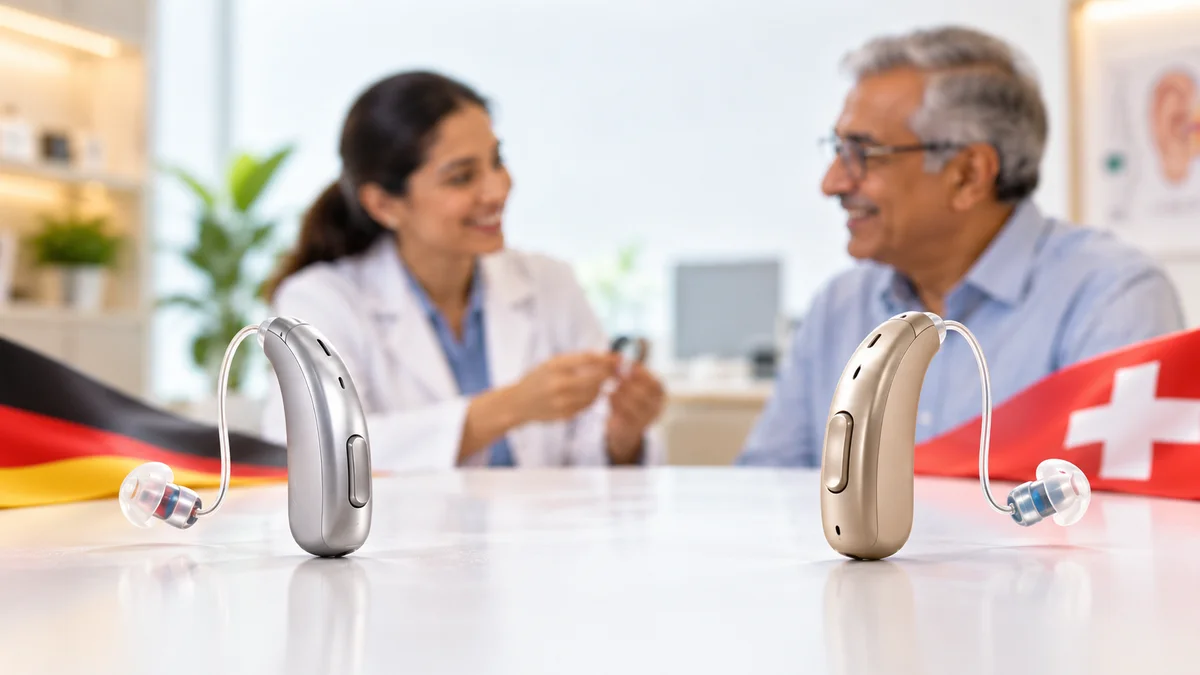
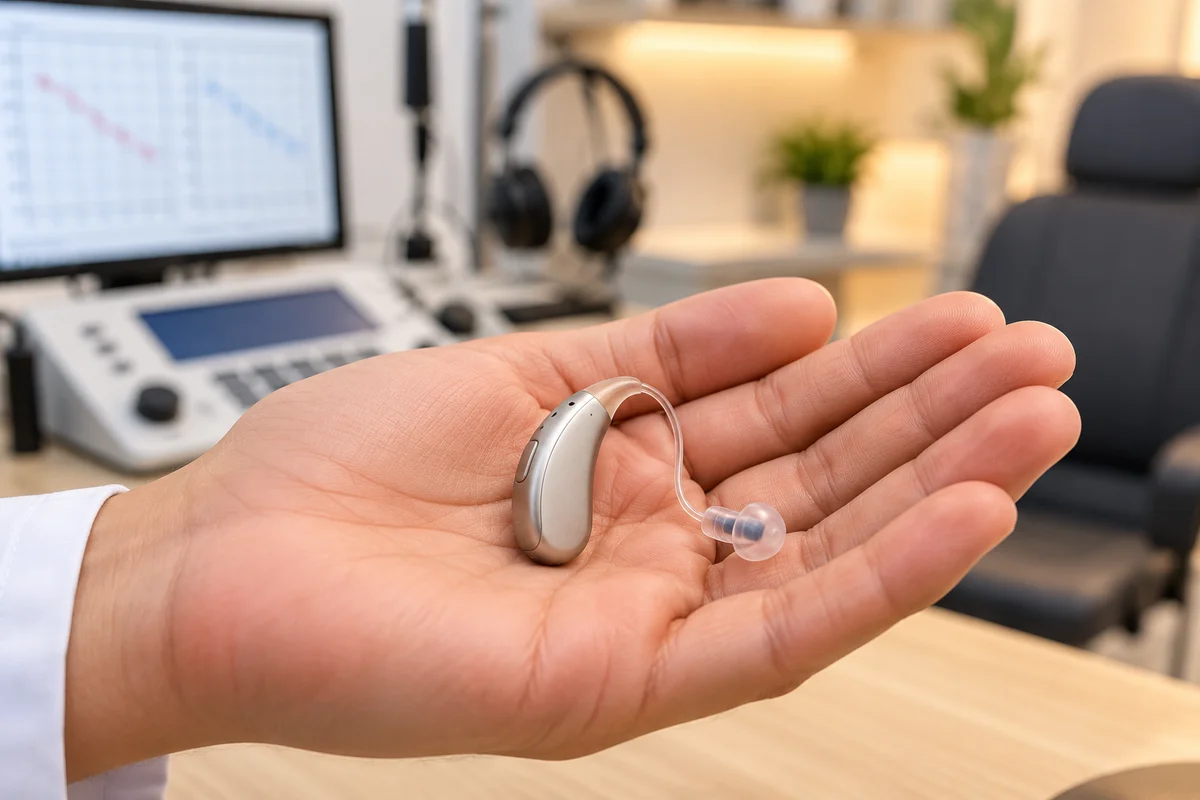
Hearing Aid Reprogramming Services
Are your hearing aids sitting in a drawer because they no longer sound right, whistle unexpectedly, or simply feel "off"? You don't always need a brand-new device to fix the problem. In most cases, what you actually need is professional hearing aid reprogramming — and that is exactly what we specialise in at VR Speech & Hearing Clinic, under the clinical guidance of Dr. Vilas Rathod, BASLP.
Hearing aids are not "set and forget" devices. They are precision instruments that must be calibrated to your ear, your hearing loss pattern, and the way you actually live your life. When that calibration falls out of step — because your hearing has changed, your lifestyle has changed, or the original programming was never optimised in the first place — your hearing aids stop performing the way they should. Reprogramming is the process of correcting that gap, and it can often restore your existing devices to full, comfortable performance without the cost of a new purchase.
What Is Hearing Aid Reprogramming
Hearing aid reprogramming is a professional adjustment service in which a qualified audiologist reconnects your existing hearing aids to manufacturer fitting software and fine-tunes the internal settings. This includes frequency-specific amplification, noise management, feedback control, directional microphone behaviour, and comfort settings for loud environments. Unlike a simple volume adjustment, reprogramming is a clinical process based on your current hearing test results, your listening complaints, and objective measurements taken in your ear canal.
At VR Speech & Hearing Clinic, this service is carried out by RCI-registered audiologists trained under Dr. Vilas Rathod, BASLP, using the same manufacturer software originally used to fit your device — whether it is Signia, Phonak, Oticon, ReSound, Widex, Unitron, or another major brand.
Why Your Hearing Aids Might Need Reprogramming
There are several common reasons patients walk into our clinics asking for reprogramming rather than a replacement device:
Your hearing has changed since the original fitting. Hearing loss is often progressive, and settings that worked two or three years ago may no longer match your current hearing thresholds.
Your lifestyle has shifted. A new job, a noisier home environment, more time in group conversations, or increased phone and video-call use all demand different program settings than what was originally configured.
The original fitting was never verified. Many hearing aids are fitted using a generic "first fit" formula and are never checked with real-ear measurement to confirm the sound actually reaching the eardrum matches what was prescribed.
Performance is inconsistent across situations. Your hearing aids may work fine at home but struggle badly in a restaurant, a family function, or while watching television — a strong sign that specific programs need fine-tuning.
You are experiencing whistling, feedback, or discomfort with loud sounds, which usually indicates the compression and feedback-cancellation settings need to be recalibrated rather than the hardware being faulty.
If any of this sounds familiar, the issue is very often software, not hardware — and it is fixable in a single visit.
Our Hearing Aid Reprogramming Process
Every reprogramming appointment at VR Speech & Hearing Clinic follows a structured clinical process designed to identify exactly where your current settings fall short.
Step One: Hearing Reassessment We begin with an updated audiometric evaluation to compare your present hearing levels against the settings currently loaded on your hearing aids. This tells us precisely where the mismatch lies.
Step Two: Device Inspection and Cleaning Before any software adjustment, our team physically inspects and cleans your hearing aids. Wax blockages, damaged tubing, or worn domes can mimic programming problems, so this step ensures we're solving the right issue.
Step Three: Software Analysis Using manufacturer-specific fitting software, our audiologist reviews your current programme map, gain settings, and special features such as noise reduction, wind management, and directional focus.
Step Four: Real-Ear Verification Wherever appropriate, we use real-ear measurement to confirm that the amplification your hearing aid is delivering inside your ear canal actually matches your prescriptive target. This single step is often what separates a hearing aid that merely "works" from one that genuinely restores clear, natural hearing.
Step Five: Personalised Fine-Tuning Based on your specific complaints — whether that's difficulty following conversations in noise, sounds feeling too sharp, or your own voice sounding unnatural — we adjust individual programs rather than applying blanket changes.
Step Six: Trial and Follow-Up You'll test the updated settings in the clinic, and we encourage a short real-world trial period with a follow-up visit to fine-tune further, since ideal settings are sometimes best confirmed once you're back in your everyday environments.
What to Expect During Your Visit
A typical reprogramming appointment takes between 45 and 90 minutes, depending on how many issues need to be addressed and whether real-ear verification is required. You will leave with an updated understanding of your current hearing status, cleaned and inspected hearing aids, and settings that are matched to your present-day hearing needs rather than settings from years ago.
Brands and Devices We Reprogram
Our audiologists work across nearly every major hearing aid brand available in India, including Signia, Phonak, Oticon, ReSound, Widex, Unitron, and Starkey. This applies to behind-the-ear (BTE) devices, receiver-in-canal (RIC) devices, in-the-canal (ITC) and completely-in-canal (CIC) custom devices, and most modern digital hearing aids regardless of where they were originally purchased. If you're unsure whether your specific device can be reprogrammed at our clinic, our team can confirm this over a phone call before your visit.
Why Choose VR Speech & Hearing Clinic
VR Speech & Hearing Clinic is led by Dr. Vilas Rathod, BASLP, and staffed with RCI-registered audiologists and speech-language professionals across multiple branches in Maharashtra and Karnataka, including Chhatrapati Sambhajinagar, Ahilyanagar (Ahmednagar), Pune, Nashik, Beed, Chalisgaon, Miraj, Shrirampur, Shirur, and Belgaum. Every branch is equipped for audiometric testing, real-ear measurement, and manufacturer-certified programming software, so you receive the same clinical standard of care regardless of which clinic you visit.
We believe reprogramming should be the first option explored before recommending a new device. It's faster, more affordable, and in a large number of cases, it resolves the exact problem patients came in with — sounds that are too sharp, difficulty in noisy places, or aids that simply don't feel like they used to.
Book Your Reprogramming Consultation
If your current hearing aids aren't performing the way they once did, don't assume you need a replacement. Walk into your nearest VR Speech & Hearing Clinic branch or call our team to schedule a reprogramming consultation with Dr. Vilas Rathod's audiology team. In most cases, we can significantly improve your listening comfort and clarity in a single visit, using the hearing aids you already own.
FAQs
Q1. How do I know if my hearing aids need reprogramming instead of replacement?
If your devices are working fine mechanically but sound unclear, too loud, too soft, or inconsistent across different environments, reprogramming is usually the first and most cost-effective step. Our audiologists can assess this during a short evaluation.
Q2. Can VR Speech & Hearing Clinic reprogram hearing aids I did not originally buy from you?
Yes. We reprogram most major brands, including Signia, Phonak, Oticon, ReSound, Widex, and Unitron, regardless of where the device was originally purchased, as long as compatible fitting software is available.
Q3. How long does a reprogramming appointment take?
Most appointments take between 45 and 90 minutes, depending on how many settings need adjustment and whether real-ear measurement is performed.
Q4. Will reprogramming fix whistling or feedback from my hearing aids?
In many cases, yes. Feedback is often linked to gain and compression settings that can be corrected through reprogramming, though a physical fit or dome-size issue is also checked during the visit.
Q5. Is real-ear measurement necessary for reprogramming?
It isn't mandatory for every visit, but it is strongly recommended. Real-ear measurement confirms that the sound reaching your eardrum actually matches your prescribed targets, which significantly improves outcomes.
Q6. How often should hearing aids be reprogrammed?
There's no fixed schedule, but reprogramming is commonly recommended once a year, after any change in hearing, or whenever your listening environment or lifestyle changes noticeably.
Q7. Do I need an appointment, or can I walk in?
Appointments are recommended so our audiologist can allocate enough time for testing and adjustments, but walk-ins are welcome at most branches based on availability.