ECHS Hearing Aid Benefits for Ex-Servicemen
ECHS Hearing Aid Benefits for Ex-Servicemen: Complete Guide
Years of service near gunfire, aircraft engines, artillery and heavy machinery take a toll on hearing. Noise-induced hearing loss is among the most common health problems faced by veterans, and it often gets worse quietly over the years. The good news is that the Ex-Servicemen Contributory Health Scheme (ECHS) is designed to support veterans with medical care, including hearing evaluation and hearing aids where medically required.
This guide explains how ECHS hearing aid benefits work, who qualifies, what the process looks like, and how VR Speech and Hearing Clinic can help you get the right hearing solution.
What Is ECHS?
ECHS is a government health scheme that provides cashless medical treatment to retired defence personnel and their eligible dependents. It runs through ECHS polyclinics and a network of empanelled private hospitals and diagnostic centres across the country. Members receive a smart card that serves as proof of enrolment and is used at the time of referral and treatment.
The scheme exists to give those who served the nation access to dependable healthcare in retirement. This includes consultations with specialists such as ENT doctors and audiologists, along with investigations and, where prescribed, hearing devices.
Why Hearing Loss Is So Common Among Ex-Servicemen
Military life exposes people to sounds far above safe levels. Common causes of hearing loss among veterans include:
Gunfire and artillery exposure
Aircraft and helicopter engine noise
Blasts and explosions
Long hours around generators, vehicles and machinery
Age-related hearing decline layered on top of earlier noise damage
Many veterans also live with tinnitus, a constant ringing or buzzing in the ears. Left untreated, hearing loss can lead to social withdrawal, frustration, communication breakdown at home, and a higher risk of depression and cognitive decline. Early diagnosis and the right hearing aid can change daily life dramatically.
Who Is Eligible for ECHS Hearing Aid Benefits?
ECHS membership is generally available to:
Ex-servicemen who retired with a pension from the Army, Navy or Air Force
Their spouses and eligible dependent family members
Certain categories such as war widows and disabled ex-servicemen, as per scheme rules
Membership usually requires a one-time contribution that depends on the rank or pay level at retirement. Once enrolled, you receive an ECHS card that you must carry when seeking care. Eligibility rules can be updated, so it is wise to confirm your status at your nearest ECHS polyclinic.
How Hearing Aid Benefits Work Under ECHS
Hearing aid support under ECHS follows a referral-based process. In general, it works like this:
Visit your ECHS polyclinic. The medical officer examines you and records your complaint, such as difficulty understanding speech or ringing in the ears.
Referral to a specialist. If hearing loss is suspected, you are referred to an ENT specialist or an empanelled facility for hearing evaluation.
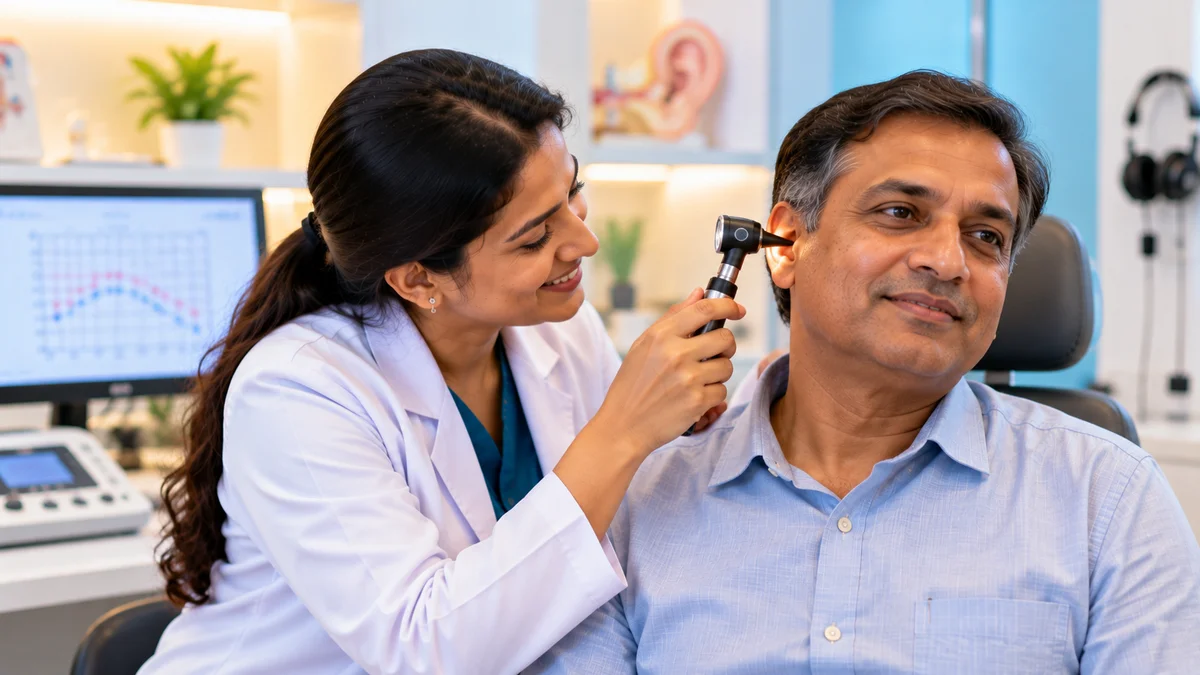
Audiological assessment. A qualified audiologist performs tests, usually including pure tone audiometry and speech audiometry, to measure the type and degree of hearing loss.
Medical recommendation. Based on the results, the specialist advises whether a hearing aid is needed and what type suits your loss.
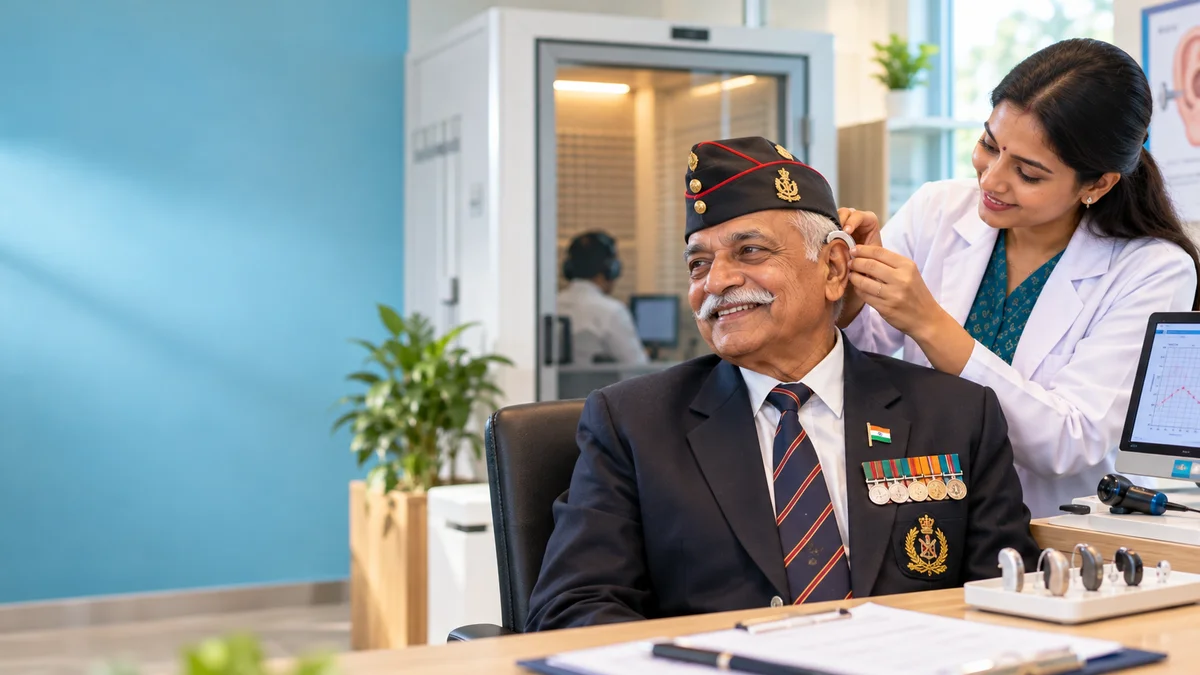
Approval and fitting. Where required, approval is obtained as per ECHS procedure, after which the device is selected, fitted and programmed.
Follow-up care. Adjustments, counselling and check-ups ensure the device works well for you.
Entitlements, approved device categories and limits can differ by case and are governed by ECHS guidelines. Always confirm the current rules with your polyclinic before starting treatment.
Types of Hearing Aids Commonly Considered
The right device depends on your hearing loss, lifestyle, dexterity and budget. Common options include:
Behind-the-ear (BTE) aids: Powerful, durable and suitable for mild to profound loss. They are often a good fit for veterans with significant noise-induced loss.
Receiver-in-canal (RIC) aids: Small, discreet and comfortable, with natural sound quality.
In-the-ear (ITE) and in-the-canal (ITC) aids: Custom-made devices that sit within the ear.
Rechargeable hearing aids: Convenient for those who prefer not to handle tiny batteries.
Bluetooth-enabled aids: Allow direct streaming from phones and televisions.
An audiologist will explain the benefits and limitations of each type so you can make a confident choice.
Benefits of Using Your ECHS Entitlement for Hearing Care
Reduced financial burden. Hearing aids can be a major expense. Using ECHS support where applicable can make quality hearing care more affordable.
Access to qualified professionals. Empanelled facilities are expected to follow accepted standards of care, so you can receive testing and fitting from trained experts.
Better family communication. Clearer hearing means less repetition, fewer misunderstandings and more enjoyable conversations with children and grandchildren.
Improved safety and independence. Hearing traffic, alarms, doorbells and warnings helps you stay safe and self-reliant.
Better emotional wellbeing. Treating hearing loss reduces isolation and supports mental sharpness.
Documents You Should Keep Ready
Being prepared saves time and avoids delays. Carry the following when you visit:
Your ECHS smart card
Your discharge book or ex-servicemen identity card
Referral letter from the ECHS polyclinic
Previous medical records and any earlier hearing test reports
Aadhaar card or another valid photo ID
Common Challenges and How to Avoid Them
Many veterans delay hearing care because they assume the process is complicated. A few practical tips can make it smooth:
Start early. Do not wait until hearing becomes severely affected.
Follow the referral route. Skipping the referral process can cause problems with approvals.
Ask questions. Request clear information about devices, warranty, servicing and follow-up visits.
Keep records. Store all bills, prescriptions and test reports safely.
Attend follow-ups. Hearing aids need fine-tuning, and your brain needs time to adapt to new sounds.
Why Choose VR Speech and Hearing Clinic
Choosing the right clinic matters as much as choosing the right device. VR Speech and Hearing Clinic focuses on patient-centred audiology, helping ex-servicemen and their families hear better with care and respect.
Here is what you can expect:
Comprehensive hearing evaluation using standard audiological tests
Honest guidance on whether you need a hearing aid and which type fits best
Support with the documentation process so you understand each step
Careful fitting and programming tailored to your hearing profile
Counselling and training on using, cleaning and maintaining your device
Regular follow-up to fine-tune settings as your needs change
Speech and communication support for those who need extra help adjusting
The team understands the unique needs of veterans, including noise-induced loss and tinnitus, and treats every patient with the dignity they deserve.
Tips for Getting the Most From Your Hearing Aids
Wear them consistently, starting with a few hours daily and building up
Keep them clean and dry, and store them safely at night
Practise listening in quiet settings first, then in busier environments
Be patient, as adaptation can take a few weeks
Return for adjustments whenever something feels uncomfortable or unclear
Get your hearing rechecked every year
Protecting Your Remaining Hearing
Even after getting hearing aids, protect your ears from further damage. Avoid prolonged loud noise, use ear protection around machinery or firearms, keep television and headphone volume moderate, and treat ear infections promptly. Regular check-ups help catch changes early.
Final Thoughts
Hearing loss is not something ex-servicemen should simply accept as part of ageing or service life. ECHS provides a framework to access medical evaluation and hearing support, and understanding the process puts you in control. Start with your polyclinic, get a proper audiological assessment, and choose a hearing solution that fits your life.
If you or a loved one is struggling to hear, VR Speech and Hearing Clinic is ready to guide you through every step, from testing to fitting to long-term care. Better hearing means better conversations, better safety and a better quality of life.
Frequently Asked Questions (FAQs)
1. Does ECHS cover hearing aids for ex-servicemen?
ECHS supports hearing evaluation and, where medically recommended, hearing aids as per its guidelines. Coverage depends on referral, approval and scheme rules, so confirm details with your polyclinic.
2. Can dependents also get hearing aid benefits under ECHS?
Eligible dependents such as spouses and other recognised family members are generally covered under the scheme, subject to its rules.
3. Do I need a referral to get a hearing test under ECHS?
Yes, in most cases you need a referral from your ECHS polyclinic to a specialist or empanelled facility.
4. What tests are done to decide if I need a hearing aid?
Audiologists typically perform pure tone audiometry, speech audiometry and other tests to determine the type and degree of hearing loss.
5. Which hearing aid is best for noise-induced hearing loss?
It depends on the pattern and severity of your loss. Behind-the-ear and receiver-in-canal models are commonly used, and an audiologist will recommend the best fit.
6. How long does it take to get used to a hearing aid?
Most people adapt within a few weeks. Consistent daily use and follow-up adjustments help.
7. Can hearing aids help with tinnitus?
For many people, amplifying outside sounds makes tinnitus less noticeable. Your audiologist can discuss additional tinnitus management options.
8. How often should I have my hearing checked?
At least once a year, or sooner if you notice any change in your hearing.
9. What documents should I bring to the clinic?
Bring your ECHS card, ex-servicemen ID, referral letter, previous medical records and a photo ID.
10. Why should I choose VR Speech and Hearing Clinic?
The clinic offers thorough testing, honest advice, careful fitting and reliable follow-up care tailored to the needs of ex-servicemen and their families.