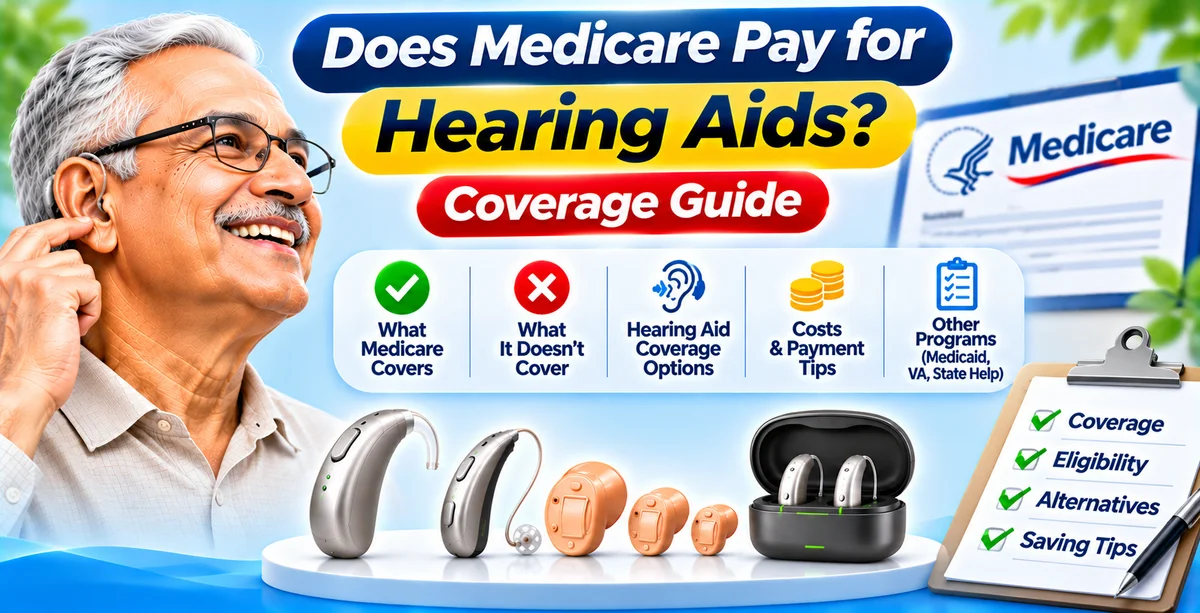
Does Medicare Pay for Hearing Aids? Coverage Guide
Does Medicare Pay for Hearing Aids? What You Need to Know
If you or a loved one is struggling to hear, one of the first questions that comes up is the cost. Hearing aids are a major expense, so many seniors ask: does Medicare pay for hearing aids? The short answer is that Original Medicare does not cover routine hearing aids. But that is not the whole story. Some parts of Medicare do help with hearing care, and there are several ways to lower your costs.
At VR Speech and Hearing Clinic, we help patients understand their hearing health and their options every day. This guide explains what Medicare covers, what it does not, and how to get the care you need without overspending.
Does Original Medicare Cover Hearing Aids?
No. Original Medicare, which includes Part A (hospital insurance) and Part B (medical insurance), does not pay for hearing aids. It also does not cover the fitting, adjustment, or routine hearing exams meant to prescribe or fit them.
This surprises many people. Medicare was created decades ago, and hearing aids were not included in the original benefit. Despite years of discussion and proposed legislation, standard hearing aid coverage has not been added to Original Medicare. Rules can change, so it is always smart to confirm current benefits on the official Medicare website or by calling 1-800-MEDICARE.
What Hearing Services Does Medicare Part B Cover?
Even though hearing aids are excluded, Part B does cover some hearing-related services when they are medically necessary.
Diagnostic hearing and balance exams. If your doctor or another health care provider orders an exam to find out why you have hearing loss, dizziness, or balance problems, Part B may cover it. The key point is that the exam must be for diagnosis and treatment of a medical condition, not for the purpose of getting hearing aids.
Medical treatment for hearing-related conditions. Part B may help pay for treatment of conditions such as ear infections, sudden hearing loss, or other medical problems that affect hearing.
Cochlear implants and bone-anchored hearing systems. Medicare may cover surgically implanted devices for people who meet specific medical criteria. These are classified differently from standard hearing aids, and coverage requires a qualifying evaluation and a doctor’s recommendation.
Keep in mind that you typically pay 20 percent of the Medicare-approved amount after meeting your Part B deductible. Without supplemental coverage, those costs add up.
Does Medicare Advantage Cover Hearing Aids?
This is where good news often appears. Medicare Advantage (Part C) plans are offered by private insurance companies approved by Medicare. These plans must cover everything Original Medicare covers, and many add extra benefits, including hearing coverage.
Depending on your plan, you may get:
Routine hearing exams
A set allowance toward hearing aids
Discounted pricing through a network of providers
Coverage for fitting and follow-up visits
Benefits vary widely. One plan might offer a generous hearing aid allowance every year or two, while another might offer only a small discount. Some plans require you to use specific providers or buy devices through a particular vendor.
Before you enroll or renew, check the plan’s Evidence of Coverage document. Look for the exact dollar amount, how often you can use the benefit, and which brands or providers are included.
Does Medigap Cover Hearing Aids?
Medicare Supplement Insurance, also called Medigap, helps pay out-of-pocket costs like copayments, coinsurance, and deductibles. However, Medigap plans generally do not cover hearing aids. Because they only supplement what Original Medicare approves, they follow the same exclusion.
Does Medicare Part D Cover Hearing Aids?
No. Part D is prescription drug coverage. It does not pay for hearing aids or hearing devices. It may cover medications used to treat conditions that affect the ears, such as infections, but not the devices themselves.
Why Hearing Aids Cost So Much
A pair of prescription hearing aids can cost several thousand dollars. Prices reflect the technology inside the device, such as noise reduction, wireless connectivity, rechargeable batteries, and directional microphones. They also often include professional services such as hearing tests, custom fitting, programming, and follow-up care.
Because the cost is high and coverage is limited, many seniors delay getting help. That delay can carry its own price. Untreated hearing loss has been linked to social isolation, depression, communication difficulties, and a higher risk of cognitive decline. Getting tested early matters.
Over-the-Counter Hearing Aids: A Lower-Cost Option
Since late 2022, the FDA has allowed over-the-counter (OTC) hearing aids for adults with mild to moderate hearing loss. You can buy them without a prescription or a medical exam, and they usually cost far less than traditional devices.
OTC devices are not right for everyone. They are not designed for severe hearing loss, and they may not be appropriate if you have ear pain, drainage, sudden hearing changes, or ringing in only one ear. A professional hearing evaluation can tell you whether an OTC device is enough or whether you need a custom-fitted prescription device. Medicare does not pay for OTC hearing aids either.
Ways to Save on Hearing Aids
Even without Medicare coverage, you have options.
Switch to or compare Medicare Advantage plans. During the Annual Enrollment Period, review plans that include hearing benefits.
Check your Veterans benefits. If you are a veteran, the VA may provide hearing aids and services at no cost for eligible individuals.
Look into Medicaid. Some state Medicaid programs cover hearing aids for adults. Coverage depends on your state.
Use a Flexible Spending Account or Health Savings Account. If you have access to one, you can use pre-tax dollars for hearing aids and related care.
Ask about payment plans. Many clinics offer financing or monthly payment options.
Explore nonprofit and charitable programs. Several organizations provide free or low-cost hearing aids to people who qualify.
Consider device tiers. Basic and mid-level hearing aids can work very well for many lifestyles. You do not always need the most advanced model.
How a Hearing Evaluation Helps
The best first step is a professional hearing evaluation. At VR Speech and Hearing Clinic, a hearing assessment identifies the type and degree of your hearing loss, so you know whether you need medical treatment, a hearing device, or other support. Having your results in hand also makes it easier to compare Medicare Advantage plans, apply for assistance programs, and choose a device that fits your needs and budget.
Hearing aids work best when they are properly fitted and adjusted. Ongoing support, such as cleaning, reprogramming, and counseling on how to use your devices, helps you get the most out of your investment.
Final Thoughts
So, does Medicare pay for hearing aids? Original Medicare does not, and neither do Medigap or Part D. But Part B may cover diagnostic hearing and balance exams, some Medicare Advantage plans include hearing benefits, and there are other ways to reduce the cost, from OTC devices to veteran and state programs.
Do not let cost keep you from hearing better. Review your coverage, ask questions, and get your hearing checked. Reach out to VR Speech and Hearing Clinic to schedule an evaluation and take the first step toward clearer communication and a better quality of life.
Note: Medicare rules and plan benefits change from year to year. This article is for general information only and is not insurance or medical advice. Confirm details with Medicare or your plan provider.
FAQs
1. Does Medicare pay for hearing aids in 2027?
Original Medicare (Parts A and B) does not pay for routine hearing aids. Some Medicare Advantage plans may include hearing aid benefits, so check your plan details.
2. Does Medicare cover hearing exams?
Medicare Part B may cover diagnostic hearing and balance exams if a doctor orders them to evaluate a medical condition. Routine hearing tests for hearing aid fitting are not covered under Original Medicare.
3. Do Medicare Advantage plans cover hearing aids?
Many do, but coverage varies. Benefits may include exams, an allowance toward devices, or discounts. Review the plan’s Evidence of Coverage before you enroll.
4. Does Medigap pay for hearing aids?
No. Medigap policies generally follow Original Medicare rules and do not cover hearing aids.
5. Does Medicare cover cochlear implants?
Yes, Medicare may cover cochlear implants and certain bone-anchored devices for people who meet medical criteria.
6. Does Medicare cover over-the-counter hearing aids?
No. Medicare does not pay for OTC hearing aids.
7. What is the cheapest way to get hearing aids?
Options include OTC hearing aids, Medicare Advantage plans with hearing benefits, VA benefits, Medicaid in some states, HSAs or FSAs, and payment plans.
8. Should I get a hearing test before buying hearing aids?
Yes. A professional evaluation confirms the type and level of hearing loss and helps you choose the right device.