Audiologist and Hearing Aids: A Complete Guide to Better Hearing
Audiologist and Hearing Aids: A Complete Guide to Better Hearing
Hearing loss rarely arrives overnight. It creeps in slowly. You ask people to repeat themselves, turn the television louder, or avoid noisy restaurants because conversations feel like a blur. Many people wait years before seeking help, yet early support can protect your communication, your confidence and your relationships.
Working with a qualified audiologist is the first step toward better hearing. This guide explains what an audiologist does, how hearing aids work, and how to choose the right solution. At VR Speech and Hearing Clinic, Vilas Rathod, BASLP, helps patients understand their hearing needs and find practical, comfortable solutions.
What Is an Audiologist?
An audiologist is a trained professional who identifies, measures and manages hearing and balance problems. Audiologists do far more than sell hearing aids. They test your hearing, interpret the results, explain the cause and degree of hearing loss, recommend treatment, and provide ongoing support after fitting.
A BASLP degree stands for Bachelor of Audiology and Speech-Language Pathology. Professionals with this training understand both how we hear and how we communicate, which is valuable because hearing and speech are closely connected. When hearing declines, speech clarity, language development in children and everyday communication in adults can all be affected.
Signs You May Need a Hearing Test
Many people do not realise they have hearing loss because the change is gradual. Consider booking an appointment with an audiologist if you notice any of these signs:
You often ask people to repeat what they said. You struggle to follow conversations in crowded places. You turn up the television or phone volume higher than others prefer. You find voices muffled, especially women’s and children’s voices. You hear ringing, buzzing or humming in your ears, known as tinnitus. You feel tired after long conversations because of the effort of listening. Family members suggest that your hearing has changed.
Children also need attention. If a child has delayed speech, does not respond to sounds, or seems inattentive at school, a hearing evaluation should be done promptly.
What Happens During a Hearing Evaluation?
A hearing evaluation is painless and usually takes under an hour. The audiologist begins by asking about your medical history, your symptoms and the situations where you struggle most. Then the ear canal and eardrum are examined to check for wax, infection or other blockages.
Next come several tests. Pure tone audiometry checks the softest sounds you can hear at different pitches. Speech audiometry measures how clearly you understand words. Tympanometry assesses how well the middle ear and eardrum are working. Depending on your needs, additional tests may be recommended.
The results are plotted on a chart called an audiogram. Your audiologist explains it in simple language, showing which sounds you hear well and which you miss. This chart guides every decision about treatment.
Understanding the Types of Hearing Loss
There are three main types of hearing loss, and the right treatment depends on which one you have.
Conductive hearing loss occurs when sound cannot pass efficiently through the outer or middle ear. Wax buildup, fluid, infection or eardrum problems are common causes, and many of these conditions can be treated medically.
Sensorineural hearing loss involves damage to the inner ear or the hearing nerve. It is often linked to ageing, long-term noise exposure, genetics or certain medicines. It is usually permanent, and hearing aids are the most common solution.
Mixed hearing loss is a combination of both types.
An accurate diagnosis matters. Not every hearing problem needs a hearing aid, and not every hearing aid suits every hearing loss.
How Do Hearing Aids Work?
A hearing aid is a small electronic device with a microphone, a processor, an amplifier and a speaker. The microphone picks up sound, the processor adjusts it according to your hearing profile, and the speaker delivers clearer sound into your ear.
Modern digital hearing aids do much more than make sounds louder. They can reduce background noise, improve speech clarity, limit sudden loud sounds, and adapt to different listening environments. Many models connect to smartphones for calls, music and television audio.
Types of Hearing Aids
Choosing a style depends on your degree of hearing loss, ear shape, lifestyle, dexterity and budget.
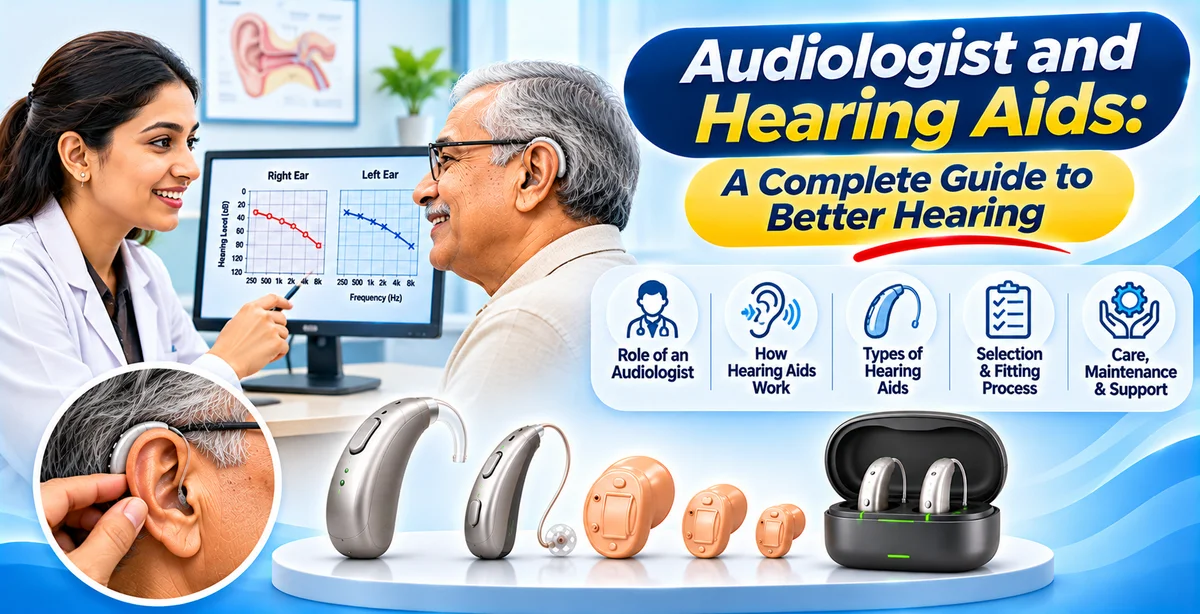
Behind-the-ear (BTE): The device sits behind the ear and sends sound through a tube or earmould. It is powerful, durable and suitable for mild to profound hearing loss.
Receiver-in-canal (RIC): A slim, discreet design with a small speaker placed in the ear canal. It offers natural sound quality and is popular for mild to severe loss.
In-the-ear (ITE): Custom-made to fill part of the outer ear. It is easier to handle and suits mild to moderately severe loss.
In-the-canal (ITC) and completely-in-canal (CIC): Small, custom-moulded devices that sit inside the ear canal. They are very discreet, though they may be harder to adjust for people with limited finger dexterity.
Rechargeable hearing aids: These remove the need to change tiny batteries and are convenient for daily use.
Your audiologist will explain the advantages and limits of each style so that your decision is informed and comfortable.
How an Audiologist Chooses the Right Hearing Aid
There is no single best hearing aid for everyone. A good recommendation considers several factors:
Your audiogram and speech understanding results. The environments where you spend your time, such as quiet homes, offices, markets or social gatherings. Your daily habits, including phone use, television watching and travel. Your comfort, ear shape and ability to handle small devices. Your budget and long-term needs.
A trial period is often helpful. Wearing a hearing aid in real situations shows how it performs far better than a short demonstration in a clinic.
Fitting, Programming and Follow-Up Care
Buying a hearing aid is only the beginning. Proper fitting and programming are what turn a device into a real solution. The audiologist adjusts the settings to match your hearing profile, checks the physical fit in your ear, and teaches you how to insert, remove, clean and care for the devices.
Follow-up visits are equally important. Your brain needs time to adjust to hearing sounds it has been missing, such as footsteps, rustling paper or birdsong. At first, sounds may feel loud or unfamiliar. Your audiologist fine-tunes the settings based on your feedback, so the experience becomes more natural over time.
Tips for Getting Used to Your Hearing Aids
Wear them daily, starting with a few hours and gradually increasing. Begin in quiet places before moving into noisy ones. Practise conversations with family members. Be patient, because adaptation can take several weeks. Share your concerns openly at follow-up visits so adjustments can be made.
Hearing Aid Care and Maintenance
Good care extends the life of your devices. Wipe them daily with a soft, dry cloth. Keep them away from moisture, heat and chemicals. Remove them before bathing or swimming. Store them in a dry case at night. Change wax filters as advised, and keep spare supplies handy. Schedule regular check-ups so your audiologist can clean and recalibrate the devices.
Why Early Treatment Matters
Untreated hearing loss can lead to social withdrawal, frustration, reduced confidence and difficulty at work. Research has also linked untreated hearing loss with an increased risk of cognitive decline in later life. Hearing aids help keep you engaged in conversations, safe in traffic and connected with the people who matter.
Why Choose VR Speech and Hearing Clinic?
At VR Speech and Hearing Clinic, care begins with listening. Vilas Rathod, BASLP, takes the time to understand your hearing concerns, performs careful testing, explains your results clearly and recommends solutions that fit your life rather than pushing a one-size-fits-all product. From the first hearing test to hearing aid fitting and follow-up support, the focus stays on comfort, clarity and long-term satisfaction.
Take the First Step Toward Better Hearing
If you or a loved one has noticed changes in hearing, do not wait. A simple hearing test can reveal what is happening and what can be done about it. Book an appointment with VR Speech and Hearing Clinic today and take the first step toward clearer, more confident communication.
FAQs
1. What does an audiologist do?
An audiologist tests hearing, diagnoses hearing and balance problems, recommends treatment such as hearing aids, and provides fitting and follow-up care.
2. How do I know if I need a hearing aid?
If you often ask people to repeat themselves, struggle in noisy places or turn up the volume more than others do, get a hearing test. An audiologist will tell you whether a hearing aid is appropriate.
3. Is a hearing test painful?
No. A hearing test is safe, comfortable and non-invasive. You simply listen to sounds and respond.
4. How long does it take to get used to hearing aids?
Most people adapt over a few weeks, though it varies. Regular daily use and follow-up adjustments make the process easier.
5. Can hearing aids restore normal hearing?
Hearing aids do not cure hearing loss, but they greatly improve sound awareness and speech understanding, making daily communication easier.
6. How often should I get my hearing checked?
Adults over 50, and anyone with hearing concerns, should have their hearing checked regularly. People who wear hearing aids should have check-ups as advised by their audiologist.
7. Can children use hearing aids?
Yes. Children with hearing loss can benefit greatly from hearing aids, and early detection supports better speech and language development.