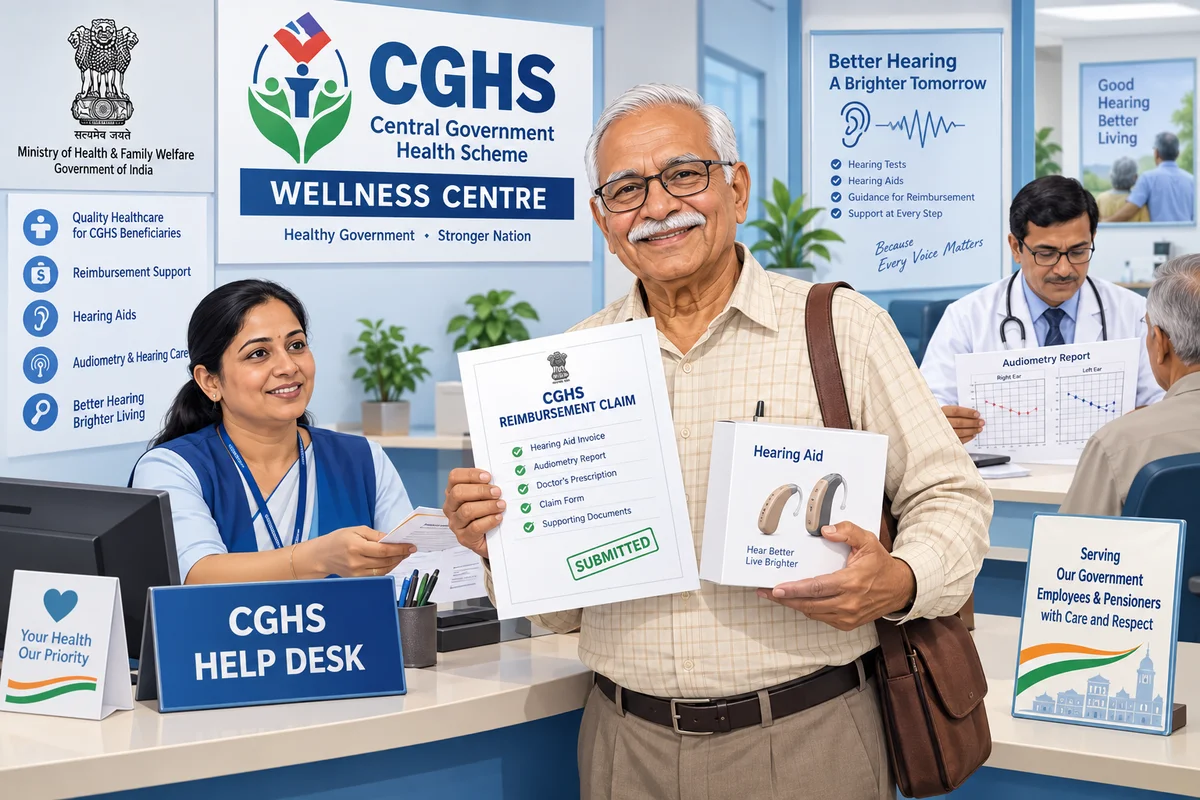
CGHS Hearing Aid Reimbursement Rejected? Reasons & Fixes
CGHS Hearing Aid Reimbursement Rejected? Common Reasons & Fixes
Getting your CGHS hearing aid reimbursement claim rejected can be frustrating, especially after going through the process of testing, purchasing, and paperwork. The good news is that most rejections happen for fixable, procedural reasons rather than because the claimant is genuinely ineligible. Understanding exactly why claims get turned down — and how to correct course — can save you weeks of back-and-forth with your CGHS Wellness Centre or department.
Why CGHS Hearing Aid Claims Get Rejected
1. Hearing Aid Purchased Before Getting Prior Approval
This is by far the most common reason claims are denied. CGHS requires beneficiaries to get permission from a competent authority before buying a hearing aid, not after. Purchasing a hearing aid without prior approval can lead to claim rejection. Many beneficiaries assume they can buy first and get reimbursed later, similar to how some other medical expenses work, but hearing aids specifically require a permission letter in hand before the purchase invoice is generated. Vrhearingclinic
The fix: Always complete your audiological assessment with a Government or CGHS-empanelled ENT specialist first, obtain the written permission letter specifying the approved hearing aid category, and only then proceed to purchase.
2. Wrong Type of Hearing Aid Purchased
CGHS guidelines are specific about which categories of hearing aids qualify. Under current rules, only standard digital programmable and rechargeable hearing aids are reimbursable. Older analogue and body-worn or pocket-type hearing aids are excluded entirely, no matter how good the fit or how strongly a private clinic recommends them.
The fix: Stick strictly to the category recommended in your permission letter. If your ENT specialist has approved a digital BTE, ITC, or CIC aid, do not substitute a different type based on personal preference or a retailer's suggestion, since CGHS assessment is meant to be brand-neutral and category-specific.
3. Missing or Incomplete Audiometry Documentation
A rejected claim often traces back to paperwork gaps rather than the purchase itself. CGHS requires a Pure Tone Audiometry (PTA) report along with an audiological assessment, and this report must carry proper certification. The countersignature and stamp of the Government Specialist or empanelled healthcare organisation's ENT specialist on the PTA report is required, and a claim lacking this authentication is likely to bounce back. Snpwachq
The fix: Before submitting your file, double-check that your PTA report includes the audiometry number, a clear diagnosis based on the results, and the specialist's signature and official stamp. An unsigned or unstamped report is one of the easiest ways to get an otherwise valid claim rejected.
4. Missing the Five-Year Undertaking Declaration
CGHS allows hearing aid reimbursement once every five years per ear per beneficiary. To confirm this, claimants must submit a signed undertaking stating that no hearing aid reimbursement has been claimed for the same beneficiary in the preceding five years. Forgetting to attach this declaration, or filling it out incorrectly, is a frequent and entirely avoidable cause of rejection.
The fix: Fill out the undertaking form (usually attached as an annexure to the permission checklist) carefully, sign it as the primary cardholder, and attach it along with your other claim documents rather than assuming it's optional.
5. Claiming Above the Ceiling Rate Without Understanding the Rules
CGHS reimburses hearing aid costs only up to a fixed ceiling per ear, and this figure has been revised over the years. As of the most recent Office Memorandum dated September 9, 2026 (which supersedes the earlier December 2020 order), the maximum reimbursement is ₹30,000 per ear, inclusive of GST, for a standard digital programmable and rechargeable hearing aid with a three-year comprehensive warranty. This is a meaningful increase from the earlier ceiling of ₹8,000 per ear that applied for years before this update.
Some claims get flagged or delayed not because they're rejected outright, but because the claimant expected full reimbursement of a device costing well above the ceiling, and the shortfall wasn't budgeted for. Note also that under current guidelines, there is no separate reimbursement for GST, standard chargers, fitting, programming, verification, counselling, or routine maintenance — these are expected to be included within the ceiling amount, not billed on top of it. Optional premium features like wireless streaming or app-based controls also don't qualify for extra reimbursement.
The fix: Confirm the current applicable ceiling rate with your CGHS Wellness Centre before purchase, and choose a hearing aid model priced within or close to that limit so there are no unpleasant surprises at the reimbursement stage.
6. Submitting the Claim Through the Wrong Channel
Pensioners and serving employees follow different submission routes, and mixing these up causes processing delays that sometimes get misread as rejections. Pensioners route their claims through the CGHS Wellness Centre and Zonal Office, while serving employees submit through their Ministry or Department. Vrhearingclinic
The fix: Identify your correct category before submission. Pensioners should never route paperwork through a Ministry department, and serving employees should not submit directly to a Zonal Office, since this mismatch can stall or return a claim.
7. Late Submission Without Justification
CGHS expects claims to be submitted within a defined window after purchase. If you delay well beyond this period without a written explanation, the claim can be rejected or sent back for clarification.
The fix: Submit your claim as promptly as possible after purchase. If a genuine delay occurs, attach a brief written explanation with your claim documents rather than submitting late with no context.
8. Excluded Beneficiary Categories
Not everyone with a CGHS card is automatically covered for hearing aid reimbursement. Beneficiaries from the Armed Forces, Railways, and certain autonomous bodies are excluded, since these groups fall under separate healthcare schemes with their own rules.
The fix: Confirm your eligibility category before starting the process. If you belong to an excluded department, check with your own scheme's health authority instead of pursuing a CGHS claim that is bound to be denied.
9. Claiming for a Condition That Doesn't Qualify
Hearing aids are meant for confirmed, clinically diagnosed hearing loss, not mild or temporary hearing issues such as those caused by an ear infection or wax buildup. Claims filed for conditions that don't meet the threshold for a hearing aid recommendation are turned down at the assessment stage itself.
The fix: Let the ENT specialist's audiogram-based assessment determine whether a hearing aid is medically warranted, rather than requesting one preemptively.
What To Do If Your Claim Has Already Been Rejected
If your claim has already been denied, don't assume it's final. Start by requesting the specific reason for rejection in writing from your Wellness Centre or Ministry. Most rejections fall into the categories above and can be corrected by resubmitting with the missing document, correct undertaking, or proper authorization sequence. Keep photocopies of every document you submit, and retain your original permission letter, PTA report, and purchase bill, since these are typically the first things scrutinized during a resubmission or appeal.
Final Thoughts
A rejected CGHS hearing aid reimbursement claim is rarely about eligibility — it's almost always about a missed step in the approval sequence, an incomplete document, or a misunderstanding of the current ceiling rates. By securing prior approval, sticking to the approved hearing aid category, ensuring your audiometry report is properly certified, and submitting through the correct channel within the time limit, most beneficiaries can avoid rejection altogether or get a denied claim reversed on resubmission.
FAQs
Q1: Why was my CGHS hearing aid claim rejected even though I have all my bills?
The most common reason is purchasing the hearing aid before getting prior written approval from a Government or empanelled ENT specialist. Bills alone aren't sufficient without prior authorization.
Q2: What is the current CGHS reimbursement limit for hearing aids?
As per the latest Office Memorandum dated September 9, 2026, the ceiling is ₹30,000 per ear for a standard digital programmable and rechargeable hearing aid, inclusive of GST.
Q3: Can I claim reimbursement for an analogue or body-worn hearing aid?
No. CGHS guidelines exclude analogue and body-worn/pocket-type hearing aids entirely. Only digital programmable models are eligible.
Q4: How often can I claim hearing aid reimbursement under CGHS?
Once every five years per ear, provided you submit an undertaking confirming no reimbursement was claimed for the same beneficiary in the preceding five years.
Q5: What documents are mandatory to avoid rejection?
A signed and stamped PTA/audiological assessment report, the prior permission letter specifying the approved hearing aid category, the original purchase bill, the five-year undertaking, and a photocopy of your CGHS card.
Q6: Are cochlear implants covered under this same hearing aid policy?
No, cochlear implants and related surgical procedures fall under a different medical category and are not covered under the CGHS hearing aid reimbursement rules.
Q7: What should I do if I missed the submission deadline?
Submit as soon as possible along with a written explanation for the delay; CGHS does allow some flexibility, but justification is required for late claims.