CGHS Claim for Retired Employees: Documents Checklist
CGHS Claim for Retired Employees: Documents Checklist
For most retired central government employees, the Central Government Health Scheme (CGHS) is the main safety net for medical expenses after retirement. Treatment at empanelled hospitals is mostly cashless, but there are many situations where pensioners must file a reimbursement claim themselves: emergency treatment at a non-empanelled hospital, medicines bought outside the wellness centre, or approved devices and therapies.
The most common reason for delay or rejection is simple: missing or incorrect documents. This guide gives you a clear checklist, a step-by-step process and practical tips to make your claim smooth.
When Can a Retired Employee File a CGHS Claim?
Reimbursement is generally possible in these situations:
Emergency treatment taken at a non-empanelled hospital
Treatment at a non-empanelled facility with prior permission or referral from the competent CGHS authority
Medicines or investigations that could not be obtained through the wellness centre, supported by proper certification
Approved aids and appliances, such as hearing aids, where CGHS rules allow reimbursement
Expenses incurred when you were outside your CGHS city and needed urgent care
Rules, ceiling rates and approved procedures are revised from time to time through official office memorandums, so always confirm the current position with your wellness centre before you spend or submit.
Essential CGHS Claim Documents Checklist for Pensioners
Keep this list handy. Most claims need the following.
1. Duly filled claim form
Use the prescribed CGHS reimbursement claim form. Fill every field, including your beneficiary ID, pension details, patient name, relationship and bank details. Blank fields are a common reason for queries.
2. Copy of CGHS card
Attach a clear copy of your valid CGHS card showing the beneficiary ID. If treatment was for a dependent spouse, include proof that links the patient to the card.
3. Pension Payment Order (PPO) details
Many offices ask for PPO number and details to verify pensioner status. Keep a photocopy ready.
4. Original bills and cash memos
Bills must be in original, show the patient’s name, date, itemized charges and the provider’s address. Pharmacy bills should list medicine names, batch details and quantity. Handwritten or unclear bills often attract objections.
5. Doctor’s prescription
Every medicine, test or therapy claimed should be backed by a prescription from a qualified doctor. It should carry the doctor’s name, registration number, date and signature.
6. Discharge summary (for hospitalization)
This is mandatory for admission cases. It should describe diagnosis, treatment given, procedures and medicines at discharge.
7. Investigation and diagnostic reports
Attach reports for blood tests, scans, X-rays, ECGs and similar investigations along with their bills.
8. Emergency certificate (if applicable)
If you went to a non-empanelled hospital in an emergency, get a certificate from the treating doctor or hospital stating that the condition was an emergency and why immediate care was needed.
9. Referral or permission letter (if applicable)
For planned treatment at non-empanelled centres, the sanction or referral letter from the competent authority must be attached.
10. Bank account details
Provide a cancelled cheque or a passbook copy so reimbursement reaches the right account without delay. Make sure the account is in the pensioner’s name and linked to the correct IFSC.
11. Identity proof
A copy of Aadhaar or another ID is commonly requested for verification.
12. Implant or device invoice (if applicable)
For stents, lenses, joint implants and similar items, attach the manufacturer’s sticker or invoice with batch details.
Special Checklist for Hearing Aid and Speech Therapy Claims
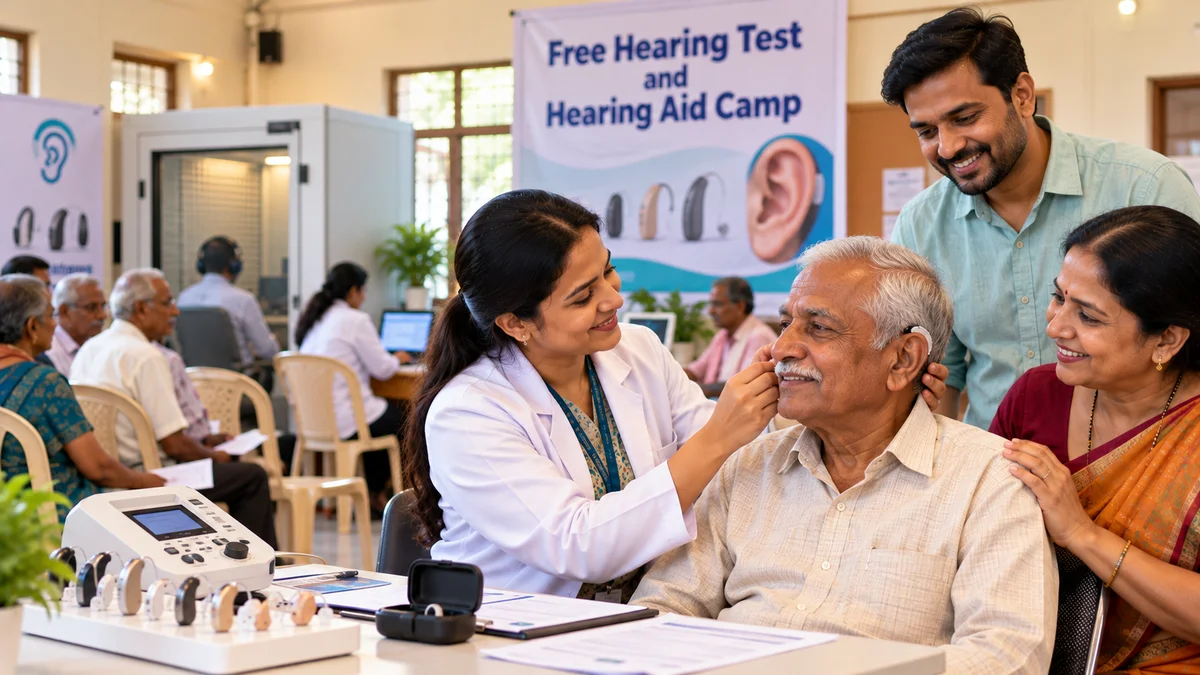
Many retired employees develop age-related hearing loss and need audiological care, yet this is an area where claims are often returned for incomplete paperwork. If you are claiming reimbursement for a hearing aid or related services, keep these in order:
ENT specialist prescription recommending the hearing aid, from a recognized specialist
Audiogram or hearing evaluation report showing the type and degree of hearing loss
Hearing aid invoice with brand, model, serial number, side (left or right) and price
Warranty card and a note of the fitting date
Speech and language therapy records, where therapy is advised after a stroke, vocal cord problems or other conditions
Approval or sanction, where your wellness centre requires it before purchase
A dedicated audiology and speech provider such as VR Speech and Hearing Clinic can help you prepare this paperwork. A properly documented hearing test, a clear invoice with device details and therapy session records make your claim far easier for the CGHS office to process. Before purchasing any device, confirm the current CGHS ceiling rate and eligibility conditions, so you know exactly how much can be reimbursed.
Step-by-Step Process to File Your CGHS Claim
Step 1: Collect all documents early. Ask for itemized bills, reports and certificates at the time of treatment. Chasing a hospital months later is harder.
Step 2: Photocopy everything. Keep a complete set for your own records.
Step 3: Check consistency. Patient name, dates, doctor details and amounts should match across the prescription, bill and reports.
Step 4: Fill the claim form carefully. Double-check the totals and bank details.
Step 5: Submit to the right office. Depending on the current system, claims go to your CGHS wellness centre or the concerned additional director’s office, or through the online claim facility where available. Confirm the current method with your wellness centre.
Step 6: Collect an acknowledgement. Keep the receipt or diary number, or a screenshot if you filed online.
Step 7: Track the claim and reply to queries quickly. If the office raises an objection, respond with the requested documents promptly and in writing.
Time Limit for Submitting CGHS Claims
CGHS rules generally require claims to be submitted within a fixed period after treatment or discharge, usually three months. Late claims may be considered only with a valid reason and permission from the competent authority. Do not wait for the last week. Submit as soon as you have all documents.
Common Mistakes That Delay or Reject Claims
Submitting photocopies instead of original bills
Missing prescription for medicines or tests claimed
No emergency certificate for treatment at a non-empanelled hospital
Unitemized or handwritten bills with unclear details
Mismatch between patient name on bills and CGHS card
Incorrect or incomplete bank details
Claiming items not covered under CGHS rules
Missing the submission deadline
Not attaching device invoices or serial numbers for aids and implants
Practical Tips for Faster Reimbursement
Create a claim folder. Keep one folder or envelope per treatment episode.
Ask before you spend. Call the wellness centre to confirm coverage, rates and permissions for planned treatment or devices.
Get everything signed and stamped. Doctors’ signatures and provider seals add credibility.
Use digital backups. Scan documents and save them on your phone or email.
Ask a family member to help. A son, daughter or neighbour can help with online forms and follow-ups.
Stay polite and persistent. A courteous follow-up often resolves pending queries faster.
Frequently Asked Questions (FAQs)
1. Can a retired central government employee claim CGHS reimbursement?
Yes. Pensioners with a valid CGHS card can claim reimbursement in eligible situations, such as emergency treatment at non-empanelled hospitals or approved items not available through the scheme.
2. What is the most important document for a CGHS claim?
There is no single document, but the filled claim form, original itemized bills, doctor’s prescription and CGHS card copy form the core. Discharge summary and emergency certificate are vital for hospital cases.
3. What is the time limit to file a CGHS claim?
Claims are usually expected within three months of treatment or discharge. Delayed claims need justification and approval, so file as early as possible.
4. Can I claim reimbursement for a hearing aid under CGHS?
Hearing aids can be reimbursed subject to CGHS rules, which include a specialist’s prescription, an audiogram and ceiling limits. Check the current provisions with your wellness centre before purchasing.
5. What documents are needed for speech therapy claims?
Typically a doctor’s recommendation, a speech and language assessment report, therapy session records and bills from the clinic. Keep these together with your claim form and CGHS card copy.
6. Do I need an emergency certificate?
Yes, if you were treated at a non-empanelled hospital in an emergency. The certificate should clearly state the nature of the emergency and why immediate treatment was necessary.
7. Can I submit photocopies of bills?
Original bills are generally required. Keep photocopies for your records and submit originals unless your wellness centre instructs otherwise.
8. Why do CGHS claims get rejected?
Common reasons include missing prescriptions, unclear bills, late submission, mismatched names, wrong bank details and claiming items outside CGHS coverage.
9. How long does reimbursement take?
Timelines vary based on the office, completeness of documents and queries raised. A complete, well-organized claim is usually processed faster.
10. Where can I get help preparing documents for audiology or speech claims?
A hearing and speech care provider such as VR Speech and Hearing Clinic can supply assessment reports, itemized invoices and therapy records in a format that supports your claim.
Final Thoughts
A CGHS claim is straightforward when your paperwork is complete, consistent and submitted on time. Build the habit of collecting documents at the time of treatment, verifying the current rules and keeping copies of everything. For hearing and speech related expenses in particular, accurate evaluation reports, clear device invoices and proper prescriptions make all the difference. A little preparation saves weeks of follow-up and helps you get the reimbursement you are entitled to.
Disclaimer: CGHS rules, rates and procedures change periodically. This article is for general guidance only. Please verify current requirements with your CGHS wellness centre or the official CGHS office memorandums before filing a claim.