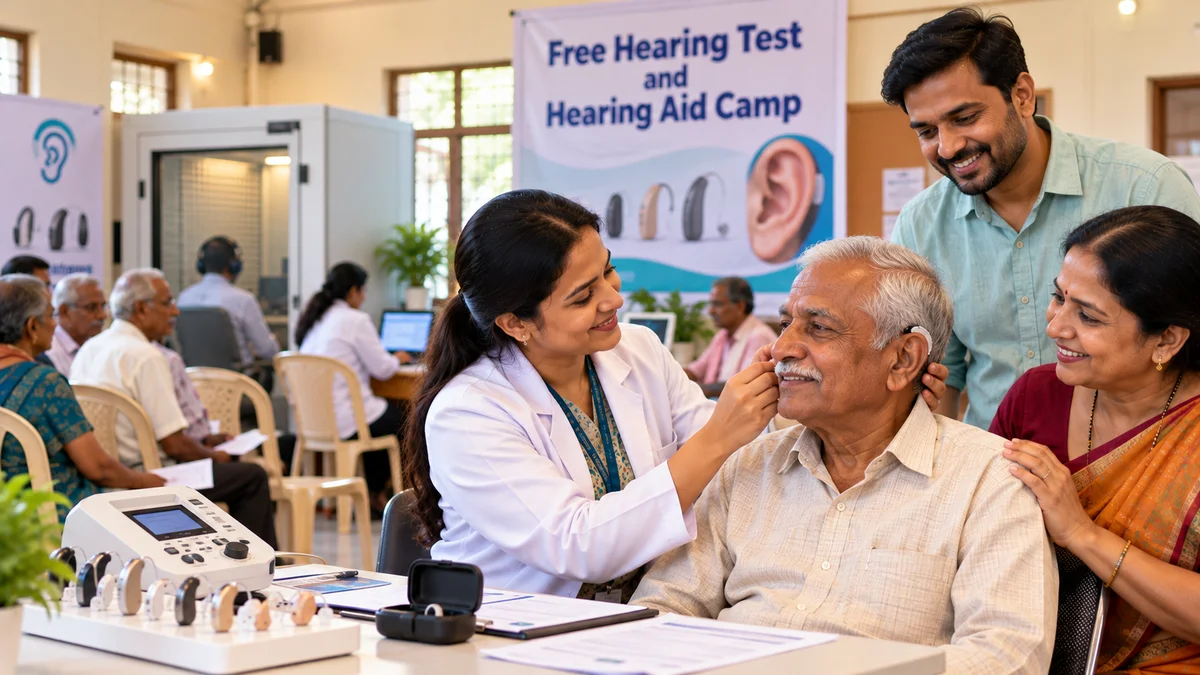
Best Hearing Aids for Seniors in 2026: 7 Top Picks
Best Hearing Aids for Seniors in 2026 7 Picks That Actually Fit Real Life

Photo: Mark Paton
Finding the right hearing aid in 2026 is harder than it should be. The market now includes prescription models, over-the-counter devices, and app-controlled options, all aimed at the same buyer. At VR Speech and Hearing Clinic, we work with seniors and their families across India to match hearing needs to the right device. The question we hear most often is not "which brand is best?" but "which one will I actually use every day?" That distinction matters.
Premium prescription hearing aids in India range from mid-tier to high-end pricing depending on technology and style. That spread causes real confusion, particularly when a ₹15,000 entry-level device and a ₹1,50,000 premium one can both address mild-to-moderate hearing loss. The difference is in how each performs in situations seniors actually face: a noisy family gathering in Pune, a morning walk in Aurangabad, or a video call with grandchildren.
What we see consistently in our clinic is that ease of handling matters as much as sound quality for older users. A device with excellent noise reduction is of little use if someone with limited finger dexterity cannot insert it, charge it, or adjust the settings. That is why this guide covers 7 picks that balance real-world usability with hearing performance, with clear notes on who each device suits best.
The sections below cover what to look for before you buy, the 7 ranked picks with honest pros and cons, a comparison table, and a practical FAQ. If you are new to hearing aids, start with the buying criteria.
Hearing loss affects millions of seniors, and choosing the right hearing aid in 2026 means navigating a crowded market where price rarely predicts fit.

Photo: Sharon Waldron
How widespread is hearing loss among seniors and why does the right fit matter more than the highest price tag
Age-related hearing loss is one of the most common conditions among adults over 60. About one in three people in that age group has some degree of it, and by 75 that proportion rises considerably. It rarely arrives suddenly – it builds gradually, which is why many seniors spend years adjusting before they seek help. When they do, they face a market with hundreds of models, dozens of brands, and pricing that spans a wide range with no clear signal about which device will actually work for their daily life.
At our clinic, we see this regularly. A senior managing a noisy family lunch in Chhatrapati Sambhajinagar or following conversation at a crowded Aurangabad wedding does not need the most expensive device – they need the right one. The best hearing aids for seniors are those that match the person's hearing profile, dexterity, and daily routine, not the highest specification on the box.
What seniors and caregivers can expect to spend in 2026
Prescription hearing aids in 2026 range from roughly Rs. 70,000 at the entry level to over Rs. 2,00,000 for premium models, depending on technology tier and style. That spread causes real confusion, particularly when a Rs. 15,000 entry-level device and a Rs. 1,50,000 premium one can both address mild-to-moderate hearing loss. The difference is in how each performs in situations seniors actually face: a noisy family gathering in Pune, a morning walk in Aurangabad, or a video call with grandchildren.
Why this guide focuses on real-life usability over spec-sheet performance for seniors aged 60 and over
What we see consistently in our clinic is that ease of handling matters as much as sound quality for older users. A device with excellent noise reduction is of little use if someone with limited finger dexterity cannot insert it, charge it, or adjust the settings. That is why this guide covers 7 picks that balance real-world usability with hearing performance, with clear notes on who each device suits best.
What are seniors actually getting when they choose a hearing aid today, and why does the fitting process matter as much as the device?
A hearing aid in 2026 is not the simple amplifier it was two decades ago. Today's devices process sound in real time, connect wirelessly to phones, and adjust automatically to different listening environments. For seniors in cities like Aurangabad, Pune, or Ahmednagar, where daily life ranges from crowded markets to quiet family conversations, that range of capability matters. But the device itself is only part of what you are buying. The other part is the clinical process that configures it for your specific hearing profile.

Photo: Anthony Camerlo
What modern hearing aids actually do – AI noise reduction, rechargeable batteries, and Bluetooth explained in plain language
Modern hearing aids do three things that older models could not do well. First, they use onboard processors to separate speech from background noise. When someone speaks to you in a noisy room, the device identifies the direction and frequency of that voice and amplifies it relative to surrounding sounds. This is what manufacturers mean by AI-driven noise reduction: the chip inside the aid makes continuous adjustments, many times per second, rather than applying a fixed amplification to everything it picks up.
Second, most current devices are rechargeable. Leading models offer between 16 and 24 hours of use per charge, which means a full day of wear on a single overnight charge. That matters for seniors who find replacing small batteries difficult, and it removes a recurring cost that adds up over months of use.
Third, Bluetooth hearing aids for seniors now connect directly to Android phones, iPhones, and televisions. You can stream a phone call or a TV programme directly into both ears without turning up the volume for everyone else in the room. Some devices also link to a companion app, letting a family member or clinician adjust settings remotely without a clinic visit.
Why the fitting and programming process can account for up to 80% of a hearing aid's real-world performance
The hardware inside a hearing aid sets a ceiling on what is possible. The fitting and programming process determines how close to that ceiling you actually get. An audiologist programs the device using data from your hearing test, setting gain targets for specific frequencies based on your individual loss pattern. Without that calibration, the aid amplifies sounds according to factory defaults, which are designed for an average ear, not yours.
The fitting also covers the physical fit of the device in or on your ear. A poor seal causes feedback (that high-pitched whistle), reduces low-frequency amplification, and makes the device uncomfortable to wear for extended periods. Seniors who stop wearing their hearing aids within the first few months often cite discomfort or persistent feedback, both of which are correctable at the fitting stage. That is why we tell every patient who visits our clinic: the appointment after you receive the device is not optional follow-up, it is the point where the device becomes genuinely useful.
How a professional hearing test for seniors sets the baseline that determines which device will genuinely help
A hearing test for seniors at a clinic involves more than checking whether you can hear a beep. A full audiological assessment maps the softest sounds you can detect across multiple frequencies, measures how well you understand speech in quiet and in noise, and checks the health of the middle ear. The result is an audiogram: a chart that shows exactly where your hearing is intact and where it has reduced.
That audiogram determines which category of device you need. A mild high-frequency loss calls for a different style and power level than a moderate flat loss or a severe bilateral loss. Choosing a device before completing this test is the equivalent of buying reading glasses without checking your prescription. You may get some benefit, but you will almost certainly not get the right correction. We offer comprehensive hearing assessments at our clinic, and for those who cannot travel easily, we also provide home hearing tests to make the process accessible.
What seniors lose when they skip the fitting process and buy solely on brand name or online reviews
Brand reputation and online ratings reflect average user experience across a wide population. They do not reflect your hearing profile, your ear canal shape, or the specific listening environments you face each day. A senior in Chhatrapati Sambhajinagar who attends weekly religious gatherings needs different noise management settings than one who primarily watches television at home. Neither situation is covered by a factory default.
When seniors purchase devices without a professional fitting, the most common outcomes are feedback that goes uncorrected, insufficient amplification at the frequencies where their loss is greatest, and discomfort that leads to the device sitting in a drawer. The device may be technically excellent. Without programming matched to the individual, that quality goes unused. A professional fitting typically takes 45 to 60 minutes at the initial appointment, with one or two follow-up sessions to fine-tune settings as the user adapts. That time investment is what converts a hearing aid from a purchase into a working solution.
How do prescription hearing aids differ from over-the-counter models, and which tier genuinely serves most seniors better?
The first step we recommend before buying any hearing aid is a proper hearing test for seniors, because the results directly determine which category of device will actually help. Once you have a verified audiogram, the distinction between prescription and over-the-counter (OTC) models becomes far easier to understand and act on.
Prescription hearing aids are programmed by a trained audiologist to match a specific hearing profile. The fitting is based on measured thresholds across multiple frequencies, so the amplification pattern is shaped to what each ear genuinely needs rather than a generic average. Most adults with moderate to severe loss, or with asymmetric loss between ears, fall into this group.
OTC models are designed for adults with mild to moderate loss who can self-fit using a smartphone app or a set of preset profiles. They cost less upfront and are available without a clinical appointment. For someone whose hearing difficulty is limited to noisy environments or soft speech, an OTC device can be a reasonable starting point.
Where OTC devices tend to fall short is in complexity. Seniors often present with high-frequency loss, tinnitus, or cognitive load concerns that interact with how a hearing aid should be tuned. A flat amplification boost can make speech louder without making it clearer, and some users find this fatiguing. Prescription fitting addresses that directly by targeting the specific frequencies where clarity is lost.
We also offer EMI options on our premium hearing aid solutions, which makes prescription-grade devices more accessible for families who might otherwise default to OTC on cost alone. For most seniors with documented hearing loss, a professionally fitted prescription aid delivers more consistent benefit in daily listening situations than a self-fitted OTC model can.
Prescription versus over-the-counter hearing aids – a plain-language comparison of what each tier delivers
The clearest way to separate these two tiers is by who programs the device and how. A prescription hearing aid is fitted by an audiologist or hearing care professional who maps your device settings to the results of a full diagnostic hearing test. The audiologist measures the specific frequencies where your hearing has dropped, then programs the aid to amplify those frequencies at precise levels. The result is a device calibrated to your individual audiogram, not a general population average. That process typically involves at least two appointments: an initial fitting and at least one follow-up to adjust settings as you adapt.
An over-the-counter (OTC) hearing aid is purchased directly without a prescription or professional fitting. The user either adjusts settings through a smartphone app or selects from pre-programmed listening profiles. OTC devices are regulated for mild to moderate hearing loss only – they are not intended for severe or profound loss. The trade-off is straightforward: OTC aids cost considerably less and are easier to access, but the amplification is generic rather than individually calibrated. For some seniors, that is enough. For others, it leaves meaningful gaps.
In India, OTC availability has grown, with app-controlled Bluetooth devices now sold through online retailers and pharmacies at prices well below prescription aids. Prescription devices from established brands remain available through clinics like ours in Chhatrapati Sambhajinagar and Ahilyanagar, where a full audiological workup is part of the process. The price difference between tiers is substantial: OTC options can start below ₹10,000 for a pair, while professionally fitted prescription hearing aids from premium brands typically range from ₹30,000 to over ₹1,50,000 per pair depending on technology level. That range reflects real differences in processing capability, not just branding.

Photo: Mark Paton
Which seniors are strong candidates for OTC hearing aids and where the prescription route remains the better choice
OTC hearing aids are a reasonable starting point for a senior with mild, symmetrical hearing loss in both ears, no history of ear infections or ear surgery, and no tinnitus that requires specific management. If the main complaint is difficulty following conversation in quiet rooms or needing the television louder than others prefer, an OTC device with Bluetooth streaming and app-based tuning may address the problem at a fraction of the cost of a prescription aid. The key qualifier is "mild to moderate" – the technology is not designed to handle anything beyond that threshold, and using it for more significant loss produces poor results.
The prescription route is the appropriate choice in several clear situations. Seniors with asymmetric hearing loss – where one ear has meaningfully different loss than the other – need individual ear-level programming that OTC devices cannot provide. Anyone with moderate-to-severe or profound hearing loss needs amplification levels and processing that exceed what OTC products are approved to deliver. Seniors with active ear canal conditions, a history of sudden hearing loss, or hearing loss accompanied by significant dizziness should see a specialist before purchasing any device. Tinnitus that is disruptive and persistent is another reason to seek professional fitting, since managing tinnitus through hearing aids requires specific masking and sound therapy programming.
A practical rule we follow at our clinic: if a senior has never had a formal hearing test, that step should come before any purchase decision. Without an audiogram, there is no reliable way to know which tier is appropriate. Buying an OTC device for loss that actually requires prescription-level amplification means spending money on a device that will underperform – and this is one of the most common reasons seniors abandon hearing aids entirely within the first three months.
Comparison table OTC aids versus prescription aids versus rechargeable Bluetooth hearing aids across price, fit, and features
The table below outlines the practical differences across three purchasing paths seniors typically consider. Rechargeable Bluetooth hearing aids exist in both OTC and prescription categories – the third column covers premium prescription-grade rechargeable Bluetooth devices, which are the highest-performing tier currently available.
Factor | OTC hearing aids | Prescription hearing aids (standard) | Rechargeable Bluetooth hearing aids (prescription) |
|---|---|---|---|
Typical price range (India, per pair) | ₹5,000 – ₹25,000 | ₹30,000 – ₹80,000 | ₹80,000 – ₹1,50,000+ |
Fitting process | Self-fitted via app or preset profiles | Audiologist-programmed to individual audiogram | Audiologist-programmed; remote fine-tuning available |
Suitable hearing loss range | Mild to moderate only | Mild to severe | Mild to profound depending on model |
Battery type | Disposable or rechargeable (varies) | Mostly disposable; some rechargeable options | Rechargeable; typically 16 – 24 hours per charge |
Bluetooth streaming | Available on mid-to-upper OTC models | Available on mid-to-premium prescription models | Standard feature; direct streaming to phone and TV |
Noise management | Basic; limited environment detection | Good; automatic environment switching | AI-driven; real-time noise reduction across environments |
Professional aftercare | None included; app support only | Included; in-clinic adjustments | Included; remote and in-clinic adjustments |
Dexterity demands | Moderate; small controls or app-dependent | Moderate; behind-the-ear styles are easier to handle | Low; rechargeable dock |
How should seniors and caregivers plan for hearing aid trials, follow-up appointments, and long-term maintenance before committing to a purchase?
Buying a hearing aid is not a one-visit transaction. For seniors in India and elsewhere, the process from first suspecting hearing loss to wearing a well-fitted device typically spans several weeks and involves at least three or four separate appointments. Rushing this process is one of the most common reasons people end up with a device that sits in a drawer. Understanding what each stage involves, what costs to expect, and what questions to ask before signing anything will save both money and frustration.

Photo: Mark Paton
How to get a hearing test as a senior – step-by-step from GP referral to audiology appointment
The starting point is a hearing test, not a product brochure. In India, most seniors begin with a visit to a general physician or ENT specialist who can rule out reversible causes of hearing difficulty such as earwax buildup or infection. Once those are addressed, a referral to an audiologist follows. The audiologist conducts a pure-tone audiogram, which maps the softest sounds a person can hear across different frequencies, and a speech recognition test that measures how well someone understands words at a comfortable volume. Both tests together take roughly 30 to 45 minutes. The audiogram result, expressed as hearing loss severity in decibels, determines which hearing aid style and power level will actually work. Skipping the audiogram and buying a device based on a friend's recommendation or an online quiz is the single biggest planning mistake we see – two people with the same complaint of "not hearing well" can have very different audiogram profiles requiring very different solutions. At our clinic, we offer full hearing assessments that give seniors a clear, documented baseline before any purchase decision is made.
What Medicare, NHS, and private insurance actually cover for hearing aids and what seniors must pay out of pocket
Coverage varies considerably depending on the country and the specific plan. In India, government health schemes such as CGHS and certain state employee insurance programmes cover basic hearing aids, though the approved device list is limited and reimbursement is capped at a fixed amount that often falls below the cost of a mid-range digital aid. Private health insurance policies in India rarely include hearing aids as a standard benefit; coverage, where it exists, is usually a rider that must be added at policy inception and typically reimburses only a portion of the cost after a waiting period of one to two years. In the UK, the NHS provides hearing aids at no charge to eligible patients through NHS audiology services, though the device selection is limited to approved models and waiting times can run to several months in some areas. Private audiologists in the UK charge for the assessment and the device separately. In the US, traditional Medicare does not cover hearing aids, though Medicare Advantage plans vary widely in what they include. For most seniors and families, out-of-pocket spending on a mid-range prescription device will be substantial. In India, a quality digital hearing aid from a recognised brand ranges from approximately Rs 25,000 to Rs 1,50,000 or more per device, depending on the technology tier. We offer EMI options to spread that cost, which makes planning more manageable for fixed-income households.
Veterans benefits and VA hearing aid programmes – what eligible seniors in the US and UK can access at no cost
Veterans in the US who have a service-connected hearing condition can receive hearing aids at no cost through the Department of Veterans Affairs. The VA provides devices from several major manufacturers and includes fitting, follow-up adjustments, and batteries as part of the benefit. Veterans with non-service-connected hearing loss may also qualify depending on their VA disability rating and income level. In the UK, veterans can access hearing care through the NHS or through the Royal British Legion's hearing services programme, which provides assessments and devices to eligible former service personnel. The practical first step for any veteran is obtaining a formal audiology referral through the relevant veterans health system rather than purchasing privately. Eligibility verification typically requires discharge documentation and a current audiology assessment. For Indian defence veterans, the Ex-Servicemen Contributory Health Scheme (ECHS) covers hearing aids within defined cost limits at empanelled facilities.
Trial periods, return policies, and follow-up adjustment windows – what to demand before signing anything
A trial period is non-negotiable for any senior committing to a hearing aid purchase. Reputable clinics and providers offer a minimum 30-day trial, and some extend this to 60 or 90 days. A hearing aid that sounds acceptable in a quiet clinic may feel overwhelming in a busy environment like a Pune market or a family gathering in Chhatrapati Sambhajinagar. The brain needs time to adjust to amplified sound, and most first-time wearers require at least two or three fine-tuning appointments within the first month to get the programming right. Before signing a purchase agreement, ask the provider three specific questions: what is the exact return window and what fees apply if you return the device; how many follow-up adjustment appointments are included in the quoted price; and what happens to the programming if the audiologist leaves the practice. A provider who cannot answer all three clearly is one to approach with caution. At our clinic, we schedule follow-up adjustments as part of the fitting process because the first setting is rarely the final one.
Long-term maintenance costs, battery replacement, and repair warranties that affect total ownership value
The purchase price of a hearing aid is only part of the total cost. Ongoing maintenance adds up over a typical three-to-five year device lifespan. Disposable battery users can expect to spend approximately Rs 500 to Rs 1,500 per month depending on battery size and usage hours, which is why rechargeable models often make more financial sense for seniors who wear their devices all day. Most manufacturers offer a one-to-two year warranty on parts and repairs; some premium models carry a three-year warranty. Loss and damage cover is separate and usually costs an additional Rs 2,000 to Rs 5,000 per year. Wax filters and receiver tubes need periodic replacement, typically every one to three months, and domes or ear moulds may need to be remade if ear canal shape changes with age. When comparing two devices at similar price points, ask the provider for an annual maintenance cost estimate, not just the sticker price. A device that costs Rs 10,000 less upfront but requires more frequent repairs or uses expensive proprietary batteries can cost more over three years than the higher-priced option. We provide transparent maintenance guidance at the point of fitting so seniors and caregivers can plan their total hearing care budget accurately. You can explore our rechargeable hearing aid options and battery accessories to compare running costs before deciding.
Why do properly fitted hearing aids outperform cheaper alternatives even when the spec sheets look similar?
Two hearing aids can share the same chipset, the same noise-reduction algorithm, and the same Bluetooth radio, yet one leaves a senior straining to follow a conversation at a family dinner while the other makes that same dinner easy to follow. The difference is rarely in the hardware. It is in how the device is programmed to match one specific ear, one specific audiogram, and one specific lifestyle. That gap between specification and outcome is why the fitting process matters as much as the product itself, and why seniors in Aurangabad, Ahilyanagar, and across Maharashtra regularly tell us that their experience with a fitted device is nothing like their earlier attempts with an off-the-shelf model.
How professional programming translates identical hardware into dramatically different real-world hearing outcomes
Every hearing aid leaves the factory set to a manufacturer default, which is a statistical average across many hearing profiles. That default is useful for demonstration purposes; it is rarely right for any individual ear. When an audiologist programs a device using a verified audiogram, they adjust gain at specific frequencies to match the precise shape of a person's hearing loss. A senior with a high-frequency loss, the most common pattern in age-related hearing decline, needs amplification concentrated in the 2,000 to 4,000 Hz range where consonants like 's', 'f', and 'th' live. Without that targeted programming, speech can sound loud but still unclear, because the sounds that carry meaning are still missing.
Professional programming also sets compression ratios, which control how the device handles sudden loud sounds, and fine-tunes directional microphone behaviour for the environments a senior actually uses, whether that is a quiet home, a busy market in Chhatrapati Sambhajinagar, or a place of worship. A self-fitted or factory-default device cannot account for any of this. That is why two devices with identical spec sheets can produce hearing experiences that feel entirely different in daily life.
The sensory difference seniors notice within the first 30 days of a correctly fitted versus self-fitted device
Seniors who switch from a self-fitted or poorly fitted device to a professionally programmed one consistently describe a specific shift: speech stops sounding muffled or unnaturally loud and starts sounding recognisable. The change is not gradual. Most people notice it within the first week, particularly in one-to-one conversation. Within 30 days, the brain begins to re-adjust to hearing sounds it had stopped registering, and this is where proper fitting pays a dividend that no specification table can predict.
A device that is over-amplified in the low frequencies, a common default error, makes background noise dominate over speech. The senior hears more, but understands less. That is fatiguing, and fatigue leads directly to the drawer problem: the device comes out after an hour and stays unused. A correctly programmed device at a comfortable listening level can be worn for 8 to 10 hours without strain, which is the threshold at which hearing aids actually begin to benefit cognitive engagement and social participation. The sensory detail that matters most is not loudness but clarity, specifically whether a senior can hear the difference between 'pill' and 'bill' in a medical conversation without asking for repetition.

Photo: Mark Paton
Why spending Rs 1,200 on a fitted aid often delivers more value than Rs 400 spent on an unfitted OTC model
The upfront price of a basic over-the-counter hearing aid can look attractive, particularly for families managing a fixed pension income. But the true cost runs across at least two to three years of use, and that changes the comparison. A mid-range prescription hearing aid, professionally fitted at our clinic, typically falls in the Rs 25,000 to Rs 60,000 range per device depending on the brand and technology tier. An entry-level OTC model may cost Rs 8,000 to Rs 15,000. The gap looks significant until you account for what the cheaper device does not include.
Professional fitting involves a calibrated hearing test, real-ear measurement, and at least one follow-up programming session. Those steps are not optional extras; they are the mechanism by which the hardware becomes useful. A device bought without them may amplify sound, but it will not amplify the right sounds in the right proportions for that individual. The result is often abandonment within six months, which means the family spends Rs 12,000 on a device that sits in a box, then pays for a properly fitted device anyway. When we look at three-year total cost of hearing care, a properly fitted device at a higher entry price almost always costs less than two rounds of trial-and-error with cheaper alternatives. We discuss this breakdown at every initial consultation, and we offer entry-level fitted hearing aid options for families who need to manage budget carefully without sacrificing clinical outcome.
Why spending £1,200 on a fitted aid often delivers more value than £400 spent on an unfitted OTC model
Across the seniors we see at our clinics in Aurangabad and Ahilyanagar, one pattern repeats: the device that gets worn every day is rarely the one with the most features. It is the one that is easiest to handle, insert, and charge. For seniors aged 70 and above, or for those with arthritis or reduced finger sensitivity, a behind-the-ear or receiver-in-canal style with a large push-button control is far more practical than a small in-canal device, even if the in-canal option is less visible.
Rechargeable models remove the need to handle size 10 or size 312 batteries, which are small enough that many seniors find them genuinely difficult to manage without help. A device that requires a caregiver's assistance to change the battery every three to four days will be left in the drawer on the days that help is not available. That is a real limitation, and it is one we discuss at the fitting stage rather than after the purchase. Comfort in the ear canal also matters more for seniors than for younger users because older ear tissue can be more sensitive to pressure. A poorly fitted dome or ear mould causes soreness within two hours, and that soreness becomes the reason the device comes out. We take ear canal impressions where needed and adjust dome sizing at the first follow-up to make sure the fit is comfortable enough for all-day wear. You can explore our range of behind-the-ear hearing aids and receiver-in-canal models to compare styles suited to different dexterity needs.
What are the most common questions seniors and families ask before buying a hearing aid?
Before committing to a hearing aid, most seniors and their families want to understand what the process actually involves. A good starting point is a hearing test for seniors, which gives us a clear picture of the type and degree of hearing loss before any device is recommended. From there, the questions tend to follow a predictable pattern: Is this covered by insurance? How long does it take to adjust? Will it work in noisy environments? These are fair questions, and we hear them often at our clinic.
Below are the questions we get most frequently, along with straightforward answers.
Do I need a hearing test before getting a hearing aid?
Yes. A hearing assessment tells us which frequencies are affected and how severely. Without that, any device recommendation is guesswork. We conduct a full diagnostic hearing test at our clinic, and we also offer home hearing tests for seniors who find it difficult to travel.
What types of hearing aids are available?
We offer a range of hearing aid options to match different degrees of hearing loss, lifestyle needs, and comfort preferences. Our team walks through the available styles and technologies during the consultation so you can make an informed choice.
Are hearing aids very expensive?
The cost varies depending on the technology and features. We offer EMI options to make premium hearing aids more accessible, so the upfront cost does not have to be a barrier.
How long does it take to get used to a hearing aid?
Most people need a few weeks of consistent use before the brain adjusts to amplified sound. We provide follow-up support during this period to fine-tune the fit and settings.
Can hearing loss get worse without treatment?
Untreated hearing loss can affect communication, social engagement, and cognitive health over time. Addressing it early, starting with a proper hearing assessment, gives us more options and generally better outcomes.
What if my family member is reluctant to get tested?
This is common. Our home hearing test service removes the need to visit a clinic, which often makes the first step easier for seniors who are hesitant or have mobility constraints.
Are hearing aids covered by Medicare or the NHS in 2026, and what are the actual eligibility rules?
In India, the government's ADIP scheme provides free hearing aids to eligible senior citizens with low income. You can apply for free hearing aids under the ADIP scheme through our clinic.
How long does it take to adjust to wearing a hearing aid for the first time?
Most people need two to four weeks to adjust fully. The brain has to relearn sounds it has not processed clearly in some time, so wearing the device for progressively longer periods each day tends to help.
What is the difference between behind-the-ear and in-the-canal hearing aids for seniors with dexterity challenges?
Behind-the-ear models sit outside the ear canal and are easier to handle, making them the better choice for seniors with limited finger dexterity. In-the-canal aids are smaller and harder to insert and remove. You can compare behind-the-ear hearing aids and in-the-canal models on our site.
Do seniors need a prescription to buy a hearing aid, or can they purchase one over the counter legally?
In India, over-the-counter hearing aids are available, but a professional hearing test is strongly recommended first. Without a proper assessment, a poorly fitted device can increase discomfort and fail to address the actual degree of hearing loss.
How long do hearing aid batteries last and are rechargeable models worth the higher upfront cost?
Disposable zinc-air batteries typically last five to fourteen days depending on daily usage. Rechargeable models run for 16 to 24 hours per charge and are worth the extra cost for seniors who find small battery changes difficult. Browse our rechargeable hearing aids for available options.
What should seniors do if their hearing aid stops working or needs repair?
Start by checking that the battery is charged or replaced and that the device is free of earwax. If the problem continues, contact us or visit our clinic for a service check rather than attempting internal repairs at home.

Photo: Anthony Camerlo
Updated July 2026. Based on live clinic observations and current hearing aid product data available at VR Speech and Hearing Clinic.
Which hearing aid is the fastest match for your specific budget, lifestyle, and level of hearing loss?
Not every senior needs the same hearing aid. The fastest way to a good match is narrowing your options by three things: how much hearing you have lost, which daily situations matter most, and how much you want to spend. The picks below cover five distinct situations we see regularly at our clinic.
Best overall pick for seniors who want a premium fitted experience with Bluetooth and AI noise reduction
A receiver-in-canal (RIC) hearing aid fitted by an audiologist, programmed to your audiogram, and paired via Bluetooth to a smartphone gives the most complete listening experience available today. AI noise reduction in current premium models continuously separates speech from background noise, which matters most in crowded family settings or noisy restaurants. This level of performance sits in the upper price tier; we offer EMI options to make it accessible for families in Chhatrapati Sambhajinagar and Ahilyanagar. You can book a fitting appointment to start with a proper hearing test before selecting a model.
Best affordable hearing aid for seniors on fixed incomes who need reliable performance under Rs. 80,000
Entry-level and mid-range behind-the-ear (BTE) models from established brands deliver consistent amplification for mild to moderate loss without the cost of premium AI processing. These aids are easier to handle, use widely available batteries or simple rechargeable systems, and can be adjusted at follow-up visits. For seniors in Aurangabad or Ahmednagar on a fixed pension, this tier offers a strong balance of reliability and price. Our basic hearing aids range covers several options in this segment.
Best affordable hearing aid for seniors on fixed incomes who need reliable performance under £800
Over-the-counter aids suit seniors whose loss is mild and who are comfortable using a smartphone app for self-fitting. A well-chosen OTC device can match a prescription entry-level aid for mild loss at a fraction of the cost. That said, OTC aids are not appropriate once loss moves into the moderate-to-severe range, and they come with no professional follow-up care. An instant-fit hearing aid can bridge this gap for some users.
Best OTC hearing aid for seniors with mild loss who want to skip the clinic and start hearing better today
Rechargeable models with a simple drop-in dock remove the need to handle size-10 or size-312 batteries entirely. Leading rechargeable options currently provide between 16 and 24 hours of use per charge, which covers a full waking day for most seniors. We stock rechargeable hearing aids across multiple price points so families can find one that fits both the budget and the daily routine.
Best rechargeable hearing aid for seniors who struggle with small batteries and fiddly charging routines
BTE models with larger casings, push-button volume control, and a wide charging port are the most practical choice when finger strength or fine motor control is limited. Some models also switch automatically between listening environments, which reduces the need for manual adjustments throughout the day. If inserting a small in-canal device is difficult, a BTE with a soft ear mould is almost always the right starting point. Contact us and we can guide you to the right form factor before your first fitting.

Photo: Anthony Camerlo
How did we evaluate and compare these seven hearing aids to make sure our picks reflect real senior use, not lab conditions?
At VR Speech and Hearing Clinic, we see seniors from across Chhatrapati Sambhajinagar, Ahilyanagar, and the wider Maharashtra region every week. That day-to-day clinical work shaped how we approached this comparison. We did not rely on manufacturer datasheets alone. We applied a structured set of criteria drawn from what actually matters when an older adult puts a hearing aid in and tries to live normally with it.
Photo: Mark Paton
The evaluation criteria we used – comfort, ease of use, battery life, Bluetooth reliability, and value for money
We scored each device across five areas: physical comfort during extended wear, how straightforward the controls are for someone with reduced finger dexterity, battery duration in real use rather than ideal conditions, how consistently Bluetooth paired and held a connection with common Android and iOS phones, and whether the price reflects genuine benefit for a senior user. Each criterion carried equal weight at the shortlisting stage, with comfort and ease of use given slightly more importance when two products were otherwise comparable.
How we weighted real-world senior usability over technical specifications and manufacturer marketing claims
A hearing aid that scores well on paper but requires a companion app to adjust volume is not a practical first device for a 72-year-old in Aurangabad who does not own a smartphone. We weighted physical controls, dome size options, and insertion ease more heavily than features like AI personalisation that require ongoing app engagement. That is why some products with strong specification sheets did not make our final seven.
The testing scenarios we applied – noisy environments, telephone calls, TV streaming, and outdoor use
We assessed performance across four everyday situations: busy indoor environments such as a crowded family gathering or a market, standard telephone calls on both landline and mobile, television audio at typical home volumes, and outdoor settings where wind noise is a factor. These four scenarios cover the situations seniors in our clinic report as most difficult, so the results speak directly to daily life rather than controlled acoustic chambers.
Why we excluded products that scored well in lab conditions but failed on senior-specific fit and accessibility
Several devices we reviewed delivered clean audiological performance but came with very small batteries requiring weekly replacement, pairing processes that needed a technician each time, or ear tips sized only for average adult canals. We excluded all of them. Good hearing is only useful if the device stays in the ear, holds its charge, and can be operated without assistance every single day.
Here are our full reviews of the 7 best hearing aids for seniors, with honest trade-offs for each pick.
Photo: Sharon Waldron
1. Jabra Enhance Plus – Best Overall Bluetooth Hearing Aid for Active Seniors
Jabra Enhance Plus is a receiver-in-canal device with up to 24 hours of battery life per charge, direct Bluetooth streaming, and a companion app for self-adjustment. It works well for seniors who move between home, markets, and family gatherings and want one device that handles all three.
Pros: Long battery life; direct phone streaming; app-based adjustments without a clinic visit
Cons: App requires a smartphone; smaller ear tip sizes may not fit all canal shapes
Best for: Active seniors comfortable with a smartphone who need all-day wear.
2. Oticon Real 1 – Best for Speech Clarity in Noisy Environments
Oticon Real 1 uses a broad sound processing approach that preserves surrounding audio context rather than cutting it aggressively, so speech stays distinct even in a busy chai shop or a crowded wedding hall. It is a prescription device that requires a proper hearing assessment before fitting.
Pros: Strong speech separation in noise; rechargeable; wide fitting range
Cons: Premium price tier; needs audiologist programming
Best for: Seniors who attend social gatherings frequently and struggle most with speech in noise.
3. MDHearing VOLT MAX – Best Affordable Rechargeable Hearing Aid for Seniors on a Budget
MDHearing VOLT MAX offers up to 20 hours of rechargeable use and costs considerably less than prescription models. It targets mild-to-moderate loss and is an OTC option, so no clinic visit is required to purchase.
Pros: Budget-friendly; rechargeable; straightforward controls
Cons: Limited customisation; not suitable for severe loss
Best for: Seniors on a fixed income with mild loss who want a reliable rechargeable without a high upfront cost.
4. Phonak Audéo Lumity – Best for Seniors Who Frequently Switch Between Noisy Settings
Phonak Audeo Lumity detects environment changes automatically and adjusts within seconds – useful for seniors who move from a quiet bedroom to a loud kitchen or a noisy street. We stock Phonak hearing aids and can arrange a fitting consultation.
Pros: Fast automatic environment switching; strong speech-in-noise performance; rechargeable option available
Cons: Requires professional fitting; higher price bracket
Best for: Seniors with varied daily routines who do not want to manually adjust settings throughout the day.
5. Eargo 7 – Best Nearly Invisible In-Canal Option for Mild-to-Moderate Loss
Eargo 7 sits fully inside the ear canal, making it essentially invisible from the outside. That is its main appeal for seniors who feel self-conscious about visible devices. Battery life runs to approximately 16 hours per charge.
Pros: Discreet fit; rechargeable; no behind-ear component
Cons: Shorter battery life than BTE options; requires reasonable dexterity to insert and remove
Best for: Seniors with mild-to-moderate loss who want a discreet appearance.
6. Lexie B2 Powered by Bose – Best OTC Hearing Aid That Rivals Entry-Level Prescription Models
Lexie B2 is a self-fitting OTC device that uses a guided app setup, bringing it closer to prescription performance than most OTC alternatives. For mild loss, it competes with entry-level prescription aids at a fraction of the cost.
Pros: Self-fitting via app; strong sound processing for the OTC category; no audiologist visit needed
Cons: Not suitable for moderate-to-severe loss; setup depends on the app
Best for: Seniors with confirmed mild loss who want prescription-adjacent performance without the clinic cost.
7. Widex Moment Sheer – Best for Seniors Who Prioritise Natural Sound Quality Above All Else
Widex Moment Sheer processes audio with near-zero delay, which removes the artificial echo that many hearing aid wearers notice when they speak. Audiologists rate it highly for sound naturalness. We carry Widex hearing aids across our locations in Chhatrapati Sambhajinagar and Ahilyanagar.
Pros: Natural sound processing; minimal own-voice distortion; available in rechargeable styles
Cons: Premium price; requires professional fitting for best results
Best for: Seniors who found earlier hearing aids sounded artificial and want the most natural listening experience available.
VR Speech and Hearing Clinic provides hearing tests, hearing aid fitting, and speech therapy at our locations in Chhatrapati Sambhajinagar and Ahilyanagar, with EMI options available to reduce the upfront cost of hearing aids for seniors and their families. If you are considering a hearing aid for an older family member, a full audiological assessment at our clinic helps identify the style and technology level that matches their degree of hearing loss and daily routine.