Best Hearing Aids for Conductive Hearing Loss
Best Hearing Aids for Conductive Hearing Loss in India
Struggling to follow conversations because everything sounds muffled or distant? You may have conductive hearing loss. The good news is that this type of hearing loss often has a clear cause and several effective solutions. Choosing the right hearing aid, however, depends on what is happening inside your ear. This guide explains your options in simple terms, so you can make an informed decision with your audiologist.
What Is Conductive Hearing Loss?
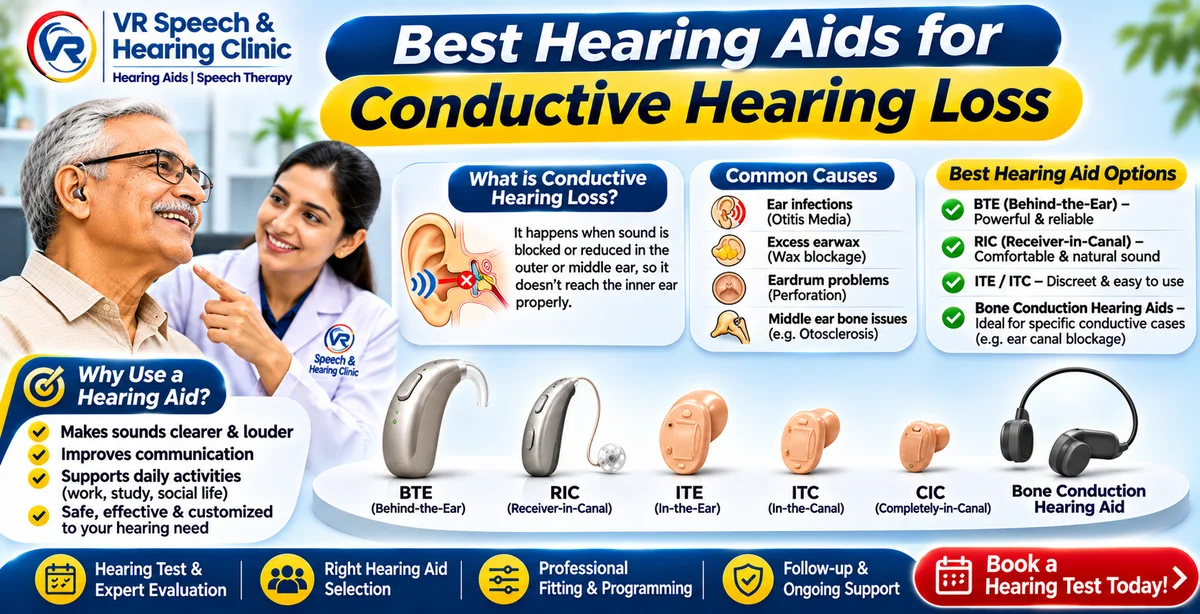
Sound normally travels through the outer ear and ear canal, vibrates the eardrum, and passes through three tiny middle ear bones to reach the inner ear (cochlea). In conductive hearing loss, a problem in the outer or middle ear stops sound from travelling properly. The inner ear usually works well, but it receives a weaker signal. That is why everyday speech sounds soft, as if someone has plugged your ears.
Common causes include:
Earwax blockage in the ear canal
Fluid behind the eardrum, especially in children
Repeated or chronic middle ear infections
A perforated or damaged eardrum
Otosclerosis, where the stapes bone becomes stiff
Congenital ear canal or middle ear malformations
Injury to the ear or head
Can Conductive Hearing Loss Be Treated Without Hearing Aids?
In many cases, yes. Wax removal, medication for infections, ear tube placement, eardrum repair and stapes surgery can all restore hearing, depending on the cause. This is why a medical check-up with an ENT specialist should come first.
Hearing aids become the best choice when surgery is not suitable, when surgery has not fully restored hearing, or when the person prefers a non-surgical route. They are also useful for people with long-term or permanent ear conditions.
How Do Hearing Aids Help in Conductive Hearing Loss?
Because the cochlea is usually healthy, amplifying sound or delivering it by another route can give very good results. Hearing aids make sound louder so more of it reaches the inner ear. Bone conduction devices skip the damaged part of the ear entirely and send vibrations through the skull. Many people with conductive hearing loss report clearer speech and less listening effort once their device is fitted and tuned properly.
Best Hearing Aids for Conductive Hearing Loss
1. Bone Conduction Hearing Aids
These devices rest against the bone behind the ear, often held by a soft band, headband or adhesive. They send sound vibrations through the skull straight to the cochlea, bypassing the outer and middle ear. They suit people with:
Chronic ear discharge or recurring infections
Closed or very narrow ear canals
Ear canal malformations such as atresia
Discomfort when anything sits inside the ear
They are also a practical option for infants and young children who cannot yet have surgery.
2. Bone-Anchored Hearing Systems (BAHA)
A bone-anchored system uses a small titanium implant placed in the bone behind the ear. A sound processor attaches to it and sends vibrations directly through bone. Because the connection is firm, sound transfer is efficient and consistent. This option is often recommended for permanent conductive loss, long-standing middle ear disease and congenital ear problems. It needs a minor surgical procedure and a medical assessment.
3. Behind-the-Ear (BTE) Hearing Aids
BTE aids sit behind the ear and carry amplified sound to the ear canal through tubing or an earmold. They offer strong power, durable build, easy handling and a wide range of technology levels. They work well for mild to moderately severe conductive loss in both adults and children, provided the ear canal is healthy and dry.
4. Receiver-in-Canal (RIC) Hearing Aids
RIC aids are small and discreet, with the speaker placed in the ear canal on a thin wire. They provide natural sound quality and good comfort. They suit people with healthy ear canals and no active infection. If you have ongoing ear discharge, a closed device in the canal may not be advisable, so check with your audiologist first.
5. Implantable Middle Ear and Bone Conduction Systems
When standard devices are unsuitable or do not give enough benefit, implantable systems may be considered. These include active bone conduction implants and middle ear implants that stimulate the hearing structures directly. They are surgical options, recommended after careful evaluation by an ENT surgeon and an audiologist.
How to Choose the Right Hearing Aid
No single device is best for everyone. Your choice depends on several factors:
Cause of hearing loss: a blocked canal and a damaged middle ear bone call for different solutions.
Degree of hearing loss: most conductive losses are mild to moderate, but mixed losses can be more complex.
Ear health: active discharge or infection usually points toward bone conduction.
Age: children, adults and seniors have different needs.
Lifestyle: work environment, phone use, noisy spaces and comfort matter.
Budget and long-term plans: both device cost and follow-up care deserve consideration.
Why a Professional Hearing Evaluation Matters
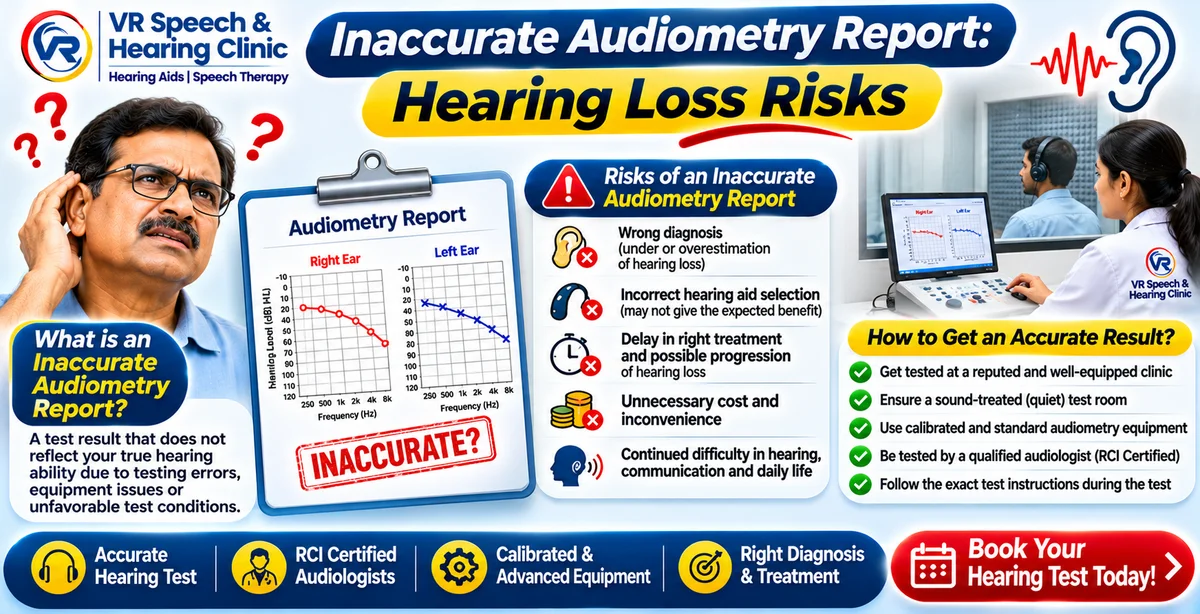
Buying a hearing aid online or on the strength of a discount can lead to poor results. In conductive hearing loss, the wrong device may cause discomfort, fail to give enough benefit, or even worsen an ear problem. A proper evaluation usually includes a pure tone audiometry test with air and bone conduction readings, tympanometry to check eardrum and middle ear function, speech testing and an ear examination. These tests show whether the loss is truly conductive, sensorineural or mixed, and they guide the correct treatment path.
At VR Speech and Hearing Clinic, each recommendation begins with a thorough assessment by a qualified audiologist. We explain your results in plain language, discuss medical and device options, fit the hearing aid carefully and provide follow-up tuning so you get the full benefit.
Final Thoughts
The best hearing aids for conductive hearing loss are the ones matched to your ear condition, hearing levels and daily needs. Bone conduction devices and bone-anchored systems are often excellent for chronic ear problems and ear canal malformations. BTE and RIC hearing aids can also work very well when the ear canal is healthy. The most important step is to start with a proper evaluation. Book a hearing test at VR Speech and Hearing Clinic and take the first step toward clearer hearing.
Frequently Asked Questions
1. Which hearing aid is best for conductive hearing loss?
It depends on your ear condition. Bone conduction hearing aids and BAHA systems are often preferred for chronic infections or canal malformations, while BTE and RIC aids suit healthy ear canals.
2. Can conductive hearing loss be cured?
Often, yes. Wax removal, medicines, ear surgery or eardrum repair can restore hearing in many cases. Your ENT specialist can tell you which option applies.
3. Do hearing aids work for conductive hearing loss?
Yes. Since the inner ear is usually healthy, properly fitted hearing aids can give significant improvement.
4. Is BAHA better than a regular hearing aid?
For people with ear canal problems, ongoing discharge or permanent conductive loss, a bone-anchored system may perform better than a conventional hearing aid.
5. Is it safe to buy hearing aids online without a test?
No. A hearing evaluation is needed to confirm the type and degree of loss and to choose a safe, suitable device.
6. How do I know if my hearing loss is conductive?
Only a hearing test can confirm it. Comparing air conduction and bone conduction results shows whether the problem lies in the outer or middle ear.