Inaccurate Audiometry Report: Hearing Loss Risks
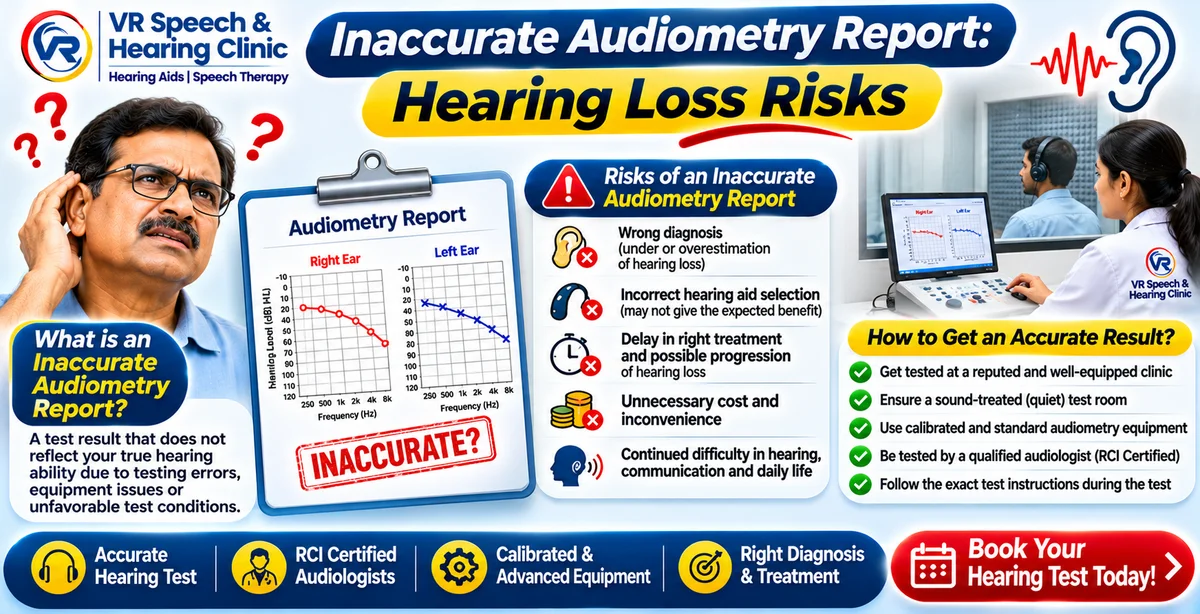
Hearing is more than picking up sound. It lets us follow conversations, learn new things, stay safe and feel connected to the people around us. When something feels off, a hearing test is the first step toward answers. But what if the answer itself is wrong? An inaccurate audiometry report can point you toward the wrong treatment, delay a diagnosis that cannot wait and, in some cases, contribute to permanent hearing loss. At VR Speech and Hearing Clinic, we believe every hearing journey must begin with a test you can trust.
What Is Audiometry and Why Does It Matter?
Audiometry is a clinical hearing assessment that measures how well you detect sounds at different pitches and volumes. Pure tone audiometry finds the softest sounds you can hear, while speech audiometry shows how clearly you understand spoken words. The results are plotted on a chart called an audiogram and are often supported by tests such as tympanometry.
A reliable report tells you:
The degree of your hearing loss
The type of hearing loss: conductive, sensorineural or mixed
Which ear and which frequencies are affected
How well you understand speech
Whether you need medicine, surgery, hearing aids or further investigation
Think of the audiogram as a roadmap. Every decision that follows, from a hearing aid prescription to a referral for a specialist, depends on it. If the map is wrong, the destination will be wrong too.
What Causes an Inaccurate Audiometry Report?
A hearing test may look simple, but accurate results depend on skill, equipment and environment. Errors usually come from one of these seven areas.
1. An Inexperienced Examiner
Audiometry is far more than pressing buttons. Without proper training, an examiner may misjudge your responses or miss subtle patterns that point to a deeper problem.
2. Poor Communication With the Patient
If instructions are rushed or confusing, you may respond late or not at all, and the results will show a hearing level poorer than the truth.
3. Equipment That Is Not Calibrated
An audiometer needs regular calibration. Even a small drift in output can shift every threshold on the report.
4. A Noisy Testing Room
Background noise covers soft tones and leads to unreliable readings. Hearing tests should always be done in a properly soundproofed room.
5. Rushing the Process
Children, older adults and people with memory or attention difficulties need extra time and patience. Hurrying them often produces misleading results.
6. Incorrect Masking
When one ear is tested, the other ear may need to be masked with noise so that it does not respond on its behalf. Poor masking can make a hearing loss look milder, or place it in the wrong ear.
7. Wrong Interpretation of the Report
Even a good test can be read incorrectly, either through carelessness or, sadly, to justify selling a device you do not need.
How an Inaccurate Audiometry Report Can Lead to Permanent Hearing Loss
The report itself does not damage your ears. The harm comes from the decisions made on its basis and from the time lost along the way.
Delayed or Missed Diagnosis
Conditions such as sudden sensorineural hearing loss, Ménière’s disease, acoustic neuroma, chronic ear infections and some neurological problems first show up as changes on an audiogram. If the report hides or misreads them, the problem can progress silently. Sudden hearing loss is a medical emergency. Treatment started within the first few days gives the best chance of recovery, and every delay lowers it.
The Wrong Hearing Aid
A hearing aid programmed from an incorrect audiogram may sound too loud, too soft or unclear. It may cause headaches, make everyday sounds uncomfortable or fail to help with understanding speech. Many people become frustrated and stop using their devices altogether, even though the real problem was never the hearing aid. Others end up buying devices they never needed.
Emotional, Social and Financial Impact
A wrong diagnosis often brings stress, social withdrawal, low confidence and, over time, depression. Money spent on unsuitable treatment adds to the burden. Untreated hearing loss in adults has also been linked with faster cognitive decline, so lost time matters.
The Risk for Children
For children, accurate testing is even more critical. Hearing loss that goes unidentified can hold back speech, language and school performance. A wrong diagnosis may also lead to unnecessary treatment while the real issue goes unaddressed, and a child can miss key learning milestones that are hard to recover later.
Warning Signs Your Audiometry Report May Be Inaccurate
Consider a second opinion if:
The results do not match your real-life hearing experience
Your hearing aids feel uncomfortable, too loud or unclear
Your hearing seems to get worse while using hearing aids
Results change greatly from one test to the next
The test felt rushed or the instructions were unclear
The test was not done in a soundproof room
You were pushed to buy a device before the results were explained
What an Accurate Hearing Test Looks Like
A trustworthy assessment usually includes:
A qualified, experienced audiologist who conducts and interprets the test
Regularly checked and calibrated equipment
A genuinely soundproof test environment
Clear instructions and unhurried testing
Cross-checks between pure tone, speech and middle ear tests
Honest counselling in plain language, including a referral to an ENT doctor when needed
Questions to Ask Your Audiologist
How often is your audiometer calibrated?
What type and degree of hearing loss do I have?
Should the test be repeated if the results look inconsistent?
Do I need to see an ENT doctor as well?
Do my symptoms match this report?
Be Careful With Camp-Style Screening
Mass screening camps can be useful for awareness, but they often lack controlled acoustic conditions. Results from a noisy camp should be treated as a basic screening only and always confirmed with a full hearing test in a clinic before any treatment or device is considered.
Why Choose VR Speech and Hearing Clinic for Your Hearing Test?
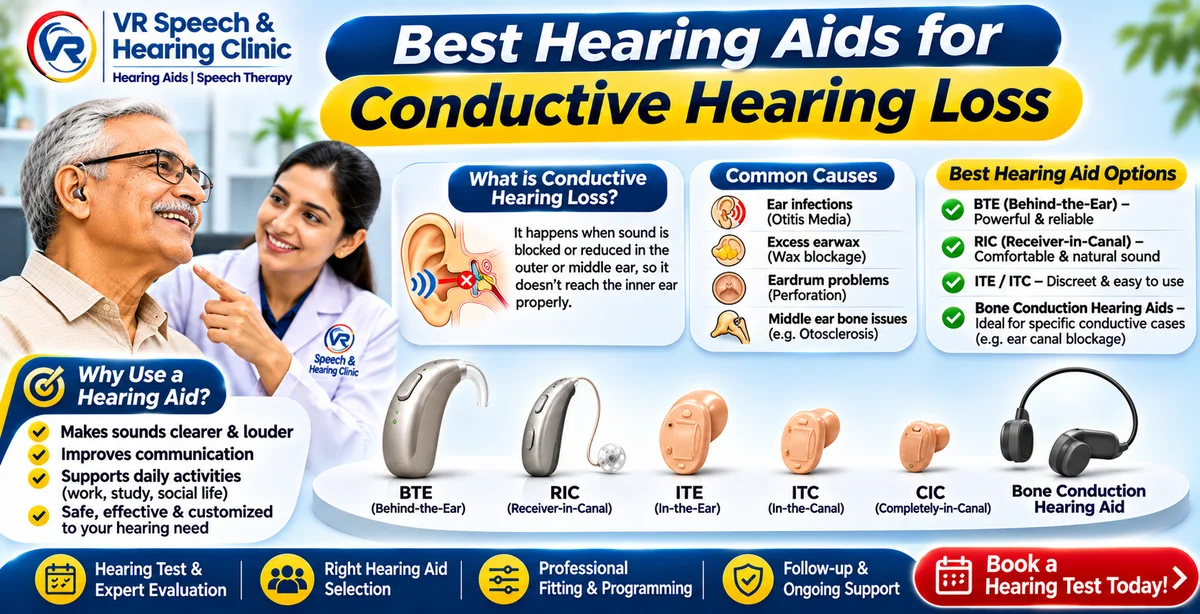
At VR Speech and Hearing Clinic, hearing assessments are carried out by qualified audiologists using calibrated equipment in a controlled, soundproof setting. We take time to explain each step, confirm results with additional tests and share your report in clear, simple language. Whether you need a first hearing test, a second opinion on an earlier report, or speech therapy support, our aim is the same: the right diagnosis first, and the right treatment next.
Conclusion
Audiometry is the foundation of good hearing care. An accurate report can change lives by guiding you to the right treatment, while one error can mean years of frustration and irreversible loss. When it comes to your hearing, the right evaluation is not a choice; it is a necessity. If something about your results does not feel right, trust that instinct and ask for a repeat test. If you notice any change in your hearing, do not wait. Book a hearing assessment with VR Speech and Hearing Clinic today and get a result you can trust.
Frequently Asked Questions (FAQs)
1. What is an audiometry test?
Audiometry is a painless hearing test that measures the softest sounds you can hear at different pitches and how well you understand speech. The results are shown on an audiogram, which helps your audiologist identify the type and degree of hearing loss.
2. Can an inaccurate audiometry report cause permanent hearing loss?
The report does not damage your ears directly. However, a wrong or misread report can lead to delayed diagnosis, incorrect treatment or an unsuitable hearing aid. Conditions such as sudden hearing loss need urgent care, so delays can turn a treatable problem into a permanent one.
3. How do I know if my audiometry report is accurate?
Your report should match how you actually hear in daily life, stay consistent across repeat tests and be explained clearly by your audiologist. If the test was rushed, done in a noisy room or the results feel wrong, ask for a second opinion.
4. Who should perform an audiometry test?
A qualified audiologist should perform and interpret the test, using calibrated equipment in a soundproof room. Tests done without proper training or setup are more likely to give unreliable results.
5. How often should I get my hearing tested?
Many audiologists suggest a baseline test in adulthood and then a check every one to three years after the age of 50, or sooner if you notice changes such as difficulty following conversations, ringing in the ears or muffled sound.
6. Is a second opinion on a hearing test worth it?
Yes. If your symptoms do not match your report, if hearing aids are not helping or if you feel pressured to buy a device, a repeat assessment by another qualified audiologist can confirm the diagnosis and protect you from wrong treatment.