Which Is the Best Hearing Aid on the Market?
Which Is the Best Hearing Aid on the Market?
If you are searching for the best hearing aid on the market, you have probably noticed that every brand claims to be number one. The honest answer is that the best hearing aid is the one that matches your hearing loss, your lifestyle, your budget and your comfort. A device that works beautifully for a retired teacher in a quiet home may not suit a shopkeeper working in a noisy market.
This guide explains what makes a hearing aid truly good, which types and features are worth paying for, and how to choose confidently. It is written by the team at VR Speech and Hearing Clinic, so you get practical advice grounded in real patient needs.
Why There Is No Single “Best” Hearing Aid for Everyone
Hearing loss is personal. Two people can have the same hearing test result on paper and still need different devices. Some struggle most in group conversations. Others find phone calls or television the hardest part. Some have mild high-frequency loss, while others live with severe or profound loss.
Before comparing any brand, you need a complete hearing evaluation. This test shows which pitches you miss, how well you understand speech, and whether your ear canal shape or any medical condition affects the fitting. Without it, buying a hearing aid is like buying spectacles without an eye test.
The Main Types of Hearing Aids
Understanding styles is the first step toward choosing well.
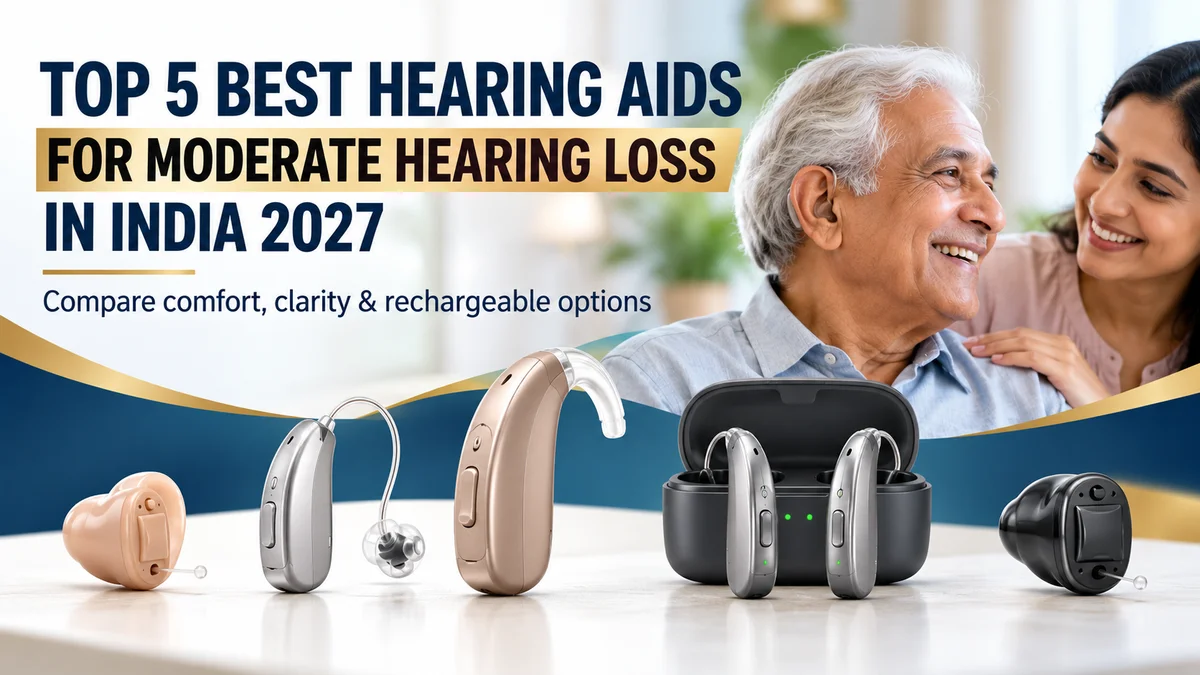
Behind-the-ear (BTE) hearing aids sit behind the ear and send sound through a tube or earmold. They are powerful, durable and suitable for mild to profound hearing loss. Many seniors and children prefer them because they are easy to handle.
Receiver-in-canal (RIC) hearing aids are small, discreet and very popular. The speaker sits inside the ear canal while the body rests behind the ear. They offer natural sound and work for mild to severe loss.
In-the-ear (ITE) hearing aids fill part of the outer ear. They are easier to handle than tiny devices and can include extra controls.
Completely-in-canal (CIC) and invisible-in-canal (IIC) hearing aids are the smallest options. They are nearly invisible but have shorter battery life and fewer features, and they suit mild to moderate loss best.
Pocket or body-worn aids are still useful for people with severe loss or limited dexterity, and they are often more affordable.
Key Features That Make a Hearing Aid Truly Good
When comparing models, look past marketing and focus on features that change daily life.
Sound quality and processing. Modern digital hearing aids analyse sound thousands of times per second. Better processors separate speech from noise more cleanly and sound more natural.
Noise reduction and speech clarity. If you often struggle in restaurants, weddings or family gatherings, directional microphones and advanced noise management matter more than anything else.
Rechargeable batteries. Rechargeable hearing aids save you from changing tiny batteries and are especially helpful for seniors. A full charge typically lasts a full day.
Bluetooth connectivity. Many devices stream phone calls, music and video audio directly to your ears. This makes conversations and entertainment easier and more private.
Mobile app control. Apps let you adjust volume, switch programs and sometimes allow remote fine-tuning by your audiologist.
Feedback control. Whistling is a common complaint. Good feedback cancellation keeps sound clean even when you hug someone or wear a cap.
Tinnitus support. If you have ringing in the ears, some hearing aids include sound therapy features that offer relief.
Durability. Look for water and dust resistance, which matters in hot, humid and dusty conditions.
Top Hearing Aid Brands Worth Considering
Several well-established manufacturers produce reliable devices worldwide, including Phonak, Oticon, Signia, ReSound, Widex, Starkey and Unitron. Each brand has its own sound philosophy. Some are known for powerful speech-in-noise performance, others for natural sound or compact design.
Keep in mind that brand name alone does not guarantee success. Models change every year or two, and the right pick depends on the match between technology level, fitting quality and your hearing profile. A well-fitted mid-range device often outperforms an expensive one that is poorly programmed.
Technology Levels: Basic, Mid-Range and Premium
Most brands offer several performance tiers.
Basic level devices handle quiet conversation well and suit people who spend most of their time at home or in simple listening settings.
Mid-level devices add better noise handling and more automatic adjustments. They suit most active adults.
Premium level devices offer the most advanced processing, the best performance in noisy places, and the richest feature set. They are ideal for people with busy social or professional lives.
Choosing the right tier means being honest about your daily listening situations. Paying for premium features you will never use is unnecessary, but under-buying can leave you frustrated.
Why Professional Fitting Matters More Than the Brand
Even the most advanced hearing aid will disappoint if it is not programmed correctly. A skilled audiologist measures your hearing, selects suitable devices, programs them to your exact loss and fine-tunes them over several follow-up visits.
Your brain also needs time to adjust. After years of reduced hearing, sounds can feel loud or strange at first. Most people need a few weeks to adapt. Regular follow-ups, cleaning, and adjustments help you get the best long-term results.
Buying online or from non-specialists without testing often leads to poor fitting, discomfort, and wasted money. Personalised care and aftercare are part of the product.
How to Choose the Right Hearing Aid: A Simple Checklist
Follow these steps to make a smart decision:
Get a full hearing test from a qualified audiologist.
Describe your daily environments: home, office, market, temple, travel and social events.
Decide your budget and discuss realistic options.
Ask about trial periods so you can test devices in real life.
Check warranty, repair support and service availability.
Consider comfort, ease of use, and who will handle the device, especially for elderly users.
Plan for regular follow-ups and cleaning.
Signs You May Need a Hearing Aid
Many people wait years before seeking help. Consider a hearing test if you often ask others to repeat themselves, turn the television volume up high, struggle to follow conversations in groups, find phone calls difficult, or feel tired after listening for long periods. Family members noticing changes is another strong signal. Early treatment helps protect communication, confidence and relationships.
Hearing Aid Care Tips
Good habits extend the life of your device. Clean it daily with a soft, dry cloth, keep it away from moisture and heat, store it in its case at night, charge it regularly if rechargeable, and never use water or harsh chemicals on it. Schedule professional cleaning and check-ups every few months.
Find the Best Hearing Aid in Chhatrapati Sambhajinagar
Choosing a hearing aid should not feel confusing or rushed. At VR Speech and Hearing Clinic, the focus is on understanding your hearing, explaining your options clearly, and fitting a device that genuinely suits you. From hearing evaluation to programming and long-term follow-up, support continues well beyond the purchase.
VR Speech and Hearing Clinic
Second Floor, Vasantrao Naik Chowk, opposite Hotel Deepali Executive, N-3, CIDCO, Chhatrapati Sambhajinagar, Maharashtra 431003
Visit the clinic for a hearing check-up and personalised guidance on the best hearing aid for your needs and budget.
Final Thoughts
The best hearing aid on the market is not a single brand or model. It is the device that fits your hearing loss, supports your lifestyle, feels comfortable, and is programmed by a trained professional who stays with you after the sale. Start with a proper hearing test, compare options with expert help, and give yourself time to adapt. Better hearing is within reach, and it can transform your daily life.
FAQs
1. Which is the best hearing aid brand?
There is no universal best brand. Leading manufacturers all make excellent devices. The right choice depends on your hearing test results, lifestyle and budget, along with the quality of fitting.
2. What is the best hearing aid for seniors?
Rechargeable behind-the-ear or receiver-in-canal models are often a good choice. They are easy to handle, clear in sound and simple to maintain.
3. Are expensive hearing aids always better?
Not always. Premium devices offer more advanced noise handling and features, but a correctly fitted mid-range device can work better than a poorly fitted premium one.
4. How long do hearing aids last?
With proper care, most hearing aids last around five to seven years, though lifespan depends on usage, cleaning and servicing.
5. How long does it take to get used to a hearing aid?
Most people adapt within a few weeks, though some need a couple of months. Regular follow-ups help the process.
6. Are invisible hearing aids good?
They are discreet and suit mild to moderate hearing loss. However, they have smaller batteries and fewer features, so they are not right for everyone.
7. Can hearing aids restore normal hearing?
No. Hearing aids improve sound and speech understanding but do not cure hearing loss. They help you hear and communicate much better.
8. Do I need a hearing test before buying a hearing aid?
Yes. A complete audiological evaluation is essential for choosing and programming the right device.
9. Can I wear hearing aids all day?
Yes. Most people wear them throughout waking hours, removing them for sleeping, bathing and swimming.
10. Where can I get a hearing test in Chhatrapati Sambhajinagar?
You can visit VR Speech and Hearing Clinic, Second Floor, Vasantrao Naik Chowk, opposite Hotel Deepali Executive, N-3, CIDCO, for a professional hearing evaluation and hearing aid guidance.