Best Gift for Elderly Parents: Why Hearing Aids Are the Gift
Best Gift for Elderly Parents: Why Hearing Aids Can Make a Difference
Every year we search for a gift our parents will actually use. A shawl, a smartphone or a trip can be lovely. But if a parent is missing conversations, the most thoughtful gift may be helping them hear comfortably again.
If your mother often asks, "What did you say?" or your father turns the television up until everyone else notices, start with a hearing test rather than buying a device as a surprise. A hearing aid is most useful when your parent wants to try it and an audiologist has assessed their hearing.
Why Hearing Support Makes a Meaningful Gift
Hearing is part of everyday family life: chatting over tea, answering the phone and following a grandchild's story. When hearing becomes difficult, people may withdraw from conversations, especially in noisy places. The National Institute on Deafness and Other Communication Disorders (NIDCD) identifies communication difficulties and social isolation among the concerns associated with hearing loss.
The gift, then, is not a box containing a hearing aid. It is an offer to listen to your parent's concerns, arrange an assessment and help them decide whether a device would make daily life easier.
What Untreated Hearing Loss Can Affect
Hearing loss involves more than turning up the volume. It can make speech less clear, particularly when several people talk at once. It may also make family conversations tiring and lead to misunderstandings.
Research has found associations between hearing loss and social isolation, falls and cognitive decline. An association does not mean that hearing loss causes every one of these problems, or that hearing aids will prevent them. In the ACHIEVE randomized trial, a hearing intervention did not significantly slow cognitive decline across all participants over three years, although a prespecified higher-risk subgroup showed a benefit. The soundest reason to seek help is the immediate one: better access to conversation and everyday sounds.
If a parent misses an alarm or doorbell, ask an audiologist about their hearing needs. Do not rely on hearing aids as the only safety measure at home.
Signs Your Parents May Need a Hearing Test
Look for patterns rather than a single missed word:
Asking people to repeat themselves frequently.
Raising the TV or phone volume above what others find comfortable.
Struggling to follow conversations at family functions or restaurants.
Mishearing words or answering a different question from the one asked.
Missing the doorbell, phone or someone calling from another room.
Avoiding calls or gatherings because listening feels tiring.
Saying that everyone seems to mumble.
Ringing or buzzing in the ears, called tinnitus, is also worth discussing with a hearing professional. If you notice several of these changes, suggest an evaluation rather than assuming a hearing aid is the answer.
Start With a Hearing Test, Not a Purchase
A hearing aid needs to suit the person's hearing and daily routine. An audiologist can assess hearing thresholds in each ear, discuss speech understanding and explain whether a hearing aid or another next step is appropriate. A pure tone audiometry test checks the softest sounds a person can hear at different pitches.
VR Speech and Hearing Clinic offers hearing tests and hearing-aid fitting and programming. The clinic has an RCI-registered audiologist. RCI stands for the Rehabilitation Council of India, the body that regulates registration for rehabilitation professionals. Vilas Rathod is the clinic's Founder and CEO. Ask about the available assessment and what it includes when you book; the right tests depend on your parent's symptoms.
How to Choose a Hearing Aid for an Older Parent
After the assessment, compare options with your parent and the audiologist. Their comfort and willingness to wear the device matter as much as its specifications.
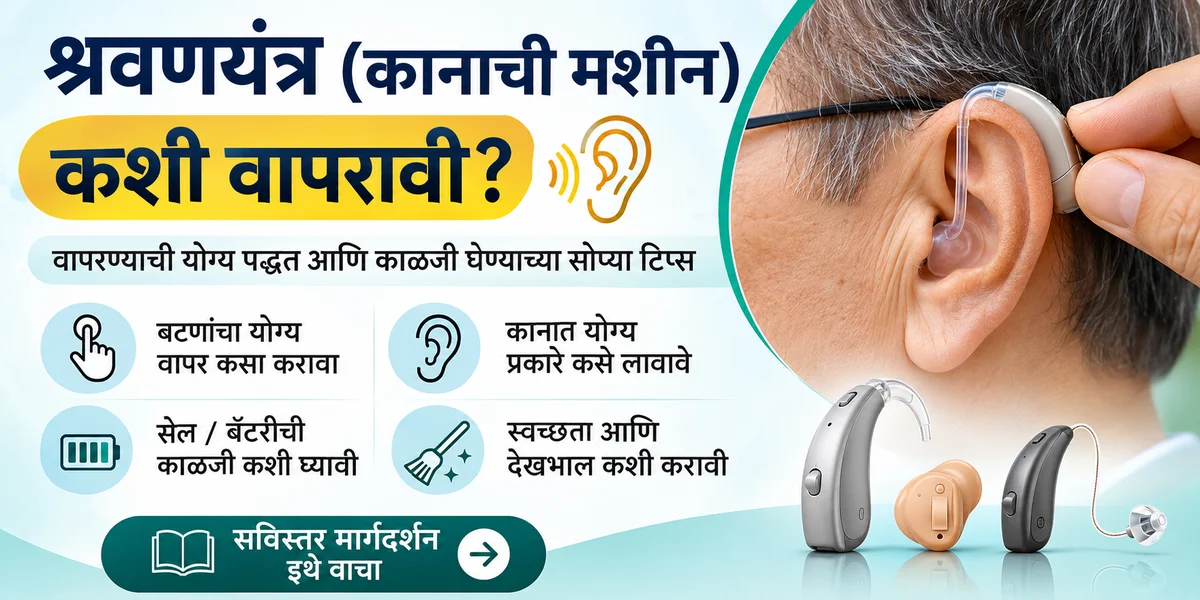
Style and handling. Behind-the-ear (BTE) devices sit behind the ear and connect to an earpiece. Receiver-in-canal (RIC) devices place a small speaker in the ear canal. Smaller in-the-ear and canal devices may be harder to handle for someone with reduced dexterity or vision. Ask to see how each option feels in your parent's hands.
Power and programming. The type and degree of hearing loss help determine which models are suitable. An audiologist can program the chosen device and adjust it after your parent has tried it in daily life.
Charging. Rechargeable models avoid frequent changes of tiny disposable batteries. Check that your parent can place the devices in the charger and manage the charging routine independently.
Listening needs. Describe the places that matter most: quiet conversations, family gatherings, markets, temples or phone calls. Ask for a demonstration and set realistic expectations about speech in background noise.
Brands and budget. Phonak, Signia, Widex, Oticon, Starkey and ReSound are hearing-aid manufacturers, not different types of hearing loss. Compare suitable devices across brands by fit, ease of use, features, service and total cost. The most expensive option is not automatically the best one for your parent.
How to Offer the Gift Without Hurting Their Pride
A hearing aid can feel personal. Give your parent a choice instead of presenting a device they have not asked for.
Make it about time together. Try, "I'd love for conversations to feel easier for both of us. Would you like me to come with you for a hearing test?"
Avoid blame. Replace "You never listen" with a description of what you have noticed.
Offer company, not pressure. Go to the appointment if they want you there, and let them ask questions.
Ask about trying a device. Check the clinic's current trial terms and return policy before committing to a purchase.
Let the occasion be an invitation. A birthday or festival can be a time to offer support, not to make a medical decision on someone else's behalf.
Why Fitting and Follow-Up Matter
A device chosen without understanding your parent's hearing may not address what they find difficult. Professional assessment, fitting and follow-up give them a chance to describe what sounds helpful and what still feels uncomfortable. NIDCD's hearing-aid guidance explains that hearing aids can help people with hearing loss but do not restore normal hearing, and that getting used to one takes time.
Ask the audiologist to show your parent how to put the device on, clean it and charge it or change its battery. Plan a follow-up if speech remains unclear or sounds are uncomfortable. Wearing a hearing aid may take practice, so encourage your parent to describe their experience rather than insisting they simply get used to it.
Caring for a Hearing Aid
Follow the care instructions for your parent's particular model. In general:
Wipe the device as instructed and check for wax or blocked openings.
Keep it protected from water and excessive moisture unless its instructions say otherwise.
Charge rechargeable devices according to the manufacturer's guidance.
Store the device safely when it is not being worn.
Arrange a check if the sound changes or the device stops working.
Hearing Care at VR Speech and Hearing Clinic
VR Speech and Hearing Clinic provides hearing evaluations, hearing-aid fitting and programming, repairs, accessories and hearing healthcare consultations. It lists devices from manufacturers including Phonak, Signia, Widex, Oticon, Starkey and ReSound. The clinic also offers a free hearing test at home and free home fitting for hearing aids; confirm availability and suitability when booking.
For current branch details, check the clinic's locations page rather than relying on an older address list. The Chhatrapati Sambhajinagar clinic is at Second Floor, Vasantrao Naik Chowk, N-3, CIDCO, opposite Hotel Deepali Executive, Maharashtra 431003. To ask about an appointment, contact the clinic or call +91 91127 17179.
Final Thoughts
The best gift for an older parent is one they can choose and use. If hearing difficulties are keeping them out of conversations, offer to arrange a hearing test and attend together. From there, your parent and an audiologist can decide whether a hearing aid fits their needs, comfort and budget.
FAQs
Is a hearing aid a good gift for elderly parents?
It can be, if your parent wants one and a hearing assessment shows it is appropriate. Offering to pay for a test or accompany them may be a better first gift than buying a device without their input.
How do I know if my parents need a hearing aid?
Frequent requests to repeat words, difficulty in noise, unusually high TV volume and missed calls can be signs of hearing difficulty. An assessment can clarify the cause and appropriate next steps.
Can I buy a hearing aid without a hearing test?
An assessment is the safer starting point for an older parent. It helps identify the hearing difficulty and whether a particular device is suitable. Some over-the-counter hearing aids are intended for adults with perceived mild to moderate hearing loss, but NIDCD explains that they are not for everyone.
Which type of hearing aid is best for senior citizens?
There is no single best type. The choice depends on the hearing assessment, how easily your parent can handle the device and where they most need help hearing. BTE and RIC are two styles worth discussing with an audiologist.
What if my parents refuse to wear a hearing aid?
Respect their decision and ask what worries them. An appointment to discuss hearing, without a commitment to buy, may feel more comfortable than a surprise purchase.
How long does it take to get used to a hearing aid?
Adjustment varies by person. NIDCD advises allowing time to become accustomed to a hearing aid and working with a hearing professional if it needs adjustment.
Are rechargeable hearing aids good for older people?
They may be easier to manage if changing small batteries is difficult. Have your parent try the charger before deciding, especially if hand movement or vision is limited.
How much does a good hearing aid cost in India?
Prices depend on the model and features. Ask for a written quote after the hearing assessment, including fitting, follow-up care, warranty terms and any additional charges.