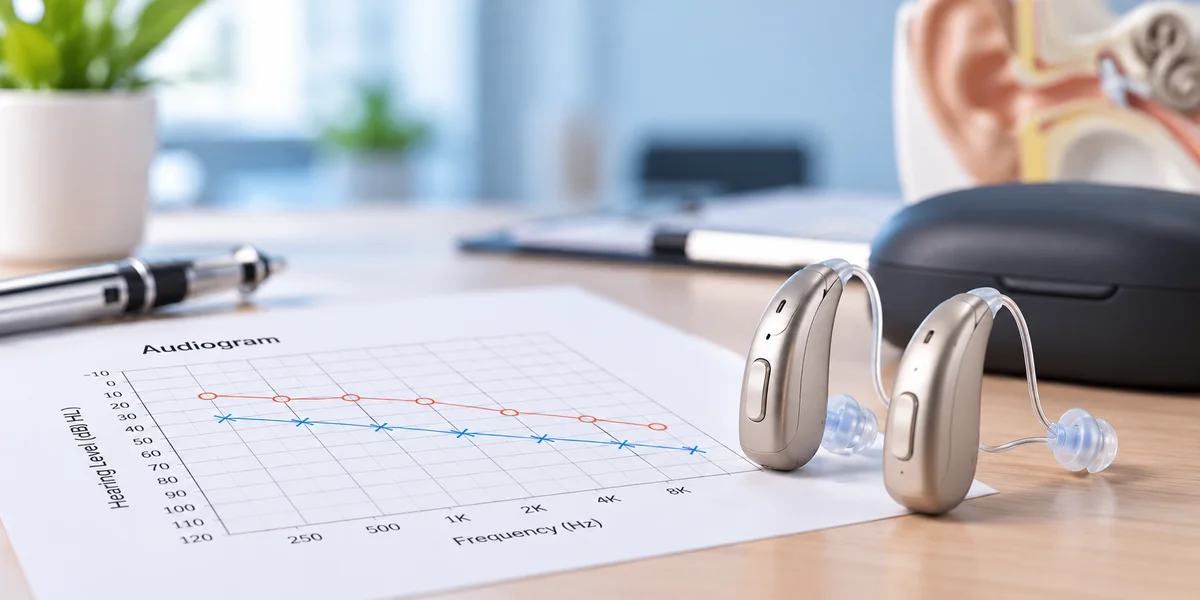
Signia MaX Hearing Aids: Breakthrough Tech for Noisy Areas
The Evolution of Acoustic Intelligence in Hearing Care
A wedding reception in Pune. A Sunday market in Thane. A family dinner where three conversations run at once and someone has the television on. These are the moments where hearing aids have historically failed their wearers — not in a quiet consultation room, but in the layered, overlapping noise that defines daily life across Maharashtra.
Older digital hearing aids worked with what amounts to a single processing brain. That one brain had to decide, moment by moment, whether an incoming sound was speech worth amplifying or clatter worth suppressing. When a room contained several speakers, traffic noise through an open window, and the wearer's own voice all at once, the single-brain approach had to compromise. Something always got flattened.
The Multi-adaptive Xperience platform — MaX — arrives as the successor to Signia's AX generation with a different structural answer. Rather than one decision-maker handling every acoustic task, the processing load is divided across separate neural networks, each trained on a narrower job.
The MaX platform's defining feature is its four-DNN architecture: four distinct deep neural networks working in parallel, approximating the way a hearing brain separates sound streams rather than simply making everything louder.
How Four AI Brains Change Your Listening Experience
The practical argument for MaX rests on processing capacity. Signia positions the MaX chip as offering roughly 54 times the processing power of its earlier platforms — the headroom required to run four neural networks simultaneously without introducing delay. Sound that arrives late sounds unnatural, so raw speed matters as much as intelligence here.
Each network specializes:
Speech clarity — isolating and sharpening the voice a wearer is attending to, even when competing talkers sit at similar volume.
Background noise management — identifying ambient sound such as traffic, crockery, or crowd murmur and reducing it without stripping out the sense of being somewhere.
Spatial awareness — preserving directional cues so a wearer can tell whether a grandchild is speaking from the left or across the table.
Own-voice handling — treating the wearer's own speech as a separate category from everything else.
The outcome is less a louder signal than a structured one. A soundscape retains depth: voices sit in front, environment sits behind, and the two do not collapse into a single wall of amplified sound.
For older adults, this matters beyond comfort. When a hearing aid does the separation work, the listener spends less mental energy reconstructing half-heard sentences — which is the real source of fatigue after a long family gathering.
Instant Own Voice Processing Without the Calibration
Nearly every new hearing aid wearer reports the same complaint in the first week: their own voice sounds wrong. Boomy, hollow, or as though they are speaking inside a tunnel. The cause is straightforward — a device amplifying the world also amplifies the sound of the wearer's jaw and vocal tract conducted through the ear canal. Many people abandon hearing aids over this alone.
Signia's Own Voice Processing addressed the problem by teaching the device to recognize the wearer's voice and treat it differently. On the AX and IX platforms, that recognition had to be trained. The wearer sat in the clinic and read a passage aloud while the audiologist captured a voice sample, then the system was calibrated around it. A reasonable process, but an awkward one — and a return visit if it needed refining.
On the MaX platform, OVP works from the moment the devices are switched on. The AI identifies own voice without a recorded sample.
No reading aloud, no calibration session, no second appointment for voice tuning — the feature is active out of the box.
For an elderly parent who finds travel to a clinic difficult, or for a family coordinating appointments around work schedules in Mumbai, removing a step from the fitting process is not a minor convenience.
Future-Proofing Your Investment with Auracast Ready Hardware
Auracast is a Bluetooth broadcast standard that lets a venue transmit audio directly to compatible hearing devices. An airport announcement, a theater performance, a lecture hall, a temple address — the sound travels to the ear without passing through a noisy room first. For anyone who has strained to catch a boarding gate change, the appeal is obvious.
Important: the Signia Pure Charge&Go MaX ships with Auracast-capable hardware, but the feature is not currently active. Activation depends on a Signia One app and firmware update scheduled for March 2027.
This distinction deserves honesty rather than marketing gloss. Someone buying today buys a device containing the radio hardware Auracast requires, with the software layer arriving later as an update rather than a replacement purchase.
That is the argument for choosing ready hardware over delaying a decision. Waiting a year for a feature to switch on means a year of continued difficulty in exactly the noisy environments the MaX platform was designed for — and the hearing aid bought today will still receive the update. Deferring treatment to time a software release is a poor trade against months of clearer conversation.
Signia MaX Price in India and Value Considerations
Pricing for premium hearing technology in India varies more than most buyers expect, and published international figures rarely reflect what a family in Nashik or Nagpur actually pays. Local distribution, applicable taxes, warranty structure, and the level of professional service bundled with the device all shift the final number.
The Signia AX hearing aid price in India established a benchmark that the newer platform builds on, and as the current generation, the Signia MaX price generally sits above the outgoing AX range at equivalent technology tiers. Those tiers matter considerably. Signia typically offers its platforms at performance levels — 7, 5, and 3 — with the higher numbers unlocking more sophisticated noise processing and more program flexibility. A level 3 MaX device and a level 7 MaX device share the same chip family but behave quite differently in a crowded hall.
Choosing between tiers is a lifestyle question rather than a budget question alone. Someone who mostly listens at home needs less than someone attending weekly social functions.
A seven-day trial period turns an expensive guess into a tested decision — wear the devices through your actual week, in your actual noise, before committing.
Set against this is the cost of postponement: withdrawal from conversation, declined invitations, and the slow social narrowing that untreated hearing loss produces.
What You Need to Know About the Signia MaX
The essentials, for readers comparing options or explaining the technology to a parent:
Four neural networks, not one. The MaX chip runs separate deep neural networks for speech, background noise, spatial awareness, and own-voice detection, supported by processing power Signia rates at around 54 times its earlier platforms.
Own Voice Processing works immediately. Unlike the AX and IX generations, MaX requires no in-clinic voice recording or manual calibration — the feature is active from first fitting.
Auracast hardware is built in but dormant. The Signia Pure Charge&Go MaX contains the necessary hardware; full functionality depends on the Signia One app update expected in March 2027.
The AI still needs a human to set it up. Audiometric results, ear anatomy, and personal listening priorities determine how well these networks perform. Automatic processing operates within the parameters an audiologist programs.
Among Signia MaX hearing aids, the platform's value lies in automation — the device adapts to the environment so the wearer stops adjusting settings mid-conversation. That shift, from manual management to hands-off listening, is the generational change worth paying for.
Expert Guidance for Your Hearing Journey in Maharashtra
Sophisticated automation does not remove the audiologist from the equation; it raises the value of a careful fitting. The most capable AI hearing aids in India has available still begin with an accurate hearing assessment, a correctly matched prescription, and real-ear verification. A poorly programmed premium device will disappoint where a well-programmed mid-tier one satisfies.
Vr Speech And Hearing Clinic supports patients across Maharashtra with:
Free home hearing tests for those who find clinic travel difficult
Professional fitting and programming of the MaX platform across technology levels
Home trial arrangements so devices are tested in the environments that matter
Follow-up adjustment and ongoing aftercare as listening needs change
Guidance on firmware and app updates as new features become available
For an elderly parent in Pune or a working professional arranging care for family in Mumbai, the home-based model removes the logistical barrier that delays so many hearing decisions. The assessment comes to the living room where the television, the ceiling fan, and the family conversation already are.
Book a home hearing consultation with Vr Speech And Hearing Clinic and hear the MaX platform in your own environment.