World Autism Day: Early Signs, Speech Therapy & Support
World Autism Day: Understanding Autism, Communication, and the Power of Early Support
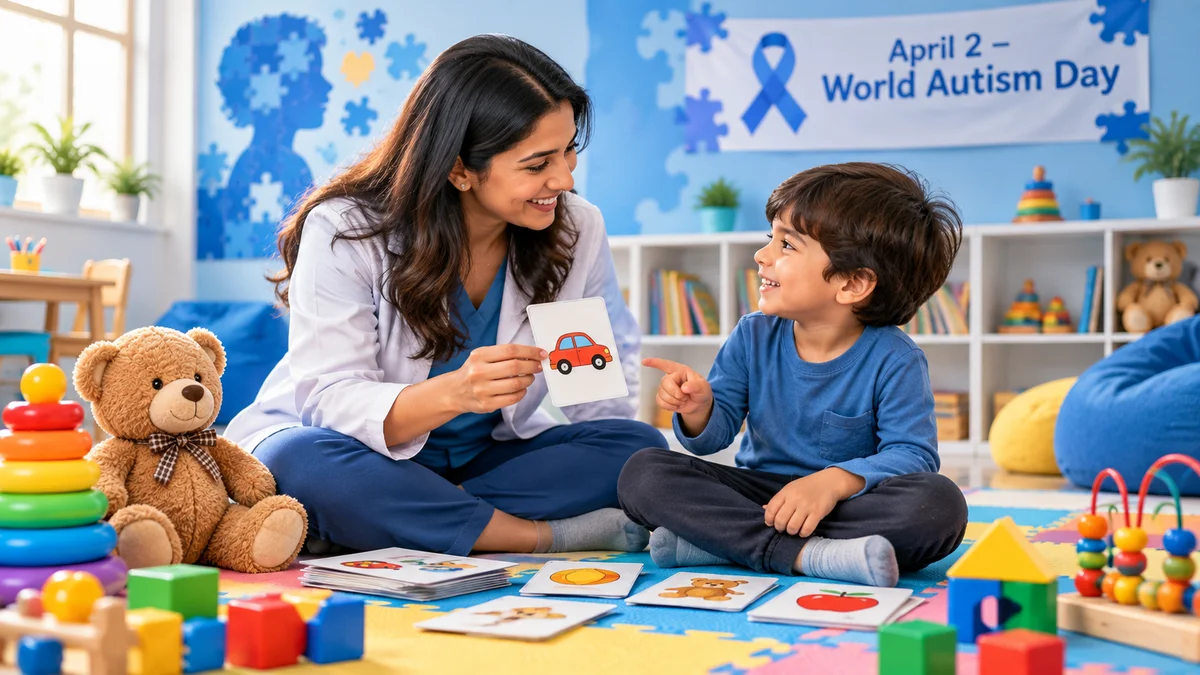
Every year on April 2, the world comes together to observe World Autism Day, also called World Autism Awareness Day. The United Nations established this day in 2007 to encourage understanding, acceptance, and inclusion for people on the autism spectrum. At VR Speech and Hearing Clinic, we see every day how much difference awareness, early action, and the right therapy can make in a child's life.
This guide explains what autism is, the early signs parents should notice, why hearing and speech evaluations matter, and how families can support communication at home.
What Is Autism Spectrum Disorder?
Autism spectrum disorder (ASD) is a neurodevelopmental condition that affects how a person communicates, interacts socially, and experiences the world. It is called a "spectrum" because it looks different in every individual. Some children speak early and have strong memory skills, while others need substantial support with language and daily activities.
According to the World Health Organization, around 1 in 100 children worldwide is on the autism spectrum. Autism is not caused by parenting style, and it is not a disease to be "cured." It is a difference in how the brain develops, and with the right support, autistic children can grow, learn, and thrive.
Why World Autism Day Matters
World Autism Day is more than a date on the calendar. It matters because:
It reduces stigma and myths about autism.
It helps parents recognise early signs sooner.
It encourages schools, workplaces, and communities to become more inclusive.
It reminds us that autistic people have strengths, talents, and unique perspectives.
Many families still hesitate to seek help because they fear judgment or are unsure what to look for. Awareness gives them the confidence to take the first step.
Early Signs of Autism Parents Should Watch For
Every child develops at their own pace, but certain patterns may suggest it is time for an evaluation. Common early signs include:
Communication signs
Limited or no babbling by 12 months
Not responding to their name consistently
Delayed speech or loss of words they once used
Repeating words or phrases (echolalia) without understanding their meaning
Difficulty starting or continuing a conversation
Social signs
Limited eye contact
Little interest in playing with other children
Not pointing to show interest in objects
Difficulty understanding emotions or facial expressions
Behavioural signs
Repetitive movements such as hand flapping or rocking
Strong need for routines and distress when they change
Unusual sensitivity to sounds, lights, textures, or tastes
Intense focus on specific objects or topics
Having one or two of these signs does not automatically mean a child is autistic. However, if you notice several of them, a professional assessment is a wise step.
The Connection Between Autism, Speech, and Language
Communication challenges are among the most noticeable features of autism. Some autistic children are non-speaking or minimally speaking, while others have fluent speech but struggle with the social use of language, known as pragmatics. This can include taking turns in conversation, understanding jokes or sarcasm, or staying on topic.
A speech-language pathologist is a key member of the support team. Speech therapy for autism does not simply teach a child to "talk." It builds functional communication, meaning the ability to express needs, share ideas, and connect with others in whatever way works best for that child.
Why a Hearing Evaluation Is Important
One of the most overlooked steps in the autism assessment process is checking hearing. A child who does not respond to their name or seems to ignore speech may be doing so because of hearing loss, not autism. In other cases, a child may have both autism and a hearing difficulty.
A complete audiological evaluation helps to:
Rule out or identify hearing loss
Check for middle ear problems such as fluid or infections
Assess how the child responds to different sounds
Guide decisions about hearing aids or other support if needed
At VR Speech and Hearing Clinic, our audiology and speech services work together, so parents get a clearer, more complete picture of their child's needs.
How Speech Therapy Supports Children with Autism
Speech and language therapy is individualised, play-based, and family-centred. Depending on the child's needs, therapy may focus on:
1. Building early communication skills
Eye contact, joint attention, gestures, imitation, and turn-taking are the foundations of language. Therapists use games, songs, and toys to strengthen these skills naturally.
2. Developing spoken language
For children who are ready to speak, therapy helps expand vocabulary, form sentences, improve articulation, and understand questions.
3. Augmentative and Alternative Communication (AAC)
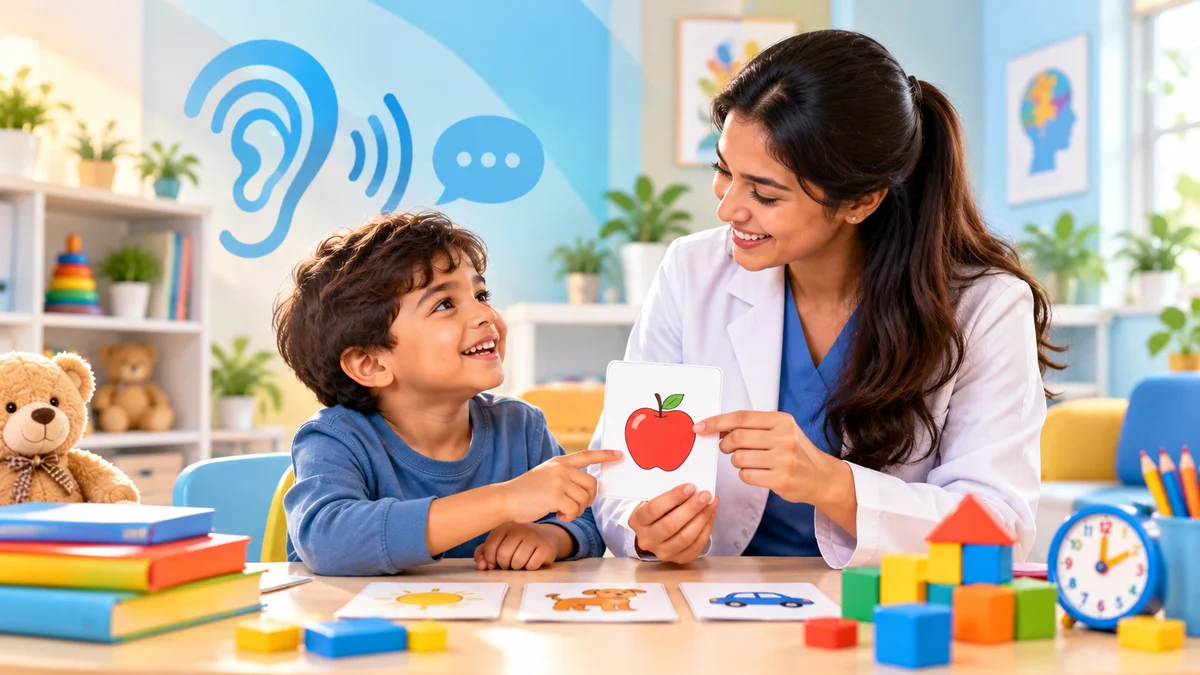
For children who struggle with speech, tools such as picture cards, communication boards, and speech-generating devices can give them a voice. Research and clinical experience show that AAC does not stop speech from developing. It often supports it.
4. Improving social communication
Therapists teach conversation skills, reading body language, understanding emotions, and interacting with peers in a safe, structured way.
5. Supporting sensory needs and behaviour
When a child can communicate their needs, frustration and challenging behaviours often reduce. Therapy also helps families understand what a behaviour is trying to say.
The Importance of Early Intervention
Research consistently shows that early intervention leads to better outcomes in communication, learning, and independence. The brain is especially adaptable in the first few years of life, which makes early therapy highly effective.
That said, it is never too late to begin. Children, teenagers, and even adults can make meaningful progress with the right support. If you are wondering whether to wait and see, it is generally better to have an assessment early and be reassured than to lose valuable time.
Practical Tips for Parents to Support Communication at Home
Therapy works best when families are involved. Here are simple strategies you can use every day:
Follow your child's lead. Join in their play and comment on what they are doing.
Use simple, clear language. Short sentences with a pause give your child time to process.
Use visuals. Picture schedules and cue cards make routines predictable and reduce anxiety.
Celebrate all communication. A gesture, a sound, a glance, or a picture choice all count.
Offer choices. Holding up two items and asking "This or that?" encourages expression.
Keep routines consistent. Predictability helps many autistic children feel safe.
Reduce sensory overload. Lower background noise and bright lights when your child seems overwhelmed.
Look after yourself. Parents and caregivers need support too. Connecting with other families can help enormously.
How Communities Can Celebrate World Autism Day
You do not need to be a parent or a professional to make a difference. On World Autism Day, you can:
Learn about autism from reliable sources and share accurate information.
Wear blue or take part in local awareness activities.
Practise patience and kindness toward autistic people and their families.
Encourage schools and workplaces to offer sensory-friendly spaces and flexible communication options.
Listen to autistic voices and respect their experiences.
Acceptance means more than awareness. It means making space for people to be themselves.
How VR Speech and Hearing Clinic Can Help
VR Speech and Hearing Clinic is committed to supporting children with autism, their families, and their communities. Our services include:
Comprehensive speech and language assessments
Individualised speech therapy programmes
Audiological and hearing evaluations
Early intervention support for toddlers and preschoolers
AAC guidance and training
Parent counselling and home-programme coaching
Our team believes every child has a voice, and our goal is to help them find the best way to use it. We work closely with families, teachers, and other professionals to create a supportive, encouraging environment.
Final Thoughts
World Autism Day is a reminder that understanding begins with listening. Autism is part of the beautiful diversity of human minds, and every child deserves the chance to communicate, learn, and belong. If you have concerns about your child's speech, hearing, or development, do not wait. Early support can open the door to confidence, connection, and a brighter future.
Book a consultation with VR Speech and Hearing Clinic today and take the first step toward helping your child communicate with confidence.
Frequently Asked Questions (FAQs)
1. When is World Autism Day celebrated?
World Autism Day, or World Autism Awareness Day, is observed every year on April 2. It was established by the United Nations in 2007.
2. What are the first signs of autism in toddlers?
Common early signs include limited eye contact, not responding to their name, delayed speech, lack of pointing or gestures, repetitive movements, and difficulty playing with other children.
3. Can speech therapy help a child with autism?
Yes. Speech therapy helps children build communication skills, including speech, gestures, AAC use, and social interaction, which improves their ability to express needs and connect with others.
4. Why is a hearing test needed for a child with suspected autism?
Hearing loss can cause symptoms that look like autism, such as not responding to their name or delayed speech. A hearing test rules out or identifies hearing problems so the child gets the right support.
5. At what age should I seek an autism evaluation?
If you notice concerns, you can seek an evaluation at any age. Early screening between 12 and 24 months is helpful, but support is beneficial at every age.
6. Does AAC stop a child from learning to speak?
No. AAC supports communication and often encourages speech development by reducing frustration and giving the child a reliable way to express themselves.
7. Is autism curable?
Autism is not a disease and does not need to be cured. With early intervention, therapy, and an inclusive environment, autistic individuals can make progress and lead fulfilling lives.
8. How can parents support their child with autism at home?
Follow your child's lead, use simple language and visuals, keep routines predictable, celebrate every form of communication, and work with therapists to practise strategies at home.