Top Hearing Aid Brands in India: Expert Reviews & Comparison
Choosing from the many hearing aid brands in India is harder than it looks. Phonak, Oticon, ReSound, Widex and Signia all make excellent devices backed by years of audiology research, yet each is built around a different idea of how people should hear. Some focus on noisy places, some on natural sound, and some on reducing listening fatigue. Add the new AI-powered models launched in 2026, big price differences and a market full of cheap “ear machines”, and it is easy to feel lost.
There is no single best hearing aid for everyone. The right one depends on your type and degree of hearing loss, your daily routine, your phone and your budget. At VR Speech and Hearing Clinic we guide patients through this decision every day, and this guide shares what we have learned, in plain language.
The short answer: which brand suits you?
If this describes you | Brands worth trying first |
|---|---|
Active, outdoors, often in noisy places | Phonak |
Tired by listening effort at the end of the day | Oticon |
iPhone user | ReSound (Phonak and Oticon also stream well) |
Android user | Phonak is known for broad phone compatibility; always test any brand with your own phone |
Music lover, or dislike “processed” sound | Widex |
First-time user, or bothered by the sound of your own voice | Signia |
Severe to profound hearing loss | Phonak Naida, ReSound Enzo, Oticon Xceed |
Limited budget but want a genuine hearing aid | ReSound Key, Signia entry models, Unitron |
Nearly invisible | Signia Silk, Oticon Zeal, custom in-canal styles |
Child with hearing loss | Phonak Sky, fitted by a paediatric audiologist |
Tinnitus (ringing) along with hearing loss | Signia, Widex (Zen tones) and others with built-in sound therapy |
Key takeaways
The big five names (Phonak, Oticon, ReSound, Widex, Signia) are all good. Fitting quality and follow-up care matter more than the badge.
Price is set mainly by technology level and style, not brand. Genuine branded hearing aids in India start at roughly ₹11,000 to ₹35,000 per ear and go beyond ₹4,00,000 at the top.
Hearing aids are exempt from GST in India, so there is no tax added to the listed price.
Newest is not always necessary. Last year’s platform often gives excellent results at a lower price.
Avoid devices sold without a hearing test. A hearing aid is programmed to your audiogram; an “ear machine” just makes everything louder.
Hearing aid brands in India at a glance
Brand | Made by | Best known for | Lines you may be shown | Approx. price per ear |
|---|---|---|---|---|
Phonak | Sonova (Switzerland) | Automatic adaptation, wide phone compatibility, power for severe loss, children’s range | Audéo EON (new in 2026), Audéo Infinio / Infinio Ultra, Virto, Naida, Sky | ₹20,000 – ₹4,50,000 |
Oticon | Demant (Denmark) | BrainHearing approach, lower listening fatigue | Intent, Reveal (new in 2026), Zeal (instant fit), Real, More, Own, Xceed (power) | ₹25,000 – ₹4,00,000 |
ReSound | GN (Denmark) | iPhone streaming, sense of direction, strong mid-range | Sensia (new in 2026), Vivia, Nexia, Key (value), Enzo (power) | ₹21,000 – ₹4,50,000 |
Widex | WS Audiology (Denmark) | Natural, low-delay sound, music | Allure, Moment, Magnify | ₹35,000 – ₹5,00,000 |
Signia | WS Audiology (Germany) | Own Voice Processing, widest range of styles, rechargeables | Pure Charge&Go IX and MaX, Styletto, Silk, Orion, Motion, Active | ₹11,000 – ₹3,00,000+ |
Unitron | Sonova (Switzerland) | Upgradeable value | Moxi, Ativo, Insera | From about ₹37,000 |
Starkey | Starkey (USA) | Health and activity features | Genesis AI | Confirm after your test |
Prices are approximate list prices (MRP) per ear, gathered from published India price lists and clinic guides in October 2026. Some premium models are priced as a pair. Offers and launches change prices, so confirm current rates with us.
How to choose a hearing aid brand
Before comparing brands, work through these seven points:
1. Your hearing loss profile. A proper hearing test (audiogram) decides which devices can actually help you. Mild loss and profound loss need very different amplification, and a tiny invisible device cannot serve a severe loss however much you want it.
2. Where you struggle most. If it is mostly one-to-one talk at home, a mid-range device may be plenty. If it is restaurants, weddings and meetings, better noise handling is worth paying for.
3. Your phone. iPhone and Android users have slightly different best options. Bring your own phone to the fitting and pair it there before you decide.
4. Style and visibility. Options range from behind-the-ear and receiver-in-canal models to nearly invisible in-the-canal devices. Be honest about how much visibility matters to you.
5. Your hands and eyesight. Tiny batteries and small in-canal devices are hard to handle with arthritis or reduced vision. Handling often decides the right style more than any spec sheet.
6. Battery type. Rechargeable models are convenient, while disposable battery models suit people who prefer a quick swap or travel to places without reliable power.
7. After-sales support. Fine-tuning, cleaning and servicing matter as much as the device itself. A great hearing aid with poor follow-up care will disappoint you.
Hearing aid styles explained
Style | What it is | Suits | Keep in mind |
|---|---|---|---|
BTE (behind-the-ear) | Larger body behind the ear with a tube or mould | Mild to profound loss; seniors; children | Most visible, but easy to handle and most powerful |
RIC / RIE (receiver-in-canal / ear) | Slim body behind the ear, small speaker in the canal | Mild to severe loss; most first-time users | The most popular modern style; discreet and comfortable |
ITE / ITC (in-the-ear / in-the-canal) | Custom shell filling part of the ear | Mild to moderately severe loss | Easier to handle than tiny styles, but wax and moisture can affect it |
CIC / IIC (completely / invisible-in-canal) | Tiny custom device deep in the canal | Mild to moderate loss | Nearly invisible, but small battery and harder handling |
Instant-fit canal (Signia Silk, Oticon Zeal) | Ready-made soft tips, no ear impression | Mild to moderate loss; people who want a same-day fit | A ready-made seal is less precise than a custom shell |
Earbud-style (Signia Active) | Looks like a wireless earbud | Younger, tech-forward users with mild to moderate loss | Discreet, but not invisible |
Phonak: best for active lifestyles
Phonak, part of Sonova, is one of the most widely used hearing aid brands in the world and is known for devices that adapt automatically. Its AutoSense technology reads your surroundings and adjusts settings without you pressing anything, which suits people who move between quiet homes, busy streets, restaurants and offices.
Phonak’s newest platform, EON, launched in August 2026 with a new processing chip and an updated version of AutoSense. It sits alongside the Infinio and Infinio Ultra range. The Naida range remains a leading choice for severe to profound hearing loss, the Sky range is designed for children, and the Roger microphone system helps in very noisy settings such as classrooms and large gatherings.
Keep in mind: flagship models are premium priced, and they can be more than a person with mild loss and a quiet routine needs.
Popular lines: Audéo EON, Audéo Infinio and Infinio Ultra, Virto (custom), Naida, Sky
Approximate price (single ear): from about ₹20,000 on entry lines to ₹4,50,000 at the top, with flagship receiver-in-canal models typically starting around ₹80,000 to ₹90,000
Oticon: best for reducing listening fatigue
Oticon, part of Demant, follows a “BrainHearing” philosophy. Instead of cutting out all background sound, its devices give the brain a fuller picture of the sound environment and help it focus on what matters. Many users find this less tiring over a long day, especially in conversations with several speakers.
If concentrating on speech leaves you exhausted by evening, Oticon is worth trying. Its 2026 launches include Zeal, an instant-fit in-canal model that needs no ear impression, and Reveal, which uses two AI systems working together. Xceed is Oticon’s power range for severe to profound loss.
Keep in mind: the open-sound approach suits some listeners more than others, which is why a trial matters.
Popular lines: Intent, Reveal, Zeal, Real, More, Own (custom in-ear styles), Xceed (power)
Approximate price (single ear): from about ₹25,000 on value lines to ₹4,00,000 at the top; premium models usually start around ₹80,000
ReSound: best for iPhone users and a sense of direction
ReSound, part of GN, was an early leader in direct streaming to iPhones, and its apps are consistently well reviewed. Its approach aims to preserve the natural way your ears pick up sound, which helps you tell where sounds are coming from. This is useful in traffic, in groups and in open spaces.
ReSound also covers a wide budget range. Key is an entry-level option from a major brand, Nexia and Vivia sit in the premium tier, and Sensia, launched in August 2026, is the new flagship. Enzo is its power range for severe loss.
Keep in mind: Android connectivity has improved across the industry, but check how it behaves with your own phone before buying.
Popular lines: Sensia, Vivia, Nexia, Key, Enzo
Approximate price (single ear): from about ₹21,000 for Key to ₹4,50,000 at the top; Nexia and Vivia typically start around ₹79,000 to ₹84,000
Widex: best for natural sound and music
Widex, part of WS Audiology, is known for very fast sound processing, which gives a natural, lifelike sound. That is why many music lovers and people who are sensitive to artificial-sounding amplification prefer it. Its app-based personalisation learns your listening preferences over time, and its Zen tones are a well-regarded option for tinnitus.
The newer Allure range, including Allure AI with a Clarity Boost feature, adds AI support on demand while keeping the Widex natural-sound approach.
Keep in mind: the newest Widex models are only now reaching more countries, so ask which Allure models are available in India today.
Popular lines: Allure, Moment, Magnify (value)
Approximate price (single ear): from about ₹35,000 on entry lines to about ₹5,00,000 at the top
Signia: best for first-time users and natural own-voice sound
Signia, formerly part of Siemens Audiology and now part of WS Audiology, focuses on speech clarity and a comfortable first-time experience. Its Own Voice Processing treats your own voice separately from outside sounds, which helps your voice sound natural. This is a common complaint among new wearers. The Styletto range is among the slimmest and most stylish designs available, the Silk range offers a near-invisible instant fit, and Orion Charge&Go is a good-value rechargeable. Signia’s newest flagship, Pure Charge&Go MaX, arrived in August 2026.
A few practical points: flagship models sit at a premium price, so many buyers start with mid-range options. Advanced sensors and processing can also mean more regular fine-tuning, so choose a provider you can visit easily. You can browse Signia hearing aids at our store.
Popular lines: Pure Charge&Go IX and MaX, Styletto IX, Silk, Orion Charge&Go, Motion (power), Active (earbud style)
Approximate price (single ear): from about ₹11,000 on basic models to ₹3,00,000 or more for premium models, some of which are sold as pairs
Other hearing aid brands you will see in India
Starkey is an independent American brand known for health-focused features such as activity tracking and fall detection. Unitron (Sonova) is valued for letting you start at a lower technology level and move up later on the same hardware. Rexton (WS Audiology), Bernafon (Demant) and Beltone and Interton (GN) are sister brands that often offer good value, built on the same core technology as their parent companies. Ask for a comparison at the same technology tier before you decide.
Who actually makes these brands?
Almost every brand above belongs to one of five groups, which is why sister brands share technology:
Group | Brands |
|---|---|
Sonova | Phonak, Unitron |
WS Audiology | Signia, Widex, Rexton |
Demant | Oticon, Bernafon |
GN | ReSound, Beltone, Interton |
Starkey | Starkey |
This is useful when shopping: a value brand from a big group can give you much of the group’s technology at a lower price.
What’s new in 2026, and do you need it?
In August 2026, Phonak, Oticon, ReSound and Signia each launched a new flagship platform within a few weeks of each other, and Widex released its AI-enabled Allure earlier in the year. The common themes are:
AI for speech in noise. Dedicated chips and AI systems aim to separate speech from background noise more precisely.
Auracast. A new Bluetooth broadcast standard that lets hearing aids tune into public audio in places such as airports, theatres and venues. Public Auracast installations may be limited in India for now, so treat it as future-proofing rather than a reason to pay more today.
Better phone connectivity across iPhone and Android.
Two honest cautions. First, at launch these claims come from the manufacturers, and independent test data is still limited. Second, not every new model reaches India immediately. Many people are very happy with the previous generation, which can be noticeably cheaper. Ask us what is actually available in India today and try it against a previous-generation model.
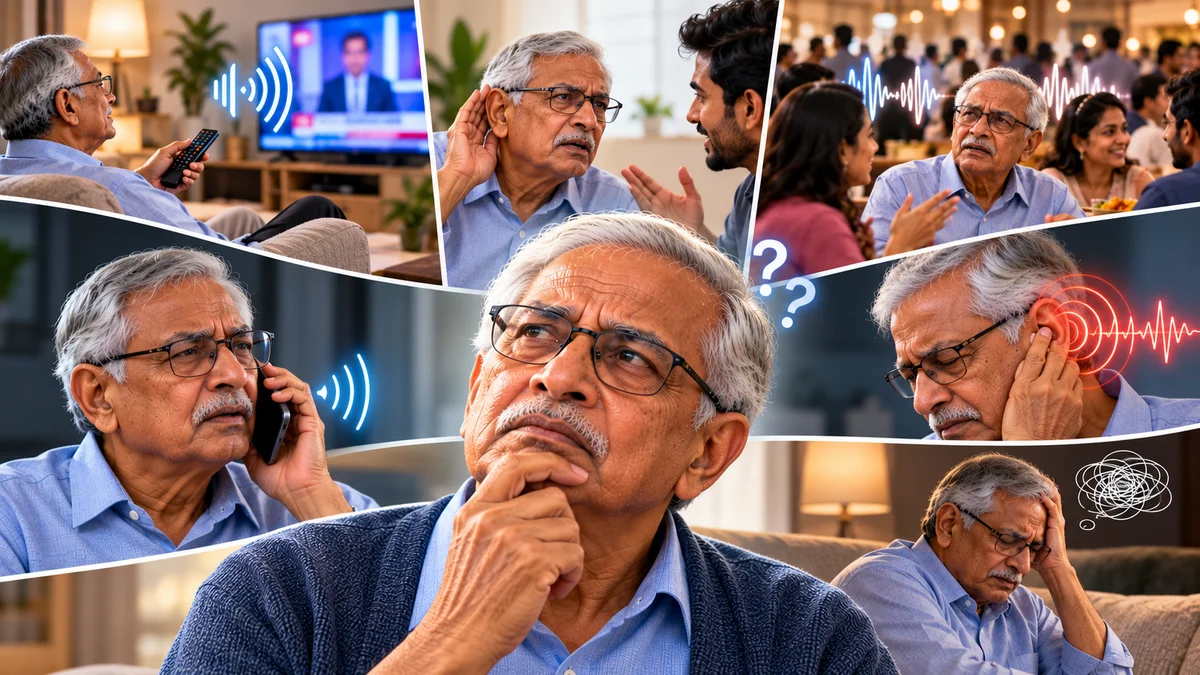
Signs you may need a hearing aid
You often ask people to repeat themselves
The TV volume is higher than others find comfortable
Phone calls and group conversations are difficult
You struggle in restaurants, markets and family gatherings
You feel tired after long conversations, or you avoid social events
Family members tell you that you are not hearing well
Any of these is a good reason to book a hearing test. Early treatment makes it easier for the brain to adapt.
See a doctor first if you notice these
Most hearing loss is gradual and managed with hearing aids, but some changes need medical attention first. See an ENT doctor promptly if you have sudden hearing loss, hearing that is much worse in one ear, ear pain or discharge, dizziness, or ringing in only one ear. Some causes, such as wax, infection or fluid, can be treated, and a hearing aid is not the first step in those cases.
Understanding hearing aid prices in India
Prices depend mostly on three things: the technology level, the style and the brand. Here are rough bands per ear:
Level | Approx. price per ear | What you typically get |
|---|---|---|
Entry | ₹11,000 – ₹35,000 | Genuine digital processing programmed to your audiogram, fewer channels, basic noise reduction, usually battery powered, often no streaming |
Mid-range | ₹35,000 – ₹90,000 | Better noise handling, more channels, often rechargeable, Bluetooth and app control on many models |
Premium | ₹90,000 – ₹2,00,000 | Advanced noise handling, more automatic adjustment, strong streaming and personalisation |
Flagship | ₹2,00,000 and above | Top AI and sensor features; some models are priced as a pair |
Higher cost does not always mean better results for you. Someone with mild loss who spends most time at home may be fully satisfied with a mid-range device, while someone in busy, noisy work settings may benefit from a higher tier. Prices change with models and offers, so treat these as a guide and confirm current rates with us.
Things people often miss about prices
Per ear, not per pair. Most listed prices are for one ear, and many people need two hearing aids for balanced hearing. Some premium models are listed as pairs, so check which one you are being quoted.
No GST. Hearing aids and their parts are exempt from GST in India, so there is no tax added on top. The government confirmed this in a reply to Parliament on 28 July 2026.
Other costs. Ask about custom ear moulds if needed, chargers and accessories, follow-up visits, servicing and extended warranty.
Previous-generation models. These can give excellent value after a new launch.
EMI. Many clinics, including ours, offer EMI so you can spread the cost.
Government support for hearing aids in India
The ADIP scheme (Assistance to Disabled Persons for Purchase and Fitting of Aids and Appliances) provides hearing aids through government-approved agencies. Under the current scheme, a person with a disability certificate and monthly income up to ₹22,500 can receive the full cost of the aid, and those earning between ₹22,501 and ₹30,000 can receive 50% of the cost. Eligibility rules, including the required level of disability, are set by the scheme, so check the official ADIP portal or your District Disability Rehabilitation Centre for current details.
Note that ADIP typically provides basic behind-the-ear models, not branded premium devices. If you prefer a specific brand or a rechargeable or discreet style, you would buy privately.
Hearing aid vs “ear machine” (sound amplifier)
Very low-cost devices sold online or in shops without a hearing test are usually sound amplifiers, not hearing aids. The difference matters:
Hearing aid | Sound amplifier / “ear machine” | |
|---|---|---|
Programmed to your audiogram | Yes | No |
Handles background noise and feedback | Yes, with digital processing | Usually not |
Safe output limit | Yes | Often none, so loud sounds can reach your ear unchecked |
Professional fitting and follow-up | Yes | No |
Warranty and servicing | Manufacturer backed | Usually limited |
An amplifier makes everything louder, including noise, and can be uncomfortable or even harmful to an already damaged ear. If a seller quotes a device before measuring your hearing, walk away.
Why a trial and professional fitting matter
A hearing aid is not an off-the-shelf gadget. Programming it to your audiogram, checking comfort and adjusting it as you adapt are what make it work. Wherever possible, try a device in your real daily environment before you commit, and ask about:
Trial period terms
Warranty duration and what it covers
Free follow-up fine-tuning visits
Servicing and spare part availability
Whether the device is genuine, sealed and covered by the manufacturer’s Indian warranty
Trying two brands at a similar technology level is a good way to compare. Avoid grey-market stock sold without Indian warranty, as you will only discover the problem when it needs service.
Getting used to your hearing aids
Most people need a few weeks to adjust. Sounds you have not heard for years, such as footsteps, paper rustling and running water, may seem loud at first. This is normal.
Week 1 to 2: wear them for a few hours a day at home, in quiet places, and increase gradually.
Week 2 to 4: try conversations, TV, phone calls and short outings.
After a month: attend your follow-up and report what is still difficult. Fine-tuning can fix many issues.
Patience and follow-up visits are part of a good result.
Caring for your hearing aids
Clean them daily with a soft, dry cloth and the brush supplied, and replace wax guards as advised.
Remove them before bathing, swimming or heavy sweating, unless your model is rated for it.
Moisture is the biggest enemy in India’s humid and monsoon months, so store them in a dry box with desiccant overnight.
Keep the charger away from damp areas, and keep spare batteries or charging cables handy.
Book a servicing check once or twice a year. With good care, many hearing aids commonly last around five to seven years.
Get expert guidance at VR Speech and Hearing Clinic
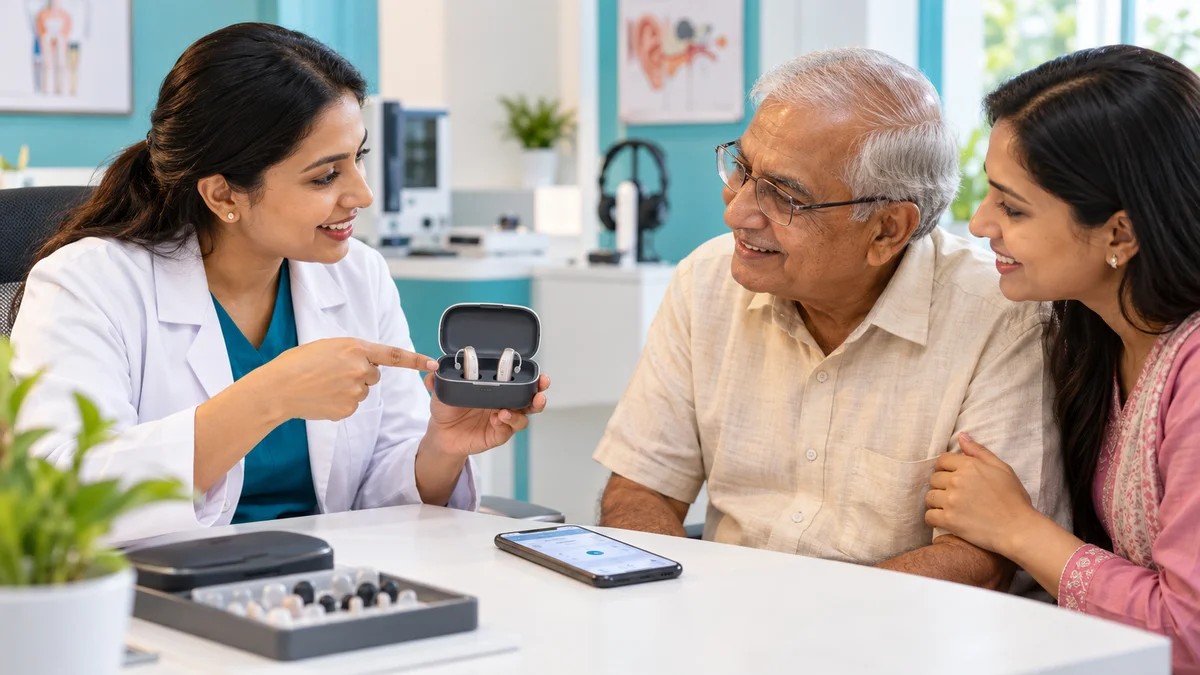
If you are unsure which brand fits your ears and budget, start with a professional hearing evaluation. At VR Speech and Hearing Clinic, we assess your hearing, explain your options in plain language and help you compare suitable devices before you decide. Ask us about our free home hearing test and current offers. Book a consultation today and take the first step toward clearer hearing, or visit our clinic.
This guide is for general information and does not replace a hearing evaluation by a qualified audiologist or a medical examination by a doctor.
Frequently Asked Questions
Q1. Which is the best hearing aid brand in India?
No single brand is best for everyone. Phonak suits active lifestyles, Oticon suits people who tire from listening effort, ReSound suits iPhone users and value buyers, Widex suits music lovers, and Signia suits first-time users. Your hearing test and daily needs should decide.
Q2. How much does a hearing aid cost in India?
Genuine branded hearing aids range from roughly ₹11,000 to ₹35,000 per ear at entry level, ₹35,000 to ₹90,000 in the mid-range, and ₹90,000 to over ₹4,00,000 for premium and flagship models. Confirm current prices with your clinic.
Q3. Is Signia better than Phonak?
Both are excellent. Signia is a good choice if you want a natural own-voice sound or are new to hearing aids. Phonak is often preferred by people in noisy environments, with active routines, or who want wider options for severe hearing loss.
Q4. Which hearing aid is best for severe hearing loss?
Phonak’s Naida range is widely recommended for severe to profound hearing loss. ReSound Enzo, Oticon Xceed and Signia Motion are also designed for high power. Your audiologist can confirm what suits your audiogram.
Q5. Which hearing aid is best for music?
Widex is popular among music lovers for its natural sound and fast processing. Many people also enjoy music on premium models from other brands, so a personal trial is worthwhile.
Q6. Can I try a hearing aid before buying?
Yes, trying devices in your real surroundings is strongly recommended. Ask the clinic about trial terms before you decide.
Q7. Do I need two hearing aids or one?
Most people with hearing loss in both ears benefit from two, as it improves sound direction and speech understanding in noise. Your audiologist will advise based on your test results.
Q8. Are rechargeable hearing aids better?
Rechargeable models are convenient and avoid battery changes, which suits many seniors and busy users. Disposable battery models still suit those who prefer a quick swap or travel often. Both can work well.
Q9. Are more expensive hearing aids always better?
Not always. Higher tiers add stronger noise handling, more automation and better streaming, which help most in busy, noisy lives. For mild loss and a quiet routine, a well-fitted mid-range device can be just as satisfying.
Q10. Are the new 2026 hearing aids worth buying?
The 2026 platforms focus on AI for speech in noise and new connectivity such as Auracast. Independent test data is still limited, and not every model is available in India yet. Ask for a side-by-side trial with a previous-generation model before paying extra.
Q11. Is there GST on hearing aids in India?
No. Hearing aids and parts used to make them are exempt from GST. Other assistive devices, such as wheelchairs and assistive listening devices, are taxed at a concessional 5%.
Q12. Can I get a hearing aid free from the government?
Under the ADIP scheme, eligible persons with a disability certificate and income within the set limits can receive hearing aids free or at 50% of the cost through approved agencies. These are generally basic behind-the-ear models. Check the official ADIP portal or your district rehabilitation centre for current rules.
Q13. How long do hearing aids last?
With regular cleaning and servicing, many hearing aids commonly last around five to seven years. Humidity, wax and rough handling shorten their life, and technology also improves over time.
Q14. What is the difference between a hearing aid and an ear machine?
A hearing aid is programmed to your audiogram with a safe output limit and professional follow-up. A cheap amplifier simply makes everything louder, with no tuning and often no safety limit, and can make hearing worse.
Q15. Is it safe to buy a hearing aid online?
Only if the device is genuine, covered by an Indian warranty and programmed by an audiologist using your hearing test. A hearing aid that is not fitted to your audiogram is unlikely to work well.
Sources and further reading
Ministry of Finance, Rajya Sabha Unstarred Question No. 1029, answered 28 July 2026, on GST rates for assistive devices (hearing aids exempt under Notification No. 10/2025-Central Tax (Rate)).
Department of Empowerment of Persons with Disabilities, ADIP scheme and FAQ: adip.depwd.gov.in
Rehabilitation Council of India, register of audiologists: rehabcouncil.nic.in
Manufacturer launch announcements and industry coverage of the August 2026 platforms (Phonak EON, Oticon Reveal, ReSound Sensia, Signia Pure Charge&Go MaX) and Widex Allure AI.
Related reading: Best Hearing Aid Brands in India · Average cost of a hearing aid in India · Choosing an ear machine for elderly parents