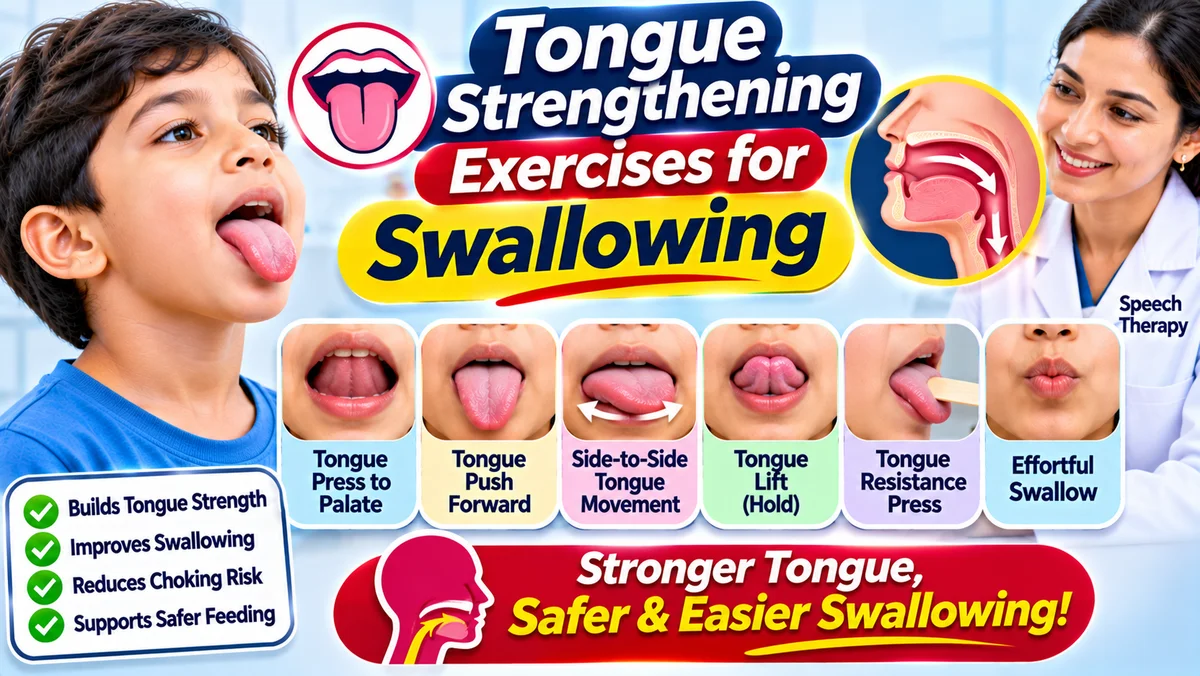
Tongue Strengthening Exercises for Swallowing: A Guide
Tongue Strengthening Exercises for Swallowing: What They Are and How They Help
Swallowing feels automatic until it stops working smoothly. Maybe food lingers in your mouth, a sip of water triggers coughing, or chewing takes more effort than it used to. Weak tongue muscles may be part of the problem. Tongue strengthening exercises for swallowing are a targeted form of therapy that rebuilds power, range of motion, and coordination, so food and liquid travel safely toward the throat. This guide explains what these exercises are, who may need them, what a routine can look like, and how to practice safely.
Why the Tongue Matters for Swallowing
The tongue does far more than help you speak. In the first stage of a swallow, it gathers chewed food into a cohesive mass, moves it around the mouth, and presses it up and back against the roof of the mouth. This pushes it toward the throat. The muscles of the pharynx then squeeze the food downward into the esophagus, which carries it to the stomach.
Each step depends on well-timed muscle action. When the tongue is weak, slow, or poorly coordinated, food can collect in the cheeks, remain in the mouth after a swallow, or slip into the airway too early. Strengthening the tongue is one way to restore control at the start of the process.
What Are Tongue Strengthening Exercises?
These are structured movements that make the tongue work against resistance or stretch it through a wider range. They work like physical therapy for an injured shoulder or knee: the muscle is challenged gradually until it becomes stronger and more responsive. They are usually one piece of a larger dysphagia treatment plan, which may also include lip and cheek exercises, posture changes, adjusted food textures, and special swallowing techniques.
A speech-language pathologist (SLP) typically designs and teaches these exercises. An SLP is a clinician trained to evaluate and treat swallowing disorders, and chooses movements based on where in the swallowing process your difficulty occurs.
Who Can Benefit From Tongue Exercises?
Dysphagia, the medical term for difficulty swallowing, can affect people of any age and has many causes. Conditions often linked to tongue weakness or reduced swallowing control include:
Stroke
Dementia
Parkinson’s disease and other neurological conditions
Head injury
Head and neck cancer, including after surgery, radiation, or chemotherapy
Muscular dystrophy
Dry mouth conditions such as Sjögren’s syndrome
Tongue exercises are most often recommended when the trouble lies in the mouth stage of swallowing, such as difficulty controlling food or moving it backward. If your difficulty occurs later, in the throat or esophagus, your SLP may recommend different strategies.
Why Swallowing Problems Need Prompt Attention
Dysphagia is more than an inconvenience. When food, liquid, or saliva enters the airway instead of the esophagus, it is called aspiration. Aspiration can lead to chest infections and pneumonia, especially in older adults or people with weakened immune systems. Swallowing problems can also cause dehydration, unplanned weight loss, and malnutrition, because eating becomes tiring or frightening. Many people start avoiding meals with family and friends, which affects quality of life.
An early evaluation gives you the best chance of protecting your lungs and nutrition. Exercise therapy is often combined with other measures, such as modified diets, safer eating positions, medication changes, or in some cases surgery.
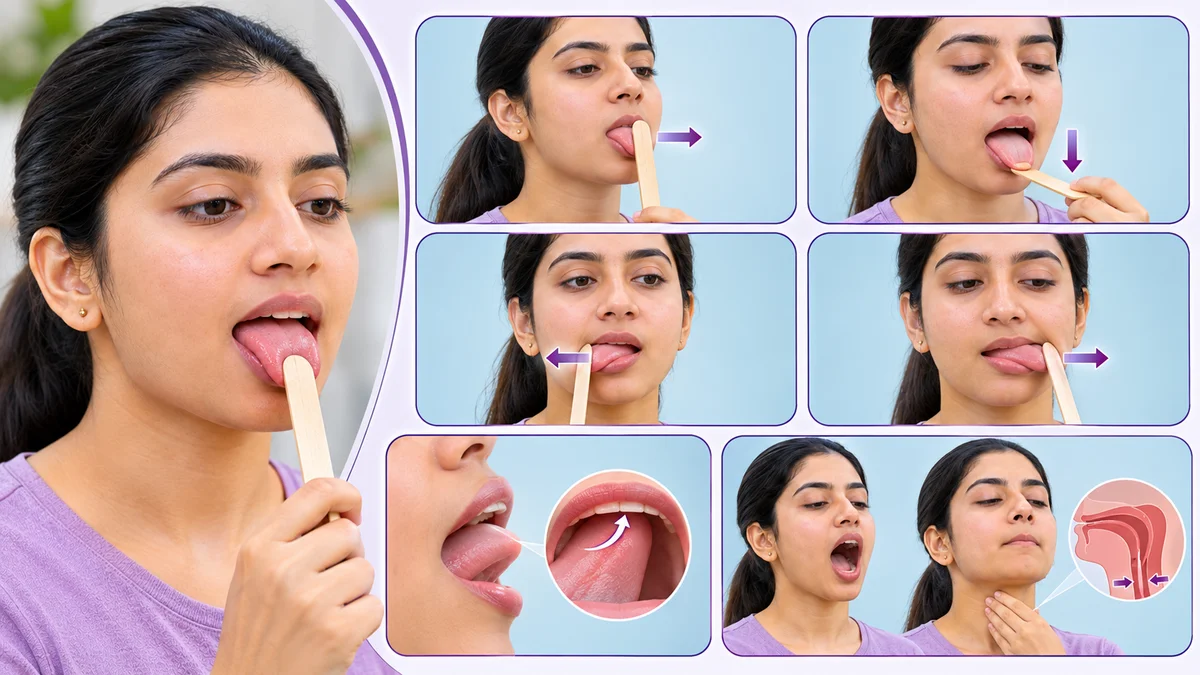
Examples of Tongue Exercises an SLP May Teach
Every program is individualized, so treat these as illustrations of what therapy can involve rather than a routine to copy.
Forward resistance press: Stick your tongue out and press it against a flat object, such as a clean spoon or tongue depressor. Hold for a couple of seconds and repeat about five times.
Downward press: Repeat the movement with the object placed beneath the tongue, so the muscle works in a different direction.
Side presses: Push the tongue toward each corner of the mouth against gentle resistance, holding briefly and then relaxing before switching sides.
Palate curl: Touch the tongue to the ridge just behind your upper front teeth, then slide it backward along the roof of your mouth as far as you comfortably can. Hold briefly and repeat.
Base-of-tongue work: Your SLP may have you mimic a gargle or a yawn while drawing the tongue back, or practice a forceful dry swallow, as if swallowing a pill without water.
Some techniques, such as the super-supraglottic swallow, involve holding your breath and bearing down. They may not be appropriate for people with heart conditions or high blood pressure, so they should only be practiced when your clinician has taught and approved them.

How to Prepare for a Practice Session
A little preparation makes your practice more effective:
Choose the right position. Your SLP may ask you to sit upright or get out of bed. Follow their instructions.
Reduce distractions. Turn off the television and pick a time when visitors are unlikely. Full focus helps you perform each movement correctly.
Keep a consistent order. If your plan includes lip, cheek, and tongue exercises, do them in the same sequence each time so nothing gets skipped.
Plan for repetition. Many programs call for several short sessions a day rather than one long one.
Use clean tools. If your therapist suggests a spoon or depressor, keep it clean and use it only as directed.
You can practice in a hospital room or at home. Many people do them independently after being taught, though some benefit from a therapist’s supervision.
Safety Tips You Should Not Skip
Tongue exercises are generally considered safe when prescribed for the right reason, but a few rules matter. Only do exercises your doctor or SLP has recommended for your condition, because a routine found online may not match your needs. If you feel pain, dizziness, or unusual discomfort, stop and tell your care team promptly. Don’t push into pain thinking it means progress. Report any new coughing, choking, or breathing difficulty during practice as well.
Tracking Progress and What to Expect
Keep a simple log of which exercises you did, when you did them, and any problems you noticed. It reminds you to stay consistent and gives your SLP useful information at follow-up visits.
Progress is usually gradual. Many people need a few weeks of regular practice before noticing a difference, and missed sessions can slow improvement. Your SLP may reassess you over time, sometimes with a bedside swallowing exam or an imaging test such as a fiberoptic endoscopic evaluation, and adjust your exercises accordingly. As swallowing improves and the risk of aspiration falls, your team may allow a wider range of foods and drinks. That can improve nutrition, energy, and enjoyment of meals.
When to See a Doctor
Don’t wait if you notice swallowing warning signs. Contact a healthcare provider if you experience:
Frequent coughing or choking while eating or drinking
A wet, gurgly voice after swallowing
Food that feels stuck in your throat or mouth
Drooling or difficulty controlling saliva
Unexplained weight loss
Repeated chest infections
Seek emergency care for severe choking or for fever combined with breathing difficulty after eating.
Final Thoughts
Tongue strengthening exercises can make a real difference for people with dysphagia, especially when weakness or poor control affects the first stage of swallowing. The key points are to get a proper evaluation, follow a personalized plan from a speech-language pathologist, practice consistently, and track your progress. With patience and professional guidance, many people regain safer, more comfortable swallowing and return to the pleasure of eating.
This article is for general education and does not replace advice from a qualified healthcare professional.
Frequently Asked Questions (FAQs)
1. What are tongue strengthening exercises for swallowing?
They are guided movements that make the tongue work against resistance or through a greater range of motion. They are meant to improve strength, control, and coordination for safer swallowing.
2. How long does it take to see results?
Timelines vary by person and condition. Many people need a few weeks of regular practice to notice improvement, and your speech-language pathologist can tell you what is realistic for you.
3. Can I do tongue exercises at home?
Yes, many people practice at home after being taught by a clinician. Only perform exercises prescribed for your condition, and follow your therapist’s instructions on frequency and technique.
4. Are tongue strengthening exercises safe?
They are generally safe when prescribed and performed correctly. Stop and contact your care team if you experience pain, dizziness, or breathing trouble.
5. How often should I practice?
Your SLP will set the schedule, but many programs involve several short sessions a day. Consistency usually matters more than session length.
6. Who should I see about swallowing difficulty?
Start with your primary care doctor, who may refer you to a speech-language pathologist or another specialist for a full swallowing evaluation.